

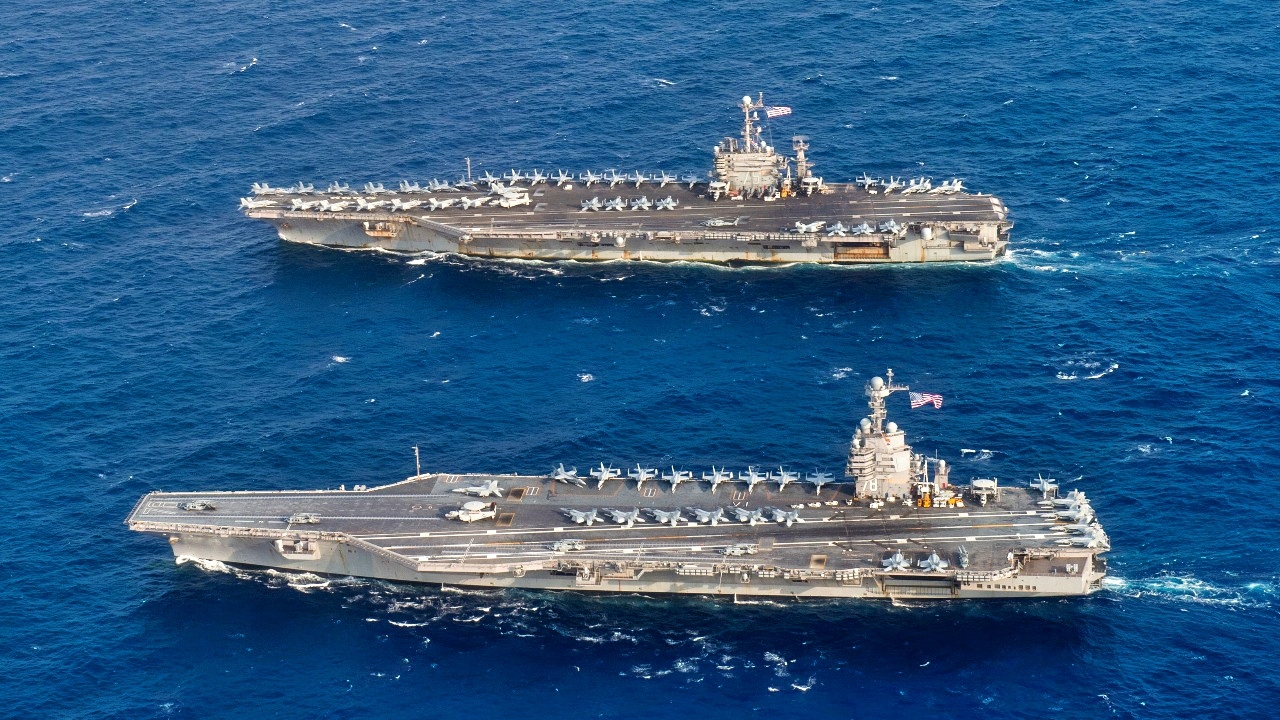
Key Points and Summary – The US Navy’s Nimitz-class supercarriers underpin America’s ability to sustain global operations for months, powered by twin nuclear reactors that provide virtually unlimited range. USS Harry S. Truman exemplifies the class—projecting power, protecting sea lanes, and aiding crises while hosting modern air wings that evolved from F-14s to Super Hornets, Growlers, and F-35s, with the F/A-XX on the horizon.
-Unlike Russia’s conventionally powered Admiral Kuznetsov, optimized for regional denial, Nimitz carriers are true blue-water platforms built for endurance.
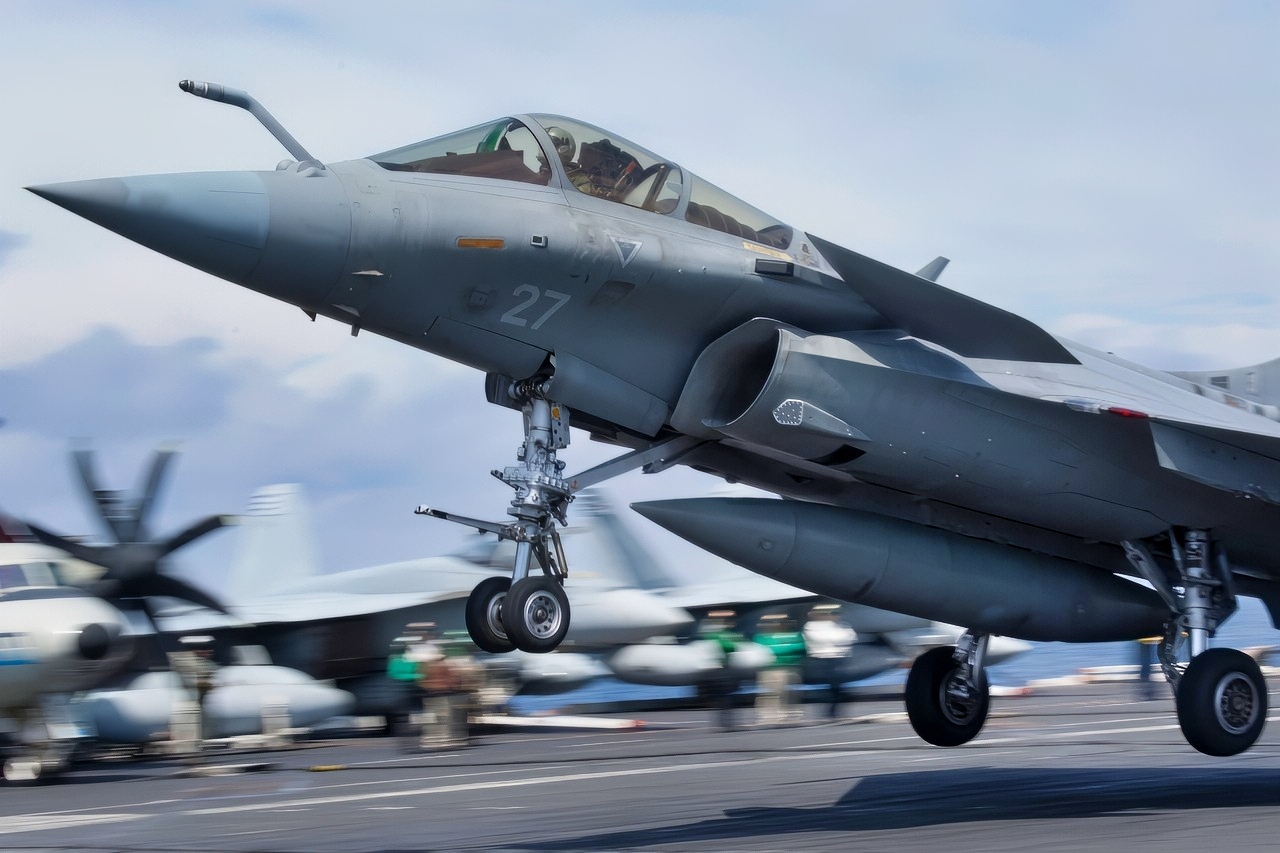
(July 3, 2018) A French Dassault Rafale M Fighter touches down on the flight deck aboard the Nimitz-class aircraft carrier USS Harry S. Truman (CVN 75). Harry S. Truman is currently deployed as part of an ongoing rotation of U.S. forces supporting maritime security operations in international waters around the globe. (U.S. Navy photo by Mass Communication Specialist 3rd Class Rebekah A. Watkins/Released)
-Recent deployments included intensive Red Sea strike operations.
-Successors are arriving: the Ford-class adds electromagnetic launch and other efficiencies to reduce crew burden and extend capability.
Inside USS Harry S. Truman: The Nuclear Heart of Carrier Power
Unlike the navies of virtually any other country in the world, the Nimitz-class carriers can project power around the globe for sustained periods of time, responding to humanitarian emergencies, reassuring allies, or keeping international sea lanes open.
The USS Harry S. Truman is one of the ten Nimitz-class carriers in service with the United States Navy today.
The nuclear-powered carrier was ordered at the tail end of the Cold War in 1988, commissioned ten years later in 1998, and named after Harry Truman, the 33rd President of the United States.
Buried within the Nimitz-class carriers are a pair of nuclear reactors, power plants that provide the massive vessels with virtually unlimited range, and allow them to sail for over two decades without needing to refuel. The only factor that crimps endurance is crew sustenance requirements.
The Nimitz-class is the heart of the United States Navy’s ability to deploy internationally in sustained operations as a true blue-water navy.
It is one of the defining characteristics of America’s carrier force. Unlike most other navies today, which focus on protecting littoral home waters and have limited ability to sustain deployments abroad, the Nimitz-class can sustain long operations overseas for weeks or months at a time.
The ship’s endurance and reach enable it to respond to a wide variety of geopolitical situations, including humanitarian aid responses to global humanitarian crises, protecting international shipping lanes from closure by terrorists or rebel groups, and serving as a powerful deterrent force in support of friends and allies worldwide.
Throughout the build of the Nimitz-class, refinements and updates were incorporated into the ship as shipyards built new carriers. Later, Nimitz incorporated upgraded radar and defensive systems, as well as modernized crew berths and support infrastructure for aircraft.
The Nimitz-class air wings have evolved. During the Cold War, F-14 Tomcats operated from carriers, warplanes that have since been retired from service to make way for the F/A-18E/F Super Hornets, EA-18G Growlers, and the fifth-generation F-35 Lightning stealth fighter. And in the future, the upcoming F/A-XX, the Navy’s anticipated sixth-generation fighter, is slated for service on the flattops.

An EA-18G Growler, assigned to Electronic Attack Squadron (VAQ) 209, U.S. Navy Reserve, prepares for takeoff as part of Exercise Southern Strike 2021 at the Gulfport Combat Readiness Training Center in Gulfport, Miss., April 19, 2021. Southern Strike is a large-scale, conventional and special operations exercise hosted by the Mississippi National Guard and is designed to maintain combat readiness, build relationships, and strengthen combat readiness across all branches of the U.S. military. (U.S. Air National Guard photo by Tech. Sgt. Jon Alderman)
The Nimitz-class’s presence is significantly different from that of the carriers of other navies. Take Russia’s Admiral Kuznetsov, for example.
In Russian Navy service, that Cold War-era aircraft carrier has been forced to contend with the collapse of the Soviet Union and a prolonged build and outfit period before it entered service—a period during which its performance has been widely lambasted.
That carrier has been seen many times belching clouds of acrid black smoke in the course of what should be routine operations, garnering widespread satire. But even if the Admiral Kuznetsov was a healthy ship, which it certainly is not, its role within the Russian Navy differed significantly from that of the Nimitz-class.
The Soviet Navy is a green water fleet, designed not to project and sustain power from seas and shores far distant from Russian home waters, but instead to push American and NATO Carrier Strike Groups away from home waters.
To that end, today’s Russian Navy ships, like their Soviet predecessors, were much more heavily armed with anti-ship weaponry than their American counterparts.
And given the conventional fossil fuel propulsion of the Admiral Kuznetsov and other Russian ships, their endurance and range are significantly less too.
The carrier has lost a couple of aircraft earlier this year. Near the end of April, while engaged in operations against the Houthi rebel group in Yemen, the Truman made an abrupt turn, an evasive maneuver to avoid being hit.
However, during that drastic course change, an F/A-18E Super Hornet fell off the flight deck and into the ocean.
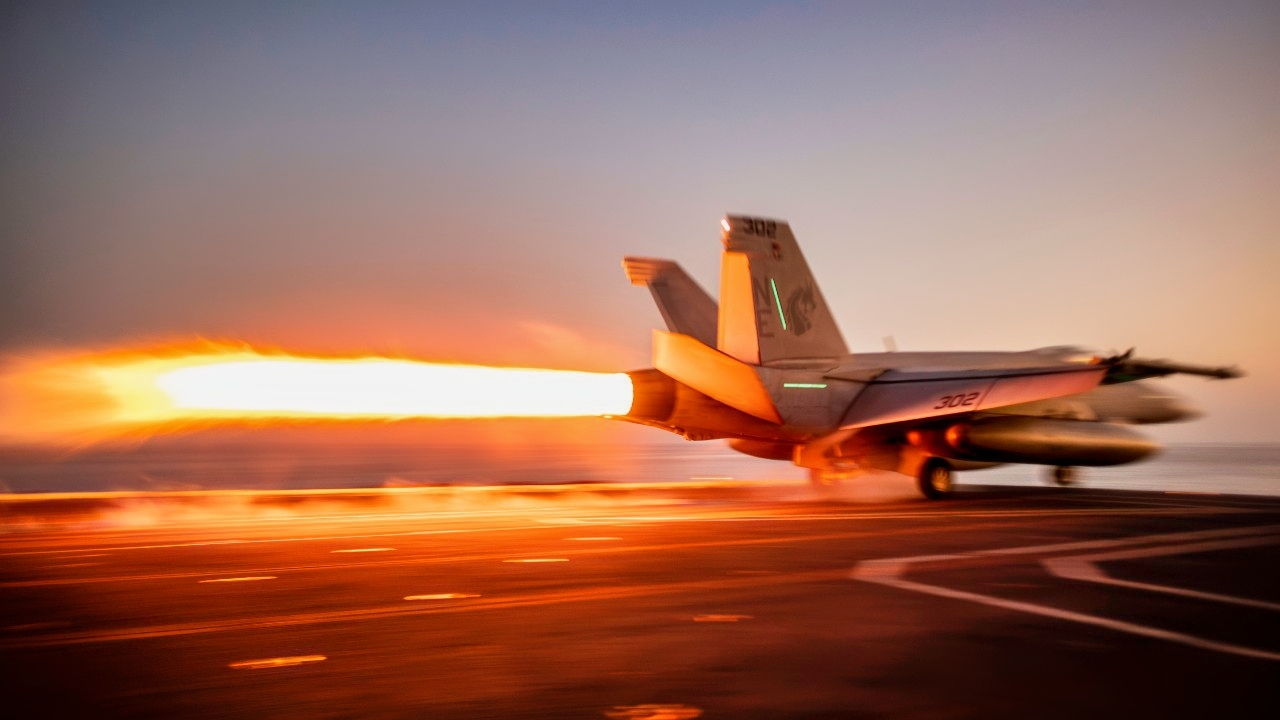
(April 28, 2025) An F/A-18E Super Hornet, attached to Strike Fighter Squadron (VFA) 192, launches from the flight deck of the Nimitz-class aircraft carrier USS Carl Vinson (CVN 70) in the U.S. Central Command area of responsibility. (Official U.S. Navy photo)
Just days later, the Truman lost a second Super Hornet when its arresting gear missed the jet’s landing on the carrier.
Earlier this summer, the USS Harry S. Truman returned to Naval Station Norfolk, in Virginia, following a long, 251-day deployment aimed at preserving freedom of navigation in the Red Sea.
During that deployment, Super Hornets from the USS Harry S. Truman launched over 1.1 million pounds of munitions.
One of these flights was dubbed the largest carrier-launched airstrike in history, and saw 27 F/A-18 Super Hornets drop 124,000 pounds of explosives on ISIS members ensconced in a series of caves in Yemen.
USS Harry S. Truman and the Nimitz-Class: Replacements on the Way?
Despite the Nimitz-class strengths, the U.S. Navy is already accepting its successors into service: the Gerald R. Ford-class of supercarriers.
Those newer carriers, also nuclear-powered, will replace the Nimitz-class carriers on a one-for-one basis as they become operational and incorporate a number of new technologies, including an Electromagnetic Aircraft Launch System (EALS), which replaces the Nimitz-class’ steam-powered catapults, as well as other efficiency measures that reduce crew burden.
About the Author: Caleb Larson
Caleb Larson is an American multiformat journalist based in Berlin, Germany. His work covers the intersection of conflict and society, focusing on American foreign policy and European security. He has reported from Germany, Russia, and the United States. Most recently, he covered the war in Ukraine, reporting extensively on the war’s shifting battle lines from Donbas and writing on the war’s civilian and humanitarian toll. Previously, he worked as a Defense Reporter for POLITICO Europe. You can follow his latest work on X.
More Military
Russia Now Has a Death Star Battlecruiser
France’s Charles de Gaulle Aircraft Carrier Has a Message for Any Navy on Earth
Russia’s Last Aircraft Carrier Might Soon Be Headed to the Grave


