


Key Points and Summary – USS Ranger (CVA-61), a Forrestal-class carrier commissioned in 1957, became one of the U.S. Navy’s most important Cold War assets in the Pacific.
-Based on the West Coast, Ranger projected American power across Asia, backing SEATO allies, cruising the Taiwan Strait to deter Beijing, and later flying intense combat sorties over North and South Vietnam.

Forrestal-Class Aircraft Carrier in Drill U.S. Navy Photo
-With a crew of 3,500 and nearly 100 aircraft—from early Skyraiders with nuclear missions to F-4 Phantoms and A-6 Intruders—the ship embodied Washington’s containment strategy at sea.
-Though overshadowed by later carriers, Ranger helped keep key “dominoes” from falling to communism.
USS Ranger Aircraft Carrier Proved Its Worth
This Cold War-era carrier plucks my heartstrings. As a former US Army infantry officer, I like anything named the Ranger. The US Navy did too.
The USS Ranger name is synonymous with naval lore. One Ranger vessel, led by John Paul Jones during the Revolutionary War, was instrumental in facing down the British Royal Navy.
The 20th-century USS Ranger had orders of magnitude more than the 140 sailors on board John Paul Jones’ vessel. The USS Ranger (CVA-61) was a Forrestal-class carrier laid down in August 1954. It was launched in September 1956 in Newport News and finally commissioned in 1957 in Norfolk.
Where Would the Strategic Home Be for the Ranger?
The USS Ranger was, at the time, a pivotal US Navy asset. It could be sent to the Pacific to maintain peace outside the Korean Peninsula and to prevent any country from going communist. Or it could sail the Atlantic to execute the containment strategy against the Soviet Union.
This was a difficult decision for President Dwight Eisenhower. The commander-in-chief at the time was enamored of nuclear weapons to deter the Russians. Still, he also recognized the importance of naval aviation as the jet age brought more modern aircraft.
Would Vietnam Be a Future Proving Ground?
Eisenhower, perhaps sensing that the former French colony of Vietnam would become a dangerous flashpoint for future conflict, decided that the Navy should base the Ranger on the West Coast and deploy it frequently to the Pacific Ocean area of operations. The Ranger would be at the pointy end of the spear to make sure no “dominoes” fell to communism.
The Ranger had 3,500 sailors aboard the floating air base. But it was the carrier flight wings that were so impressive. Ranger featured nearly 100 aircraft on board. This was going to make the Navy’s job in East Asia easier: flying the flag and projecting power in that region.
Skyraiders Were a Key Airplane for the Era
The main squadron originally on board was VA-85. This was a colorful unit that flew Douglas A-D6 Skyraiders. The Skyraider was a long-range propeller-driven strike aircraft capable of carrying nuclear weapons. The Skyraider’s other job on the Ranger was to fly at a lower altitude to drop atomic bombs.
It had a good range and a large payload. This made the Ranger into a Cold War beast with a strategic mission that the Navy preferred for its carriers at the time.
By 1957, the Ranger was ready for active duty. It has already rehearsed its launching and landing of jet aircraft. In 1958, it deployed to South America and was then homeported in California.
That year, a tragic and avoidable accident happened. Two sailors were playing with a model jet engine seven decks below the flight line. Somehow, gunpowder ignited, and the explosion killed the two enlisted men who were doing extra-curricular and dangerous activities that should have been avoided.
Prop Up U.S. Allies in the Region
The Ranger recovered from the unfortunate incident and began helping allies in Asia. Its mission was to support Australia, New Zealand, Thailand, and the Philippines, which were members of SEATO – the alliance intended to mimic NATO in Europe. Ranger conducted operations to support anti-communism efforts, ensuring the SEATO countries remained loyal to the United States and remained dedicated to capitalism and democracy.
Ranger had a mission that peered into the future. China’s designs on Taiwan began in those days, and the carrier often sailed the Taiwan Strait to discourage China from any mischief against Taiwan.
In 1959, Ranger had conducted an astounding 6,000 catapult launches and 15,000 landings in East Asia. By 1962, the Ranger deployed F-4B Phantom IIs. This would become a historic airplane during the Vietnam War, and the carrier regularly practiced launching and landing F-4s.
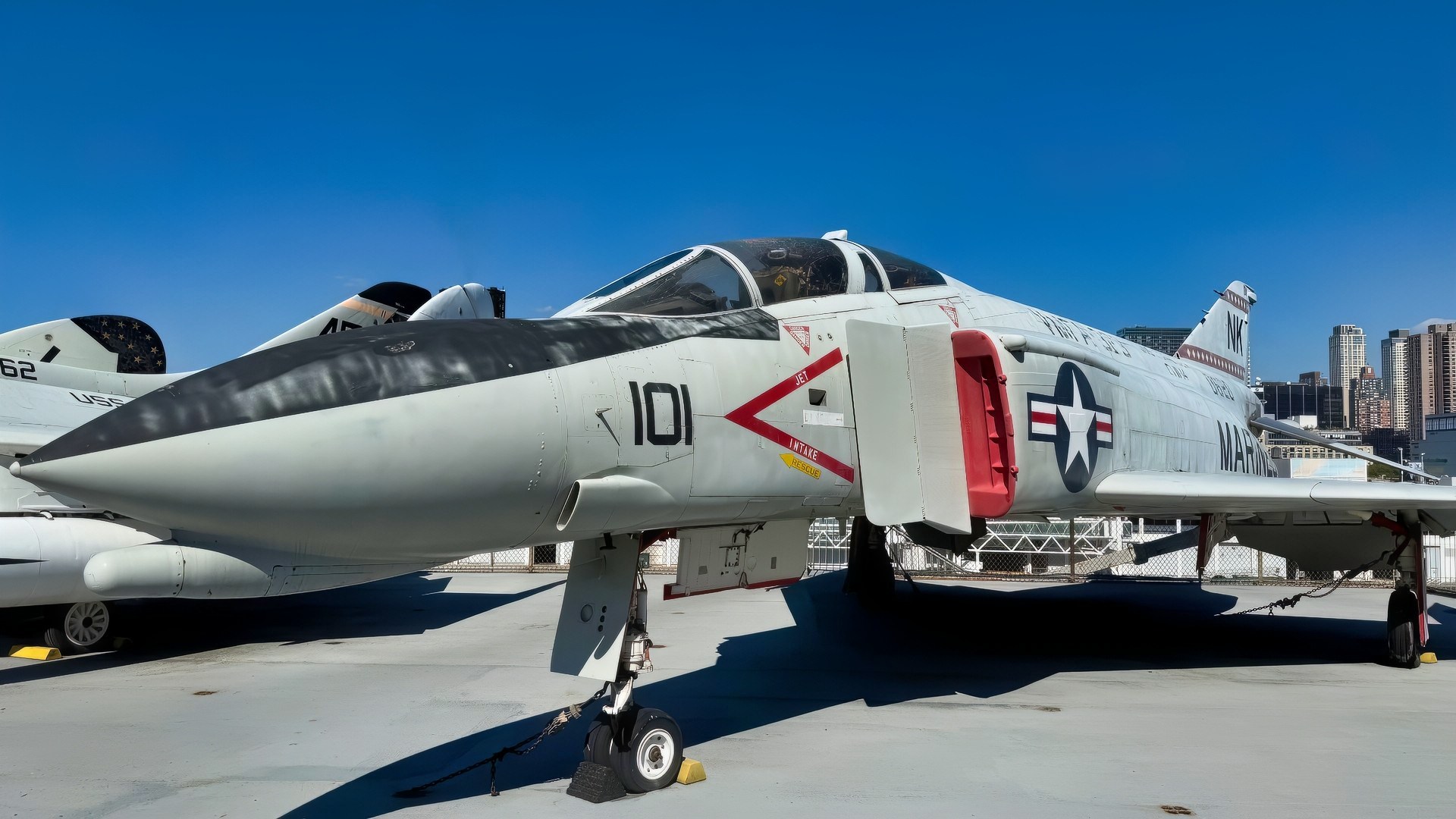
F-4 Phantom Photo Taken on USS Intrepid. Image Credit: National Security Journal.
By the end of 1962, the Ranger had sailed 57,264 nautical miles and executed 10,788 catapult launches and 13,980 arrested landings. Ranger showed just how much carrier aviation duties had evolved.
The Ranger was a Vietnam War stalwart, using its F-4 Phantoms and A-6 Intruders during many operations in North and South Vietnam. The war dragged on, but the Rangers were there for numerous engagements to bomb enemy targets to hurt the communist war effort against the Americans.
The Ranger was an important carrier that was battle-tested and used to ward off the growth of communism in the Pacific.
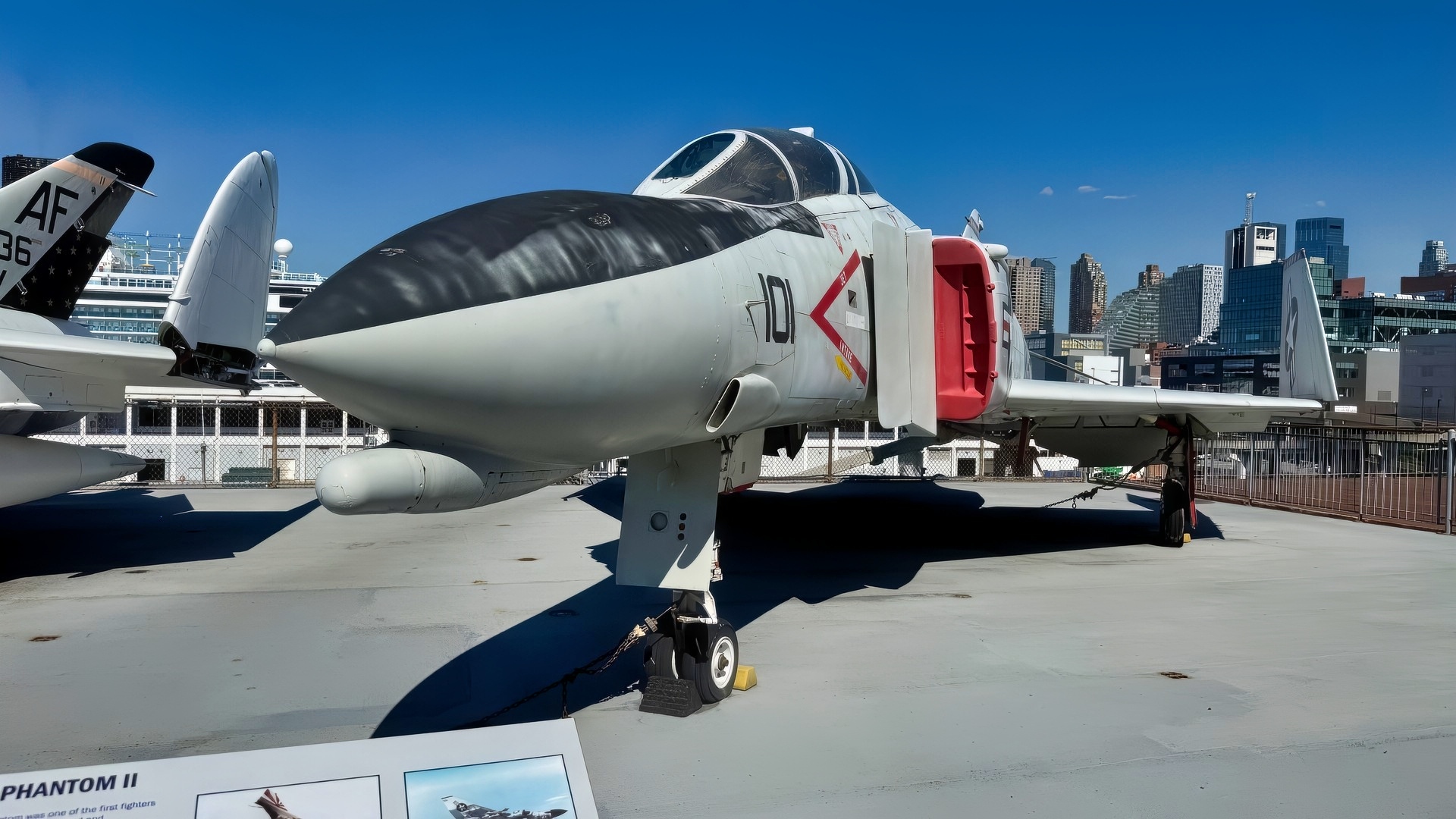
F-4 Phantom II Photo from National Security Journal. Taken on September 18, 2025.
It had both hot and cold war duties in its history. The Ranger employed versatile carrier wings that were primed to stop the enemy in its tracks during the Vietnam War.
The war was more manageable to fight with the Rangers’ immense number of sorties to attack enemy facilities and troop formations.
The Ranger did the US Navy proud and was a major factor in preventing the spread of communism in East Asia. The domino theory was what the Ranger was designed for, and its combat record showed that carrier aviation would be instrumental for decades to come.
About the Author: Brent M. Eastwood
Author of now over 3,000 articles on defense issues, Brent M. Eastwood, PhD is the author of Don’t Turn Your Back On the World: a Conservative Foreign Policy and Humans, Machines, and Data: Future Trends in Warfare plus two other books. Brent was the founder and CEO of a tech firm that predicted world events using artificial intelligence. He served as a legislative fellow for US Senator Tim Scott and advised the senator on defense and foreign policy issues. He has taught at American University, George Washington University, and George Mason University. Brent is a former US Army Infantry officer. He can be followed on X @BMEastwood.


