

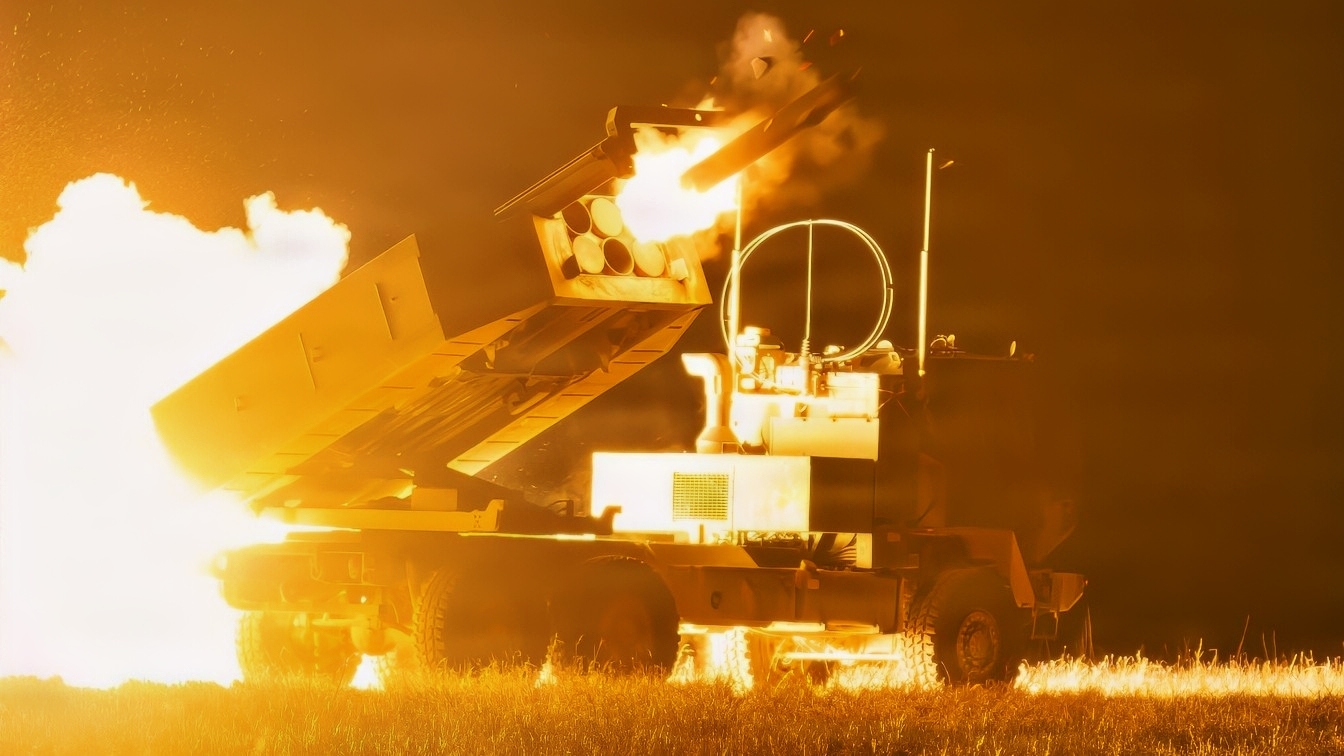
Iran Must Never Have a Nuclear Weapon—and That Requires Ending the Regime That Wants One: For months, the Commander-in-Chief has repeated a clear, absolute endstate: Iran will never—never—possess a nuclear weapon. That objective is not a talking point. It is the only outcome consistent with American security, Israeli survival, and the prevention of nuclear-armed theocratic blackmail of the global energy system, even as alternative pipelines begin to offer partial redundancy. Yet as the war that began on 28 February 2026 grinds into its fifth month—with the United States intensifying air and naval strike campaigns, reimposing the blockade, and the Iranian regime lashing out against regional targets and striking additional cargo vessels in the Strait—too many voices in Washington and the commentariat have lost sight of what ‘never’ actually requires.
A functional decomposition of the endstate is straightforward. Iran’s nuclear program is not a technical problem that can be solved by bombing centrifuges or stockpiles. It is a political-military program driven by a regime whose founding ideology, constitution, and operational doctrine treat the acquisition of nuclear weapons as a means to destroy Israel and, ultimately, confront the United States. The will, the intent, and the institutional machinery that produce that pursuit reside in the Supreme Leader’s office, the Islamic Revolutionary Guard Corps, the Atomic Energy Organization of Iran, and the network of clerics and commanders who have spent four decades pursuing the bomb while denying it. As long as that leadership remains, the program can be reconstituted. History has proven this repeatedly.
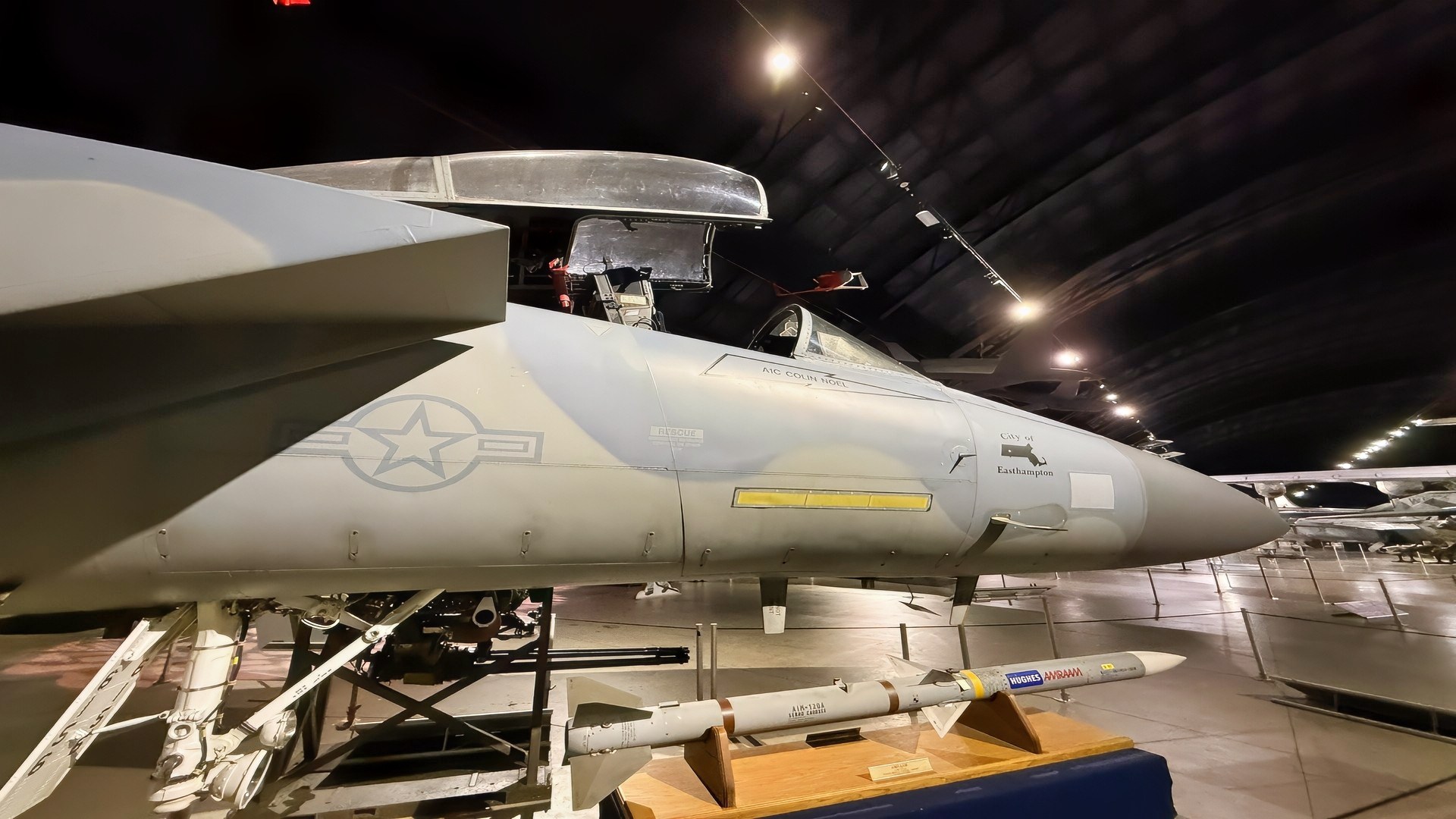
F-15 Fighter at the U.S. Air Force Museum. Image Taken on July 19, 2025 by National Security Journal.

F-15 Fighter Taken on July 19, 2025. Image Credit: National Security Journal.
Consider the record. After the 1979 Revolution, the nuclear program was largely frozen and further damaged during the Iran-Iraq War. Yet by the late 1990s, Iran had launched the secret Amad Plan and, by late 2003, had advanced warhead design, high-explosive testing, detonator work, and missile integration, lacking only fissile material. In roughly two decades, under sanctions and isolation, the regime went from near-zero capability to the threshold of a nuclear weapon. The 2015 Joint Comprehensive Plan of Action later imposed temporary limits on enrichment and installed monitoring, yet by 2019 Tehran was already exceeding those limits and, by 2025, had stockpiled hundreds of kilograms of 60-percent-enriched uranium. This is enough, if further enriched, for multiple weapons. The June 2025 U.S.-Israeli strikes and the far larger February 2026 campaign (Operation Epic Fury) severely damaged Natanz, Fordow, and related sites. Intelligence assessments still cannot confirm the complete elimination of the material or the know-how. The regime’s scientific cadre, its archival blueprints, and its procurement networks survived. With residual scientists, data, and institutional knowledge intact, Iran can drastically shrink the timeline to another nuclear weapon in the near future despite recent setbacks. “Degrade and delay” is not “never.”
The same pattern appears in every prior attempt at management. Sanctions have devastated Iran’s economy and its people, yet the leadership has consistently chosen the role of global antagonist over any long-term arrangement that would deliver prosperity to its own population. The current administration’s offer of economic reconstruction and sanctions relief in exchange for permanent zero enrichment is noble in intent. It has also been met with the same tactical engagement followed by violation that has defined Tehran’s diplomacy since 1979. When the June 2026 memorandum of understanding reopened the Strait of Hormuz on paper, Iranian forces almost immediately resumed harassment and then direct attacks on commercial shipping. The regime treats every pause as an opportunity to rearm and every concession as weakness.
This is why “managing” or “monitoring” the regime over time is a strategic illusion. It places the burden of eternal vigilance on future administrations that may lack the will, the congressional majorities, or the public support to act when Iran next sprints for the bomb. We have already watched this movie with North Korea: temporary freezes, food aid, inspections that become theater, and then a nuclear arsenal. The difference is that a nuclear North Korea can be contained; a nuclear Iran, controlling the world’s most important energy chokepoint and sworn to Israel’s destruction, cannot. Worse, any residual Iranian regime would almost certainly receive overt, clandestine, or covert assistance from China and Russia to rebuild its nuclear, missile, and terrorist infrastructure. This assistance is already documented in satellite intelligence sharing, dual-use materials for ballistic missiles, drone components, and air-defense preparations. Embittered by the loss of its Supreme Leader and the degradation of its forces and economy, the regime is now more hateful of the United States than ever before. No matter how robust our conventional military campaigns become, they will not change the theocratic ideology or its foundational hostility toward the United States and its allies. The regime continues to expand its proxy network, publicly communicating its hatred even as another plot to assassinate the President of the United States has just been uncovered. History shows that American public attention and political will fade, just as they largely have regarding 9/11. This creates the conditions for Tehran to supercharge efforts at retribution through proxies, asymmetric attacks, and a renewed nuclear sprint. What begins as a temporary setback for the regime can become a more dangerous long-term threat for America.
The political clock makes half-measures especially dangerous. Disruptions in the Strait of Hormuz, through which roughly one-fifth of global oil seaborne trade still flows, already drive up prices, raise American gasoline costs, and feed directly into midterm election dynamics. Now, with Tehran signaling it will use its Houthi proxies to threaten the Bab el-Mandeb Strait in the Red Sea, a second vital energy artery is at risk. Iran’s conventional navy has been heavily degraded, yet the regime retains substantial residual tactical capabilities: naval mines, swarm boats, drones, coastal missile batteries, and shore-based artillery that can still range the shipping lanes. It only needs one successful strike against a commercial vessel in either chokepoint to achieve a de facto closure. The resulting spike in prices and voter frustration could easily tip power in Congress leftward this November. That shift would shrink the options and funding available to the current Commander-in-Chief and invite deep legislative gridlock. The administration has said “time is on our side,” but that claim holds only if the adversary is not regenerating capability and using energy blackmail to impose domestic political costs. We are past the moment for decisive resolution.

F-16 Logo on F-16A in NYC. Image Credit: National Security Journal.

F-16 Fighting Falcon Onboard USS Intrepid. Image Taken on September 18, 2025.
The correct tool is the Powell Doctrine, applied without apology. Vital national interest: preventing a nuclear-armed Iran. Clear political objective: the permanent elimination of the regime’s nuclear weapons ambition. That objective is achievable only by removing the regime that harbors it. Recent intensified air and naval strikes plus the reimposed blockade are essential shaping operations. They degrade capabilities, disrupt power projection, and raise the cost of Iranian aggression through both conventional and asymmetric means. But shaping operations alone cannot achieve the endstate of “never.” The decisive operation must target Iran’s true center of gravity: the radical theocratic ideology itself and the Supreme Leader’s office, IRGC, Atomic Energy Organization, and clerical network that embody and enforce it. The Commander-in-Chief, as recently as July 15, has stated that the elimination of the IRGC, as was largely done with ISIS, is on the table.
Critics, including the Vice President in his recent interview with Joe Rogan, warn of a “Libya outcome,” arguing that regime change risks creating a failed state and a refugee crisis, and that committing forces is “basically saying that the U.S. military should do the job for the Iranian people.” That is the wrong lesson to draw. Libya, Iraq, and Afghanistan did not fail because the initial objective of neutralizing a threat was wrong; they failed because we lacked the commitment, the strategy, and the resources to confront the full spectrum of the task. Rather than pointing to poor past execution as an excuse for strategic paralysis, we must learn from those experiences and formulate a plan to do it right.
Regime change does not require 150,000 U.S. boots on the ground or an open-ended occupation to rebuild Iranian civil society. Operationally, this means a Special Forces-led Unconventional Warfare campaign: training, arming, and organizing the Iranian resistance where it already exists. By establishing secure footholds for these indigenous forces, backed by overwhelming American air and naval power, we can collapse the regime from within. The exit strategy is thus built-in: a rapid, pre-planned transfer of authority to a provisional, non-theocratic Iranian coalition, backed by strictly defined security guarantees.
The Powell Doctrine was designed precisely for this: overwhelming force applied to a clear objective, backed by full commitment, and then stopped. Desert Storm succeeded because it matched the means to the endstate. The Iran problem is larger, but the principle is identical. Unconditional surrender of the Axis powers in 1945 is the relevant historical precedent. Germany and Japan were not “managed.” Their regimes were destroyed, their ideologies discredited, and their war-making capacity permanently dismantled. That is how “never again” is achieved.
No post-1945 conflict has presented so clean a case that regime change is the only path to the stated endstate. Containment worked against the Soviet Union because Moscow was a status quo nuclear power that valued survival. Mutual deterrence works between Pakistan and India because they are conventional states with definable interests. Iran’s regime is revolutionary, millenarian, and openly genocidal in its rhetoric toward Israel. It has spent decades building a proxy empire, assassinating dissidents abroad, and racing for the bomb under the cover of civilian nuclear energy. Leaving that regime in power after we have already killed its Supreme Leader and degraded its military is not prudence; it is strategic incoherence.
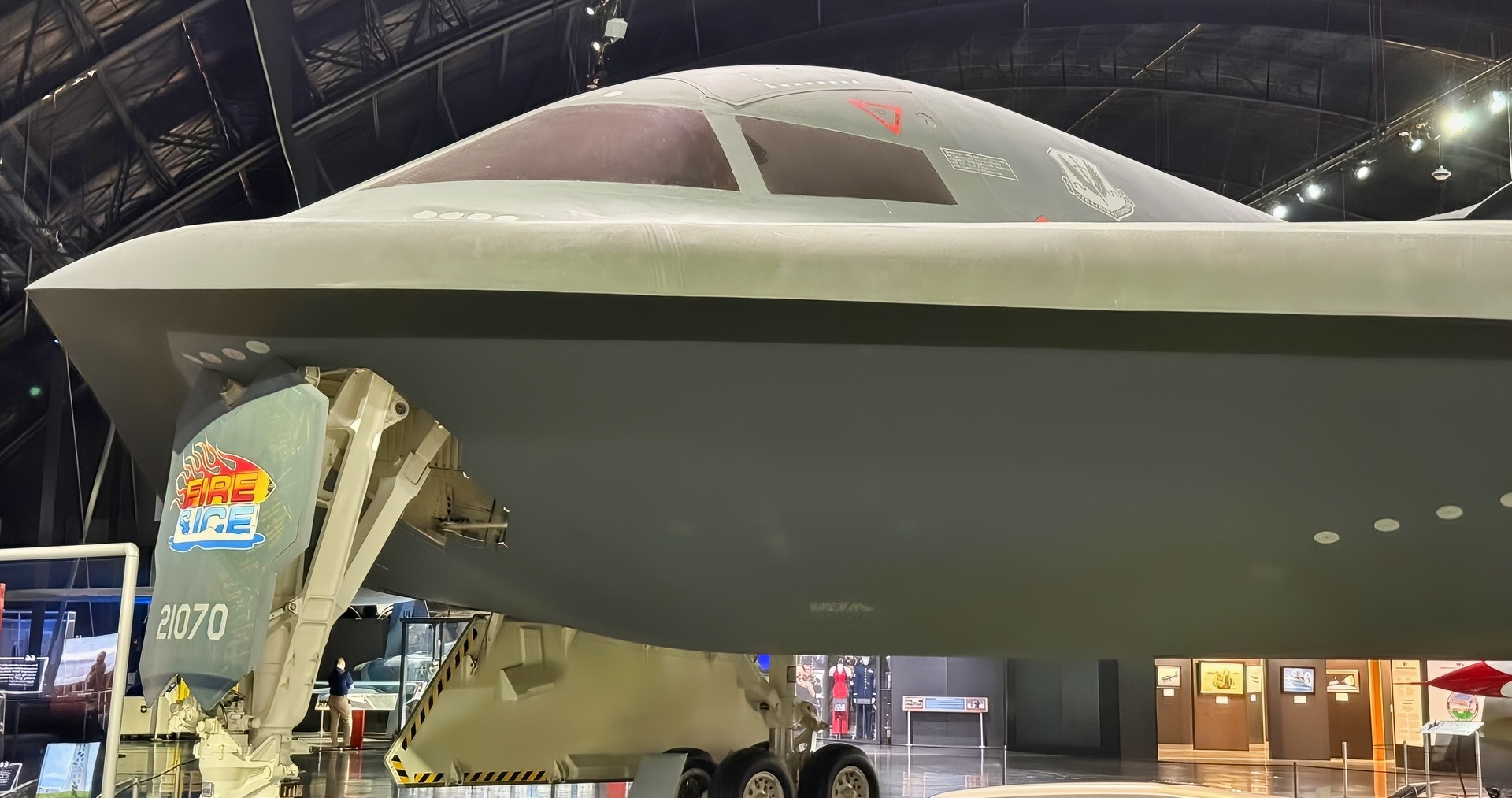
B-2A Spirit Stealth Bomber USAF Museum. Image Credit: Harry J. Kazianis/National Security Journal.

B-1B Lancer Bomber in Museum in Dayton, Ohio. Image Credit: Harry J. Kazianis/National Security Journal.
The American people deserve candor. The endstate has been stated: “Iran shall never obtain a nuclear weapon.” The functional requirements of that endstate are now obvious. Continuing to pursue diplomatic settlements with a proven non-compliant actor or settling for indefinite monitoring that future administrations may abandon simply defers the day of reckoning while the human and economic costs accumulate. The Strait of Hormuz remains a hostage. Oil prices remain a political weapon. Midterms approach.
The Principles of War still apply. We have diluted both the principle of the Objective—directing every operation toward a clear and attainable political end—and the principle of the Offensive—seizing and retaining the initiative. It is time to rekindle and re-communicate the original objective without euphemism: Iran shall never obtain a nuclear weapon. Achieving that requires the decisive application of overwhelming force, not limited to naval and air bombardment alone, to end the current theocratic regime and change the leadership of Iran. The military has the capability. The political will must now match the rhetoric. Half-measures have already been tried and they have failed. The only remaining path consistent with the endstate is the one that removes the will and the intent at their source. That is not adventurism. It is strategic clarity. And it is long overdue.
About the Author: Stephen D. Cook
Stephen D. Cook is a retired U.S. Army Special Forces Lieutenant Colonel with 25 years of service. A combat veteran decorated for both heroism and valor, he is the author of the field manuals When We’re Finished and Choose the Heavier Ruck, and the techno-thriller In the Shadows of the Sky. His work explores the intersection of elite military decision-making, intuition, and disruptive leadership. He is based in St. Augustine, Florida. This first appeared in RealClearDefense.


