
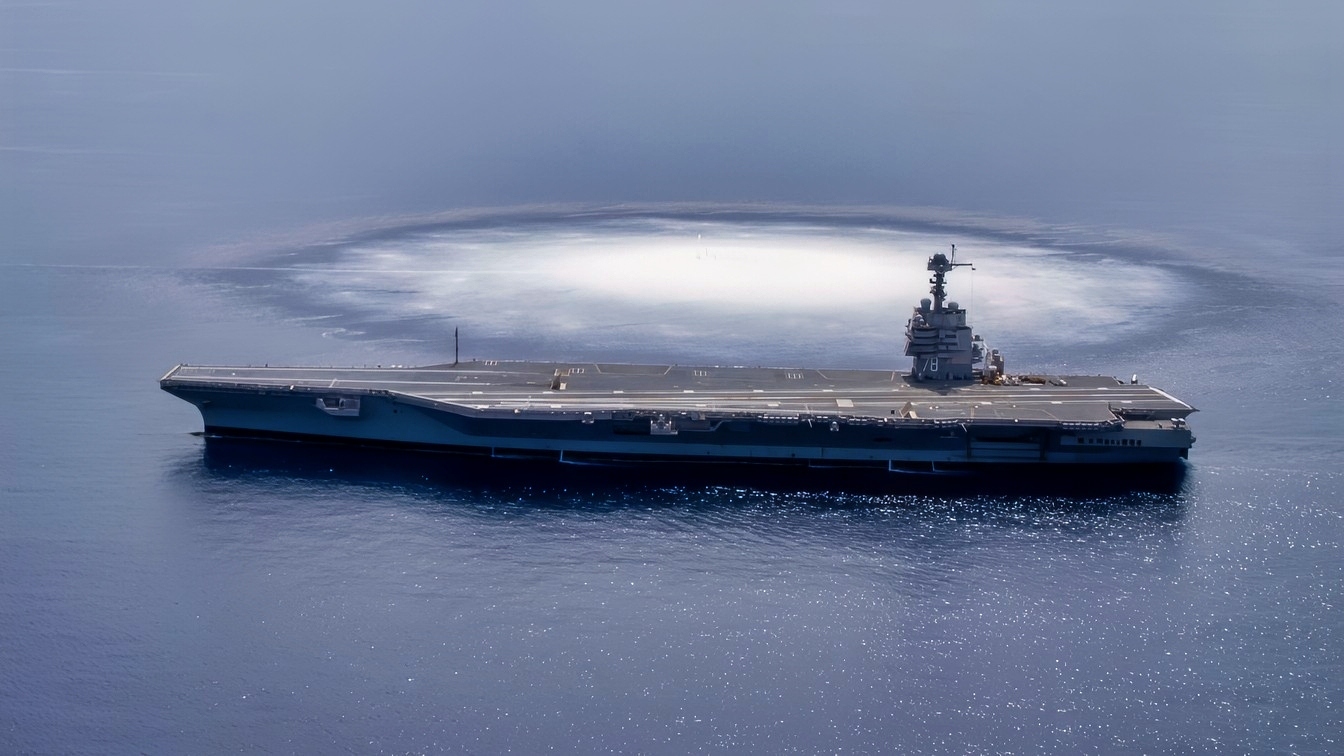
New video footage obtained by CNN offers the world a look at the extent of the fire that broke out aboard the USS Gerald R. Ford aircraft carrier earlier this year. The shocking footage could provide insight into how long it may be before the Navy’s newest and most advanced carrier is fully ready to deploy again.
When the fire was first reported in March, the Ford was operating in the Red Sea. The ship was fully operational at the time, but the fire damage was so extensive that it was eventually forced out of action and sent for repairs. The fire was described as contained, but the new footage suggests more damage was done than originally believed. The video shows charred berthing spaces with destroyed bunks, exposed writing, and collapsed ceiling sections. It also shows fire damage throughout large portions of the ship.

Aviation Boatswain’s Mate (Equipment) 3rd Class Mark Ruiz, assigned to Air Department aboard the world’s largest aircraft carrier, USS Gerald R. Ford (CVN 78), prepares a Carrier Air Wing 8 F/A-18E Super Hornet attached to Strike Fighter Squadron 37 for launch on the flight deck, Aug. 1, 2025. Gerald R. Ford, a first-in-class aircraft carrier and deployed flagship of Carrier Strike Group Twelve, is on a scheduled deployment in the U.S. 6th Fleet area of operations to support the warfighting effectiveness, lethality and readiness of U.S. Naval Forces Europe-Africa, and defend U.S., Allied and partner interests in the region. (U.S. Navy photo by Mass Communication Specialist 2nd Class Mariano Lopez)

The world’s largest aircraft carrier, USS Gerald R. Ford (CVN 78), conducts flight operations in the North Sea, Aug. 23, 2025. Gerald R. Ford, a first-in-class aircraft carrier and deployed flagship of Carrier Strike Group Twelve, is on a scheduled deployment in the U.S. 6th Fleet area of operations to support the warfighting effectiveness, lethality, and readiness of U.S. Naval Forces Europe-Africa, and defend U.S., Allied and partner interests in the region. (U.S. Navy photo by Mass Communication Specialist 2nd Class Maxwell Orlosky)
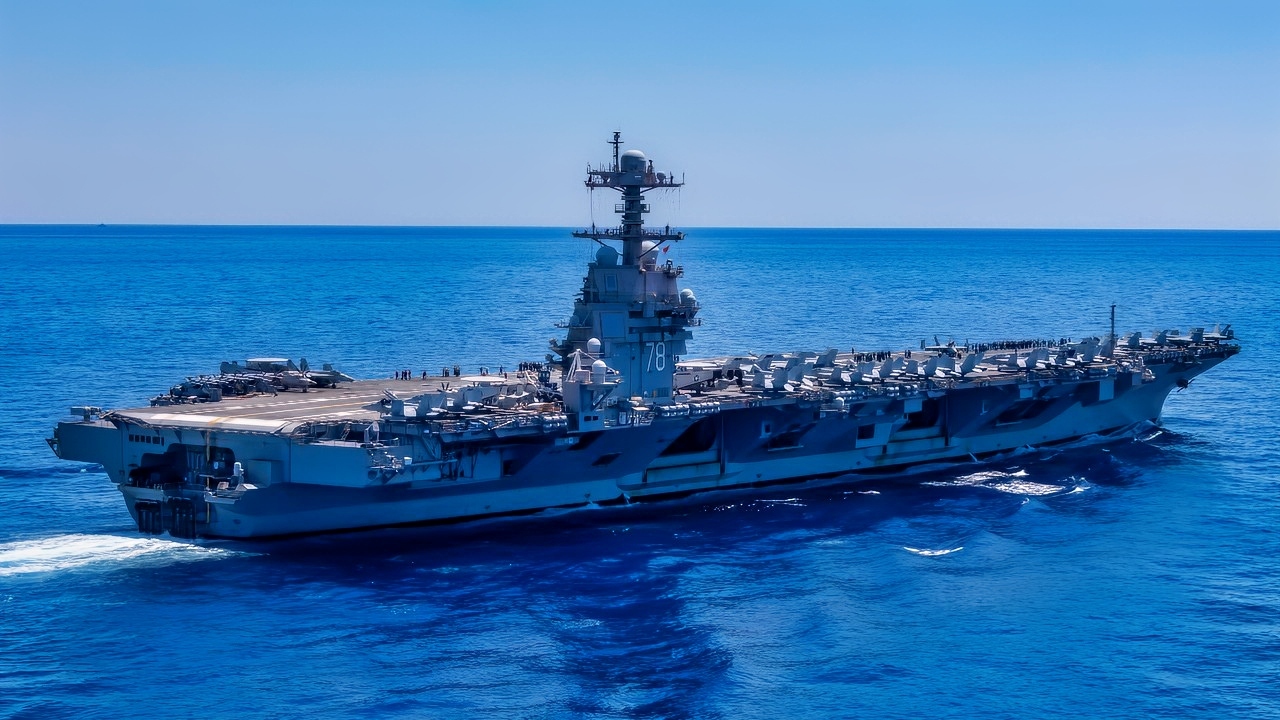
The world’s largest aircraft carrier, USS Gerald R. Ford (CVN 78) transits the Mediterranean Sea, August 1, 2025. Gerald R. Ford, a first-in-class nuclear aircraft carrier and deployed flagship of Carrier Strike Group Twelve, is on a scheduled deployment in the U.S. 6th Fleet area of operations to support the warfighting effectiveness, lethality, and readiness of U.S. Naval Forces Europe-Africa, and defend U.S., Allied, and partner interests in the region. (U.S. Navy photo by Mass Communication Specialist Seaman Brianna Barnett)
While this was exactly the kind of damage described at the time, a senior U.S. official told CNN that the Navy’s public statement deliberately downplayed the impact that the fire had on the vessel.
The Fire Onboard USS Gerald R. Ford
The fire broke out aboard USS Gerald R. Ford during operations against Iran.
The carrier was operating under constant threat of Iranian missiles at the time, while launching combat sorties throughout the region.
Reports described how the fire broke out in a laundry area and quickly spread to other parts of the ship before sailors brought it under control. One sailor who participated in firefighting efforts aboard the Ford told CNN that he believed they were “going to lose the ship,” adding, “it’s either fight or die.”
The sailor also said that the fire was able to spread so quickly because the carrier’s built-in fire suppression system did not function correctly, forcing sailors to fight the fire manually.
“It shouldn’t have gotten that bad. The fire-suppression system built into the ship should have put it out,” the anonymous sailor told the outlet. “Everybody — me included — helped put the fire out.”
The crew spent roughly 30 hours extinguishing the fire and ensuring it did not reignite. Around 600 sailors also lost access to their berthing spaces due to the damage caused. The Navy has not commented on the new claims.
How Bad Was the Damage?
The newly released footage is the clearest public evidence yet of the scale of the damage, showing rows of sailor bunks completely destroyed and metal bed frames twisted and damaged. Electrical wiring is visible hanging from damaged overhead sections in the clip, and ash and debris cover the decks.
The damage was so severe that it disrupted flight operations, and Chief of Naval Operations Adm. Daryl Caudle stated earlier this year that it took two days for the carrier to resume launching aircraft. Soon afterward, the ship was diverted to Greece for repairs before returning to operational service.
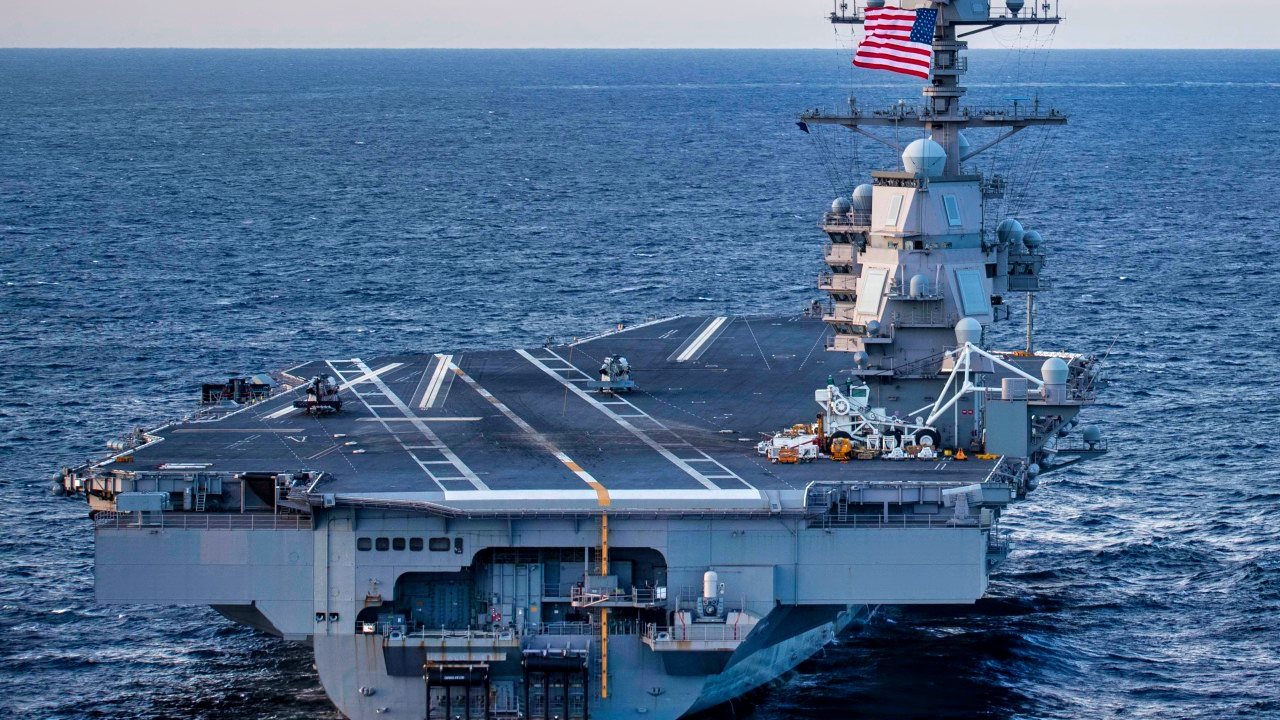
The Ford-class aircraft carrier USS Gerald R. Ford (CVN 78) and the Italian aircraft carrier ITS Cavour (CVH 550) transit the Atlantic Ocean March 20, 2021, marking the first time a Ford-class and Italian carrier have operated together underway. As part of the Italian Navy’s Ready for Operations (RFO) campaign for its flagship, Cavour is conducting sea trials in coordination with the F-35 Lightning II Joint Program Office’s Patuxent River Integrated Test Force to obtain official certification to safely operate the F-35B. Gerald R. Ford is conducting integrated carrier strike group operations during independent steaming event 17 as part of her post-delivery test and trials phase of operations. (U.S. Navy photo by Mass Communication Specialist 3rd Class Riley McDowell)
Speaking to CNN, Caudle said that the crew handled the fire “well” and fought the fire “brilliantly and courageously,” noting that the ship was back in the fight within a matter of days. But returning to combat operations is not the same as being fully repaired. Carriers may remain operational despite extensive damage, returning to fight only out of necessity and not because they are completely safe or fully operational. Warships often receive temporary repairs that allow them to continue operating until more extensive work can be completed later, and this could be the case with Ford.
Maintenance Was Already Overdue
Based on public reporting and statements, the stop in Greece appears to have focused primarily on restoring operational capability rather than fully repairing all damage caused by the fire. The Ford remained deployed for several weeks after the fire and ultimately completed what became the longest deployment by a U.S. aircraft carrier since the Vietnam War.
It returned to Virginia in May after an 11-month deployment – one that overshot its Planned Incremental Availability (PIA) maintenance period. Ford deployed in June 2025 and was expected to complete a much shorter deployment. When the fire broke out, senior officials described the ship as overdue for maintenance, indicating it should have begun sometime in late 2025 or early 2026, before the extension of the Iran deployment.
Unlike older Nimitz-class carriers, the Ford incorporates several advanced technologies, including the Electromagnetic Aircraft Launch System and Advanced Arresting Gear, as well as a completely redesigned weapons handling system.
These systems require specialized maintenance. And because the Ford is the first ship of its type, its first maintenance period is likely to include a number of unexpected problems. The fire has also probably considerably expanded the scope of both planned and unplanned work
How Long Will It Take?
Without knowing the full extent of the damage – something even Navy officials may not know for some time – it’s hard to say how long it will take until the USS Gerald R. Ford returns to service.
A U.S. official told CNN that it could be at least a year before the Ford is ready to sail again, but that assessment means very little. At least one year could mean a year and several months, but depending on the scale of the necessary repairs, it could be substantially longer.
A routine post-deployment maintenance period for an aircraft carrier would usually last around six months, depending on the scope of the work required – and if fire-related repairs prove more extensive than currently understood, the timeline could theoretically stretch beyond that. For heavy and non-routine overhauls, like complex first-in-class fixes, it could be much higher – potentially reaching 12 to 18 months.
It’s important to note, though, that this is entirely speculative; even top Navy officials may still be unaware of the scale of the damage.
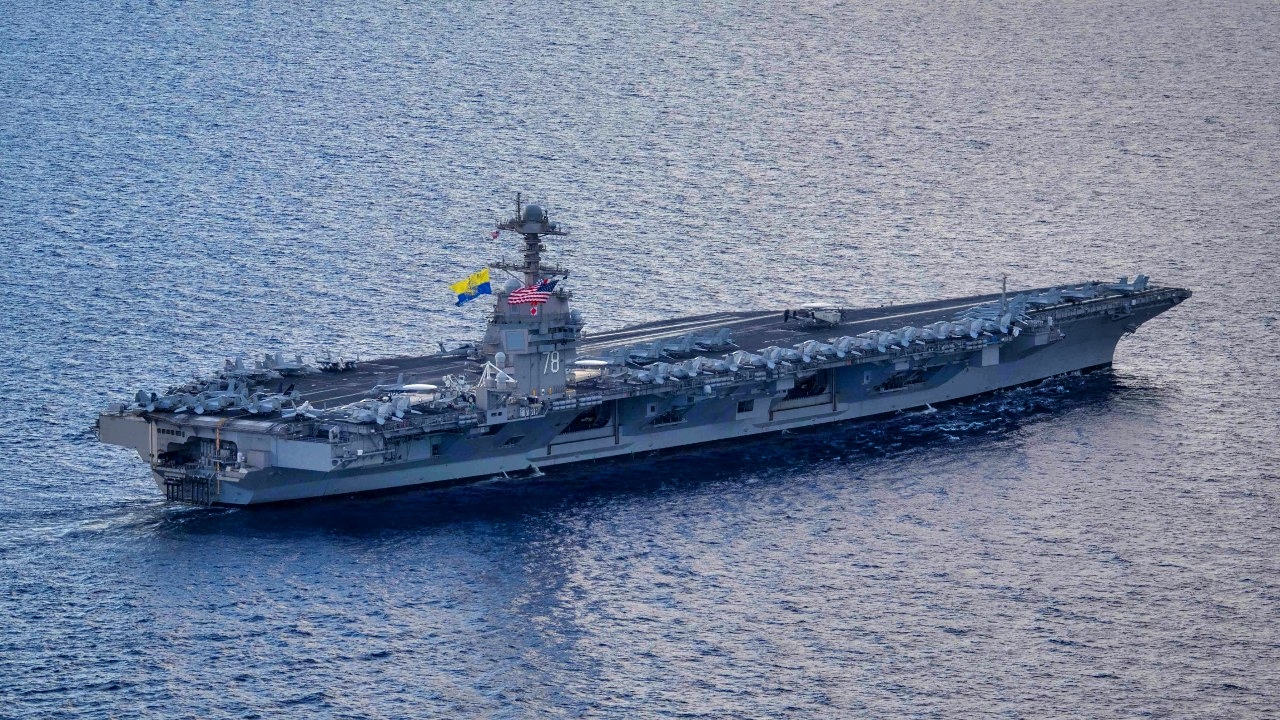
The world’s largest aircraft carrier USS Gerald R. Ford (CVN 78) sails in the Mediterranean Sea, Dec. 31, 2023. The U.S. maintains forward deployed, ready, and postured forces to deter aggression and support security and stability around the world. (U.S. Navy photo by Mass Communication Specialist 2nd Class Jacob Mattingly)
At this stage, a return to operational service sometime in 2027 appears realistic, while a very conservative estimate could push full readiness into 2028.
About the Author: Jack Buckby
Jack Buckby is a British researcher and analyst specializing in defense and national security, based in New York. His work focuses on military capability, procurement, and strategic competition, producing and editing analysis for policy and defense audiences. He brings extensive editorial experience, with a career output spanning over 1,000 articles at 19FortyFive and National Security Journal, and has previously authored books and papers on extremism and deradicalization.


