

Russia Is Now Feeling the Heat of the Ukraine War: Ukraine continues its assault on Russian warehouses and logistics hubs, with strikes destroying a major Wildberries warehouse southeast of Moscow overnight into August 26.
The strikes involved hundreds of drones that crossed into Russian territory overnight, while another strike hit one of the country’s largest oil refineries.
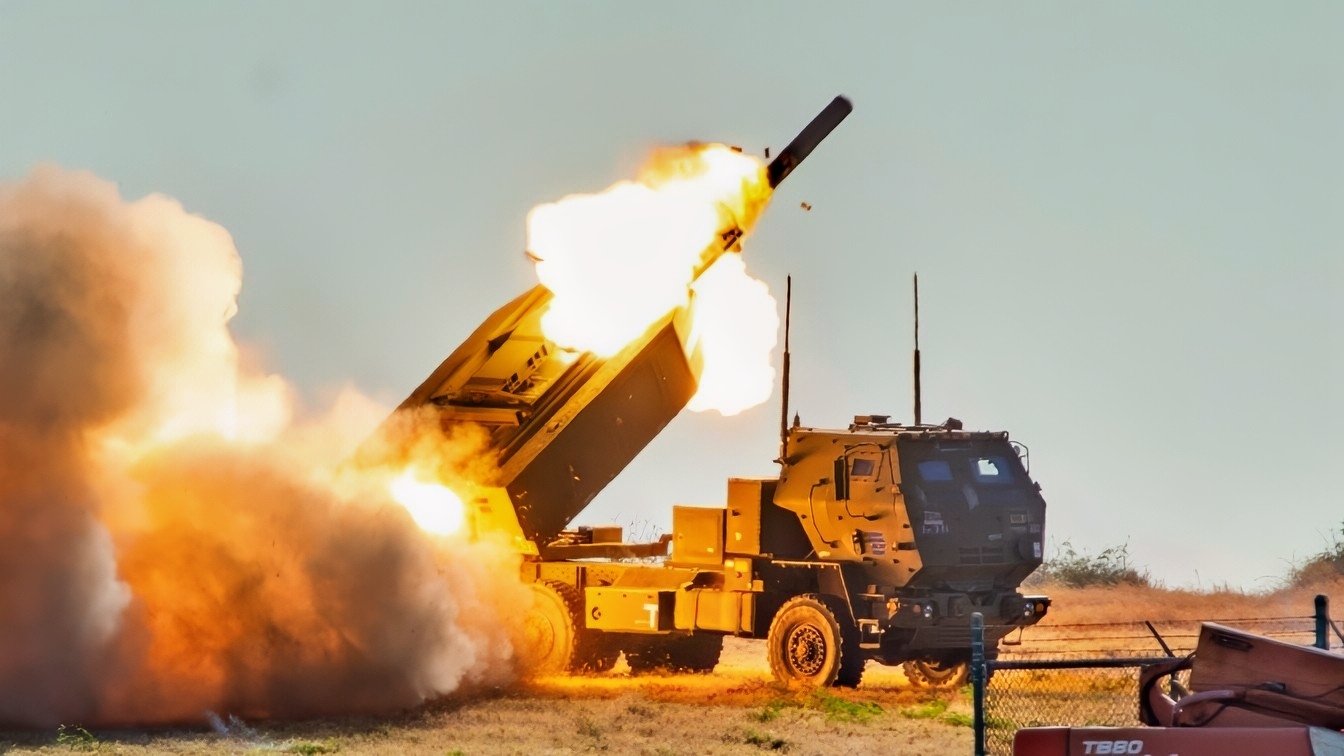
KEKAHA, Hawaii — U.S. Army 3rd Multi-Domain Task Force fires the High Mobility Artillery Rocket System (HIMARS), which can fire traditional rocket artillery rounds or long-range missiles with various payloads, on Pacific Missile Range Facility, Barking Sands, during Exercise Rim of the Pacific (RIMPAC) 2024, July 11. Twenty-nine nations, 40 surface ships, three submarines, 14 national land forces, more than 150 aircraft and 25,000 personnel are participating in RIMPAC in and around the Hawaiian Islands, June 27 to Aug. 1. The world’ s largest international maritime exercise, RIMPAC provides a unique training opportunity while fostering and sustaining cooperative relationships among participants critical to ensuring the safety of sea lanes and security on the world’ s oceans. RIMPAC 2024 is the 29th exercise in the series that began in 1971. (Japanese Ground Self Defense Force Courtesy Photo)
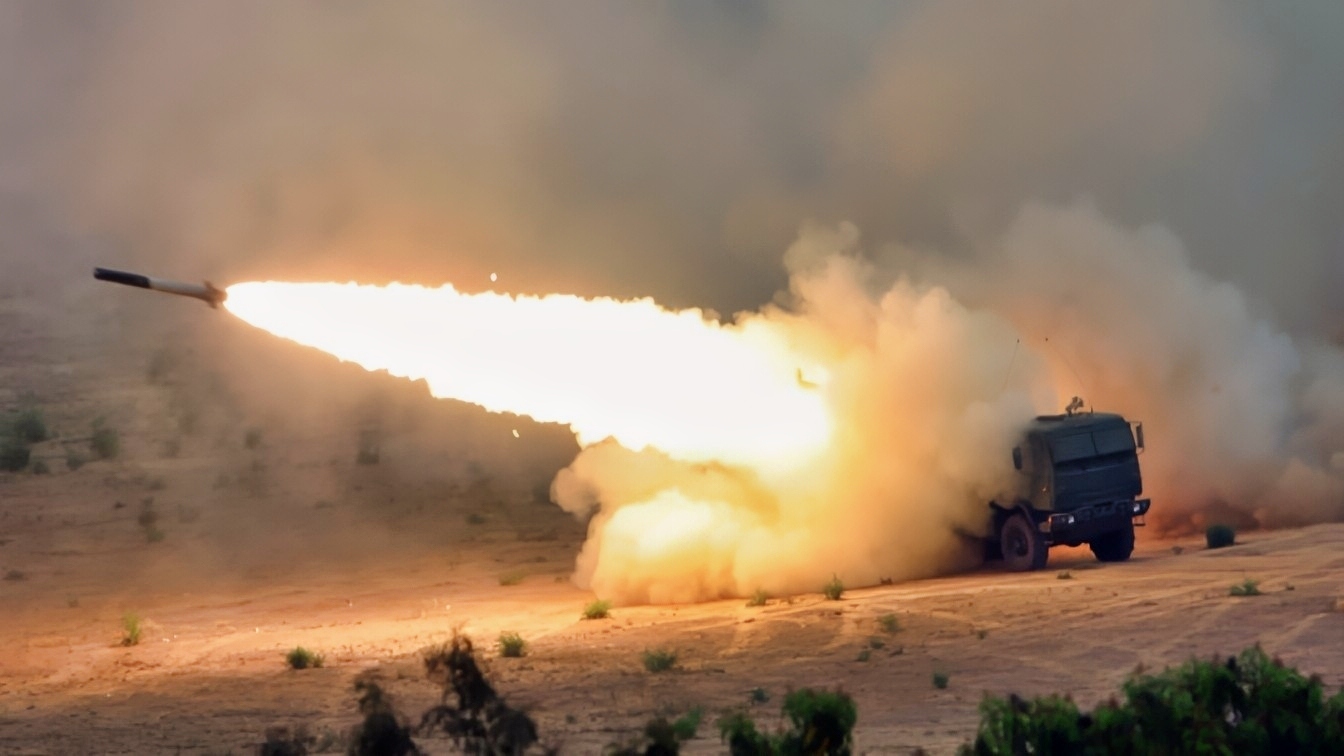
MFOR Rocket Creative Commons Photo
The Wildberries logistics center in Kotovsk, in the Tambov region, burned down and marked the second time that the same site had been struck in a little more than a month.
Local authorities said that two people were injured in the assault.
Wildberries Warehouse Completely Destroyed
Yevgeny Pervyshov, the regional governor of Tambov, said that the Kotovsk logistics center was completely destroyed by a fire caused by the overnight drone attack. According to Pervyshov, Russian forces managed to intercept 16 drones while they approached the facility, but three slipped through the defenses and caused a fire that engulfed more than one million square feet of space.
One 19-year-old man suffered a concussion during the assault, and a 49-year-old woman also injured her finger, according to Russian authorities.
The building had already been evacuated following an air raid before the drones hit.
The consequences were still being felt in the surrounding area through Wednesday afternoon, with Kotovsk Mayor Alexey Plakhotnikov advising local residents to keep their windows closed and limit their time outdoors amid fears of smoke inhalation.
The warehouse was a major employer in the region. The facility began operating in May 2025 and employed thousands of people, according to regional authorities.
Pervyshov said Wednesday that officials would discuss finding alternative employment for workers affected by its destruction.
The Same Warehouse Was Hit Last Month
It’s not the first time this very warehouse has been targeted and hit in Ukrainian strikes.
The Wednesday assault was the second such strike on the Kotovsk facility, with the last being on July 18 – the first night of Ukraine’s long-range strikes against Wildberries facilities.
Seven employees were killed in that earlier attack, and roughly two dozen others were injured, according to Russian reporting. Despite the damage, operations resumed several days later.
Since the Wildberries attacks began in late July, the company has faced constant disruptions, with dozens of its facilities having been hit by drones and missiles.
Most recently, those strikes extended to Ozon, Russia’s second-largest e-commerce company. And the assaults continue.
More than 1.9 million square meters of warehouse space have been severely damaged by fire, causing major disruption to the Russian economy and affecting military logistics, with Kyiv claiming the companies are being used to move dual-use goods for military operations by Russian forces.
Ukraine Goes After Russia’s E-Commerce Network
Ukraine’s Ministry of Defense made it clear that its forces will continue to target Russia’s online retailers in a statement on Saturday, August 22, after strikes on an Ozon logistics center in Chapayevsk.
In a statement published on Telegram, the ministry said:
“The defence forces scored an opening goal by destroying logistics hubs belonging to the Russian company Ozon. Advertisement: Systematic strikes on centres storing dual-use goods complicate the enemy’s logistics and have a negative impact on Russia’s economy as a whole.”
The ministry also said that it was now “Ozon’s turn” following dozens of strikes against Wildberries facilities.
Kyiv claims that these commercial warehouses do far more than just move ordinary consumer goods. Wildberries sells products including night vision equipment, helmets, and even ammunition pouches, alongside clothing and electronics.
Ukraine argues that the items purchased through the platform are routinely being used to support Russian troops, or that they could be used to support them.
That makes striking the facilities doubly useful: the strikes not only inflict major economic damage on Russia as it already endures a fuel crisis, but also disrupt military logistics.
Wildberries and the Kremlin deny that the company supplies the Russian military.
The Economic Damage Is Spreading
Russia is feeling the pain caused by the strikes.
Since the outset of the war, online retailers have played a larger part in Russian life, with reports earlier this month suggesting that Wildberries and its competitors make up around 8.5% of the national economy.
The destruction of distribution capacity across Russia is forcing goods onto longer, more expensive routes, raising transportation costs, insurance rates, and more. Meanwhile, deliveries across Russia are slowing.
The problem is becoming so prominent that the Kremlin is diverting resources to protect commercial infrastructure and has even committed to providing financial support to companies affected by the strikes.
President Vladimir Putin is even allowing the state to temporarily take control of some critical facilities whose owners fail to defend or rebuild them adequately.
Ukraine’s ongoing long-range strike campaign is pushing the Russian economy to the brink from virtually every angle.
About the Author: Jack Buckby
Jack Buckby is a British researcher and analyst specializing in defense and national security, based in New York. His work focuses on military capability, procurement, and strategic competition, producing and editing analysis for policy and defense audiences. He brings extensive editorial experience, with a career output spanning over 1,000 articles at 19FortyFive and National Security Journal, and has previously authored books and papers on extremism and deradicalization.


