

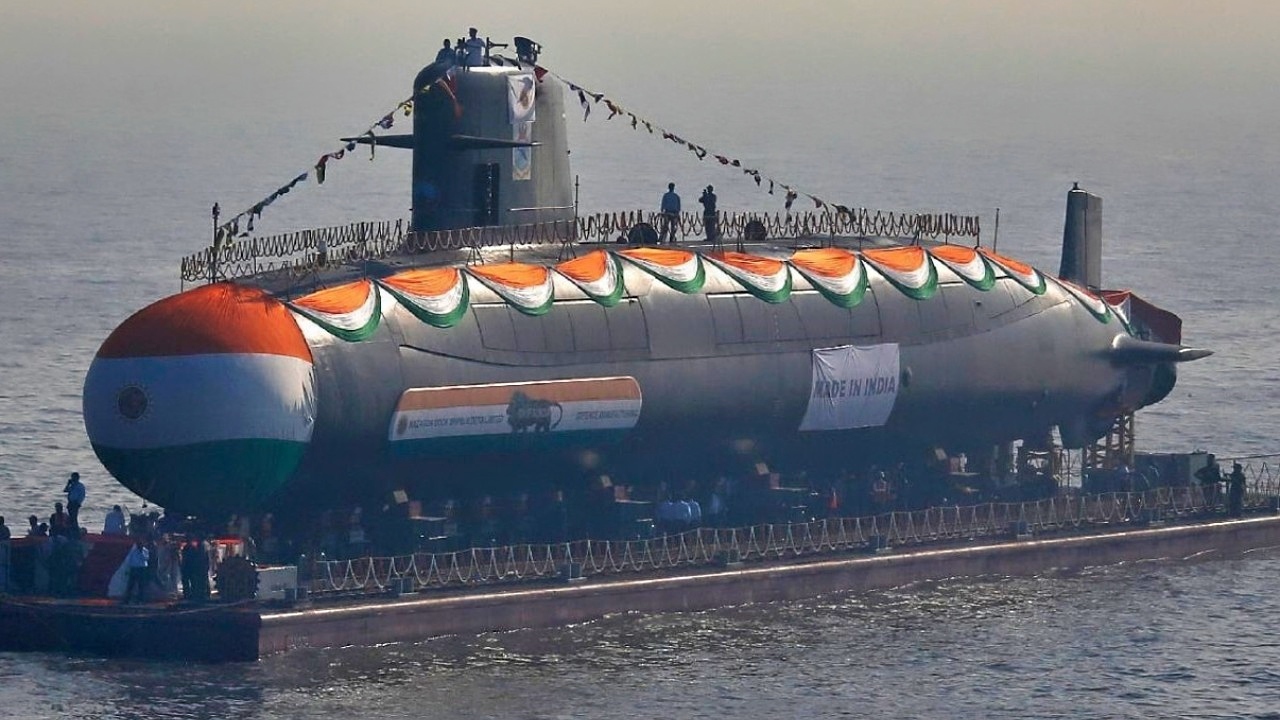
Key Points and Summary – In a shocking and embarrassing blunder, India’s first nuclear-powered ballistic missile submarine, the $3 billion INS Arihant, was knocked out of commission for nearly a year after a crew member allegedly left a rear hatch open while it was docked. This was later disputed.
Seawater flooded the propulsion compartment, causing extensive damage that required a 10-month repair period.
The 2017 incident, which the Indian government was slow to acknowledge, raised serious questions about crew training and professionalism aboard the cornerstone of India’s nuclear deterrent and highlighted the catastrophic potential of simple human error in a high-stakes military environment.
How A Blunder Nearly Cost India A $3 Billion Submarine
“Batten Down the Hatches.” The earliest mention of this term was used to secure a ship for bad weather in 1769 or to keep a vessel from leaking or even sinking. Bob Dylan wrote about the sinking of the Titanic in his song Tempest, “They battened down the hatches…But the hatches wouldn’t hold.”
Sailors have committed blunders since the first men took to the sea. We’re human and therefore, fallible. However, some blunders are more egregious than others. An example of this was the $3 billion submarine of the Indian Navy, the INS Arihant.
The Arihant, India’s first nuclear-powered ballistic missile submarine, experienced a significant accident in 2017 due to a crew member leaving a hatch open, allowing seawater to flood the propulsion compartment. This incident resulted in nearly a year of repairs.
But since the first submarine disaster in the United States, more have followed. During the American Civil War, the CSS Hunley became the first “successful” submarine in that it could effectively submerge yet had problems surfacing—and sadly, that cost the lives of its entire crew, after blowing up a Union ship, the USS Housatonic, in Charleston Harbor.
The Incident In India Was an Embarrassment
India was proud (and rightfully so) in building its first nuclear-powered ballistic missile submarine. The Arihant was the first of five planned nuclear missile boats. The Arihant was designed and constructed as part of the Indian Navy’s Advanced Technology Vessel project.
Construction on Arihant began in 2009, and the ship was commissioned into the Indian Navy seven years later in October 2016.
The modified Russian Akula-1 class nuclear attack submarine was lengthened to accommodate twelve K-15 short-range nuclear missiles or four K-4 intermediate-range nuclear missiles. K-15 missiles, with their 434-mile range, primarily target Pakistan, while K-4 missiles, with their 2,174-mile range, can reach all of Pakistan and as far as the capital of India’s other neighborhood rival, Beijing.
A second missile submarine, INS Arighant, was launched in December, and at least three submarines are planned.
A crew member left the rear hatch open while the submarine was docked, leading to saltwater flooding the propulsion compartment.
According to an Indian Navy source, a hatch was left open on the rear left side of the ship, allowing seawater to rush into the propulsion area while the Arihant was in harbor.
Arihant was out of action for ten months as water was pumped out and pipes were cut out and replaced. There was substantial damage to the pipes that ran through the submarine.
Given how corrosive seawater can be to the various pipes, including those that carry pressurized water coolant to and from the ship’s 83-megawatt nuclear reactor, all had to be cut out and replaced.
Indian authorities likely felt that pipes exposed to corrosive seawater couldn’t be trusted again, particularly pipes that carry pressurized water coolant to and from the reactor.
Failing pipes could not only endanger the ship’s crew but also the entire submarine and her nuclear weapons.
Lengthy Repairs Were Felt During Standoff With China
The 6,000-ton missile boat was out of service for approximately ten months while repairs were carried out. India’s standoff with China during the Doklam border crisis in 2017 was where the INS Arihant’s absence was keenly felt.
The embarrassment factor was so deep that the Indian government didn’t even acknowledge the fact that the submarine had undergone repairs until 2018.
Impact And Controversy Ensue
A controversy began as media reports and naval analysts reported that the submarine did not have hatches. The Arihant is modeled after a double-hulled, sealed nuclear reactor vessel from Russia.
The Economic Times noted, “There are no external hatches in the compartment that houses the steam turbine, gearbox, generator, and shaft that drives the propeller.
“Under normal circumstances, it is not possible for seawater to enter the submarine, and certainly not via a ‘non-existent hatch.’ It is also not possible for a modern submarine that has various sensors not to have a warning system about an open hatch in any other area of the submarine that is critical for its survival.”
Some naval analysts dismissed the hatch assertions as dubious. Moreover, the Government of India (GoI) did not explain the incident or the various conspiracy theories circulating, citing national security concerns.
The incident was a major embarrassment for the Indian Navy and raised concerns about the submarine’s readiness and operational capabilities. Regardless of whether there was a hatch or not, why were the nuclear reactor and the propulsion system left unattended? This blunder allowed water to reach levels it shouldn’t have ever reached, especially in the port.
The Arihant is a crucial part of India’s nuclear deterrent, and the accident highlighted training and professional issues with the crew and its maintenance procedures.
Despite the setback, the submarine has since been repaired and has successfully launched Submarine-Launched Ballistic Missiles, demonstrating its continued importance to India’s nuclear capabilities.
About the Author:
Steve Balestrieri is a National Security Columnist. He served as a US Army Special Forces NCO and Warrant Officer. In addition to writing on defense, he covers the NFL for PatsFans.com and is a member of the Pro Football Writers of America (PFWA). His work was regularly featured in many military publications.
Russia’s Bomber Forces
Tu-22M3: The Bomber Ukraine Hit With Drones


