

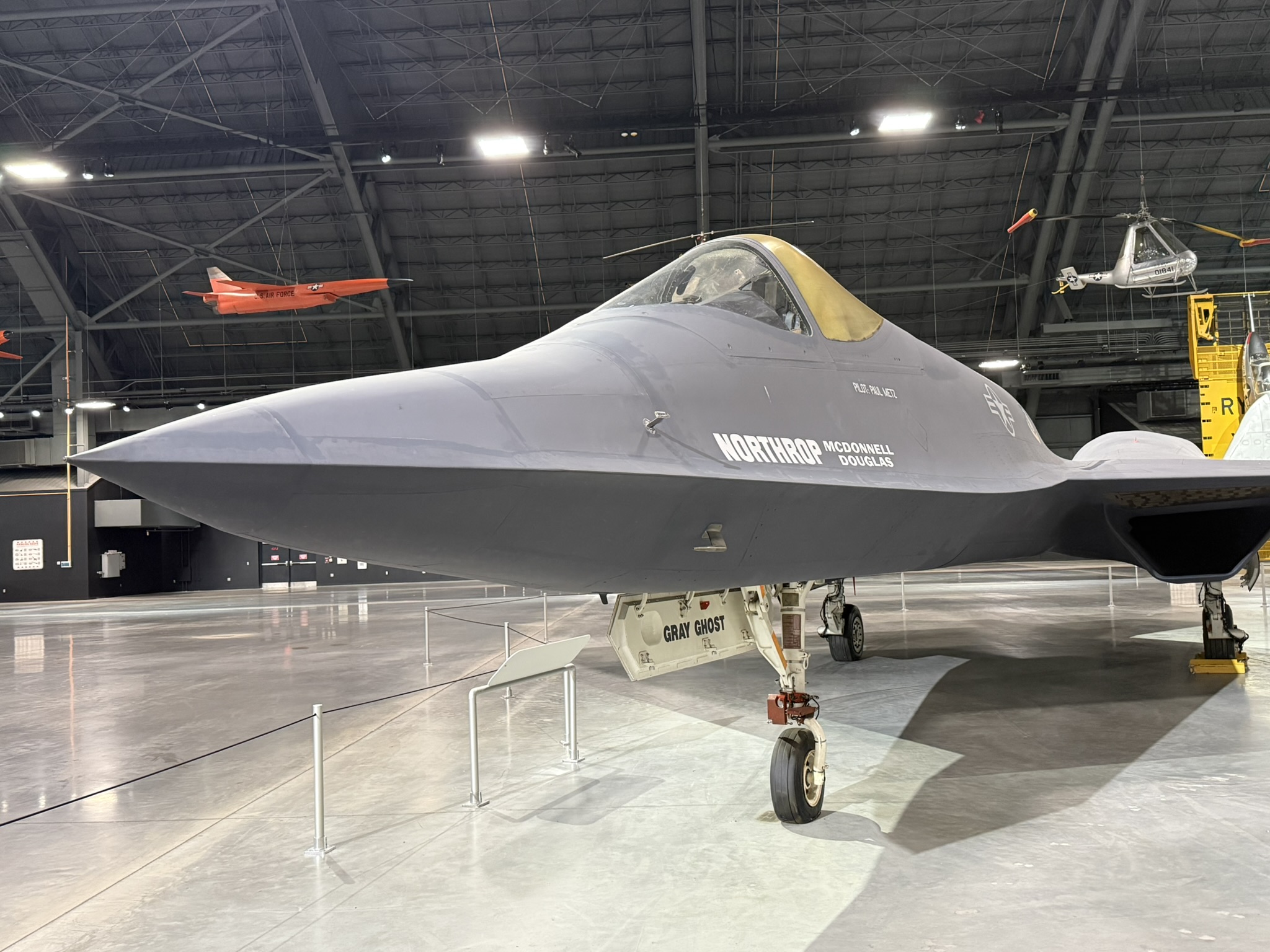
Last summer, I made a point of standing in front of both surviving YF-23 Black Widow II prototypes. I saw the first restored aircraft indoors at the National Museum of the U.S. Air Force in Dayton, Ohio, and then the second, the Gray Ghost, sitting outdoors in Southern California near Los Angeles. The photos and video I shot of both run throughout this piece. Seeing them in person, these long, sleek, otherworldly machines that look like nothing else ever built, it is easy to understand why the YF-23 inspires such devotion, and easy to absorb the legend that comes with it: that the Air Force was too timid and too conventional to pick the better plane. Standing inches from those airframes, though, I came away convinced the legend is mostly wrong.
The YF-23 did not lose the Advanced Tactical Fighter (ATF) competition because the Air Force lacked vision. It lost for concrete, defensible reasons that its admirers almost never mention. There was a time when I thought the YF-23 should have won, but, in retrospect, I was wrong.
YF-23: The Legend, And Why It Persists
The romantic version of the story is by now a fixed text in aviation writing. The YF-23 was faster, stealthier, and longer-ranged than the Lockheed YF-22, the tale goes, and a hidebound Air Force wedded to dogfighting picked the safe, conventional jet over the visionary one.
The frustrating thing about that account is that the first half is largely true. By many expert assessments, the YF-23 was the better performer on the headline metrics, with better supersonic cruise, better stealth, and only marginally less maneuverability than the YF-22 at very low airspeeds.
The numbers back that up. The Gray Ghost achieved the program’s most impressive supercruise result, a sustained Mach 1.6 without afterburner on November 29, 1990, edging the YF-22’s Mach 1.58, and in full afterburner, the YF-23 reached at least Mach 1.8 with a classified top speed widely believed to exceed Mach 2. It was genuinely a superb aircraft.
But “superb on paper” and “the right choice for a thirty-year program” are not the same thing, and the gap between them is where the real story lives.
The Weapons Bay Nobody Talks About
Start with the single most underappreciated reason, because it is the one that most cleanly punctures the myth that the decision was about timidity. It was about whether the airplane could reliably shoot.
The YF-22 carried four AIM-120 AMRAAMs in shallow ventral bays fitted with independent ejectors, plus separate side bays for AIM-9 Sidewinders whose seeker heads would deploy into the slipstream before launch.
The YF-23, by contrast, used a deeper, single-stacked weapons bay that nested its missiles together, an arrangement that raised the risk of one weapon’s launch interfering with another. For a fighter whose entire reason to exist is killing other aircraft from inside a closed, stealthy fuselage, how cleanly and reliably it can get its missiles out is not a footnote. It is close to the whole point.
Lockheed proved its bay worked. During the flight-test program, the YF-22 fired both an AIM-9 Sidewinder and an AIM-120 AMRAAM from its internal bays, demonstrating the full weapon-launch sequence in the air, while the YF-23 carried out no such firings during the competition. One team showed the evaluators its fighter could shoot.
The other asked them to take it on faith. Put yourself in the seat of an officer deciding where to commit decades of national air dominance, and that contrast is not timidity. It is diligence.
The Demonstration Northrop Chose Not To Give
The maneuverability story is similar and more about choices than capability. The YF-22’s thrust-vectoring nozzles, which the YF-23 did not have, gave it dramatically better controlled maneuvering at high angles of attack, and during testing, it demonstrated pitch rates more than double those of an F-16 at low speed, along with controlled flight at a 60-degree angle of attack. The Air Force of that era still placed a real premium on close-in maneuverability, and Lockheed showed up and put on a show.
Northrop made a fateful decision not to match it. The YF-23 demonstrated a maximum angle of attack of around 25 degrees and did not attempt the extreme high-alpha maneuvers the YF-22 showcased. Northrop’s engineers believed their aircraft could perform comparably and saw little point in chasing agility numbers for a jet built around stealth and speed.
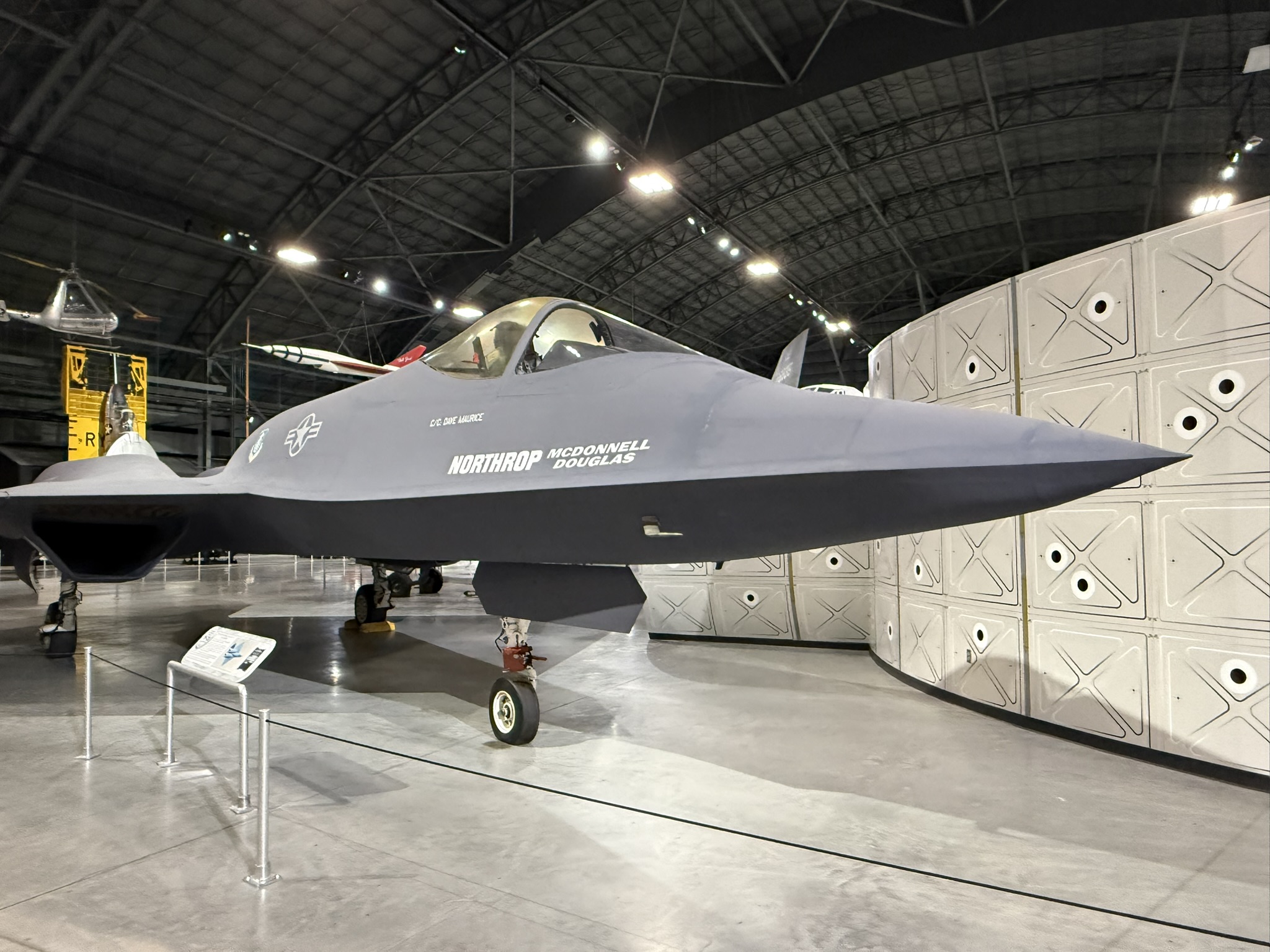
YF-23. National Security Journal Photo.
That was a calculated gamble, and it did not pay off. When one competitor visibly demonstrates a capability, and the other simply asserts it, the evaluators reward the one they watched. The YF-23 may well have been able to do more than it showed. The problem is that it did not show it, and an evaluation can only score what it sees.
The Engine Story Is The Opposite Of The Legend
The engine question is where the romantic account gets the facts almost exactly backward. Both prototypes flew with two competing powerplants: the Pratt & Whitney YF119 and the more exotic General Electric YF120, a variable-cycle engine that could adjust how it moved air to operate efficiently at both subsonic and supersonic speeds. The YF120 produced the better raw numbers, and the legend often cites it as further proof that the YF-23 represented the bolder future.
But the Air Force did not buy raw numbers. It bought risk, and it chose the other engine. When the competition ended, it was the YF-22 and the Pratt & Whitney YF119 that were the winners, the more conventional engine chosen over General Electric’s more ambitious variable-cycle design precisely because it was the more mature, lower-risk, less expensive path to a production powerplant.
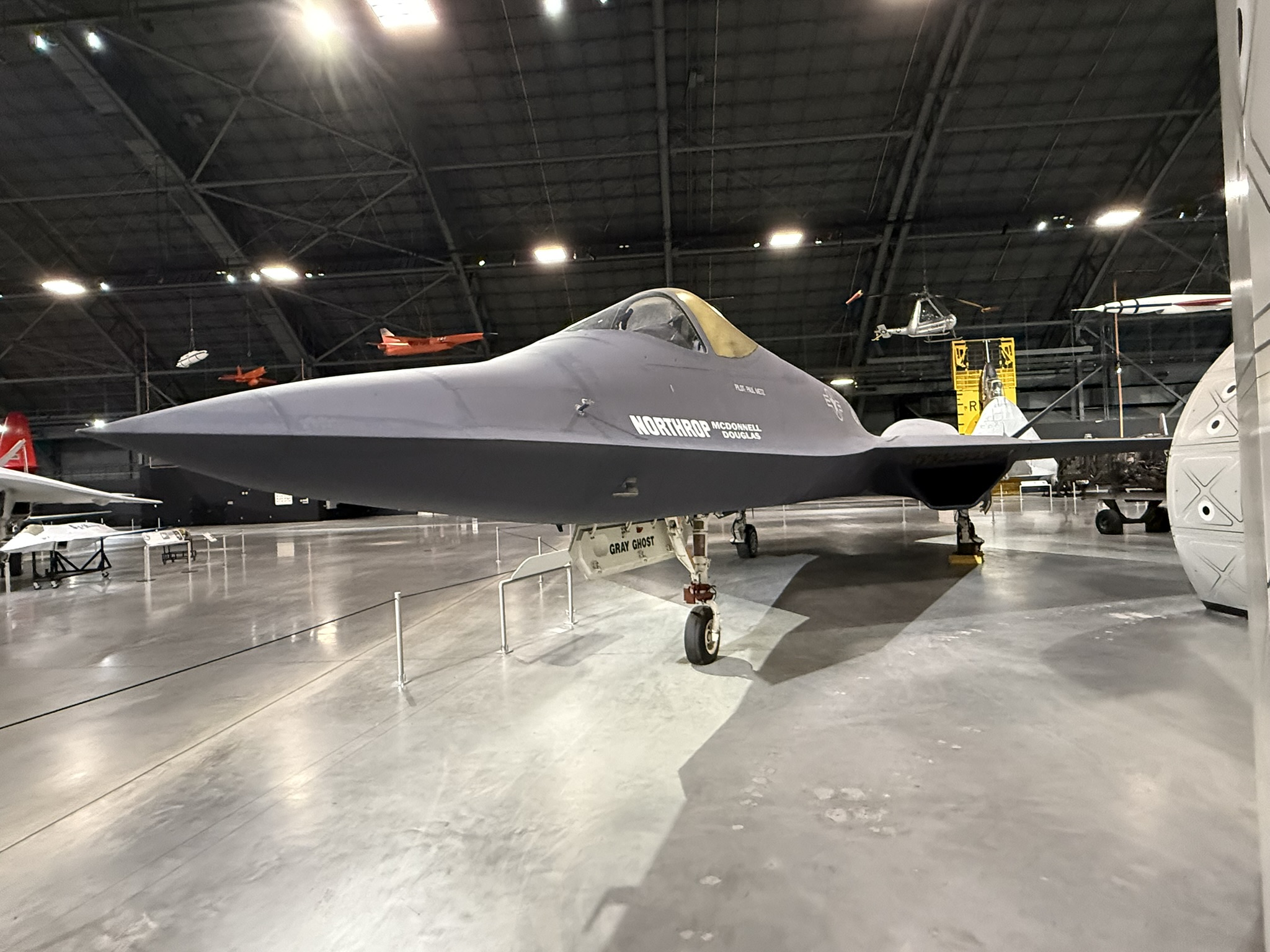
YF-23. National Security Journal Photo.
The engine decision is a perfect miniature of the whole competition: the more exotic, higher-performing, higher-risk option lost to the proven and sustainable one. That is not a failure of imagination. It is exactly how a government buying a weapon that must keep flying for forty years is supposed to think.
Risk, Track Record, And A Thirty-Year Marriage
Underlying all of it was a judgment that had little to do with any single flight and everything to do with the next three decades.
The ATF was never just an airplane. It was a multi-decade industrial commitment to design, build, sustain, and repeatedly upgrade a frontline fighter, and the Air Force had to believe the winning team could carry that weight.

YF-23 Black Widow Fighter in California. Image Credit: National Security Journal/Harry J. Kazianis.
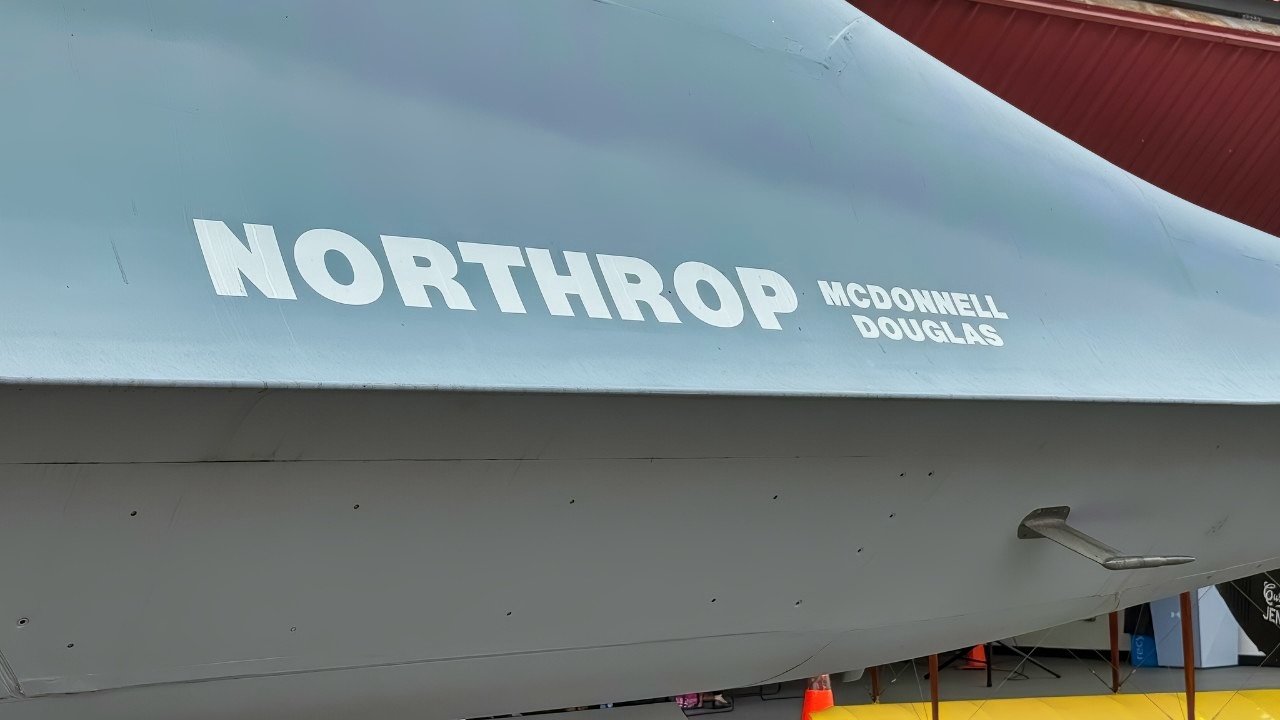
YF-23 Side Profile. Image Credit: National Security Journal.
On that score, the Lockheed team was rated higher on technical confidence, having flown its prototypes more hours and more sorties during the demonstration phase, and its program management, with Boeing and General Dynamics as partners, was seen as the lower-risk bet to run the program for the long haul.
The Air Force, in short, believed Lockheed simply fielded the stronger team and the more production-ready, supportable design. None of that is the stuff of a stirring legend, but procurement at this scale is not decided by which jet looks most like the future on a museum floor. It is decided by which program is most likely to deliver, on time, on budget, and for decades. By that standard, the YF-22 was the rational pick, and calling it a blunder requires ignoring almost everything the evaluators were actually responsible for weighing.
Giving The YF-23 Black Widow Its Due
None of this means the YF-23’s admirers are fools, and the honest version of the contrarian case has to concede what they get right. The aircraft really was a magnificent piece of engineering, and its stealth-first, speed-first philosophy did turn out to anticipate where air combat was heading, an emphasis on being unseen and striking first rather than turning and burning in a close fight.
You can draw a real line from the Black Widow’s priorities to the penetrating stealth designs that followed it. The people who love this airplane are responding to something genuine.
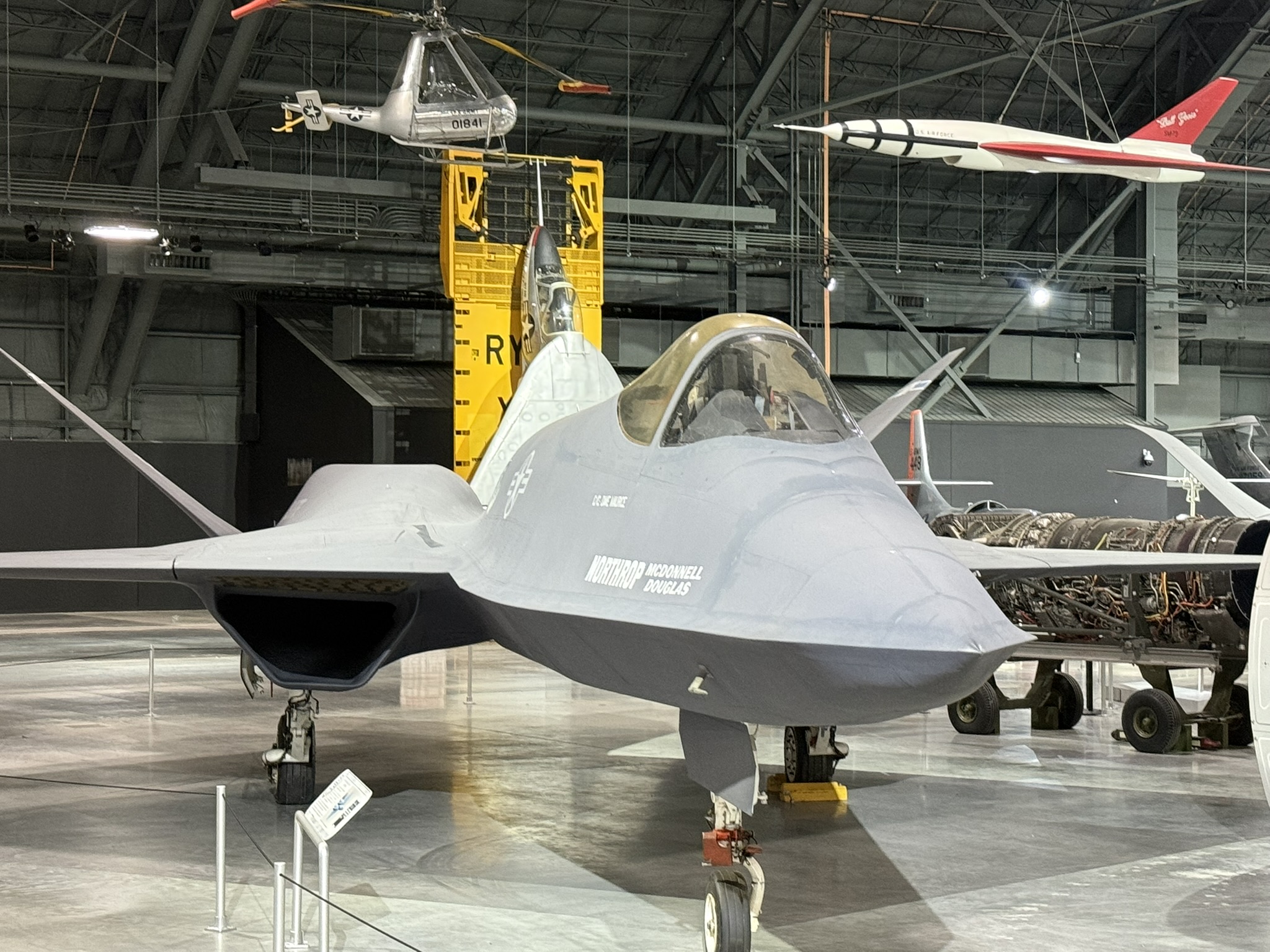
YF-23 back in 2025 at the National Museum of the U.S. Air Force. National Security Journal Photo.
But being prophetic about the long arc of air warfare is a different thing from being the correct choice in 1991, with the information available, the demonstrations actually flown, and a thirty-year program on the line.
The YF-23 lost because Lockheed proved its weapons bay worked and Northrop did not; because Lockheed demonstrated agility that Northrop chose to withhold; because the Air Force bought the lower-risk engine over the exotic one; and because Lockheed was judged the safer steward of a generational program.
Those are not the marks of an institution that feared the future. They are the marks of one doing their job. Standing right near those two beautiful airframes last summer, I felt the pull of the legend as strongly as anyone. Then I remembered that the Air Force was not choosing the better-looking jet or even the faster one. It was choosing the one most likely to win wars for forty years, and, on the evidence before it, that was not the Black Widow. And that makes me really, really sad.
MORE – China Has Supersonic Cruise Missiles to Target Aircraft Carriers
MORE – The U.S. Air Force Might Need 200 B-21 Raider Bombers
About the Author: Harry J. Kazianis
Harry J. Kazianis (@Grecianformula) was the former Senior Director of National Security Affairs at the Center for the National Interest (CFTNI), a foreign policy think tank founded by Richard Nixon based in Washington, DC. Harry has over a decade of experience in think tanks and national security publishing. His ideas have been published in the NY Times, The Washington Post, The Wall Street Journal, CNN, and many other outlets worldwide. He has held positions at CSIS, the Heritage Foundation, the University of Nottingham, and several other institutions related to national security research and studies. He is the former Executive Editor of the National Interest and the Diplomat. He holds a Master’s degree focusing on international affairs from Harvard University.


