


Key Points and Summary – A hypothetical matchup between China’s 5th-gen J-20 and the U.S. Air Force’s future 6th-gen F-47 NGAD posits that the F-47 will reclaim a decisive technological edge.
-While the J-20 currently holds speed and range advantages over existing U.S. fighters, the F-47 is being designed specifically to neutralize them.
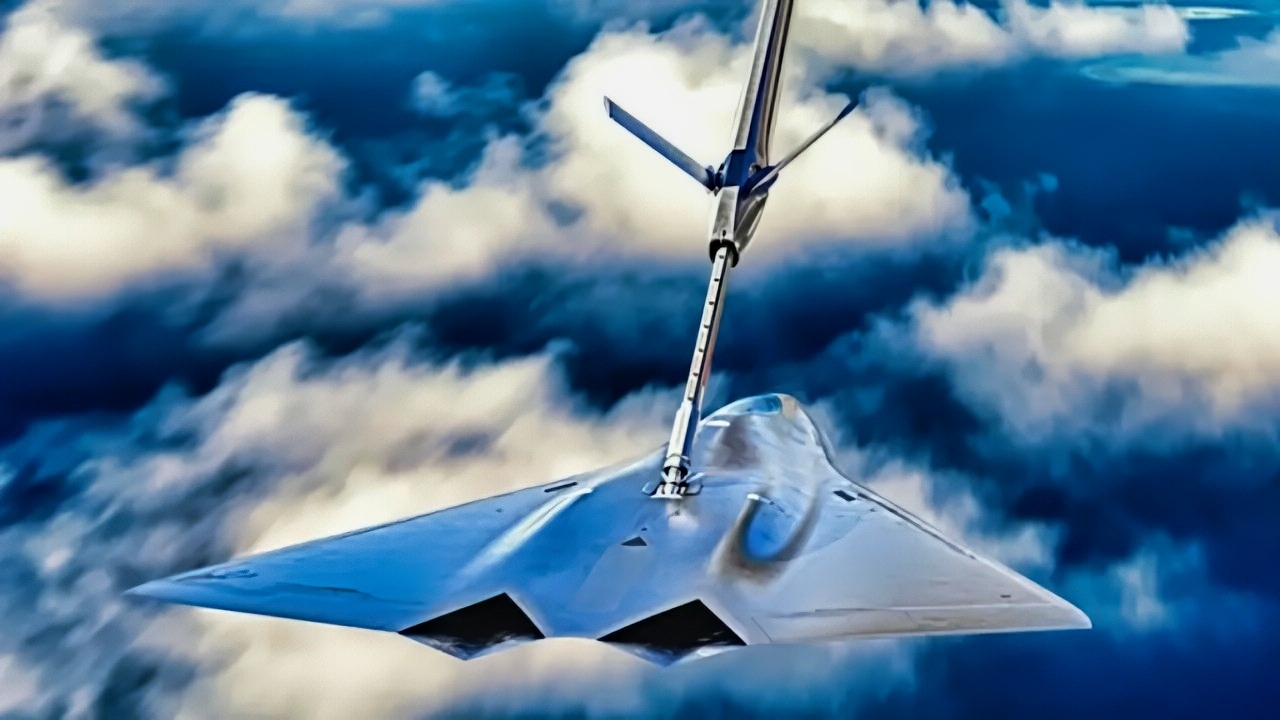
F-47 Lockheed Photo. Image Credit: Lockheed Handout.

Shown is a graphical artist rendering of the Next Generation Air Dominance (NGAD) Platform. The rendering highlights the Air Force’s sixth generation fighter, the F-47. The NGAD Platform will bring lethal, next-generation technologies to ensure air superiority for the Joint Force in any conflict. (U.S. Air Force graphic)
-It is expected to feature superior 6th-generation stealth and advanced adaptive cycle engines.
-Crucially, the F-47 will also include a cannon for dogfighting—a weapon the J-20 lacks—giving the American jet a presumed advantage in any close-range combat scenario.
F-47 vs. J-20: A Fighter Battle for the Future?
The United States of America’s two 5th-generation fighter jets, the F-22 Raptor and the F-35 Lightning II—both proudly made by Lockheed Martin’s venerable Skunk Works division—are excellent warbirds. However, they’re certainly not perfect.
For one thing, they’re getting a bit long in the tooth (or beak and talon if you prefer), as their designs are 28 and 19 years old, respectively (going by their maiden flight dates).
More concerning, they have certain technical disadvantages relative to the People’s Republic of China’s entry into the 5th-generation race, the Chengdu J-20 Wēilóng (“Mighty Dragon;” NATO reporting name “Fagin”), which first flew in 2011.
The PRC plane has a max airspeed advantage over the F-35, Mach 2.0 versus a mere Mach 1.6. In addition, the “Fagin” has a combat range advantage over both the F-35 and F-22: 1,100 nautical miles vs. 760 nautical miles and 750 nautical miles, respectively.
Hence, the sense of urgency to build its 6th-generation fighter jet for the US Air Force, namely the Boeing F-47 NGAD (Next Generation Air Dominance) plane. So then, how would the F-47 stack up against the J-20?
Tale of the Tape Part I: J-20 Technical Specifications and Vital Stats
-Crew: 1 or 2 (depending on variant)
-Fuselage Length: 69 feet 7 inches (21.2 meters)
-Wingspan: 42 feet 8 inches (13.01 meters)
-Height: 15 feet 5 inches (4.69 meters)
-Wing Area: 790 square feet (73 square meters)
-Empty Weight: 37,479 pounds (17,000 kilograms)
-Gross Weight: 55,116 pounds (25,000 kilograms)
-Max Takeoff Weight (MTOW): 81,571 lbs. (37,000 kilograms)
-Powerplant: 2 × Shenyang Liming WS-10C (codename Taihang) afterburning turbofans generating 142–147 kilonewtons (32,000–33,000 pounds-force) of thrust (NOTE: “WS” stands for “Woshan,” i.e., “turbofan.” “Taihang” is an homage to the Taihang Mountains)
-Max Airspeed: Mach 2.0
-Ferry Range: 1,200 statute miles (1,100 nautical miles, 2,000 kilometers)
-Combat Range: 1,200 miles statute miles (1,100 nautical miles; 2,000 kilometers)
-Service Ceiling: 52,000 feet (66,000 meters)
-Rate of Climb: 59,800 feet per minute (304 meters per second)
Armament-wise, the Weilong wields a hellacious arsenal, including two short-range PL-10 air-to-air missiles (one in each air-intake bay) and six to eight medium-range P-12s in the main internal weapons bay below the mid-fuselage.
However, conspicuous by its absence from the Mighty Dragon’s fire-breathing arsenal is a cannon. That makes it unique amongst the currently operational stealth fighters, as its US-made and Russian-made 5th-generation counterparts (in the case of the Russians, that would be the Sukhoi Su-57 “Felon”) still do in fact have a cannon.

Chinese J-20 Fighters. Image Credit: PLAAF.
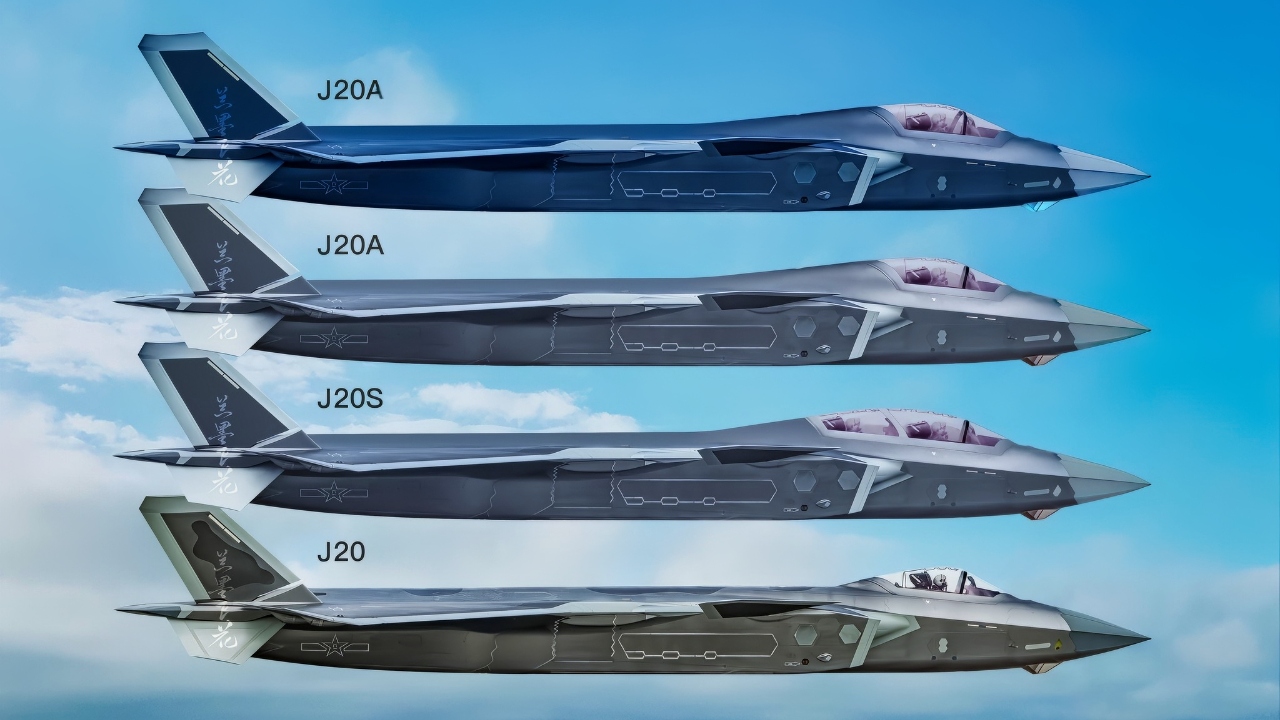
China J-20 Fighter X Screenshot.
Exact production numbers of the J-20 are somewhat murky, but educated guesswork and reasonable estimates show that over 270 airframes may have been built by now. As for its price tag, Wiley Stickney of BoltFlight states that “it is plausible that today’s J-20 costs hover between $70 and $90 million per unit, depending on the block version and specific mission configuration.”
Tale of the Tape Part Deux: F-47 NGAD Technical Specifications and Vital Stats
Admittedly, this is largely speculative, as exact specifications on the NGAD are few and far between, due to the fact that (1) it hasn’t actually been built yet and (2) the secretive, hush-hush nature of the project.
-Max Airspeed: In excess of Mach 2.0
-Combat Range: 1,200 statute miles (1,000 nautical miles; 1,900 kilometers)
It’s still up in the air as to who will manufacture the NGAD’s engines (Pratt & Whitney and General Electric [GE] Aerospace are presumably the main competitors). Still, it is expected that the power plant will be an adaptive engine.
As Christian P. Martin of Simple Flying explains: “With an adaptive engine, the conventional high-pressure exhaust and low-pressure bypass streams are aided by a third bypass duct. This third duct can be opened or closed depending on the flight conditions the pilot experiences, thus optimizing the engine’s performance … During takeoff, the third stream is closed to decrease the bypass ratio, channeling airflow through the high-pressure core to maximize thrust … [T]he adaptive mechanism (which opens and closes the third stream) can transform the engine from a high-thrust strike operation to a fuel-efficient transport mode.”
Mr. Martin adds that “The adaptive engine will bring numerous benefits, such as increased fuel efficiency, greater cooling, and electricity generation…The benefits of an adaptive engine will be manifest in a conflict with China or any combat operation requiring air power.”
Armament-wise, the F-47 is also expected to have an increased payload, thus enabling it to stay in the fight longer than its 5th-generation predecessors. Presumably, the arsenal will include a gun, either (A) the Vulcan M61A2 20mm Gatling gun like the F-22 has, or (B) the GAU-22/A 25mm rotary cannon that the F-35 employs. (General Dynamics makes both guns).
The initial contract for the NGAD is worth an estimated $20 billion to produce at least 185 airframes (which matches the number of F-22s currently in the USAF fleet).
USAF Chief of Staff (CSAF) Gen. David Allvin estimated back in May that the F-47 would be operational sometime within the 2025-2029 timeframe, whilst Colin Miller, vice president and general manager at Boeing Phantom Works, said somewhat cryptically that people will “be surprised by how fast you see [the F-47] flying” and “I think it’ll happen faster than normal.”
Who Wins in 2 Words: Advantage F-47
At the very least, the known features of the F-47 will offset the speed and combat radius of the J-20. In addition, since it will incorporate 6th-generation technology, the NGAD will presumably have superior stealth characteristics to the F-15.
If the NGAD and the Mighty Dragon were to ever get into a dogfight, the American plane would definitely have an advantage, assuming it were indeed packing a gun; the philosophy of “Better to have and not need than vice versa” comes to mind here.
About the Author: Christian D. Orr, Defense Expert
Christian D. Orr is a Senior Defense Editor. He is a former Air Force Security Forces officer, Federal law enforcement officer, and private military contractor (with assignments worked in Iraq, the United Arab Emirates, Kosovo, Japan, Germany, and the Pentagon). Chris holds a B.A. in International Relations from the University of Southern California (USC) and an M.A. in Intelligence Studies (concentration in Terrorism Studies) from American Military University (AMU).
More Military
YF-23 Black Widow II: How the Navy Saves the F/A-XX
F-14 Tomcat: We Got As Close To This Fighter as the Law Allowed Us (Full Tour/Pictures and Video)
F-22 vs. J-20: Who Wins a Stealth Fighter Dogfight?


