

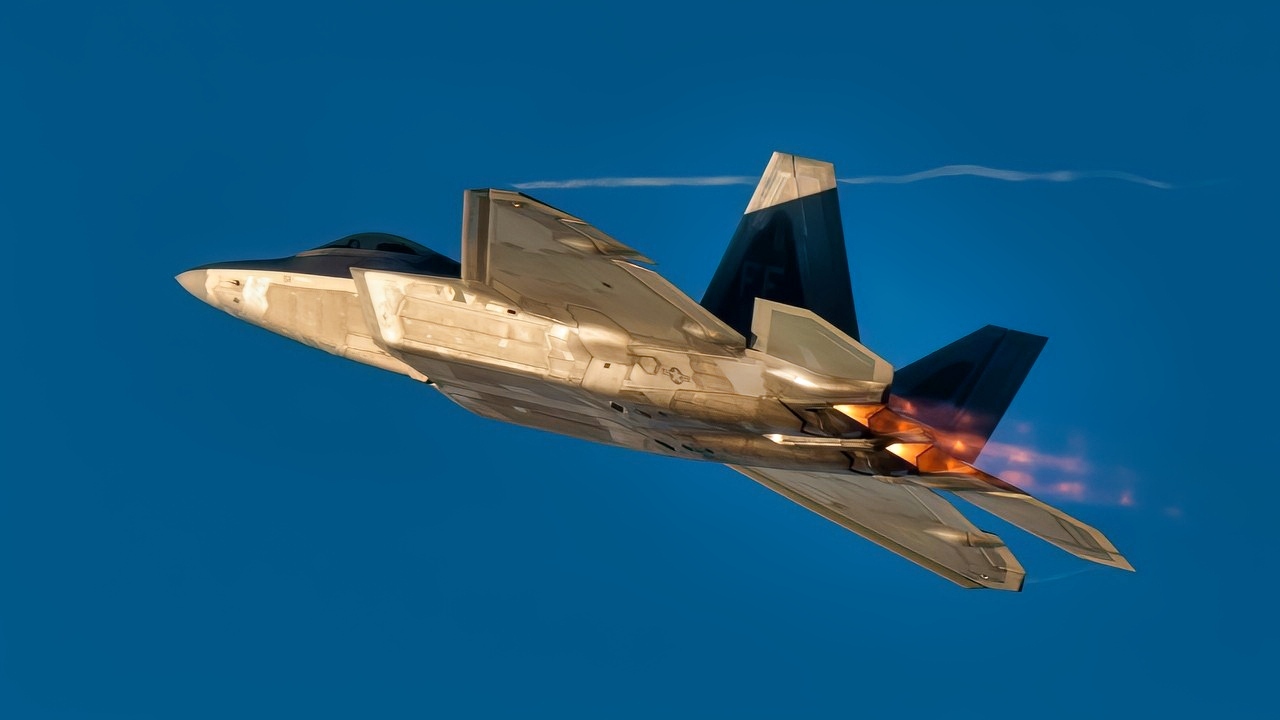
Key Points and Summary – A head-to-head comparison between the U.S. F-22 Raptor and China’s J-20 Mighty Dragon concludes that the American jet remains superior in most one-on-one encounters.
-The F-22 holds a decisive edge in three key areas: superior all-aspect stealth, true supercruise capability, and unmatched dogfighting maneuverability from its thrust-vectoring engines.
-While the J-20 poses a threat with its newer avionics and potentially longer-range missiles, the F-22’s ability to achieve a “first-look, first-shot” and to “fly circles around” the J-20 in a dogfight would likely ensure its victory.
F-22 Raptor vs. J-20 Mighty Dragon: Who Wins the Ultimate Stealth Showdown?
The F-22 Raptor changed the world with its introduction and ushered in the age of stealth fighters.
Since its introduction at the tail end of the Cold War, America’s adversaries have been playing catch-up and have been trying to match the F-22’s capabilities.
So far, China has been the most successful with the Chengdu J-20, also known as the Mighty Dragon.
The J-20 incorporates a lot of design features from American stealth fighters, but then the fighter it was designed to compete against, or is the U.S. still at the top of the leaderboard?
The Raptor vs The Mighty Dragon
The F-22 Raptor was conceived at the end of the Cold War as a dedicated air superiority fighter. Its primary mission is to dominate the skies by engaging and defeating enemy aircraft before they can pose a threat.
The aircraft entered service in 2005 and was designed with a strong emphasis on stealth, supercruise capability, and extreme maneuverability.
These features allow the F-22 to operate undetected, engage targets at long range, and outmaneuver opponents in close combat. The Raptor’s design reflects the U.S. Air Force’s doctrine of maintaining air dominance through technological superiority and tactical flexibility.
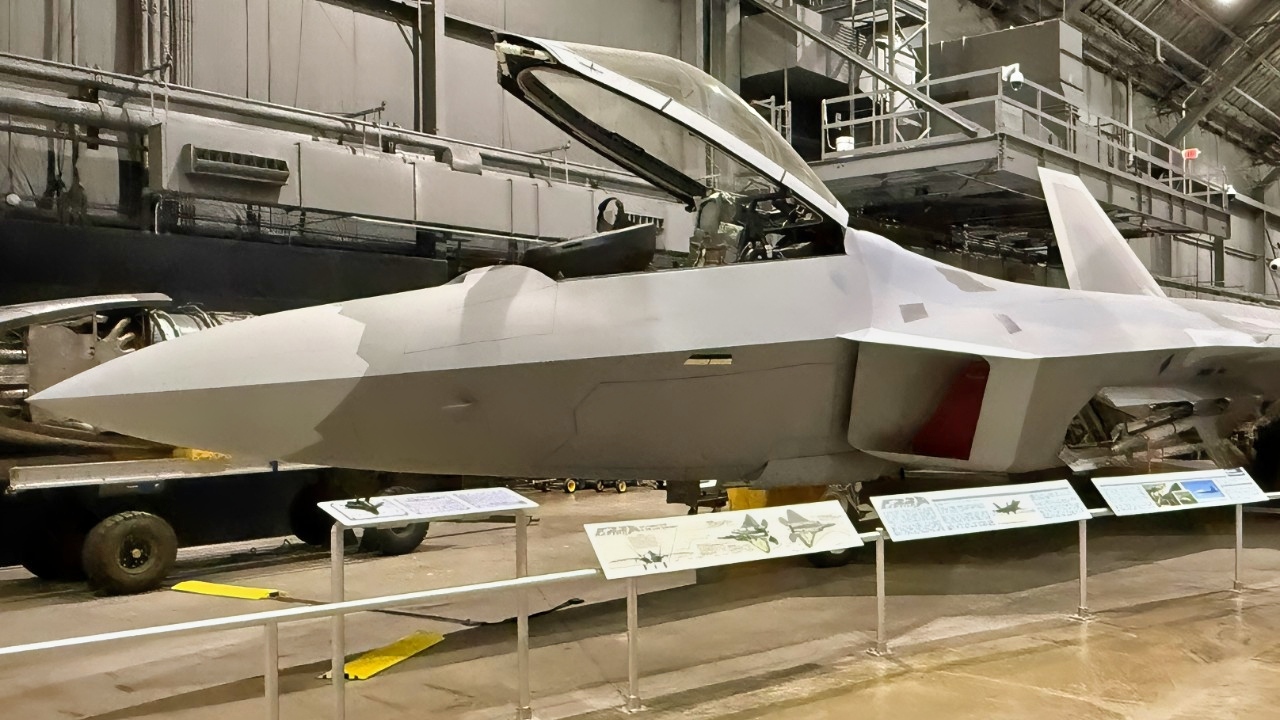
F-22A Raptor In Dayton, Ohio National Security Journal Photo.
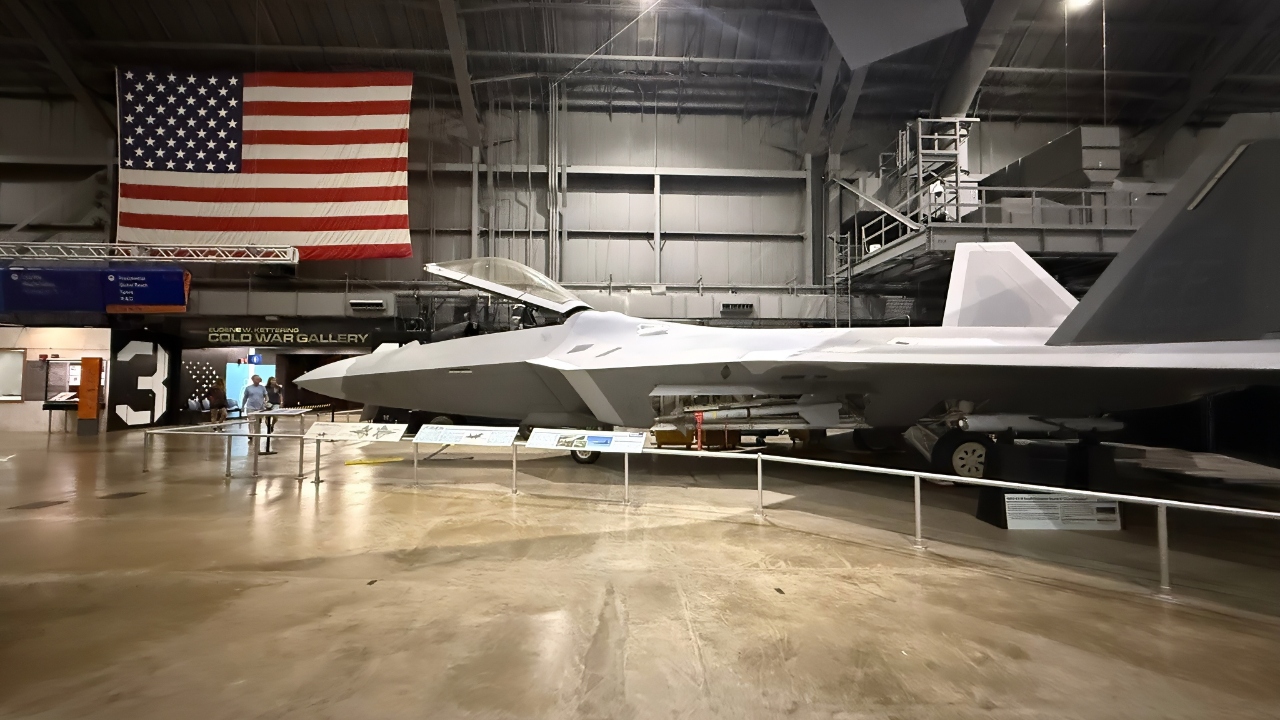
F-22 Resting at U.S. Air Force Museum. Image Credit: National Security Journal.
In contrast, the J-20 Mighty Dragon was developed by China as a direct challenge to the F-22. First flown in 2011 and entering service in 2017, the J-20 is an air superiority fighter like the Raptor but is able act as an interceptor or a strike fighter depending on the mission. Its design suggests an emphasis on engaging high-value targets such as AWACS, aerial refueling aircraft, and possibly stealth bombers.
While stealth is a key feature of the J-20, its overall configuration, including its size, canard layout, and engine design, indicates that it prioritizes range and payload over extreme agility.
This aligns with China’s broader strategy of countering U.S. air power in the Asia-Pacific region through asymmetric capabilities and networked warfare.
Engine Performance
Engine performance and supercruise capability are another area where the F-22 holds a clear advantage. Its Pratt & Whitney F119 engines allow it to cruise at supersonic speeds (Mach 1.5+) without using afterburners, a feature that enhances both fuel efficiency and stealth by reducing infrared signature.
This capability gives the F-22 a significant edge in dictating the terms of engagement, whether to pursue or disengage from a fight.
The J-20 is also no pushover in this arena. It initially relied on Russian AL-31 engines, which lacked supercruise capability. More recent variants are reportedly equipped with Chinese-made WS-10C or WS-15 engines, which are a step up in capability but not yet at the level of the F-22. Engine reliability and thrust-to-weight ratio remain areas of concern for the J-20.
When it comes to maneuverability, the F-22 is unmatched. Its thrust-vectoring nozzles and high thrust-to-weight ratio allow it to perform post-stall maneuvers and maintain energy in tight turns, making it lethal in visual-range combat.
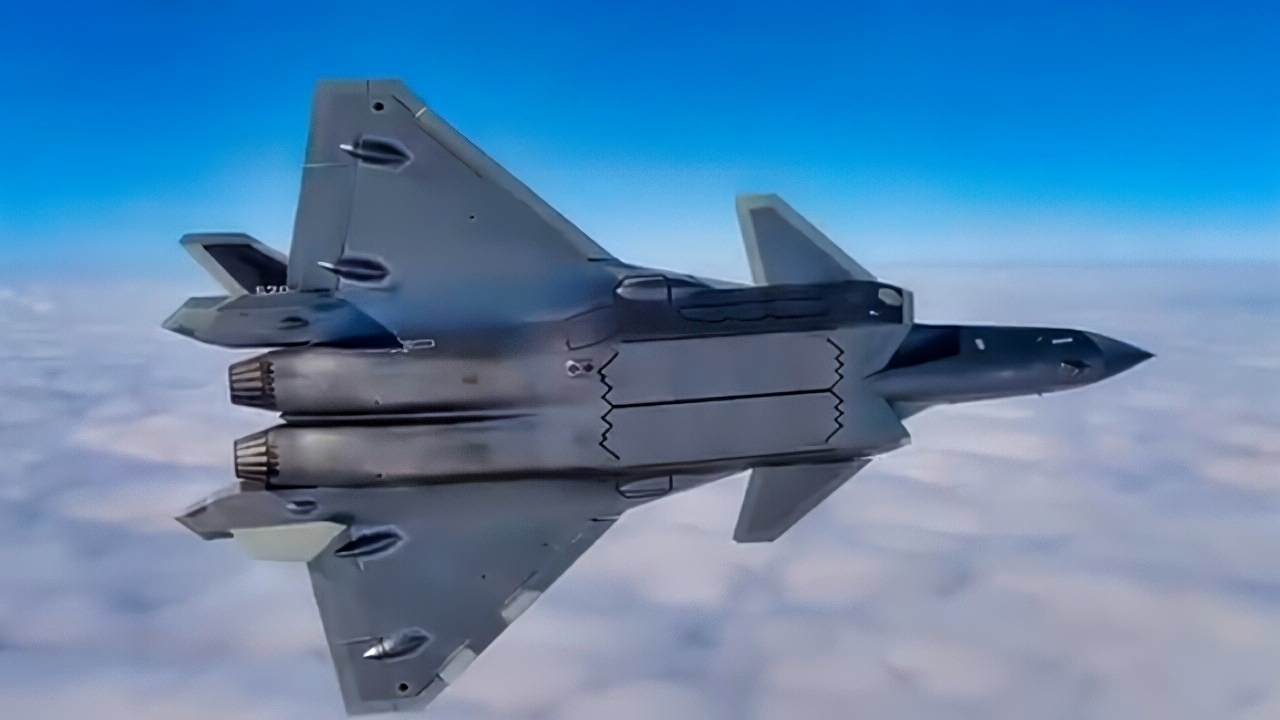
China J-20 Screenshot. CCTV Screenshot from State TV.
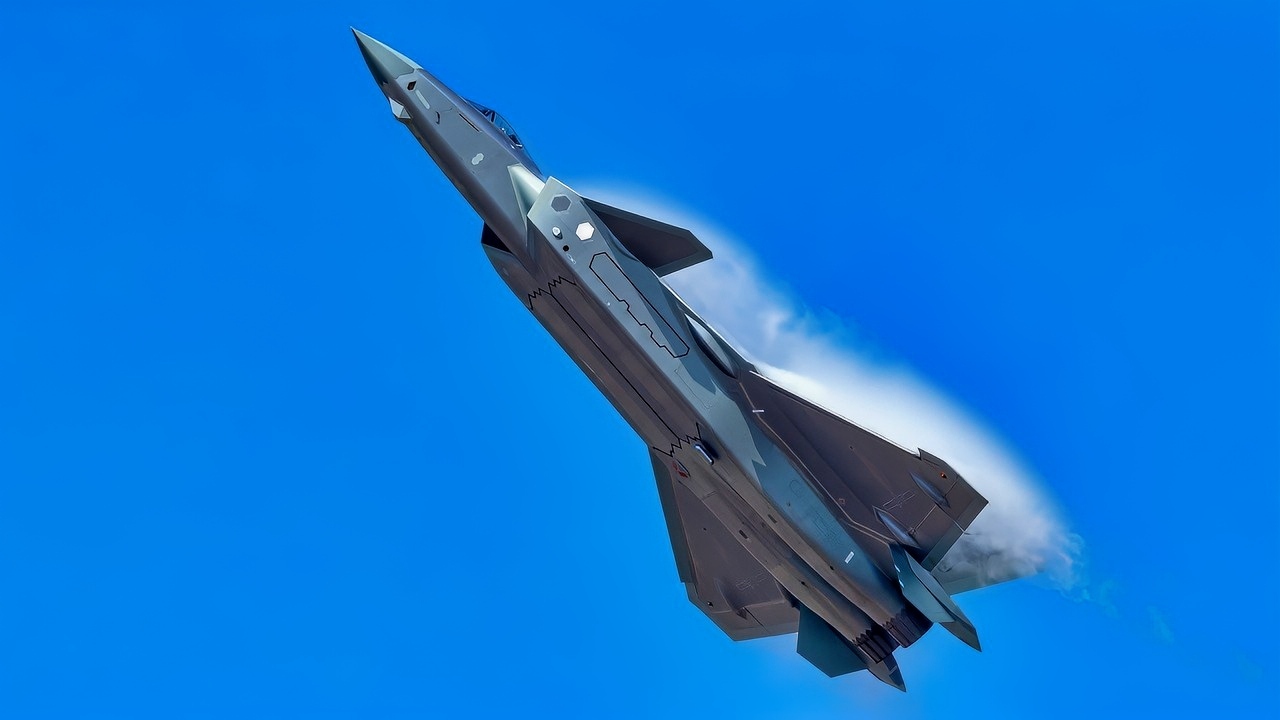
China J-20 Fighter High In Sky. Image Credit: Creative Commons.
The aircraft was designed to win dogfights through superior agility and control.
The J-20, being larger and heavier, is not optimized for close-in combat. The J-20 possesses decent maneuverability overall, but it is unlikely to match the F-22 in a dogfight. Its design favors speed and range over agility, which makes it favorable in long-range engagements. In close quarters, it is unlikely to fare well against the F-22.
Stealth Capabilities and Avionics
Stealth is a critical factor in modern air combat, and both aircraft incorporate low-observable technologies.
The F-22 is widely regarded as having the lowest radar cross section (RCS) of any operational fighter, particularly from the frontal aspect. Its stealth features are battle-tested and integrated with tactics that maximize survivability in contested environments.
The J-20 also employs stealth shaping and radar-absorbent materials, but analysts debate its effectiveness. The presence of canards and exposed engine nozzles may compromise its RCS from certain angles, although newer variants address these issues. Overall, while the J-20 is stealthy, it likely does not match the F-22’s stealth performance across all aspects.
Sensor and avionics capabilities are critical in modern air combat, and both aircraft feature advanced systems. The F-22 is equipped with the AN/APG-77 AESA radar, which offers long-range detection, low probability of intercept, and high-resolution tracking.
Its sensor fusion capabilities allow pilots to maintain situational awareness and engage targets effectively. However, some of its systems are aging, and its communication capabilities are limited compared to newer platforms like the F-35.
The J-20, on the other hand, benefits from newer electronics and may have superior data-link capabilities, allowing better integration with other Chinese assets. Its radar and avionics have seen many upgrades over the years, with its radar boasting triple the range of its original models.
In terms of weaponry, both fighters carry a deadly arsenal. The F-22 carries AIM-120 AMRAAMs and AIM-9 Sidewinders internally, preserving its stealth profile.
It can also carry precision-guided munitions for ground attack missions. The J-20 is equipped with PL-15 long-range air-to-air missiles, which may outrange the AIM-120. The J-20 utilizes a larger weapons bay than the F-22, allowing it to carry around 24,000 lb of munitions of various types.
In 2 Words: F-22 Wins
In a hypothetical one-on-one engagement, the F-22 comes out on top in most scenarios. In beyond visual range (BVR) combat, the J-20’s longer-range missiles and avionics would pose a threat.
Still, the F-22’s superior stealth and radar capabilities would likely allow it to detect and engage the J-20 first.
The F-22’s supercruise and low RCS give it a significant advantage in first-look, first-shot capability. In within visual range (WVR) combat, the F-22’s agility and thrust-vectoring would allow it to fly circles around the J-20 literally. The J-20’s larger size and less agile design would put it at a disadvantage in any close-range dogfight.
About the Author: Isaac Seitz
Isaac Seitz, a Defense Columnist, graduated from Patrick Henry College’s Strategic Intelligence and National Security program. He has also studied Russian at Middlebury Language Schools and has worked as an intelligence Analyst in the private sector.
More Military
Ryan X-13 Vertijet: I Just Visited The Strangest Air Force Fighter Ever
MBT-70: The Super Tank Built to Fight WWIII Against Russia
The M48 Tank Has a Message for the U.S. Army


