

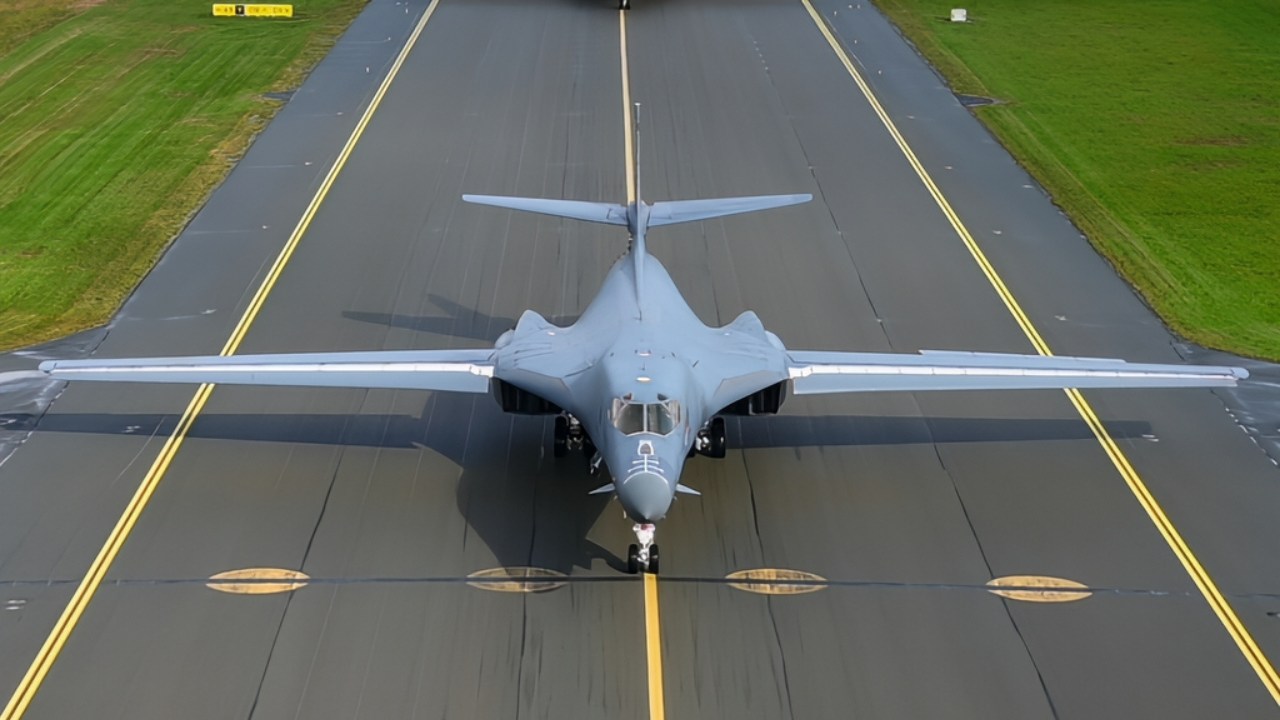
Summary and Key Points: Boeing once floated one of the era’s wildest aircraft concepts: the B-1R, a version of the B-1 Lancer bomber reimagined as the world’s largest air-superiority fighter. The plan swapped the Bone’s engines for the F-22 Raptor’s F119s, pushing its top speed to Mach 2.2, and added air-to-air missiles atop its enormous bomb load. Australia, having retired its F-111s amid rising tensions with China, was eyed as a buyer. The B-1R never flew — but the B-21 may one day inherit its mission.

U.S. Air Force Senior Airman Colby Delia, 9th Expeditionary Bomb Squadron crew chief, and Airman 1st Class Olivia Ward, 9th Expeditionary Bomb Squadron crew chief, prepare for a B-1B Lancer to take off for a mission at Misawa Air Base, May 9, 2025. BTF missions provide opportunities to train and work with our allies and partners in joint and combined operations and exercises. (U.S. Air Force photo by Airman 1st Class Mattison Cole)

B-1B Lancer Bomber. Image Credit: Creative Commons.
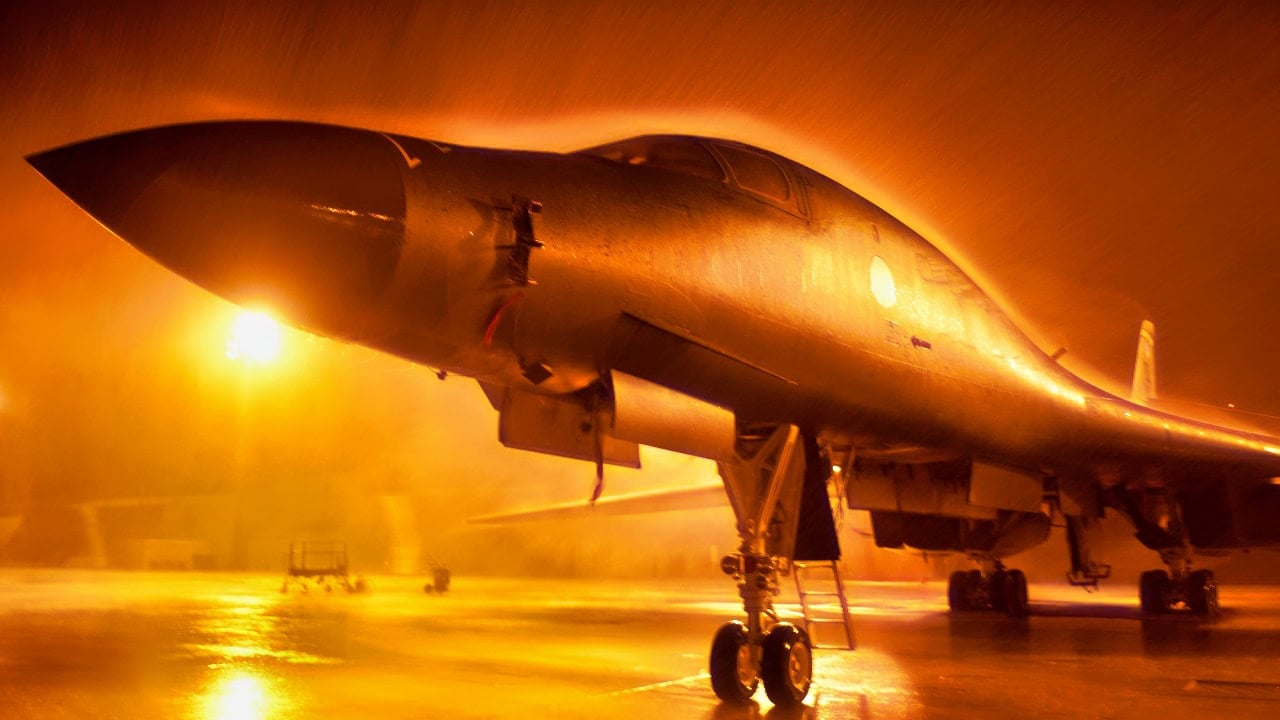
B-1B Lancer Bomber. Image Credit: Creative Commons.
The B-1B Lancer Bomber As a Fighter
The Air Force’s B-1B bomber, nicknamed the “Bone,” could have had a follow-on role as the world’s largest air superiority fighter. As crazy as it sounds, it was a possibility. The concept would have helped Australia and other allies with limited strike capability.
Nicknamed “The Bone” (for B-ONE), the B-1B Lancer is a long-range, multi-mission, supersonic conventional bomber that has served the U.S. Air Force since 1985. The aircraft is on track to continue flying at its current operational tempo until 2040 and beyond. Boeing partners with the Air Force to keep the B-1 mission-ready.
Originally designed for nuclear capabilities, the B-1 switched to an exclusively conventional combat role in the mid-1990s after the START Treaty went into effect. In 1999, six B-1s flew 2 percent of the strike missions during Operation Allied Force, yet dropped 20 percent of the ordnance. During Operation Enduring Freedom, the B-1 flew on 2 percent of the sorties, while dropping over 40 percent of the precision weapons.
There were only 21 B-1Bs at this time, and the Air Force didn’t want to risk them. But Boeing came up with an intriguing proposal. The company suggested modifying the B-1B into the so-called B-1R—the R stood for “Regional.”
The B-1R would have updated electronics and radar systems. It would be capable of carrying air-to-air missiles (AIM-120 AMRAAMs) for self-defense, have its external hardpoints made fully functional, and swap out its F101-GE-102 turbofans for the same Pratt & Whitney F119 engines used on the F-22.
The F119 is longer (203 inches vs 181 inches), narrower (46-inch diameter vs 55-inch), and lighter (3,900 lbs vs 4,400 lbs) than the F101. But it produces more thrust in afterburner (35,000 lb-ft vs 30,800 lb-ft) and, importantly, much more thrust dry (26,000 lb-ft vs 17,400 lb-ft).
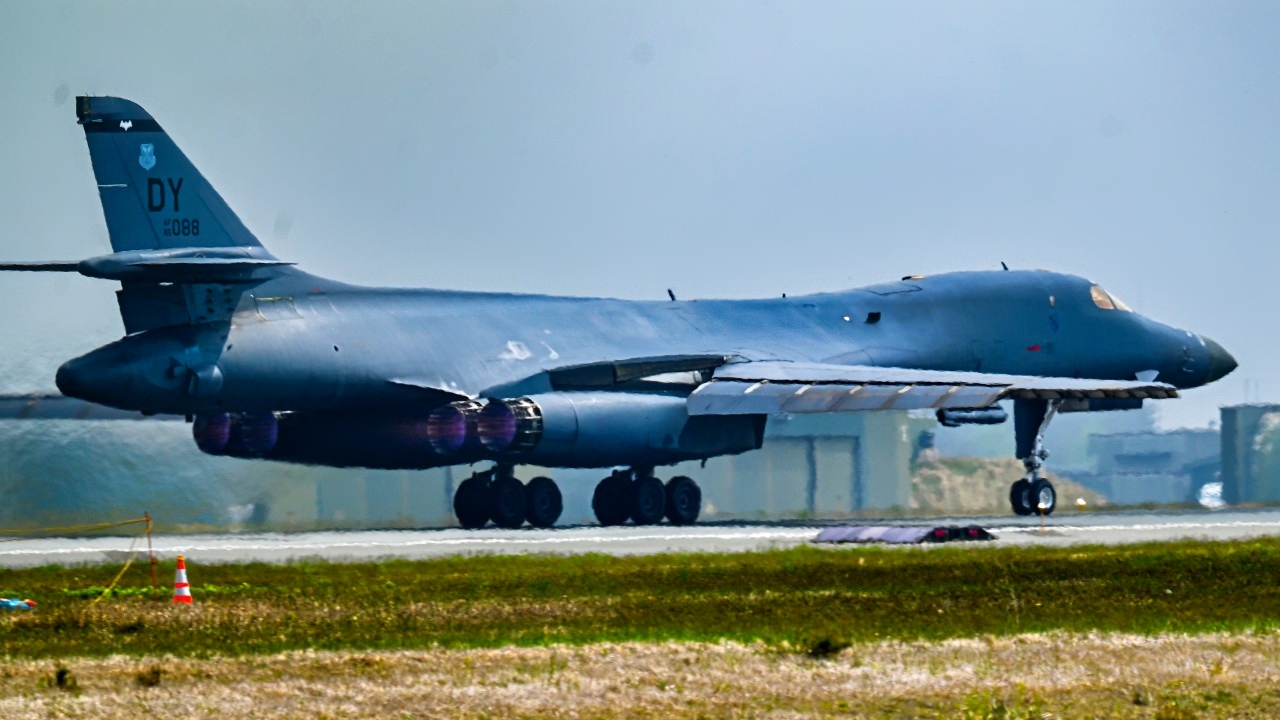
A B-1B Lancer prepares to return to Dyess Air Force Base, Texas, during Bomber Task Force 25-2 at Misawa Air Base, Japan, May 15, 2025. BTF missions provide opportunities to train and work with our allies and partners in joint and combined operations and exercises. (U.S. Air Force photo by Airman 1st Class Mattison Cole)
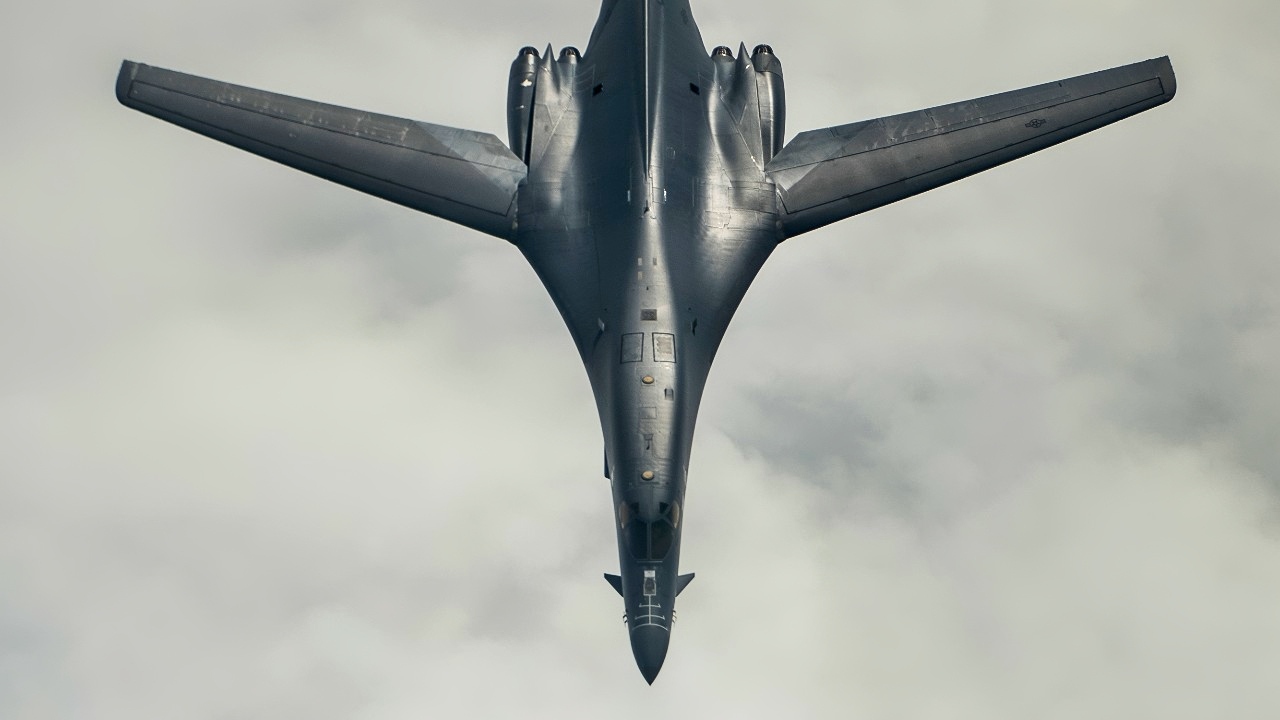
A U.S. Air Force B-1B Lancer, assigned to the 37th Expeditionary Bomb Squadron, Ellsworth Air Force Base, S.D., flies over the East China Sea, Jan. 9, 2018. The Lancer serves as premier platform for America’s long-range bomber force, carrying the largest conventional payload of guided and unguided weapons in the Air Force inventory. (U.S. Air Force photo by Staff Sgt. Peter Reft)

A B-1B Lancer aircraft from the 34th Bomb Squadron departs from Al Udeid Air Base, Qatar, April 8, 2017. This departure marks the airframe’s first mission in the U.S. Air Force Central Command’s area of operations in more than two years. (U.S. Air Force photo by Staff Sgt. Joshua Horton)
Capable Of Mach 2.2
With the Raptor engines installed, the B-1R could reach speeds of Mach 2.2.
Its range would decrease by 20 percent to about 3,400 nautical miles because the aircraft would cruise supersonically, but the engines would require less maintenance.
B-1B Lancer Fighter: Australia Would Be a Perfect Fit
Australia was considered as a recipient for the project, because the retirement of its F-111 fleet and the country’s limited number of Collins submarines have put its Navy in a tough spot. These factors have limited the nation’s capacity to successfully intercept and prosecute strikes against air, land, and sea targets that threaten the nation or its interests through the sea-air gap—as identified by Paul Dibb during the 1986 Dibb Review and the subsequent white papers, which form the basis of Australia’s strategic doctrine.
The acquisition of F/A 18E/F Super Hornets in the mid-to-late 2000s, and of fifth-generation F-35 Joint Strike Fighters to fulfill a niche, low-observable limited strike role, gives Australia a partial stop-gap for the capabilities it has lost. But the nation has not successfully replaced the F-111.
With tensions rising between the U.S. and China, and the Chinese acting aggressively in the South China Sea, Canberra wants to invest in the Australian Defense Force’s long-range strike and strategic deterrence capabilities.
Air Marshal Leo Davies and his predecessor, Air Marshal Geoff Brown, spoke to the media about the situation:
“The force that we used to carry out nation-building in the Middle East cannot defend our sea lines of communication or prevent the lodgement of hostile power in the Indo-Pacific region.
“Everyone thought conventional wars were almost a thing of the past. That judgment now looks rather optimistic. We need to ensure that our air, space and naval assets can impose transaction costs on those who would infringe on our vital trading interests. That must entail investment in air power.”
B-1B to B-1R: The Armament Carried Was Ridiculous
The B-1R’s storage bays held the normal 75,000 pounds of ordnance. However, hardpoints under the aircraft allowed it to carry another 50,000 pounds of missiles and bombs. That would include a massive amount of air-to-air missiles.
While the B-1R never took off, the Air Force’s 2050 paper mentioned the soon-to-be-operational B-21 Raider stealth bomber, and suggested the B-21 in the future may adopt the role the B-1R would have played.
Leave it to my friend Alex Hollings of Air Power. When I first heard of the B-1R, I dismissed it as pie-in-the-sky stuff. Then I watched his video on the B-1R, and now I am a convert.
About the Author: Steve Balestrieri
Steve Balestrieri is a National Security Columnist. He served as a US Army Special Forces NCO and Warrant Officer. In addition to writing on defense, he covers the NFL for PatsFans.com and is a member of the Pro Football Writers of America (PFWA). His work was regularly featured in many military publications.


