


Britain’s Royal Navy has 13 warships left, down from 48 in 1990. The destroyer HMS Dragon broke down trying to reach the Eastern Mediterranean — and the Navy is now stripping parts off the HMS Iron Duke just to keep its remaining ships running. And their aircraft carriers have major problems.
The Royal Navy’s Great Crash
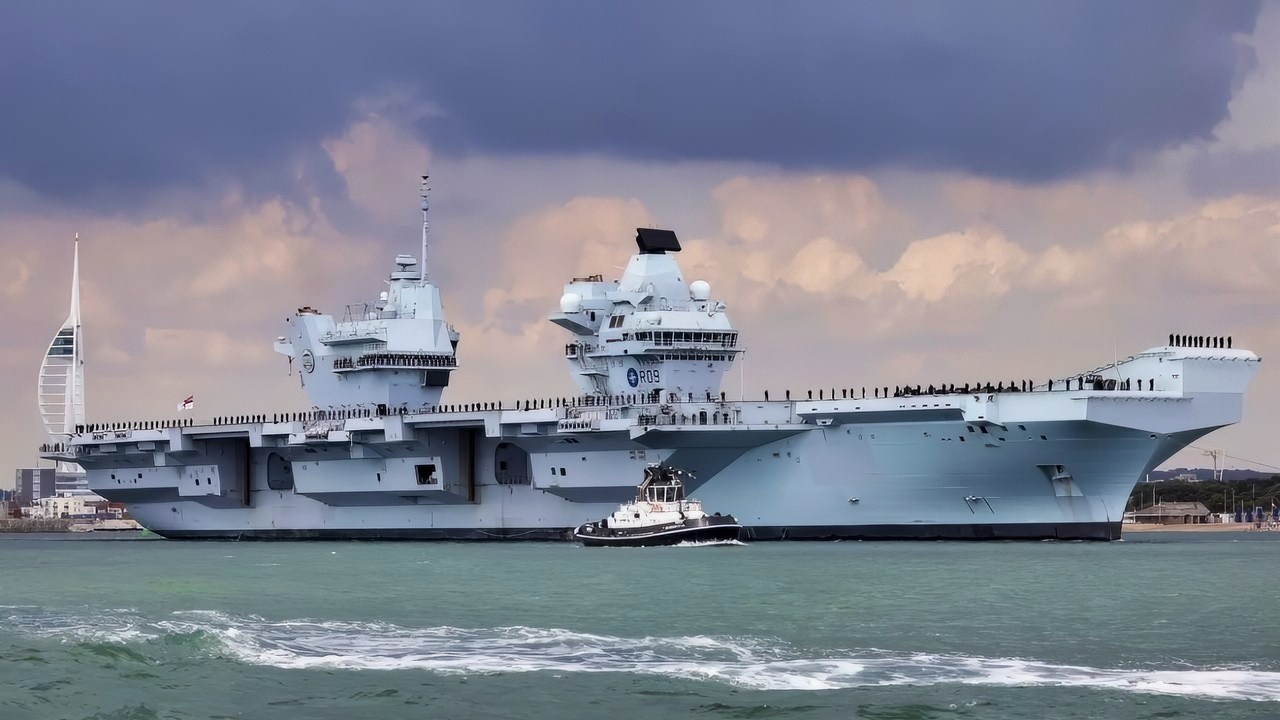
HMS Prince of Wales Aircraft Carrier. Image Credit: Royal Navy.
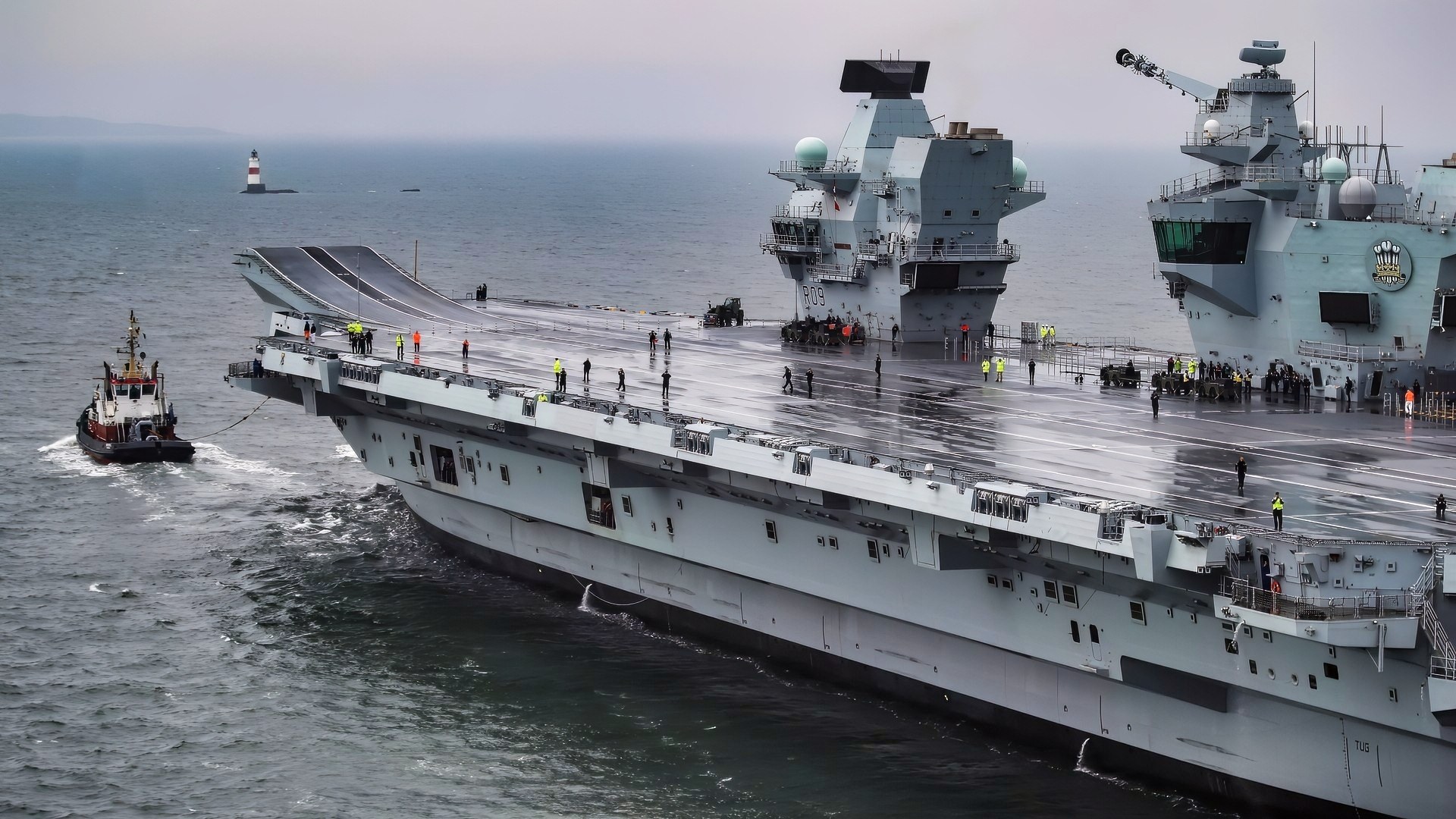
HMS Prince of Wales Aircraft Carrier Test. Image Credit: Creative Commons.
It has been 36 years since the British had a respectable navy. In 1990, the Royal Navy had 48 warships: 13 destroyers and 35 frigates. Now that number has dwindled down to seven frigates and six destroyers. This is hardly a deployable expeditionary force, and the Navy can only conduct homeland security operations. This is not a Blue Water Navy; it is merely for regional use.
Slow Reaction Is a Sign of the Times
In fact, the Royal Navy Type 45 destroyer HMS Dragon had a disappointing deployment to the Eastern Mediterranean in March. It was supposed to provide cover for a British military installation at RAF Akrotiri in Cyprus after it was under a drone attack.
It took weeks for the HMS Dragon to set off on its journey. It could not even make the voyage without incident. There was a problem with its onboard water systems, and it required a maintenance period in April that led to some embarrassment for the Royal Navy.
No Match for Global Threats
Military analysts wonder whether geopolitical concerns, such as the threat from Russia, the possibility of the United States withdrawing from NATO, and dangerous conditions in the Middle East, require a rejuvenated navy that the British do not have.

HMS Prince of Wales and HMS Queen Elizabeth pictured at sea for the first time. Image Credit: Royal Navy.

HMS Prince of Wales Royal Navy (Queen Elizabeth-Class Aircraft Carrier). Image Credit: Royal Navy.
The media in the United Kingdom has piled on. Some publications have called the Royal Navy “weak, embarrassing, and a disgrace.”
A Death By a Thousand Cuts
The problem has reached a crescendo, but while the Royal Navy was being gutted by the government due to a lack of funding and resources, the British public was not tuned in. Each year, the maritime branch got smaller, and this was largely ignored by the media. Without these checks and balances and a loyal opposition to damaging defense policies, the Navy atrophied.
The problem is now felt painfully. “The Navy is simply too small, and its readiness levels are not high enough,” according to Navy Lookout.
Warship Acquisition Is the Pits
There is now not enough funding to support the small number of ships that are on active duty. The defense acquisition program for military hardware, like new vessel construction, is in shambles.
Anything costing over $27 million takes more than six years to award a contract to a defense firm. Shipbuilding is often delayed. This has come from “long-term under-resourcing and mismanagement.”
The Issues Cropped Up After the Cold War
The problems have persisted for decades. During the Cold War, the Royal Navy had 12 Type 42 destroyers. These were replaced by only six Type 45 destroyers. After the Soviet Union disintegrated, the entire British military entered a period of decline.
There was supposed to be a “peace dividend” after the end of the Cold War. That meant there would be a drawdown in the number of ships due to the Soviet Union’s elimination as an enemy.

ATLANTIC OCEAN (Aug. 8, 2017) The Royal Navy aircraft carrier HMS Queen Elizabeth II sails in formation alongside the Nimitz-class aircraft carrier USS George H.W. Bush (CVN 77) during exercise Saxon Warrior 2017, Aug. 8. Saxon Warrior is a United States and United Kingdom co-hosted carrier strike group exercise that demonstrates interoperability and capability to respond to crises and deter potential threats. (U.S. Navy photo by Mass Communication Specialist 3rd Class Tristan B. Lotz/Released)
The Army Was Needed More
Moreover, during the wars in Iraq and Afghanistan in the 2000s, the military emphasis was on the army and counter-terrorism and counter-insurgency. The Royal Navy was not prioritized, and it became hollowed out. There is now a “ship gap” with a backlog of orders.
“Thirteen frigates are in the shipbuilding pipeline, but the 30-year-old Type 23s are falling apart, well before replacements are ready. The ‘frigate gap’ will leave the escort fleet under severe pressure for the rest of the decade.
The Type 45 destroyers, currently being placed most prominently in the public view, are in the middle of an upgrade program, which should start to show some availability benefits in the next year or two,” Navy Lookout reported.
The Iron Duke Has Lost Its Luster
The Type 23 frigates are in poor shape. The HMS Iron Duke has just entered a repair period, so the Royal Navy is down to only five operational Type 23s. The Iron Duke had recently completed a refit that cost over $100 million. This took over 49 months with 1.7 million man-hours. Now, the navy is stripping parts off the Iron Duke for use on other warships.
The obsolete Type 23s are supposed to be replaced by the new Type 26 City-class frigates. But these are in various stages of construction and will take years to finish. Eight of the Type 26 frigates will eventually join the Royal Navy, but they are needed now.
No Good News for the Royal Navy
“All of the major classes of warships and support ships, without exception, are in various states of retirement, repair, construction, training, or crew regeneration. Some relatively new ships are tied up alongside but uncrewed as they await sufficient trained manpower and funding to be used operationally,” according to the Center for European Policy Analysis.
British Aircraft Carriers Have Been a Disappointment
Another glaring problem has been the British aircraft carriers. The two Queen Elizabeth-class carriers have undergone numerous problems. There are not enough escort ships to create strong carrier strike groups.
Costs ballooned to $6 billion each, and the price was double the original estimate. There were plenty of delays during construction. Technical problems multiplied. The carriers had badly built propeller shaft couplings. There are not enough F-35B Lightning II fighter jets.
The Royal Navy has also suffered from human capital shortages. Recruitment and retention have been poor, and ensuring sailors are qualified to do their job has been difficult. The number of Royal Navy sailors dipped by 4.1 percent from 2022 to 2023. That’s 1,640 fewer shipmates than needed, and by 2025, only 27,820 personnel were trained.
The First Sea Lord, General Sir Gwyn Jenkins, has an idea for a ‘Hybrid Navy’ in which unmanned vessels would sail alongside manned warships and submarines in the future. This is a good idea, but it will require a high level of political will and strategic initiative to transition to the Hybrid Navy.
The British just do not seem to have the acquisition capabilities or shipbuilding prowess they once had during the Cold War. The manpower shortages in the active navy and at shipyards are a growing weakness.
The biggest issue is readiness. When overseas assets are threatened, the Royal Navy must be ready to deploy at a moment’s notice, and this did not happen. The problem is acute, and since it has festered for so long, the British may have to throw up their hands and wait for new political leadership that will emphasize rebuilding the navy to its former glory.
About the Author: Dr. Brent M. Eastwood
Author of now over 3,500 articles on defense issues, Brent M. Eastwood, PhD, is the author of Don’t Turn Your Back On the World: A Conservative Foreign Policy and Humans, Machines, and Data: Future Trends in Warfare, plus two other books. Brent was the founder and CEO of a tech firm that predicted world events using artificial intelligence. He served as a legislative fellow for US Senator Tim Scott and advised the senator on defense and foreign policy issues. He has taught at American University, George Washington University, and George Mason University. Brent is a former US Army Infantry officer. He can be followed on X @BMEastwood.


