
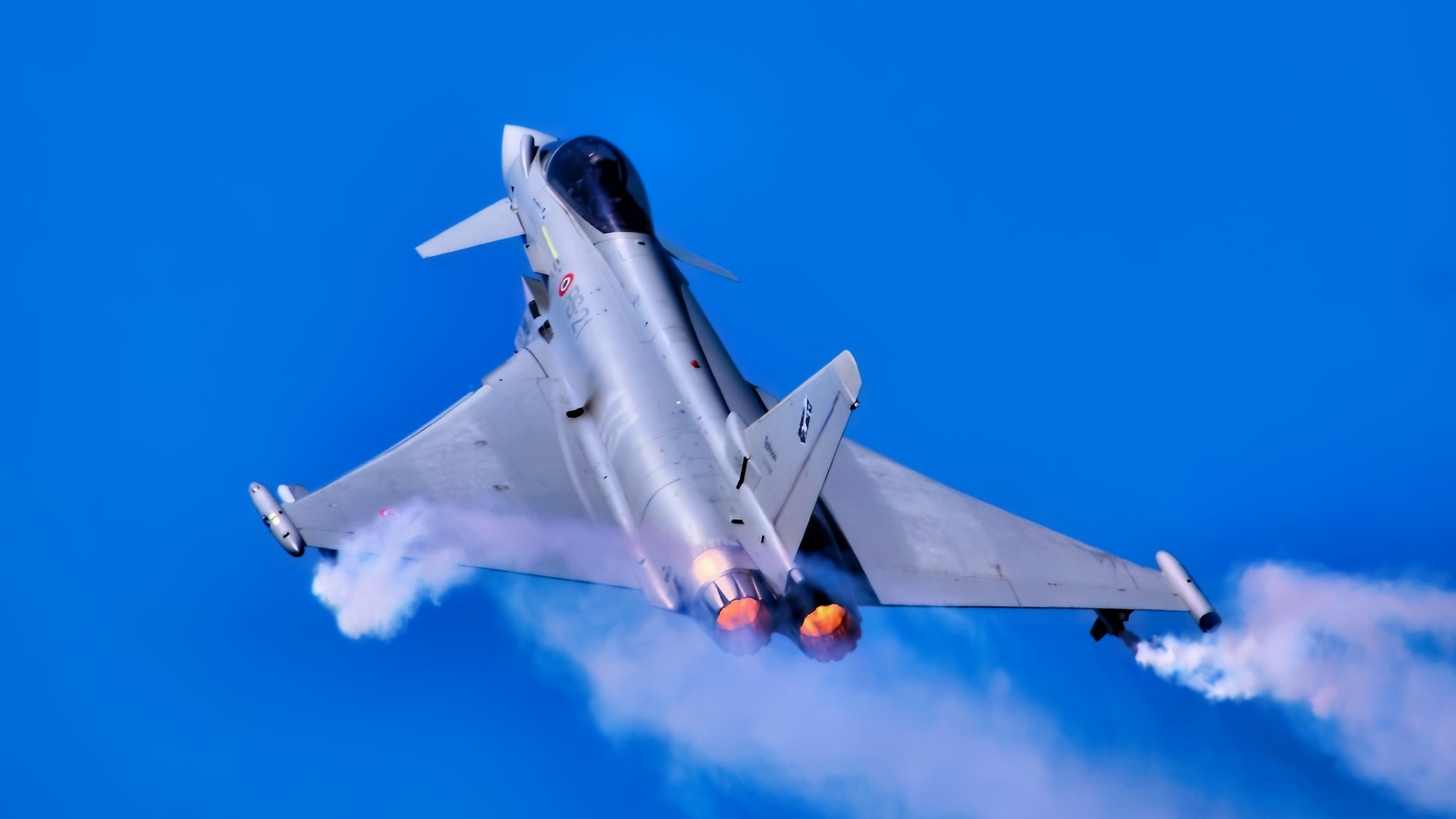
Key Points and Summary – Canada’s F-35A review has revived speculation about a Eurofighter Typhoon alternative for the final 72 jets.
-But the same factors that pushed Airbus out in 2019 still apply: stringent NORAD and U.S. 2-EYES interoperability, plus deep integration with American networks and datalinks.
-Typhoon is a strong 4.5-gen platform, yet it lacks stealth and F-35-level sensor fusion needed for Arctic defense and joint operations.
-Operating costs and a fragmented European supply chain add sustainment risk. Switching now would delay CF-18 replacement, complicate integration, and strain Canada–U.S. defense ties amid rising threats.
-The prudent course is staying with a fifth-generation, interoperable fleet.
Canada’s F-35 Review: Is Eurofighter Typhoon Back in Play?
As Canada awaits the official release of the findings of a review ordered by Prime Minister Mark Carney into the country’s $19 billion CAD deal for 88 F-35A fighter jets, analysts speculate that the Canadian government may be looking to Europe for an alternative.
Beyond talk of the possibility of Canada striking a deal with Saab for its Gripen E fighter jet, some observers have suggested that the Eurofighter Typhoon could be in the running to replace the final 72 Lockheed Martin F-35s not yet delivered.
While the Typhoon was originally a contender in the Future Fighter Capability Project – Canada’s competition to replace its CF-18 fighter jets with a more modern, fifth-generation fighter – Airbus formally withdrew from the contest in 2019, citing prohibitive NORAD requirements.
However, the fact that Canada is now being nudged to revisit Eurofighter proposals warrants some scrutiny – especially given the serious drawbacks of returning to the drawing board and abandoning Lockheed Martin’s popular fifth-generation platform.
Interoperability and NORAD Integration Risks
Canada’s primary strategic requirement is seamless integration with the United States under NORAD. Prime Minister Mark Carney insists that Canada is free to choose whatever platform it deems best, but these limitations have not changed since before the review was announced, or indeed since Airbus formally withdrew its own proposals over interoperability concerns.
The Typhoon, being a European platform not designed from inception for integration with U.S. systems, combat networks, and data-fusion technologies, poses serious interoperability risks.
In 2019, Airbus explicitly cited these requirements, noting that they place “too significant of a cost on platforms whose manufacture and repair chains sit outside the United States-Canada 2-EYES community.”
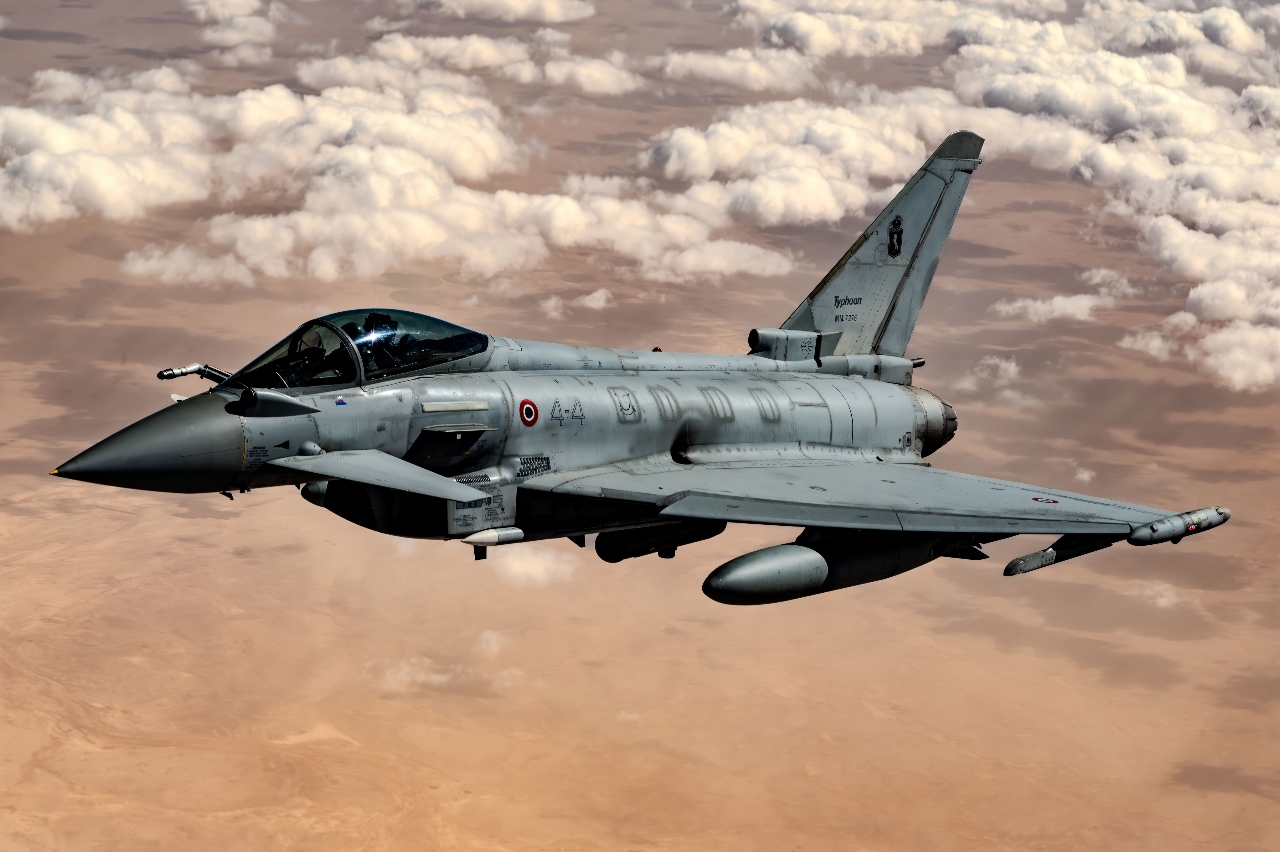
An Italian Air Force F-2000 Eurofighter Typhoon flies a routine presence patrol mission over the U.S. Central Command area of responsibility, Feb. 6, 2025. Close collaboration with partner nations improves interoperability, ensuring rapid crisis response and sustained operations to protect vital mutual interests in the AOR.
(U.S. Air Force photo by Staff Sgt. Jackson Manske)
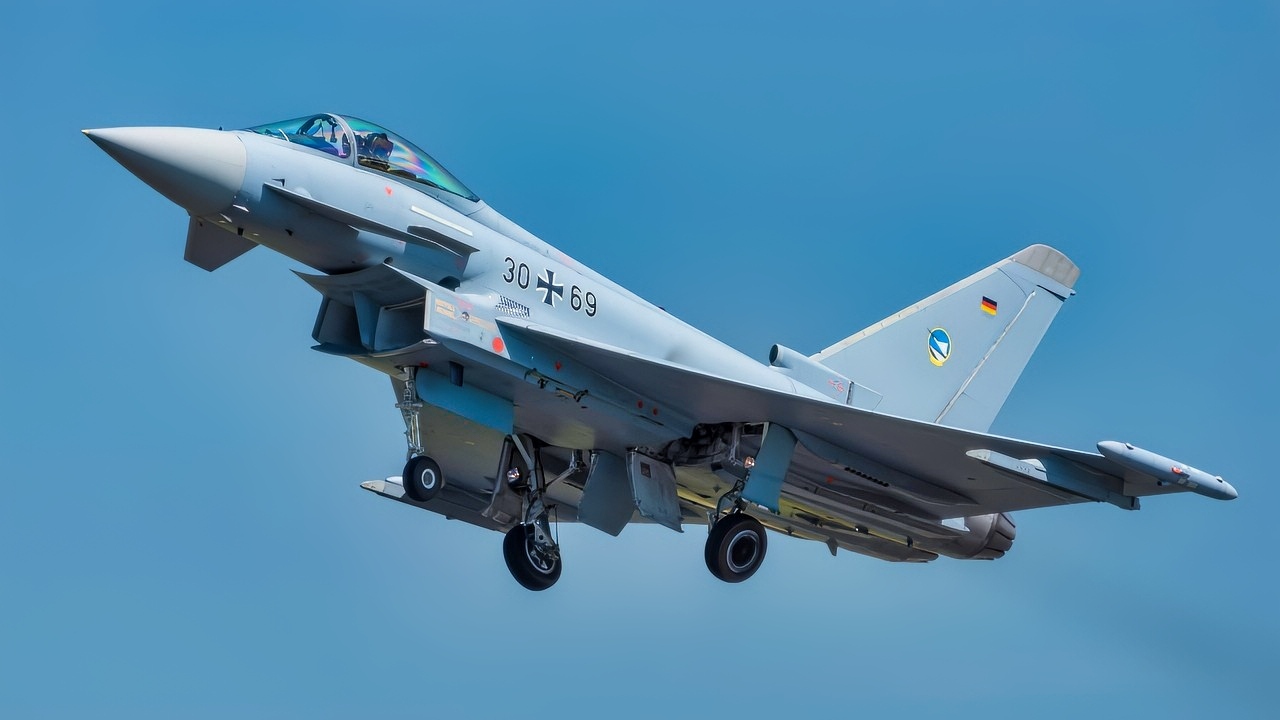
German Air Force Eurofighter Typhoon. Image Credit: Creative Commons.
Even if the Typhoon can carry the radar, communications, and datalink equipment required to be integrated into Canada-U.S. systems—and handle the architectural mismatch that comes with it—there remains a major risk of long-term costs and unforeseen integration problems.
Canada Needs Fifth-Gen Capabilities
The Eurofighter is effectively a 4.5-generation multirole fighter – not a true fifth-generation fighter like the F-35.
It is a competent swing-role aircraft, meaning it is suited to both air-to-air and air-to-surface roles; however, it lacks stealth, deep strike penetration, and sensor fusion capabilities at the level of the F-35.
Writing for National Security Journal, Brent Eastwood notes that the Typhoon “lacks the F-35’s critical stealth capability needed to penetrate advanced air defenses.”
At the same time, the F-35 “provides superior sensor fusion, networking, and NATO interoperability.”
Choosing Typhoon, therefore, marks a regression in capability in an era defined by beyond-visual-range battles, as adversaries begin to field substantially more advanced aircraft.
As the world moves beyond the F-35’s capabilities, Canada would be unwise to revert.
Operating Costs and Complexity
Operating the Eurofighter Typhoon is expensive, too.
Some sources estimate its cost per flight hour to be around $80,000 USD, although others cite wildly differing figures. Comparisons also show that the Typhoon has among the highest maintenance burdens in its class.
In contrast, while the F-35’s operational costs are also high, its global user base, integrated supply chain, and economies of scale make its long-term sustainment far more manageable. The Typhoon’s supply chain, meanwhile, is fragmented across multiple European partners (the United Kingdom, Germany, Italy, and Spain), which increases logistics friction, procurement lead times, and time spent dealing with bureaucracy while attempting to procure new parts or upgrades.
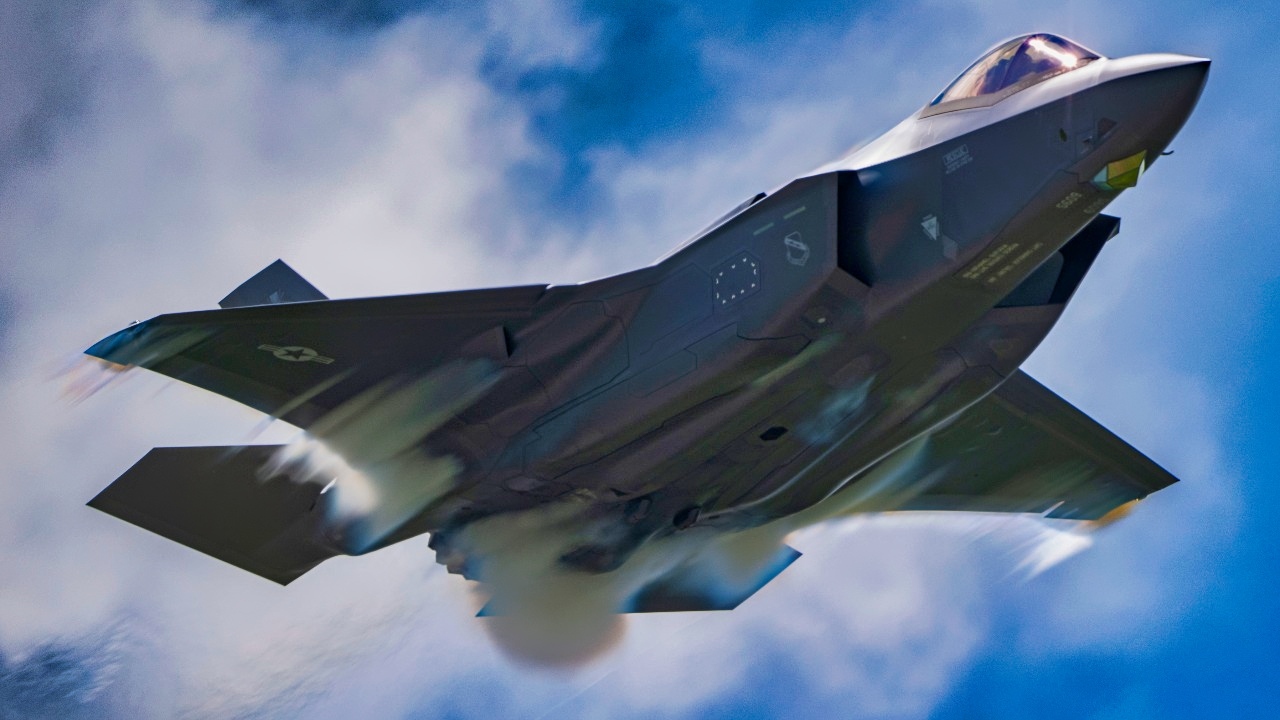
A U.S. Air Force F-35A Lightning II assigned to the F-35A Lightning II Demonstration Team performs at the Westmoreland County Airshow in Latrobe, Pennsylvania, August 18, 2024. The F-35A is an agile, versatile, high-performance, 9g capable multirole fighter that combines stealth, sensor fusion and unprecedented situational awareness. (U.S. Air Force photo by Staff Sgt. Zachary Rufus)
Politics At the Worst Time
Adopting the Eurofighter Typhoon over the F-35 would send a clear and deliberate message to the United States that Canada is shifting its focus from integrated North American defense to European defense industrial alliances.
And, in doing so, Canada would effectively begin the process of unwinding its deep military ties with its closest and most reliable ally and start leaning more on Europe.
It’s a process that began as soon as U.S. President Donald Trump initiated his aggressive renegotiations of trade deals with Canada, and that was exacerbated by the appointment and election of Mark Carney as the Prime Minister of Canada.
A decision like this would be a risky gamble, particularly with its closest military partner, at a time when Arctic security, NORAD modernization, and growing threats from anti-Western adversaries all demand military modernization.
As the anti-Western world forges new alliances, Canada and the United States are beginning to diverge, risking the seamless interoperability between the two nations’ air forces. And, for what?
The Eurofighter may be a proven 4.5-generation platform, but it lacks stealth, is not optimized for NORAD, and is not built for the integrated battle networks that now define modern aircraft.
Abandoning the F-35 for a legacy design that will ultimately cost more to maintain in the long run would weaken Canada’s deterrence posture and strain its alliance with the United States at a time of mounting global instability. The choice before Ottawa is simple: remain interoperable and relevant or settle for an aircraft that is already outdated.
About the Author:
Jack Buckby is a British author, counter-extremism researcher, and journalist based in New York who writes frequently for National Security Journal. Reporting on the U.K., Europe, and the U.S., he works to analyze and understand left-wing and right-wing radicalization, and reports on Western governments’ approaches to the pressing issues of today. His books and research papers explore these themes and propose pragmatic solutions to our increasingly polarized society. His latest book is The Truth Teller: RFK Jr. and the Case for a Post-Partisan Presidency.
More Military
Russia’s Su-34 Fullback Fighter-Bombers Are Going Down in Ukraine
America Bought A Massive Fleet of MiG-29 Fighters
Russia’s MiG-41 6th-Generation Mach 4.3 ‘NGAD’ Fighter Nightmare Begins
A U.S. Navy Nuclear Attack Submarine Sank Due to an ‘Uncovered Manhole’ Mishap
The U.S. Navy’s Nuclear Aircraft Carrier Nightmares are Just Beginning


Rob
October 7, 2025 at 6:49 am
Wow Jack, two articles in the same day on the Canadian F35 decision. You’re pumping the tires of the F35 pretty hard….Lockheed Martin must pay well!
Dave
October 7, 2025 at 1:09 pm
He does seem to be quite the fanboy, doesn’t he? Completely ignores the rapidly increasing costs of not only the F-35 itself, but also the signicant maintenance required to keep them operating. Not to mention the fact that the US absolutely cannot be trusted by anyone, much less Canada.
Steven Patterson
October 7, 2025 at 5:06 pm
Despite the view you hold the F35 is just plain better. It’s what you want when needing to win a war. The United States can be trusted. We carried NATO and the world on our shoulders for decades. Our industries took the hit, while NATO countries and everyone else lived off the American taxpayer. Time for everyone else to start paying the dues.
Phil
October 7, 2025 at 5:27 pm
It should be noted that both f35 and Typhoon complement each other aka UK and Germany operate both
Stephan Larose
October 7, 2025 at 5:43 pm
F35s are total lemons. Can’t sprint, can’t turn, single engine, short range. The Yemenis almost shot one down. These things aren’t invisible. We need two-engine long-range patrol aircraft, not 5th generation first-strike weapons. F35s are also notorious for their extremely low combat readiness and extraordinarily high maintenance needs. Canada should build its own jets if it wants sovereignty. The only conceivable threat we actually face is from the USA. Why give them the money, jobs, and ability to switch our jets off?
KENT LORBECK
October 7, 2025 at 8:36 pm
Steven Patterson.
USA can be trusted? By Canada? With your own comment AND the repeated history from your Oompaloompa in chief about making Canada the 51:st state? You lot truly are damaged goods over there… No, Canada would be safer and better if even buying the bloody SU-47 from Russia even. They haven’t threatened Canada’s sovereignty. ONLY the US have. Fact.
Marc Lemieux
October 8, 2025 at 9:53 am
Canada needs to purchase replacement fighters that fulfill the needs of our own country and its challenging temperatures and harsh weather.
Under no circumstances should Canada buy the F-35, whose capabilities that can be rendered useless under the control of the United States.
On the other hand, the affordable and capable Swedish Gripen fighter checks all the boxes in terms of protecting Canada’s sovereignty, not to mention the benefits of building this fighter in Canada along with the transfer of its advanced aviation technology.
Add to the above-mentioned that the USA under Trump can no longer be relied upon or trusted, and the decision is all too obvious!
Richard Langmuier
October 8, 2025 at 3:41 pm
Yet another “Canada Has a Message” post by a foreigner working for America. America is the one that “Has a Message for the Eurofighter Typhoon” and as with a lot of message they’re making these days, it’s an empty threat. Do you really think Canada can’t think for itself, or are you just so desperate since you’re starting to lose your grip on us?
Bob
October 9, 2025 at 6:55 am
The article’s core argument collapses under new geopolitical realities. A Trump administration reintroduces profound uncertainty regarding U.S. military exports. Relying on the F-35, an ITAR-controlled platform, poses an unacceptable risk of political interference, supply chain disruptions, or technology embargoes.
The Rafale is Canada’s only logical choice. As a fully sovereign, ITAR-free platform, it guarantees operational independence and unfettered access to its technology, supply chain, and upgrade path. France, a stable NATO ally, offers a reliable partnership without the risk of political weaponization. This strategic autonomy is paramount for defending Canadian sovereignty, particularly in the Arctic.
While the Eurofighter is a capable second choice, its multi-national framework and partial reliance on U.S. components still expose Canada to the very ITAR risks the Rafale eliminates. In an era of escalating great-power competition and U.S. unpredictability, the Rafale is not just an alternative; it is Canada’s essential safeguard for national security independence.