

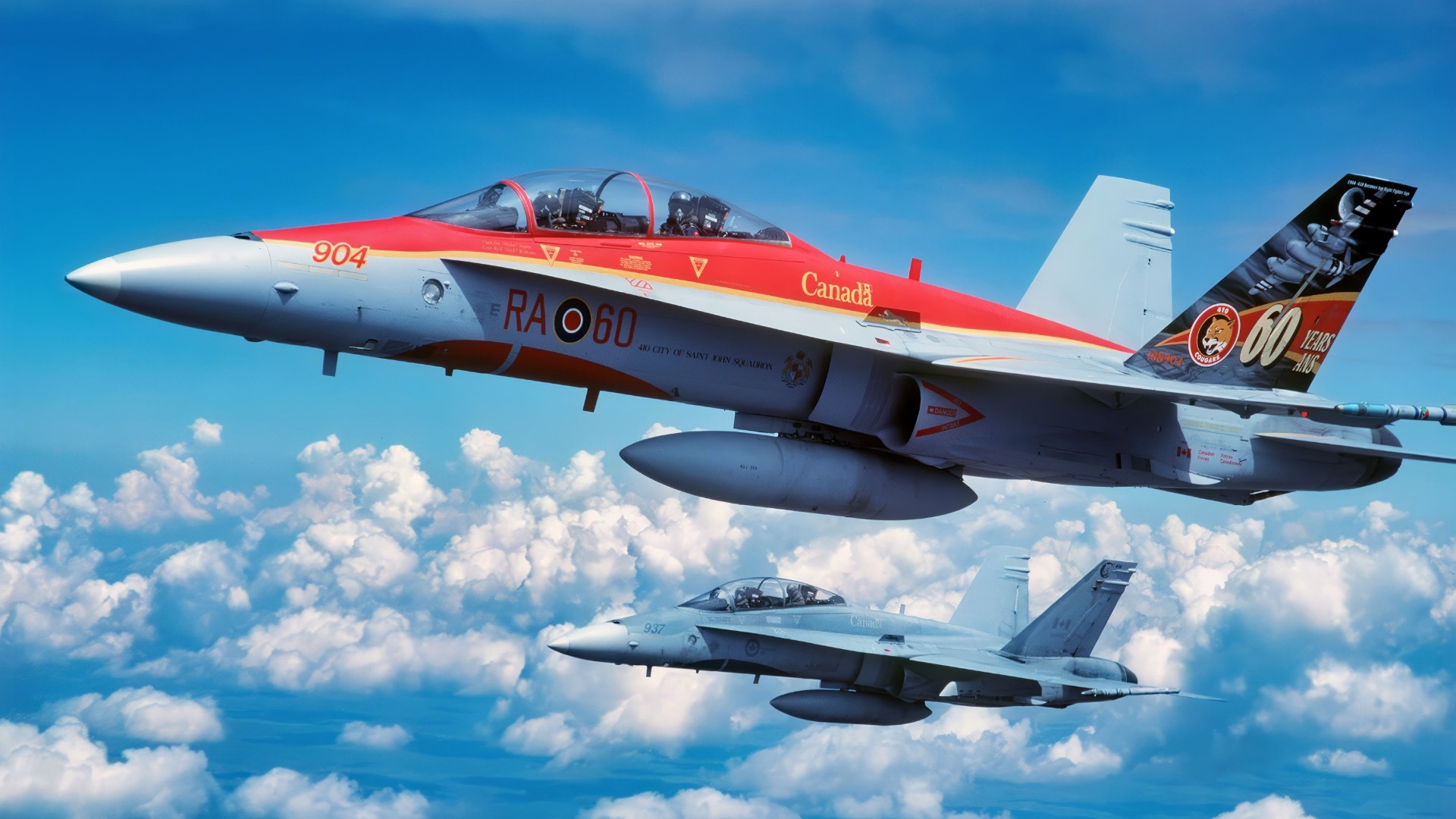
Key Points and Summary – Canada’s refusal to make a timely decision on a CF-18 replacement and the F-35 left the RCAF in a deep capability hole.
-Ottawa dithered on the F-35 for a decade, then bought used Australian F/A-18s as a stopgap just as those jets neared the end of their own airframe lives.
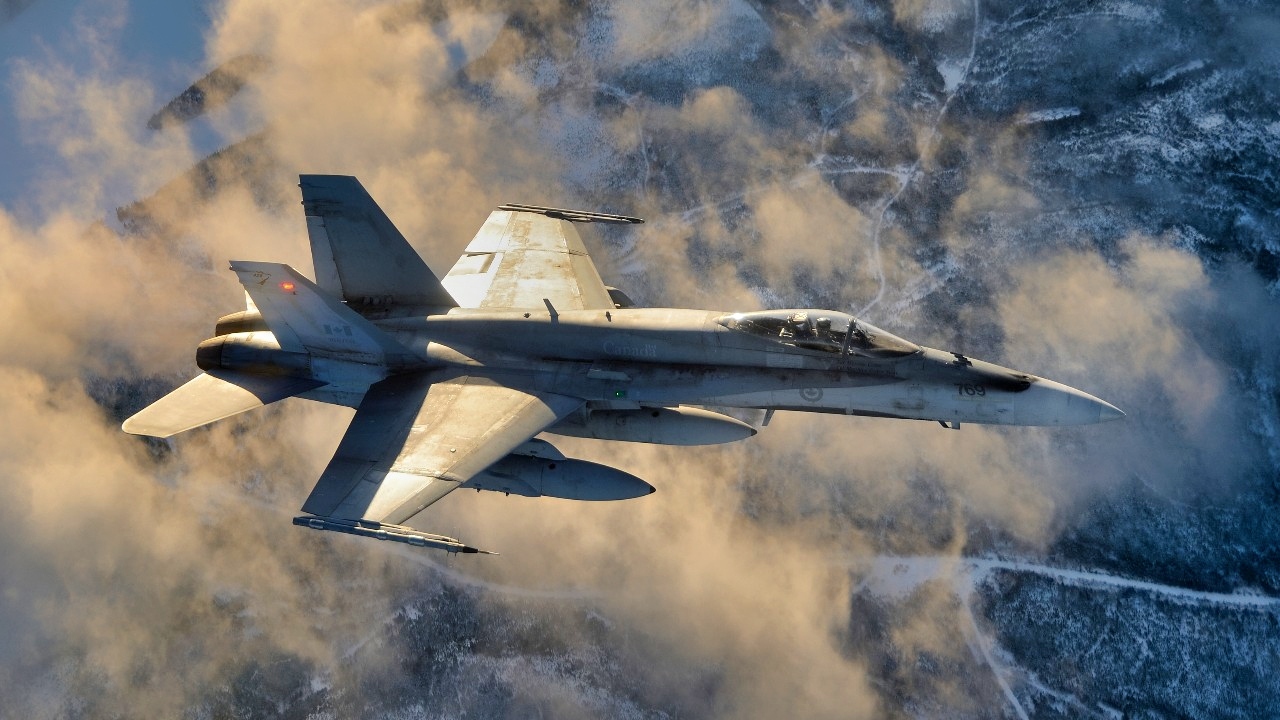
Canada Air Force CF-18. Image Credit: Creative Commons.
-Personnel, parts, and integration problems blunted any short-term gain.
-Although the Trudeau government finally selected 88 F-35s in 2022, deliveries and IOC are years away—and the new Carney government has again frozen the buy amid tensions with Washington.
-Nearly a decade after warning CF-18s were aging out, Canada still has no replacement in service.
Canada Foot-Dragging On The F-35 Led The RCAF To Purchase Aussie F/A 18s
The Canadian government has not procured new fighter jets in the past 30 years. Their aging CF-18 Hornets are reaching the end of their service life, and the fighters need to be retired.
The CF-18 Hornet has been in service since the 1980s. It was originally designed as a multirole fighter capable of both air superiority and ground attack missions and has served the Royal Canadian Air Force (RCAF) well in various international operations.
However, its age and increasing maintenance demands are making it less viable for the future. As a result, Canada has been actively seeking to replace the CF-18 with a more modern and capable aircraft.
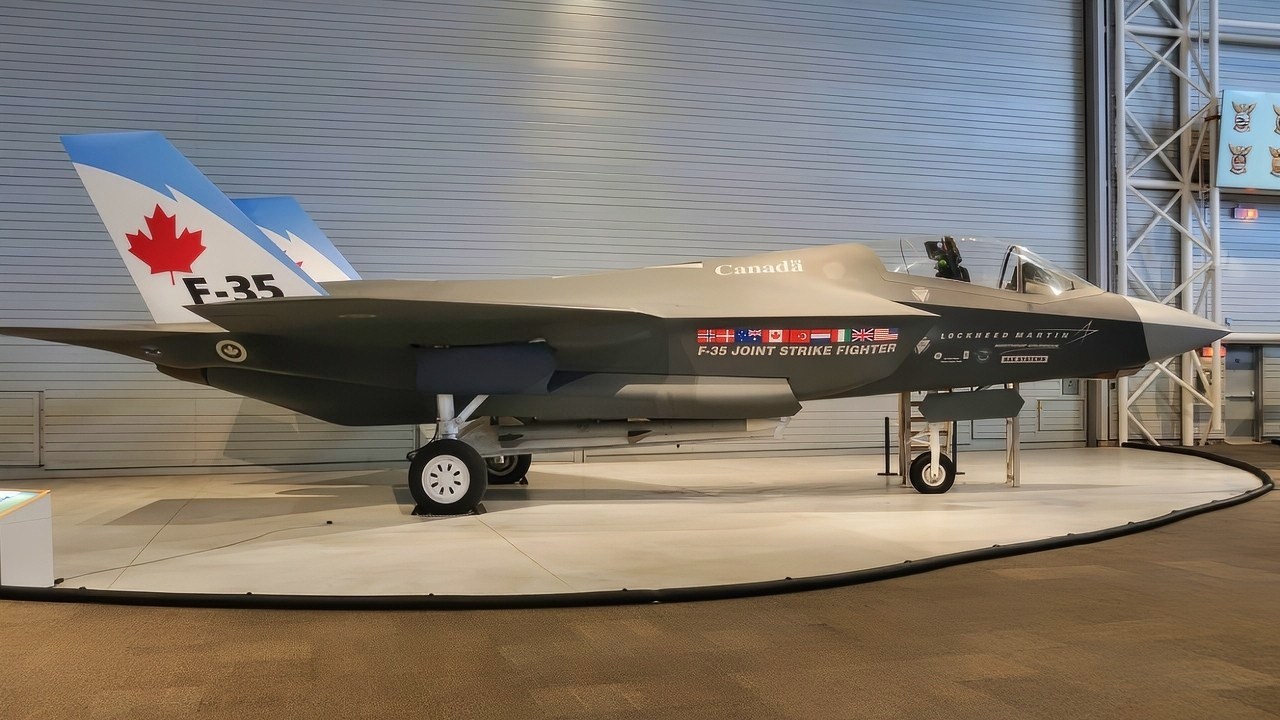
Canada F-35. Image Credit: Creative Commons.
The Trudeau government initially said it would not pursue the F-35 but then changed its mind and ordered 88 after a competition in which it beat the Swedish JAS-39 Gripen.
But due to its inability to make a decision for the past decade, the RCAF was placed in a difficult position and it purchased used Australian F/A-18 Hornets, quickly bolstering their fleet at a modest cost as a stopgap measure.
The Purchase Of Australian F/A-18s Was Not A Great Move:
As a stopgap measure, this purchase just delayed the inevitable. It was a short-term solution that was further exacerbated by personnel and spare parts shortages.
The decision to purchase Australia’s FA/18s was made back in 2019. In a weird twist of fate, Australia was also in the middle of replacing its F-18s with F-35s and was willing to sell its used F/A-18 aircraft to Canada.
The transfer was done quickly. The US agreed to the sale and transferred the first 20 aircraft to Canada in February 2019, and the final five aircraft were delivered by April 2021.
Airframe Life Is About Up:
The F/A-18 Hornet airframe’s original design life was 6,000 flight hours, but it has been extended to a potential 10,000 hours for Super Hornets through the Service Life Modification (SLM) program. Legacy A/C Hornets have been extended to 8,000 hours through the High Flight Hour (HFH) program.
Australia did an excellent job of managing its Hornet fleet; each aircraft has a through-life plan designed to minimize airframe wear and tear.
However, as the CDA reported, as of April 2016, the average CF-18 airframe had approximately 6,100 hours, with some having over 7,000. Structural upgrades have extended the lives of their airframes to 8,000 hours per aircraft—something that most RAAF Hornets lack.
Keeping the CF-18 fleet going and relevant until replacement jets arrive in the mid-2020s will require a series of upgrades, but extending their lives past 2025 would likely require significant structural and avionics upgrades, so any further delay in the replacement program would be costly.
And as of today, the CF-18s are significantly less capable than the aircraft operated by Canada’s main allies.
Dragging Out The F-35 Decision Has Drawn Criticism:
The Canadian government still faced criticism for its handling of the CF-18 replacement program, as issues with Canada’s fleet have persisted for an inexcusably long time.
Canada opted to buy 88 F-35s to upgrade its air fleet. Its planned purchase held up even after 2015, when former Prime Minister Justin Trudeau’s Liberal Party government canceled the purchase and reopened a search for a fighter jet to replace the Royal Canadian Air Force’s obsolescent CF-18s.
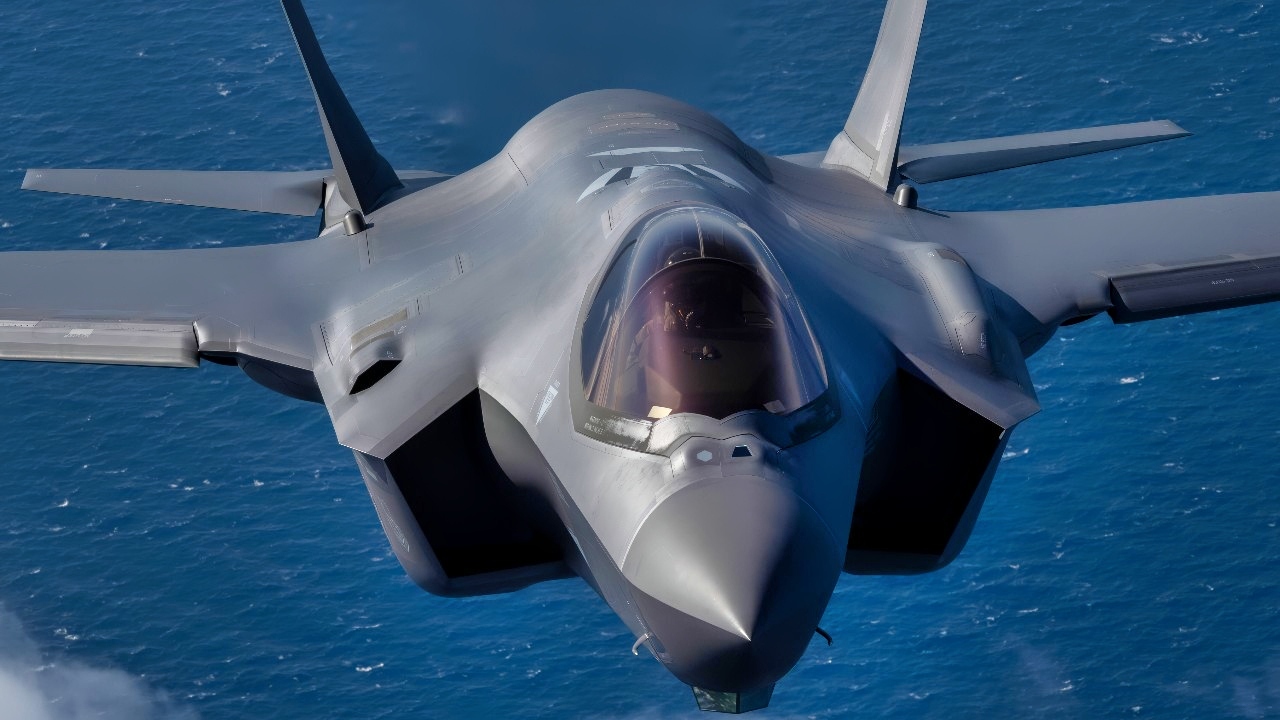
A U.S. Air Force F-35A Lightning II participating in NATO exercise Ramstein Flag 24 flies over the west coast of Greece, Oct. 4, 2024. Over 130 fighter and enabler aircraft from Greece, Canada, France, Hungary, Italy, Poland, Portugal, Romania, Spain, Sweden, United Kingdom and United States are training side by side to improve tactics and foster more robust integration, demonstrating NATO’s resolve, commitment and ability to deter potential adversaries and defend the Alliance. (U.S. Air Force photo by Tech. Sgt. Emili Koonce)
The F-35, however, remained among the possible choices along with JAS-39 Gripen, and the Trudeau government in 2022 belatedly related saying it would purchase 88 F-35 Lightning IIs for $19 billion.
The Royal Canadian Air Force is expected to have a squadron operational in 2029 and all aircraft in hand by 2032. The first 16 F-35s, already paid for, are scheduled to arrive in 2026.
However, the new Carney administration, due to a hostile political climate under US President Trump, has once again put the purchase on hold. But recently released data has shown that the F-35 clearly outperformed the Gripen across all capability categories set by the RCAF.
In 2016, a year after winning an election, Prime Minister Trudeau announced that flying CF-18 Hornets past their lifespan “would be imprudent and irresponsible”. Canadian pilots are still flying the CF-18 nearly a decade later.
The decision to integrate the Australian F/A-18 Hornets into the RCAF didn’t resolve Canada’s long-term defense strategy. And the decision presented its own set of challenges.

(Jan 31, 2009) An F/A-18 Super Hornet assigned to the “Tomcatters” of Strike Fighter Squadron (VFA) 31 launches from the flight deck of USS Theodore Roosevelt (CVN 71). The Nimitz-class aircraft carrier and embarked Carrier Air Wing (CVW) 8 are operating in the 5th Fleet area of responsibility and are focused on reassuring regional partners of the United States’ commitment to security, which promotes stability and global prosperity (U.S. Navy photo by Mass Communication Specialist 3rd Class Jonathan Snyder/Released)
Due to the lack of personnel, spare parts, and other equipment, integrating the newly acquired F/A-18 Hornets was overwrought with technical challenges and delays.
Now, in late 2025, the RCAF is no closer to having its answer on which aircraft will replace its CF-18s.
About the Author: Steve Balestrieri
Steve Balestrieri is a National Security Columnist. He served as a US Army Special Forces NCO and Warrant Officer. In addition to writing on defense, he covers the NFL for PatsFans.com and is a member of the Pro Football Writers of America (PFWA). His work was regularly featured in many military publications.


