

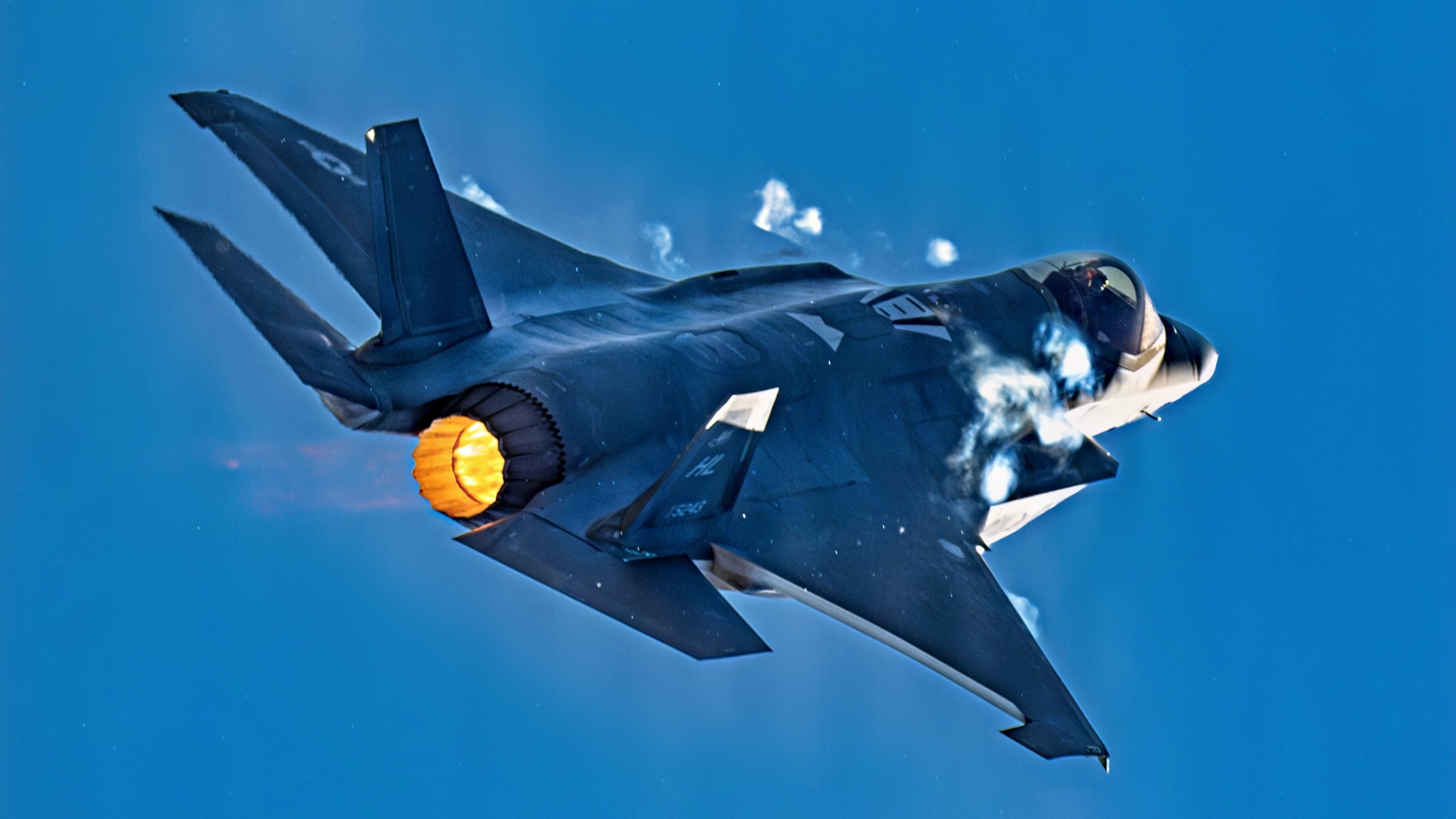
Canada’s plan to buy 88 Lockheed Martin F-35A stealth fighters to replace the Royal Canadian Air Force’s aging CF-18 fleet has become a sovereignty fight. A 2025 audit raised the program’s projected cost from $19 billion to $27.7 billion. President Trump’s tariffs and U.S. Ambassador Pete Hoekstra’s warning that NORAD ‘would have to be altered’ if Ottawa walks away have changed the conversation. Sweden’s Saab is offering the Gripen-E with the GlobalEye early-warning aircraft and roughly 12,600 Canadian jobs. NORAD Commander Gen. Gregory Guillot has said fifth-generation stealth is not required for continental defense.
U.S. Pressure Turns Canada’s F-35 Review Into a Fight Over Sovereignty
The Canadian fighter jet review was already an awkward topic, but Washington’s approach to it has now made the matter more difficult to treat as a normal defense procurement dispute.
Replacing the Royal Canadian Air Force’s elderly CF-18 fleet with 88 Lockheed Martin F-35As was the initial plan.
Way back in 2022, the F-35 was selected as the most logical option for Canada’s NATO obligations, defense needs, and interoperability with the North American Aerospace Defense (NORAD) command and Washington.
Tensions with Trump
The deal remains under review, and costs have still continued to climb, delivery timelines have been questioned, and the whole issue has become far more strained since President Donald Trump re-entered the White House.
This is not just a debate about aircraft, but also a broader test of how much military independence Canada can realistically claim while remaining so closely tied to Washington.
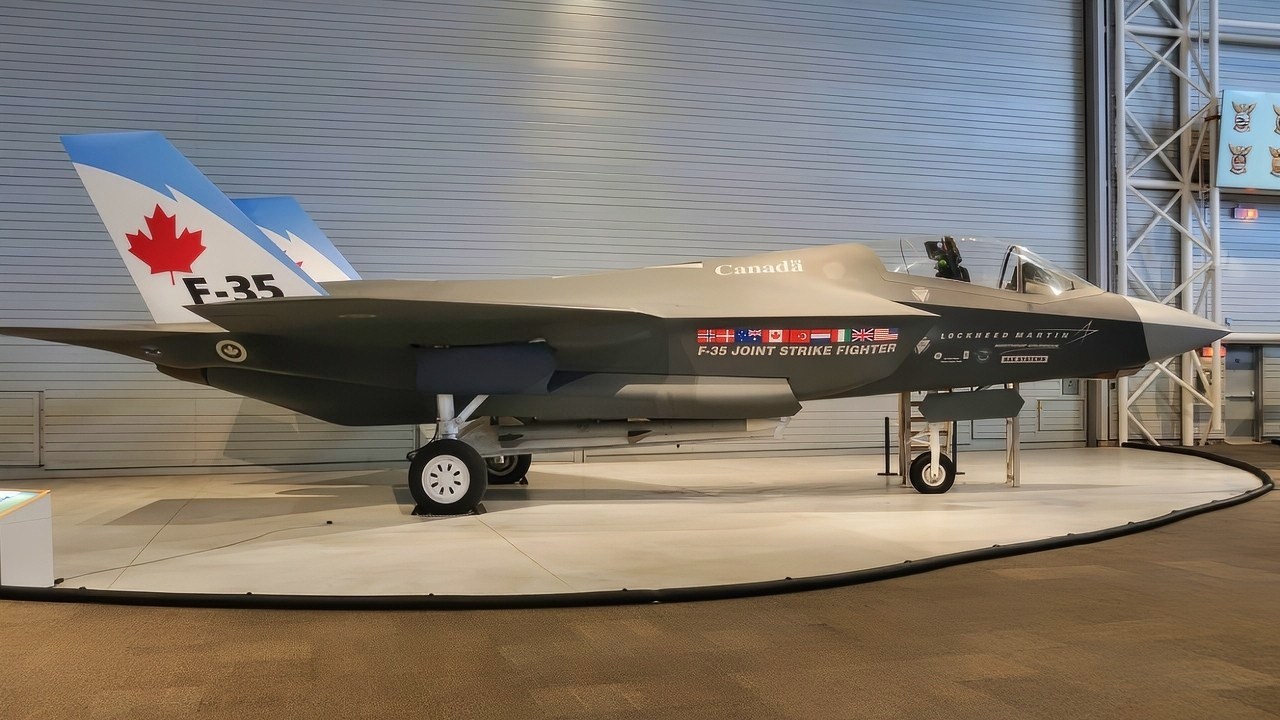
Canada F-35. Image Credit: Creative Commons.
Canada initially committed funding for 16 F-35s, although a 2025 audit found that the program’s projected cost had risen from $19 billion to $27.7 billion. That would have been enough to invite scrutiny on its own. But the review has become more charged because of Trump’s tariff threats and the growing anxiety among U.S. allies that American defense systems may come with political pressure attached.
How Would NORAD React?
That anxiety spiked following U.S. Ambassador to Canada Pete Hoekstra’s warning that NORAD “would have to be altered” if Canada were to climb down from its full F-35 purchase plans. Hoekstra posited how the United States could step in to “fill those gaps”.
This would mean the U.S. Air Force flying more of its own fighters in Canadian airspace. Under existing NORAD arrangements, U.S. and Canadian aircraft can already operate in each other’s airspace to track and intercept threats.
The reality is that Canada cannot hope to defend North America on its own. NORAD exists precisely because the defense of Canadian and American airspace is shared. But there is a major contrast between cooperation and hard pressure.

A Swedish Air Force JAS 39 Gripen participating in NATO exercise Ramstein Flag 24 flies over the west coast of Greece, Oct. 4, 2024. Over 130 fighter and enabler aircraft from Greece, Canada, France, Hungary, Italy, Poland, Portugal, Romania, Spain, Sweden, United Kingdom and United States are training side by side to improve tactics and foster more robust integration, demonstrating NATO’s resolve, commitment and ability to deter potential adversaries and defend the Alliance. (U.S. Air Force photo by Tech. Sgt. Emili Koonce)
If Ottawa’s final fighter jet decision is treated as a condition for maintaining normal defense relations with Washington, then the procurement decision stops being purely military.
This week, Simple Flying reported the United States’ warning that it would need a larger operational role in Canada’s airspace if the F-35 fleet were walked back. U.S. officials have complained that a non-F-35 fleet could leave gaps in the continent’s defense.
The same report also explained how NORAD Commander Gen. Gregory Guillot has said fifth-generation stealth jets are not a total prerequisite for continental border defense, and that modernized fourth-generation aircraft can still play an important role.
That matters because Canada’s day-to-day air defense needs are not identical to the high-end strike missions for which the F-35 was designed.

Canada F-35 Fighter Display. Image Credit: Creative Commons.
Could A Mixed Fleet Work?
Canadian officials are still deciding whether a mixed fleet could work, which would likely mean buying fewer F-35s.
In its push to sell the Gripen-E to Canada, Saab has also pitched a broader industrial package, including Gripen fighters and GlobalEye airborne early-warning aircraft, with domestic manufacturing and long-term operations on Canadian soil.
The firm claims that the proposal could support up to 12,600 Canadian jobs.
The Gripen cannot hope to match the F-35’s stealth or sensor fusion, but it is probably easier to maintain and operate and is well-equipped for Arctic conditions.
Deeper F-35 dependence would wed Canada to the tightly U.S.-controlled software, spare parts, upgrades, and sustainment infrastructure. Naturally, there is a long history of ties between the U.S. and Canada, which makes this plan viable, but the recent public ruckus is manageable.
Amid tariffs, threats, and public pressure from Washington, it has started to look less comfortable.
But the fact remains that Canada selected the F-35 for a reason. It has consistently ranked far ahead of the Gripen, and its data-sharing abilities, sensor technology, and interoperability with U.S. forces make it the more viable jet aircraft for high-end tasks. If Canada’s key priority is high-quality integration with the U.S. Air Force, the F-35 remains the obvious option. The issue is that the extent of the trade-offs is unclear.
A pair of different fighter types means two training systems, two maintenance pipelines, two sets of spare parts, and, in general, more complex oversight for an already small air force of about 88 aircraft.
These are difficulties this country simply may have no time for in the current geopolitical context.
About the Author: Georgia Gilholy
Georgia Gilholy is a journalist based in the United Kingdom who has been published in Newsweek, The Times of Israel, and the Spectator. Gilholy writes about international politics, culture, and education. You can follow her on X: @llggeorgia


John
May 19, 2026 at 12:25 pm
Carney is a communist. His goals are clear. He is making trouble where there wasn’t any.