
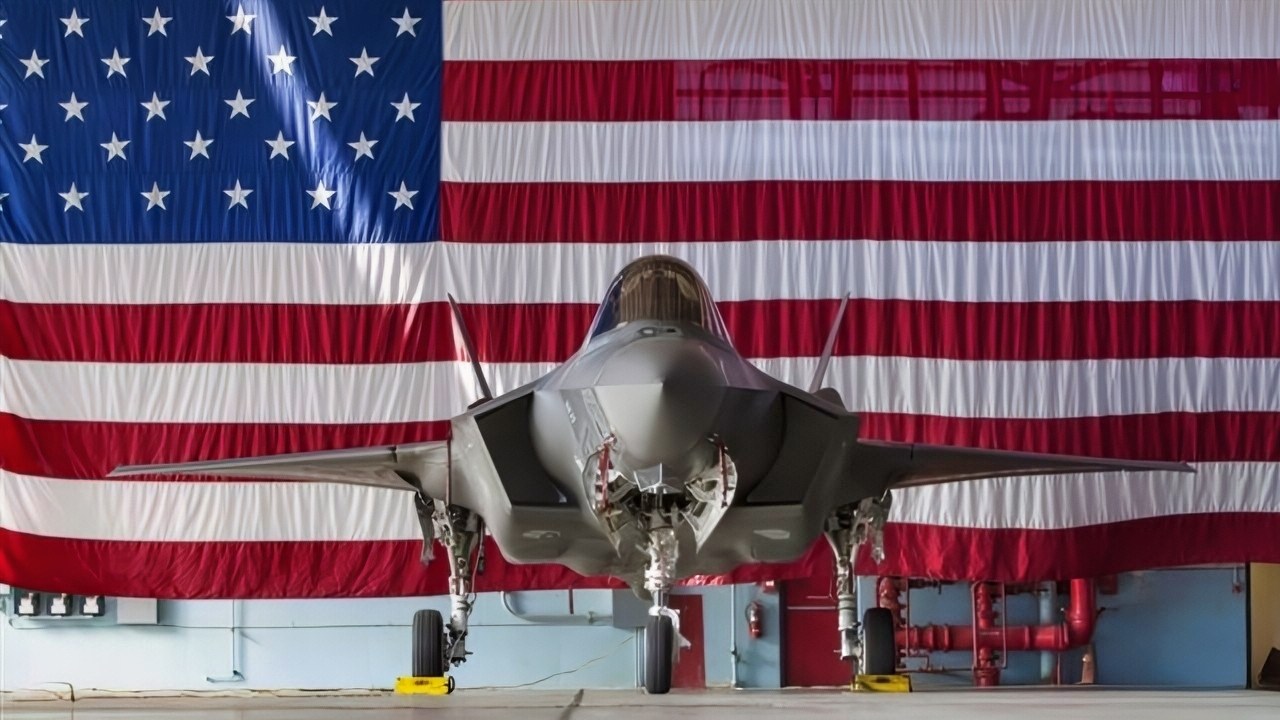
Canadian Defense Minister David McGuinty told a Senate defense committee on April 27 that Ottawa has not set a timeline for deciding whether to proceed with its $19 billion CAD ($13.9 billion USD) plan to acquire 88 F-35A Lightning II fighter jets. The latest comments suggest Canada may be no closer to making a decision on its future fifth-generation fighter fleet, further extending a review launched in March 2025.
“The review of the purchase of the F-35s is continuing,” McGuinty told the Senate’s defense committee. “We are taking the necessary time to study very, very closely the question of the fighter fleet.”
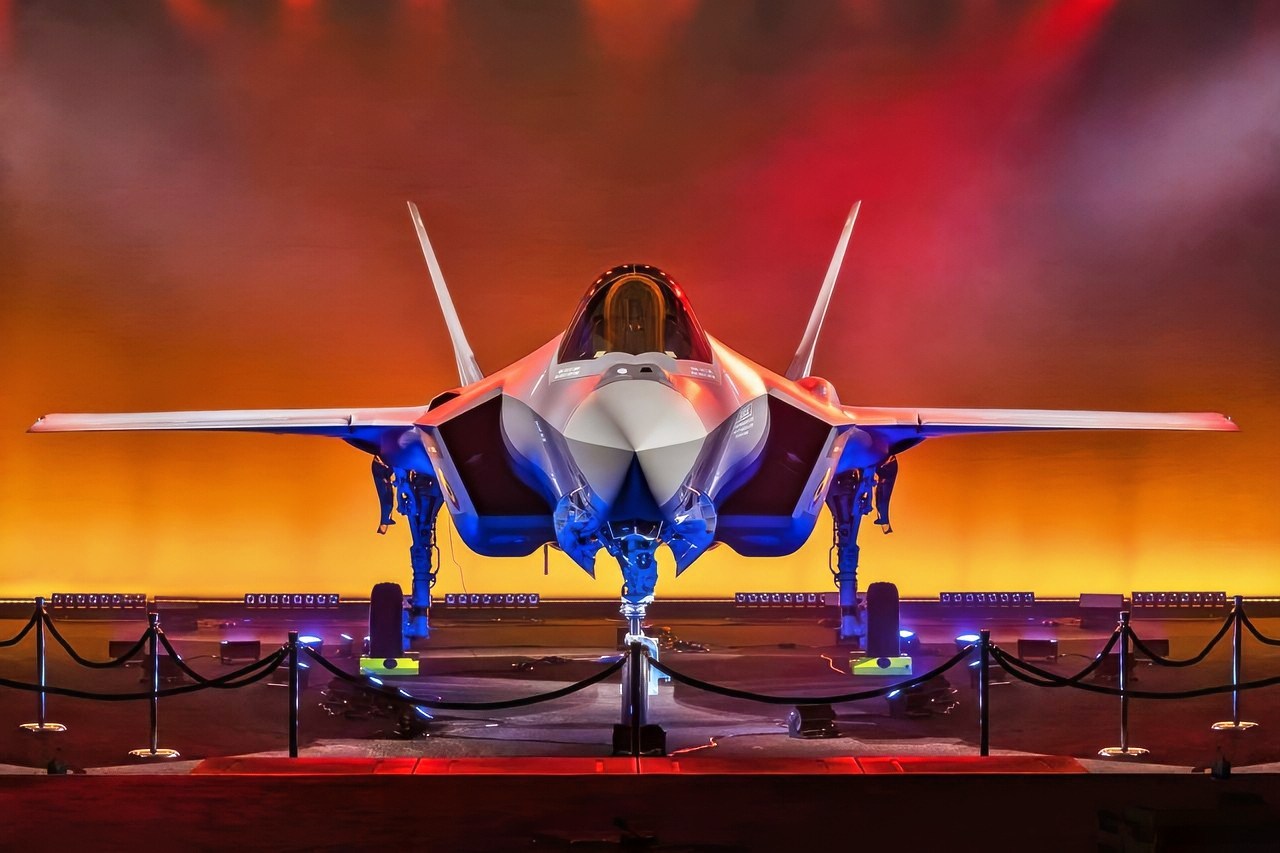
F-35 Fighter in Belgium. Image Credit: Creative Commons.

An F-35 Lightning II assigned to the 56th Fighter Wing performs a strafing run during exercise Haboob Havoc, April 26, 2023, over Barry M. Goldwater Range, Ariz. Haboob Havoc is a total force competition enabling pilots from various bases to demonstrate their skills across a diverse range of aircraft while also testing their abilities in different mission sets such as dogfighting and gun-runs. (U.S. Air Force photo by Airman 1st Class Mason Hargrove)
The additional delay also pushes the process well beyond its original September 2025 target completion date and comes as U.S. officials continue to warn that scaling back the purchase could complicate operations under North American Aerospace Defense Command (NORAD).
Canada’s F-35 Deal Is Still In Question
Canada’s F-35 program was intended to end more than a decade of delays in replacing the Royal Canadian Air Force’s (RCAF) aging CF-18 fleet. In early 2023, Ottawa signed an agreement to purchase 88 aircraft from Lockheed Martin, but the plan was disrupted in March last year when Prime Minister Mark Carney ordered a full review of the deal.
Carney cited concerns about over-reliance on the U.S. defense industrial base amid deteriorating trade relations.
The review was initially expected to conclude by September 2025, but more than six months later, it remains completely unresolved. And, even in recent months, Sweden’s Saab has made increasingly aggressive offers to convince Canada to operate a mixed fleet of Canada’s planned F-35s and dozens of its own Gripen fighter jets.
Canada has already secured funding for the first 16 F-35s, with additional payments recently made to preserve production slots for future jets. Ottawa also continues to face pressure from RCAF officials who have repeatedly stated that the fifth-generation F-35 is still Canada’s best option.
Maj. Gen. Chris McKenna, a senior RCAF officer and operational commander within NORAD, heavily implied the F-35 was the right option during a December 2025 interview, saying that while it is a “sovereign decision” for Canada to make, he would say that NORAD needs an aircraft “that has overmatch over the adversaries.” The comment potentially rules out the Saab Gripen, a 4.5-generation fighter jet.
What Canada May Choose Instead
If Canada ultimately reduces or walks away from its full F-35 purchase, the most viable and actively pursued alternative remains the Saab JAS 39 Gripen. Sweden’s Saab has spent the past year intensifying its pitch to Ottawa, positioning the Gripen as both a military and industrial alternative to the U.S.-built F-35.
Saab’s offer is becoming increasingly competitive. The company has proposed assembling the Gripen in Canada and transferring significant intellectual property – a point of contention among modern fighter procurement programs.
The model would allow the domestic industry to sustain and modify the aircraft over its lifecycle.
Saab has also promised to support more than 12,500 Canadian jobs, including high-skilled roles in aerospace manufacturing and long-term maintenance. The company has also suggested that Canada could gain a role in future Gripen development programs, giving Ottawa more control over upgrades and export opportunities – something not available under the F-35 program, which is tightly managed by Lockheed Martin and the U.S. government.
The main argument from Sweden is that the Gripen offers lower acquisition and sustainment costs, and faster delivery timelines – potentially within five years. Their offer would also arguably provide greater flexibility for dispersed operations, including from remote airfields in Canada’s north. However, the aircraft lacks the stealth and deep sensor fusion integration of a fifth-generation platform, a gap that Canadian military officials continue to highlight as a major disadvantage.
Saab’s increasingly generous offers have also forced Lockheed Martin to beef up its own industrial offer. Lockheed has repeatedly noted that more than 110 Canadian companies are participating in the F-35 program, collectively securing over $3 billion CAD (approximately $2.2 billion USD) in contracts to date through production of components such as landing gear and avionics systems.
Lockheed’s position is that its model provides long-term, export-driven industrial returns tied directly to Canada’s continued participation in the multinational program.
Allies Move Ahead Despite Canada Delays
While Ottawa continues its review, several NATO allies have moved in the opposite direction, accelerating their own F-35A Lightning II procurements to address growing threats from Russia and China.
In recent months, countries including Germany and Finland have reaffirmed or expanded their F-35 commitments, citing the need for fifth-generation capabilities and seamless interoperability with U.S. forces. In February, reports revealed how German officials were considering a follow-on order of up to 35 additional F-35s on top of their original purchase.
Finland, meanwhile, has already begun taking delivery of its F-35s, with its first aircraft rolled out in December 2025 and additional jets arriving in the United States for pilot training in early 2026 ahead of their transfer to Finnish bases later this year.
About the Author: Jack Buckby
Jack Buckby is a British researcher and analyst specializing in defense and national security, based in New York. His work focuses on military capability, procurement, and strategic competition, producing and editing analysis for policy and defense audiences. He brings extensive editorial experience, with a career output spanning over 1,000 articles at 19FortyFive and National Security Journal, and has previously authored books and papers on extremism and deradicalization.


Elias Moreau
May 2, 2026 at 6:59 pm
I’m not surprised Canada hasn’t committed to a timeline—if this isn’t a classic catch-22, I don’t know what is. Any decision is bound to face significant pushback and could carry serious consequences.
Moving ahead with the F-35 is politically challenging. The U.S. is widely seen as an unreliable partner for a project of this magnitude, and Canadian public opinion remains strongly opposed. Meanwhile, the RCAF appears firmly committed to the F-35 and reluctant to seriously consider other options. At the same time, formally cancelling the F-35 would likely weaken Canada’s position in future trade negotiations, while staying silent helps preserve leverage.
It’s striking that we need to think in these terms, but that’s the reality of navigating relations with a more authoritarian-leaning government. And for those who view Trump as the sole obstacle to choosing the F-35, it’s worth remembering that a well-functioning society likely wouldn’t have seen 77 million people vote for him in the first place.
Against that backdrop, it’s important to note that some F-35 components are manufactured in Canada. Shifting to the Gripen would require careful coordination to ensure a smooth transition between priorities without losing critical expertise. Ottawa can’t risk widespread layoffs in the aerospace sector due to a poorly planned or poorly timed announcement.
Choosing the Gripen—or any alternative, for that matter—would also further strain relations between Ottawa and Washington. Contrary to expectations, however, there is little to suggest that opting for the F-35 will improve relations. The U.S. also retains significant leverage, as the Gripen relies on American components that Washington could restrict.
If Gripen is the preferred option, it would make sense to resolve as many uncertainties as possible before making an announcement. If the F-35 remains the plan, it may be wiser to wait for a more stable political climate in Washington.
All things considered, staying silent for now may be the best course of action.
Pragmatic Thinker
May 4, 2026 at 12:36 am
Maj. Gen. Chris McKenna is probably off to a cushy job sharpening pencils at Lockheed when he retires like other RCAF senior staff. Recently the chief of NORAD stated that an F-35 type aircraft is not required to defend North America. Gripen E operates for less than a half the flight hour costs of F-35 and brings qualities of its own to the mission of defending North America. We already have seen this recently with the Nordic nations working together with legacy Gripen C and the F-35. Buy both and keep the F-35 as the hangar queens.