

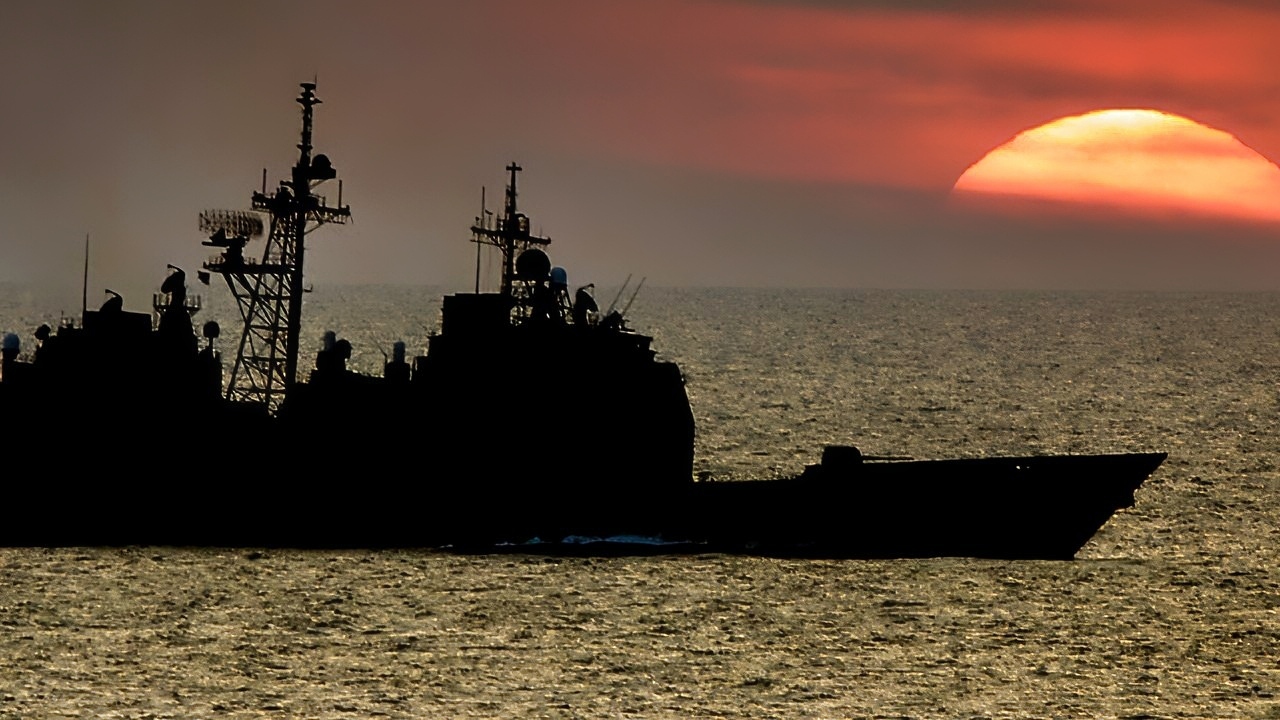
Key Points and Summary – China’s new YKJ-1000 “cement-coated” missile could upend the balance between cheap offense and costly defense at sea for the US Navy.
-Built with civilian-grade materials and reportedly costing under $100,000 per round, the weapon appears designed for mass production and saturation attacks against high-value targets like US carrier strike groups.

Navy Aircraft Carrier At Sea. Image Credit: Creative Commons.
-When each Chinese missile costs a fraction of US interceptors such as SM-6 or THAAD, the economics of naval defense start to break down.
-If exported, the system could offer smaller states a powerful anti-access tool and complicate Washington’s traditional reliance on carrier power projection.
Could a New, Dirt-Cheap Chinese Missile Present a New Challenge for the US Navy
The conventional wisdom for some time has been that China’s arsenal of anti-ship ballistic and cruise missiles would be a significant threat to U.S. Navy carrier strike groups (CSGs). For more than a decade, Beijing’s ability to field large numbers of anti-ship missiles has been foundational to its anti-access/area denial strategy.
That strategy calls for layered deployments of “carrier-killer” missiles such as the DF-21D and DF-26B, as well as hypersonic missiles such as the DF-17. These weapons can be operated and launched from land, ships, submarines, and bombers.
The objective of deploying these missiles would be to essentially deny the U.S. Navy access to the Western Pacific—hence the label. Deterrence would be accomplished because CSGs would be highly vulnerable to Chinese saturation missile attacks.
This scenario has two potential drawbacks for China. One is that the number of missiles required would mean a massive expense; further, their use would reveal any concealed launch sites. Second, targeting is still difficult at the longer ranges ballistic missiles would have to strike.
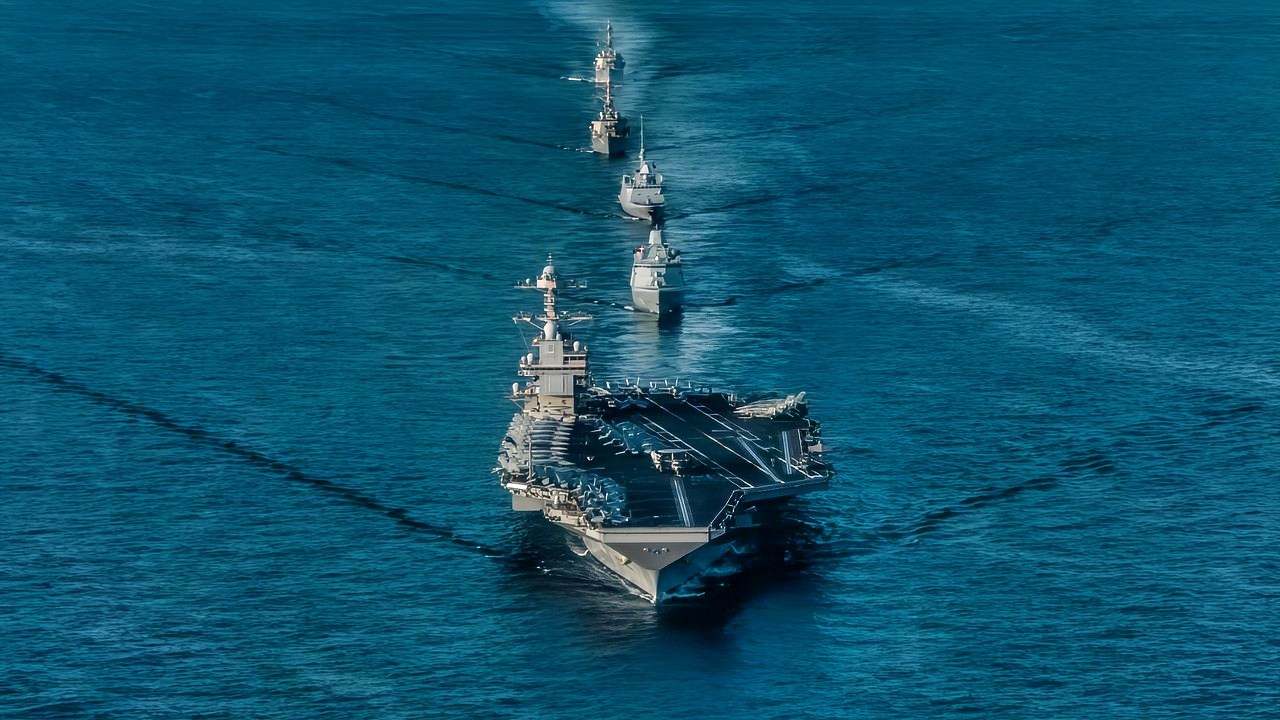
USS Gerald R. Ford Aircraft Carrier Training. Image Credit: U.S. Navy.
Two Major Developments and US Navy Problems
The rapidly increasing use of artificial intelligence is now changing the dynamic in the targeting sphere. AI could significantly enhance the accuracy of these missiles, thereby raising the risk to U.S. CSGs.
But in another recent change, the Chinese may be fielding what is described as a “dirt-cheap” missile that is produceable in large numbers.
This missile, the YKJ-1000, has been nicknamed the “cement-coated” missile. It reportedly uses civilian-grade materials, including foamed concrete, in its heat-resistant coating that allows the warhead to survive high speeds in the terminal phase.
According to slides from a Chinese presentation that is circulating on different websites, the per-unit cost of this missile may be as low as 700,000 yuan, which is around US $99,000.
The missile reportedly is already in mass production after successfully completing combat trials. Beijing-based Lingkong Tianxing Technology released a video on Tuesday showcasing the YKJ-1000 missile in flight, including real target impact footage from a desert testing range.
For purposes of comparison, one U.S.-made SM-6 naval interceptor missile, which is what would be used to take down one of these “cement-coated” missiles, costs about $4.1 million, more than 40 times the price of one YKJ-1000.
One Theatre High-Altitude Air Defense (THAAD) system missile costs $12–15 million. Even the cheapest U.S. missile defense-system interceptor, the Patriot PAC-3 MSE that Taiwan wants to buy, would cost $3.7–4.2 million.

A Terminal High Altitude Area Defense (THAAD) interceptor is launched from the Pacific Spaceport Complex Alaska in Kodiak, Alaska, during Flight Experiment THAAD (FET)-01 on July 30, 2017 (EDT). During the test, the THAAD weapon system successfully intercepted an air-launched, medium-range ballistic missile (MRBM) target.
Altering the Logic of Warfare
As one of the articles on this topic points out, “This imbalance between low-cost offense and high-cost defense has the potential to change the logic of warfare.”
“If this missile were introduced on the international defence market, it would be formidably competitive,” military commentator Wei Dongxu told Chinese state broadcaster CCTV on Tuesday. “Many nations have yet to develop their own hypersonic missiles, and this one—with its long range, high destructive power, and strong penetration capability—would likely become a hot commodity due to its dirt-cheap price.”
If sold abroad, such a weapon could empower smaller nations to enforce some level of deterrence against far more powerful military powers. It could thus alter the strategic balance around the world.
Most significant for the U.S. and its tradition of using naval power projection as a primary tool of foreign and defense policy, this missile would present a pronounced threat to advanced naval warships, particularly aircraft carriers.
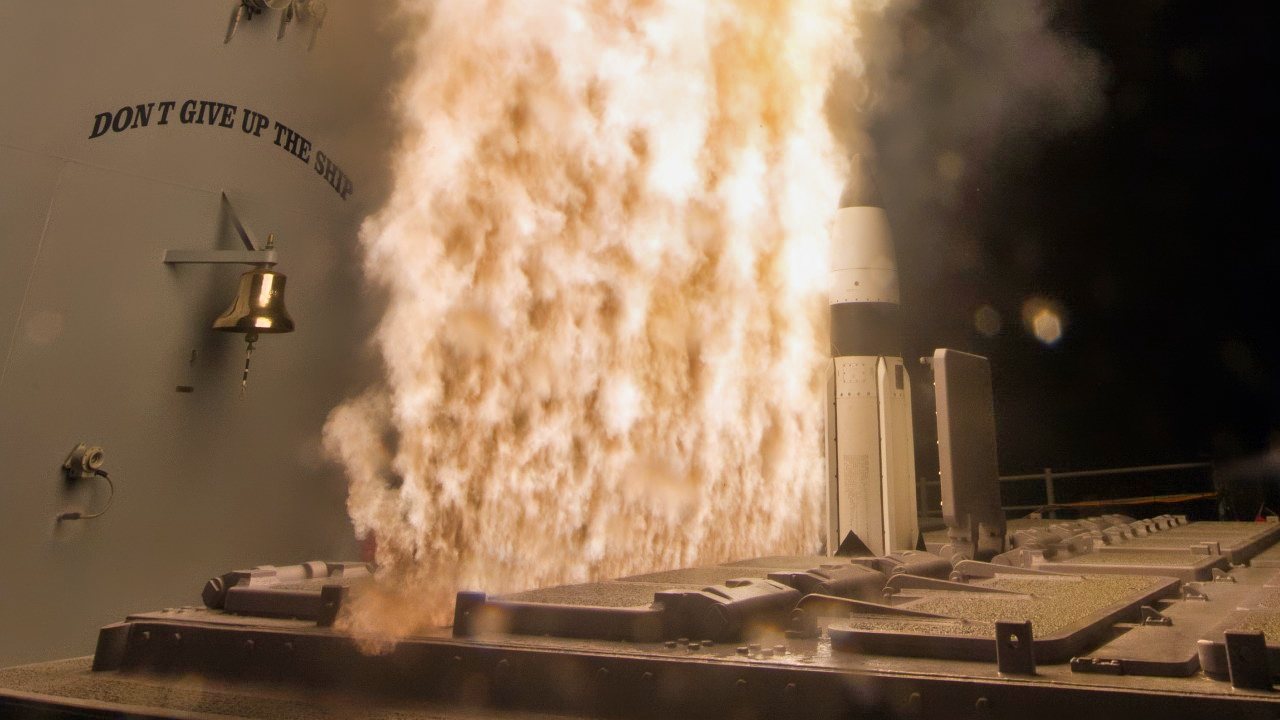
(Feb. 13, 2013) A Standard Missile-3 (SM-3) Block 1A interceptor is launched from the guided-missile cruiser USS Lake Erie (CG 70) during a Missile Defense Agency and U.S. Navy test in the Pacific Ocean. The SM-3 Block 1A successfully intercepted a target missile that had been launched from the Pacific Missile Range Facility, Barking Sands, Kauai, Hawaii. (U.S. Navy photo/Released)
For example, if Venezuela were to acquire this missile, it could target a U.S. CSG of the type and size currently positioned off its coast in the Caribbean.
This would have a profound impact on Washington’s strategic calculus, because it out-ranges the effective combat range of a Ford-class nuclear carrier, which is 1,100 kilometers.
Some analysts online have voiced skepticism about the claimed cost of the missile. There are specific questions about how the price of rocket fuel could be kept so low, not to mention the cost of the rocket engine itself.
The company has said an article providing some answers and greater details would be published soon.
About the Author: Reuben F. Johnson
Reuben F. Johnson has thirty-six years of experience analyzing and reporting on foreign weapons systems, defense technologies, and international arms export policy. Johnson is the Director of Research at the Casimir Pulaski Foundation. He is also a survivor of the Russian invasion of Ukraine in February 2022. He worked for years in the American defense industry as a foreign technology analyst and later as a consultant for the U.S. Department of Defense, the Departments of the Navy and Air Force, and the governments of the United Kingdom and Australia. In 2022-2023, he won two awards in a row for his defense reporting. He holds a bachelor’s degree from DePauw University and a master’s degree from Miami University in Ohio, specializing in Soviet and Russian studies. He lives in Warsaw.


DerpyDooYouToo
December 4, 2025 at 7:09 pm
well if it’s that cheap to build, and that effective, then why can’t the us do the same thing?
oh thats right. union jobs and 8x the cost for everything.
Doyle
December 4, 2025 at 8:13 pm
Pretty pathetic article. China has a new cheap missile and not much else. And it’s a carrier denial weapon. Trash talk at its best. Range, payload, seeker, kill chain,….not really mentioned. Give it a break, Chinese propaganda like all totalitarian states is what is cheap, a cheap lie. Lastly the range of a Ford carrier is more than 1,100 kms. as it moves unlike land and it has a global kill chain.
AtildHun
December 5, 2025 at 10:35 am
This is Check Mate, time for peace
DJ
December 5, 2025 at 1:16 pm
America has out priced itself on everything, capitalism works great if there is no greed, and evil.
Mr. James A. Spruyt
December 5, 2025 at 3:09 pm
Every day is one day closer to the violent take over of Taiwan. The USA is going to be humiliated when we step into a conflict that is not ours. PS When was the last time the USA won a war?