
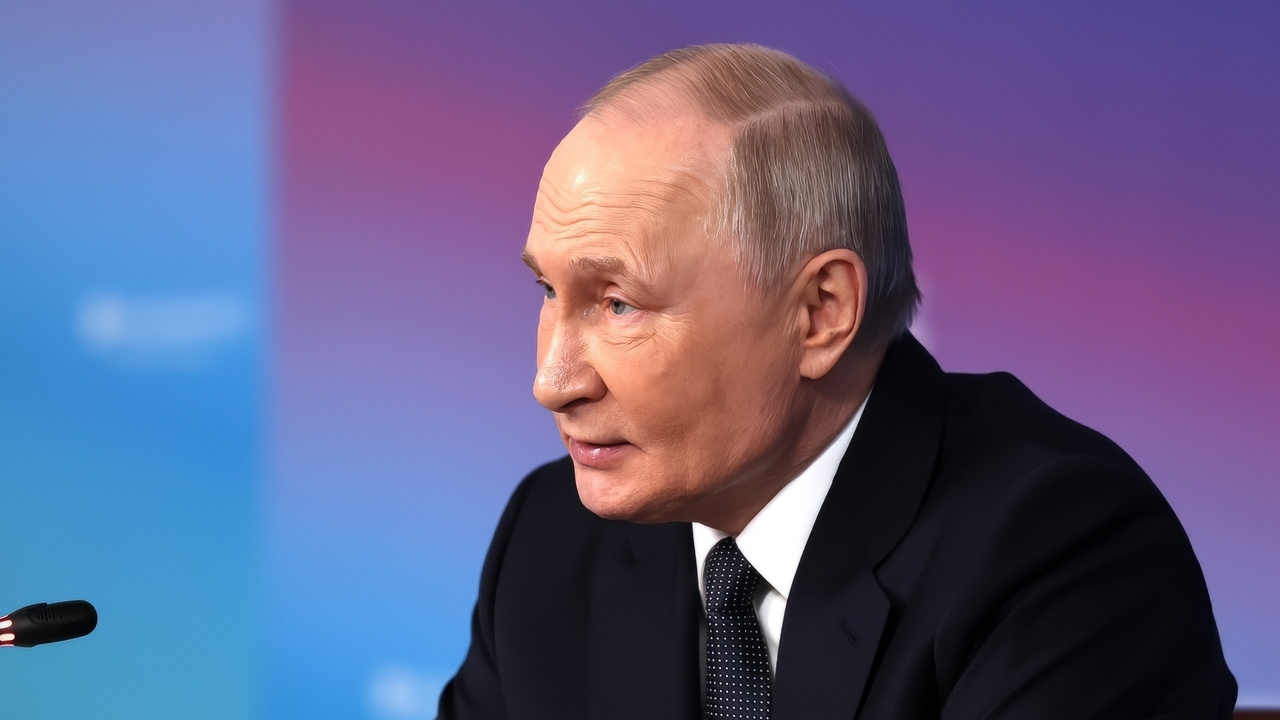
Russia has lost between 1 million and 1.2 million soldiers killed and wounded in Ukraine since February 2022, according to Western analysts. A January 2026 CSIS analysis estimated as many as 325,000 dead. Russia controlled roughly 27% of Ukraine at its 2022 peak; Ukrainian counteroffensives at Kharkiv in September 2022 and Kherson in November 2022 pushed Moscow back to about one-fifth of the country. Russian advances have slowed dramatically. In April 2026, the Institute for the Study of War recorded Russia’s first net territorial loss since August 2024. The war now consumes about 40% of Russia’s federal budget and 8% of its GDP.
Is Five Years Of Fighting Worth It For Russia in the Ukraine War?

Putin in 2021. Image Credit: Creative Commons.

Putin in 2023. Image Credit: Creative Commons.
More than four years after launching its full-scale invasion of Ukraine, Russia today occupies roughly one-fifth of Ukrainian territory – but the battlefield map today doesn’t look much like what Moscow appeared to envision during the opening months of the invasion.
After initially capturing around 26–27% of Ukraine in early 2022, Russian forces were later pushed out of large areas during a series of Ukrainian counteroffensives that recaptured territory around Kyiv, Kharkiv, and Kherson. At the same time, Russia has suffered enormous casualties, with Western analysts now estimating the number of killed and wounded soldiers lying somewhere between 1 million and 1.2 million.
While Russia continues to make incremental gains in eastern Ukraine, the pace of advance has slowed dramatically and is coming at an extraordinary human and economic cost.
What Russia Captured In 2022
When Russian forces first crossed into Ukraine in February 2022, Moscow launched one of the largest military invasions in Europe since World War II.
Russian troops attacked from multiple directions simultaneously, including from Belarus toward Kyiv and from Russia into northeastern Ukraine, and north from Crimea into southern Ukraine. Within weeks, Russian forces had successfully occupied large areas around Kyiv, including Bucha, Irpin, and Hostomel, while also seizing territory in Chernihiv and Sumy regions. Russian troops advanced through the south of Ukraine, capturing Kherson city, Melitopol, and eventually Mariupol.
At its peak, Russia’s territorial expansion saw Moscow take control of as much as 27% of Ukraine.
Russian President Vladimir Putin and other senior Kremlin officials repeatedly signaled that Moscow intended to remove Ukraine’s government and install a more pro-Russian leadership in Kyiv during these early days of the conflict, and it was not controversial to suggest at the time that Ukraine could technically collapse.
But over time, the invasion stalled as Russian logistics broke down and Ukrainian resistance hardened with the support of Western governments.

President Putin of Russia in 2018.
Everything Soon Changed
Things began to change fairly quickly, with Russia abandoning its northern offensive by April 2022 after failing to capture Kyiv. Russian troops withdrew completely from Kyiv Oblast, Chernihiv, and Sumy – and that retreat soon revealed evidence of alleged war crimes in Bucha and surrounding towns.
Ukraine then launched a rapid counteroffensive in the Kharkiv region in September 2022, collapsing Russian defensive lines in a matter of days as Ukrainian mechanized units recaptured Izium, Kupiansk, Balakliia, and thousands of square kilometers of territory. It was one of the most significant battlefield defeats Russia had suffered since the invasion began.
Another major setback came in November 2022, when the Russians withdrew from Kherson city and the western bank of the Dnipro River.
The retreat was particularly humiliating for Moscow because the Kremlin had formally declared Kherson Oblast part of Russia only weeks earlier. Kherson remains the only regional capital Russia captured after February 2022 – and then lost.
Although Russia regained offensive momentum during parts of 2024 and 2025, those gains now appear to be slowing again. According to the Institute for the Study of War, Russian forces suffered a net territorial loss in Ukraine for the first time since August 2024 in April of this year.
Russian Advances Are Becoming Smaller
Russia continues advancing in parts of Donetsk and eastern Ukraine, but the scale of those gains has shrunk dramatically compared to earlier periods of the war. Much of Russia’s recent strategy has relied on attritional infantry assaults backed by heavy artillery, glide bombs, drones, and massed firepower.
Ukraine, meanwhile, has increasingly targeted Russian logistics, oil infrastructure, and military facilities deep inside Russian territory using long-range drones – a tactic that continues to deliver results and complicate Russian planning. In March 2026, for example, Ukrainian drones struck an oil refinery in the Russian central city of Ryazan. The fight is no longer taking place solely on Ukrainian soil.
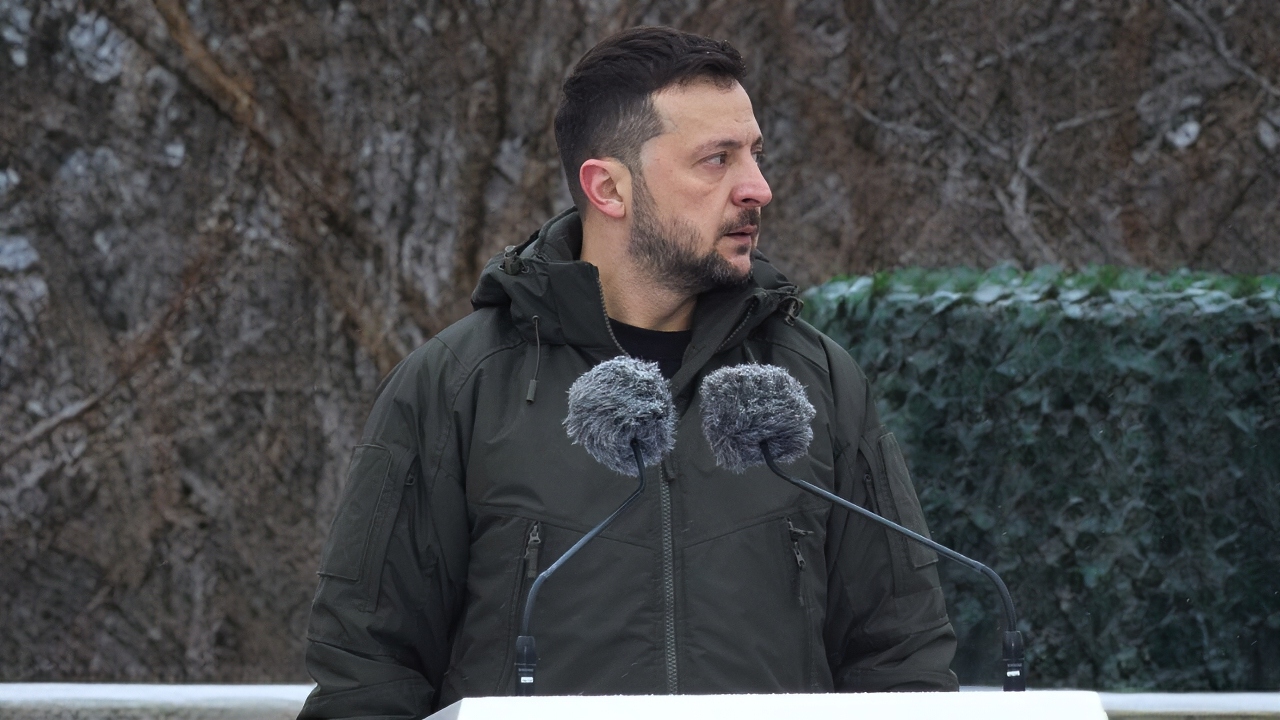
Image Credit: Office the the President, Ukraine.

T-90 Tank from Ukraine War. Image Credit: Creative Commons.
In fact, recent weeks have seen some of the largest Ukrainian drone strikes of the war.
Russian officials claimed to have intercepted more than 500 Ukrainian drones during a massive May attack that targeted multiple Russian regions, including areas near Moscow. Ukraine has also struck Russian oil refineries and naval facilities far from the frontline.
More Than One Million Troops Lost
Not only is Russia seeing its territorial gains reversed in certain areas, but it is also suffering staggering casualties. Estimates now generally place Russian military casualties between 1 million and 1.2 million killed and wounded since February 2022.
A January 2026 analysis by the Center for Strategic and International Studies estimated that total Russian casualties could be as high as 1.2 million, with as many as 325,000 dead.
Can Russia Sustain the War?
Russia has managed to avoid military collapse by continuously replenishing its forces through a combination of contract recruitment drives, financial bonuses, prison recruitment programs, and mobilization efforts across poorer Russian regions.
However, Russia is losing its best troops and replacing them with soldiers who are less trained, or barely trained at all. Meanwhile, Russia’s economy is also coming under growing strain from labor shortages, which are themselves worsened by military recruitment drives. Add to that rising inflation and the enormous cost of sustaining a war that now consumes roughly 40% of Russia’s federal budget spending and around 8% of the country’s GDP, and it’s clear Russia is under pressure.
The Kremlin still appears capable of continuing this war for the foreseeable future, but as we enter the fifth year of the conflict, the question is whether small territorial gains are worth the scale of losses incurred to achieve them.
MORE – The Dodge Durango of Submarine: The Virginia-Class Is Best on Planet Earth
About the Author:
Jack Buckby is a British researcher and analyst specializing in defense and national security, based in New York. His work focuses on military capability, procurement, and strategic competition, producing and editing analysis for policy and defense audiences. He brings extensive editorial experience, with a career output spanning over 1,000 articles at 19FortyFive and National Security Journal, and has previously authored books and papers on extremism and deradicalization.


