

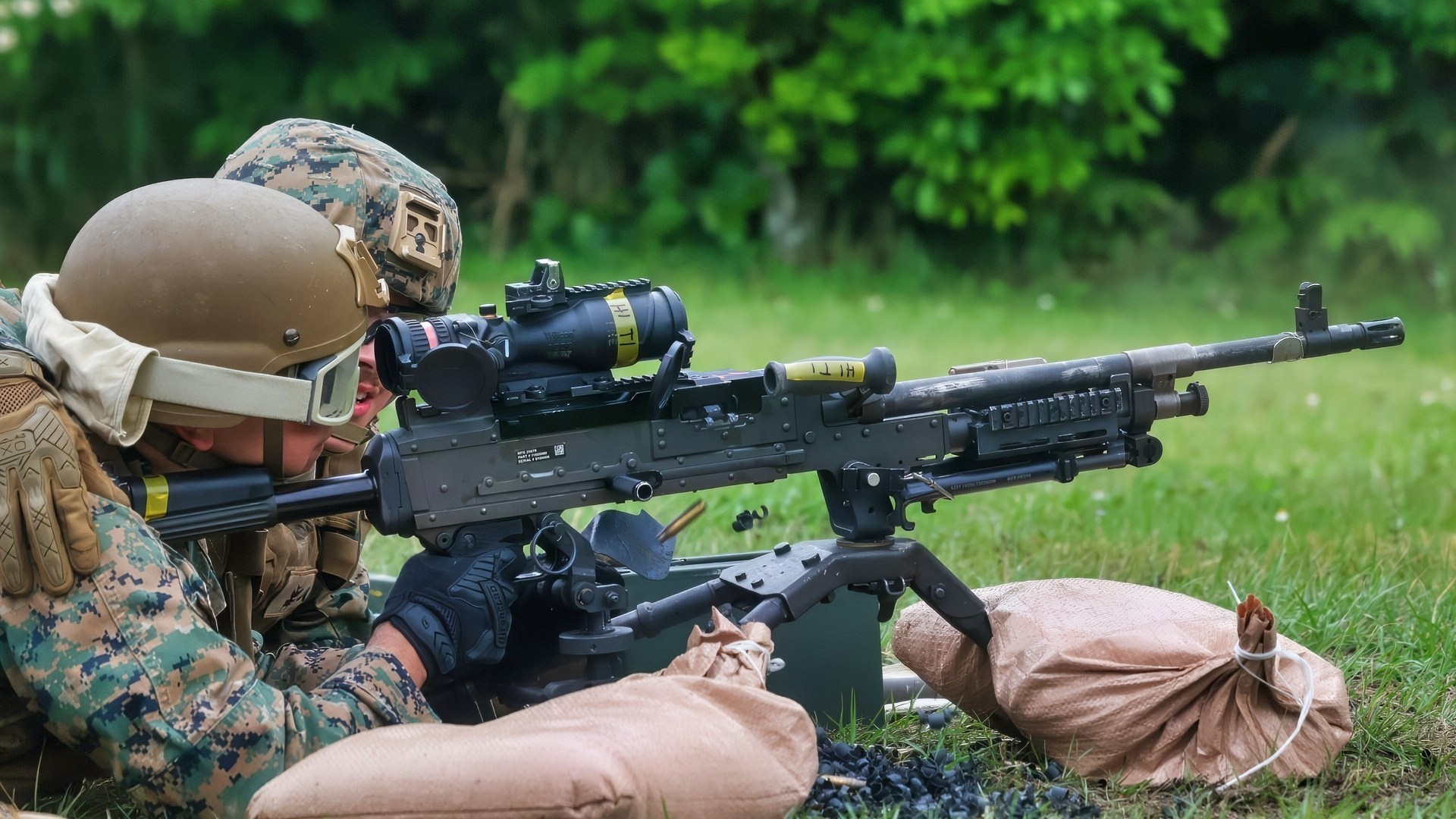
Article Summary – U.S. Marines are quietly building a foothold on Japan’s Yonaguni Island, just 70 miles from Taiwan, moving medical and logistics supplies, testing refueling points, and landing CH-53E heavy-lift helicopters.
-Officially framed as humanitarian and disaster-response training, the activity is clearly tailored to a future Taiwan fight and to punching holes in China’s anti-access/area-denial strategy.

A joint team consisting of F-35 Patuxent River Integrated Test Force flight test members, U.S. Sailors and Marines, and the crew of the Japan Maritime Self-Defense Force Izumo-class multi-functional destroyer JS Kaga (DDH-184) are executing developmental sea trials in the eastern Pacific Ocean to gather the necessary data to certify F-35B Lightning II short takeoff and vertical landing aircraft operations. While aboard the MSDF’s largest ship, the Pax ITF flight test team has been gathering compatibility data for analysis in order to make recommendations for future F-35B operational envelopes, further enhancing the Japanese navy’s capabilities. The results of the testing will contribute to improved interoperability between Japan and the United States, strengthening the deterrence and response capabilities of the Japan-U.S. alliance and contributing to peace and stability in the Indo-Pacific region. Japan is an F-35 Joint Program Office foreign military sales customer planning to purchase 42 F-35Bs. The F-35 Joint Program Office continues to develop, produce, and sustain the F-35 Air System to fulfill its mandate to deliver a capable, available, and affordable air system with fifth-generation capabilities.
-Beijing has already sent drones to watch, while Japan scrambled F-15Js in response.
-With Tokyo’s new hardline government openly hinting it could respond to a Taiwan war, Yonaguni is fast becoming a symbolic—and practical—forward outpost aimed squarely at deterring China.
U.S. Marines and Japan Are Collaborating Close to China’s Shores
A potential Chinese invasion of Taiwan dominates discourse among military personnel, government officials, intelligence analysts, and observers.
Will the United States intervene in a potential Chinese attack against Taiwan?
We are learning new clues almost daily about the United States’ strategic posture in the Indo-Pacific.

J-10 Fighter From China. Image Credit: Creative Commons.
Now we have news that the Americans believe that forward-deployed military personnel may be necessary to face down China.
Recently, the United States has sent U.S. Marines to and from an outpost in Kubura Port on Japan’s Yonaguni Island – only 70 miles from Taiwan.
The Marines have sent military logistical items to the location. Most of the material is medical supplies and the means to respond to natural disasters.
Xi Jinping Upset With Japanese Rhetoric and Joint Actions With the U.S.
This is bound to set Xi Jinping’s hair on fire as he is always concerned about the strategic, operational, and tactical stance of the United States versus Taiwan.
Relations between the Chinese and the Japanese are also at a boiling point after Japan’s Prime Minister Sanae Takaichi’s rhetoric this month claimed that war between China and Taiwan could trigger a military response from Tokyo.
The Japanese, offering a potential outpost to the Marine Corps, will only exacerbate this diplomatic impasse.
This year, the 12th Littoral Logistics Battalion of the Marine Corps sent training items to the island in preparation for Resolute Dragon 2025.
The United States and Japan held combined arms drills in September to rehearse controlling and holding terrain in the First Island Chain. The training first focused on treating wounded personnel in a potential battle with China.
A Significant Amount of Logistical Supplies
As Naval News described, “The Resolute Dragon 2025 deployment included shipping containers, refrigeration equipment, and water. The supplies were offloaded to the island and shipped to the Japan Self-Defense Force’s Camp Yonaguni, located on the island. Over the course of two days, the Corps offloaded eighteen 20-foot ISO containers, two water SIXCONs, and a 40-foot refrigeration container between September 15-16. The offloaded containers returned to Naha Military Port by September 19.”
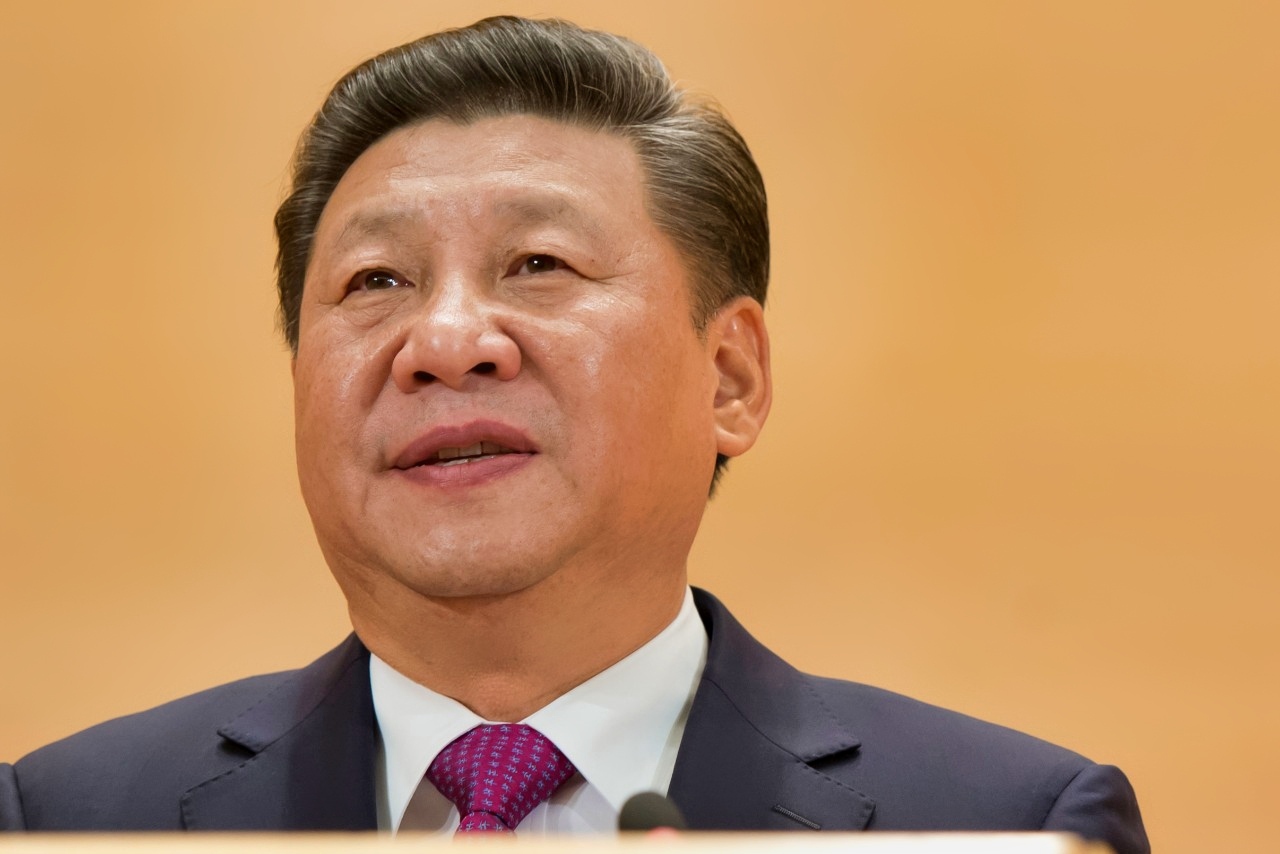
Xi Jinping President of the People’s Republic of China speak’s at a United Nations Office at Geneva. 18 january 2017. UN Photo / Jean-Marc Ferré
The Marines sent other “humanitarian assistance and disaster response” supplies to Camp Yonaguni.
This activity spurred a response.
The Chinese deployed a reconnaissance drone to check out this logistical activity. Not to be intimidated, the Japanese scrambled F-15Js into the air in a show of strength.
The Leathernecks have also built a refueling point for aviation assets on Yonaguni Island.
This supported a joint American-Japanese simulation called Exercise 07 JX in late October.
Large Marine Helicopters Deployed
The Marines landed at least one CH-53E Super Stallion helicopter in a never-before-executed activity in that part of the ocean.
The CH-53E is a heavy-lift helicopter perfect for the job of ferrying supplies. The items were sent from Okinawa.
China Believes This is Only the Beginning of Aggression
The Chinese have used these activities to gin up their propaganda organs, claiming that the Marines would eventually be using F-35B Lightning IIs acting in concert with the Japanese on the island.
According to state-run media, the Americans are allegedly lengthening runways to accommodate other airplanes.
The United States could also use the island to deploy full-time M142 HIMARS launchers and NMESIS anti-ship systems.
This would create a situation that could mitigate the effects of China’s anti-access/ area denial strategy around Taiwan.
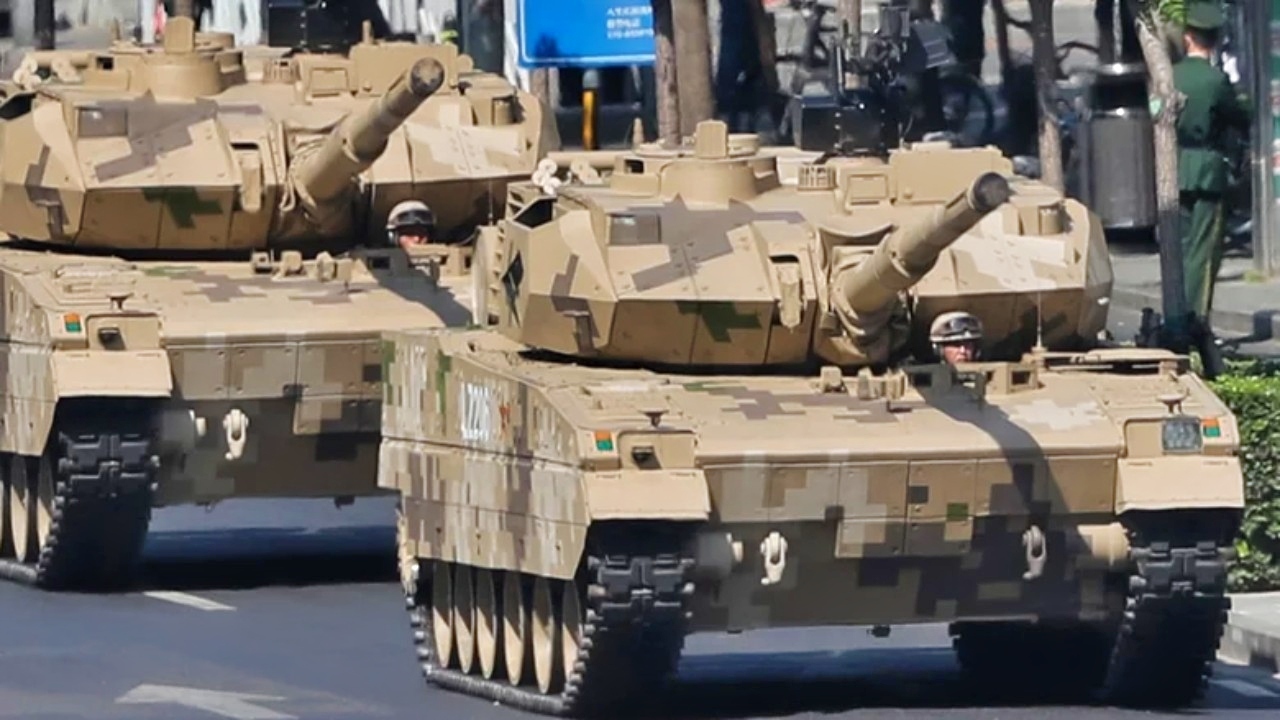
Type 15 Tank from China. Image Credit: Creative Commons.
This is an essential development for Japan and the United States – one that China is sure to point out as an affront to its sovereignty.
China has militarized various islands in the South China Sea and made territorial claims in the East China Sea.
This time, the Americans and the Japanese appear to have the same idea about an island near Taiwan.
It is unclear whether Taipei is working with Washington or Tokyo to encourage these actions on Yonaguni Island. The activity is sure to worsen relations between Japan and China. That doesn’t seem to rattle Japan’s newly installed hardline conservative government led by Japanese Prime Minister Takaichi, which is more hawkish toward China.
Are the Americans and Japanese Looking to Intervene?
This also leaves some wondering if the United States and Japan would intervene in some type of attack or blockade against Taiwan executed by the Chinese.
To be sure, these are only short-term supply deliveries for military exercises, but Xi believes that the worst could happen from the Americans and Japanese who are conducting drills so close to China.
If I were advising President Donald Trump or Secretary of Defense Pete Hegseth, I would recommend postponing combined exercises near the island in question until a full trade agreement is reached between the United States and China. There is no reason to antagonize Xi while negotiations are ongoing.
But to the United States and Japan’s credit, they have found a weak spot in China’s anti-access/ area denial gambits, and both countries are likely to keep exercises going until there is a full-time presence on the island that is so close to China.
Relations between Japan and China are at their worst in months. Japan’s prime minister doesn’t seem to care.
The Marines are annoying China to no end with the activity on the island. They may claim that this is for humanitarian or training purposes, but Xi is unlikely to see it this way.
However, this can be considered a dose of their own medicine in exchange for militarizing islands far from China’s shores.
We’ll keep an eye on this strategic island to see whether the Marines and the Japanese have bigger plans for its defense and whether the two countries will deploy offensive weapons someday.
The die has been cast for more regular operations, less than 100 miles from Taiwan. Xi will deploy drones to fly over the area to look for more signs of regular activity in the vicinity.
It will likely encourage China to refrain from having friendly relations with both Japan and the United States in the future.
About the Author: Brent M. Eastwood
Author of now over 3,000 articles on defense issues, Brent M. Eastwood, PhD is the author of Don’t Turn Your Back On the World: a Conservative Foreign Policy and Humans, Machines, and Data: Future Trends in Warfare plus two other books. Brent was the founder and CEO of a tech firm that predicted world events using artificial intelligence. He served as a legislative fellow for US Senator Tim Scott and advised the senator on defense and foreign policy issues. He has taught at American University, George Washington University, and George Mason University. Brent is a former US Army Infantry officer. He can be followed on X @BMEastwood.


diver_night
November 24, 2025 at 12:44 pm
There is only one good kind of communist.