

Key Points and Summary – China’s CH-7 “Rainbow” is a stealth, flying-wing UCAV aimed at deep-penetration ISR and strike.
-Built by CASC, it sports an internal bay, dorsal intake, and reportedly an 85-ft span with ~15-hour endurance.
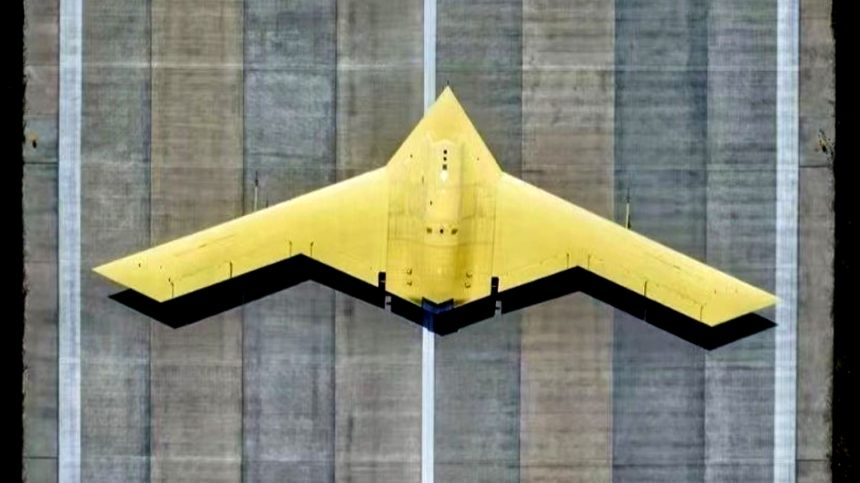
CH-7 Drone
-Recent imagery suggests a prototype is moving, but engines and signature maturity remain unknown—panel seams and China’s turbofan bottlenecks are real constraints.
-Even unfinished, the CH-7 matters: a carrier-capable, long-range sensor/striker to extend PLA kill chains, cue missiles, and complement inexperienced pilots.
-As a forward node for manned-unmanned teaming—and a potential export flagship—the CH-7 pressures U.S. forces to harden air defenses, jam links, and accelerate loyal-wingman concepts now.
The CH-7 Drone Changes Everything
China’s next-generation unmanned combat aerial vehicle (UCAV), the CH-7 (also known as “Rainbow-7” or Cai Hong 7), has drawn significant international attention. It’s said to be a flying-wing, stealth-design drone designed for deep-penetration ISR and strike missions.
The first design made its public debut as a full-scale mock-up at the 2018 Airshow China in Zhuhai.
Since then, additional imagery and reports have indicated that the project is progressing rapidly.
China’s state aerospace industry is believed to be advancing toward a prototype, raising questions for the United States and allied planners about when it could soon move from concept to fielding and how they plan to respond.
So what is this drone?
What threat does it pose, and what are the implications of its anticipated arrival?
What the CH-7 Is Supposed to Be
According to Chinese industry and commentary, the CH-7 is built by the China Aerospace Science and Technology Corporation (CASC) as a high-altitude, long-endurance stealth UCAV with a flying-wing layout.
That means it features no vertical tails and a blended wing-body. It features an internal weapons bay, meaning it can penetrate contested airspace for intelligence, surveillance, and reconnaissance missions and for stand-off strikes.
Some early published provisional specifications said that the drone had a wingspan of around 72 ft, a length of roughly 33 ft, an endurance of up to 15 hours, and a maximum take-off weight in the approximately 10-tonne class.
More recent mockups show that its wingspan has increased to 85 ft, and its top speed reached 575 mph.
There are, however, some details we know for sure, based on open-source information.
What We Know For Sure
While China’s publicity surrounding the project is ambitious, there are some publicly verifiable details – now many, but some – that give us an idea of what’s really happening.
After the CH-7 model made its first appearance in 2018, it took 4 years to appear again. In 2022, a refined version with sharper wing-tips and a longer dorsal engine appeared.
Video and imagery from late 2024 also appear to show a full-scale prototype taxiing at a test facility, including yellow primer paint and what may be a blended-wing aircraft performing low-speed runs.
In terms of engine, the drone is said to be powered by a single turbofan system with a dorsal intake. But the specifics are not there. We don’t know the thrust output, the manufacturer, or afterburning status. For China, engine maturity is a known bottleneck, and this is likely to impact its UCAV ambitions, too.
Then there’s the matter of stealth. The flying-wing layout and internal bay seen in the mock-ups are consistent with low-observable design.
However, there are panel gaps and exposed seams that suggest the aircraft is still very much in its development phase and that the airframe is not yet complete.
We don’t know how long the production process for the drone may be, but we do know that a mature airframe has not yet been shown – and may not yet have been built.
All of that leads to the question of service entry timelines and operational status – and the answer is simply “we don’t know.”
The CH-7 is a credible design concept that could be realized and will mature into a product in the future.
But full operational capability and a timeline for its entry into service are simply impossible to determine at this stage, based on what we know.
The CH-7 Matters Regardless
Despite the many questions surrounding the project – and the fact that it is not yet ready to be fielded – the CH-7 matters for several reasons.
First, the PLA is working to layer its systems – satellites, high-altitude drones, ship-borne sensors, and long-range strike missiles – to contest American power projection across the Indo-Pacific.
A stealth UCAV like the CH-7 would provide persistent surveillance capabilities, as well as strike power when used alongside forward maritime assets, such as its new supercarriers.
Naval carrier integration is key here, and drones also mean that China doesn’t have to rely entirely on its largely inexperienced pilots.
There’s also the matter of unmanned teaming.
By providing a stealthy forward sensor node – the UCAV – that can feed data to bombers, missiles, and other systems, the CH-7 ensures Chinese forces are better informed about the environment around them.
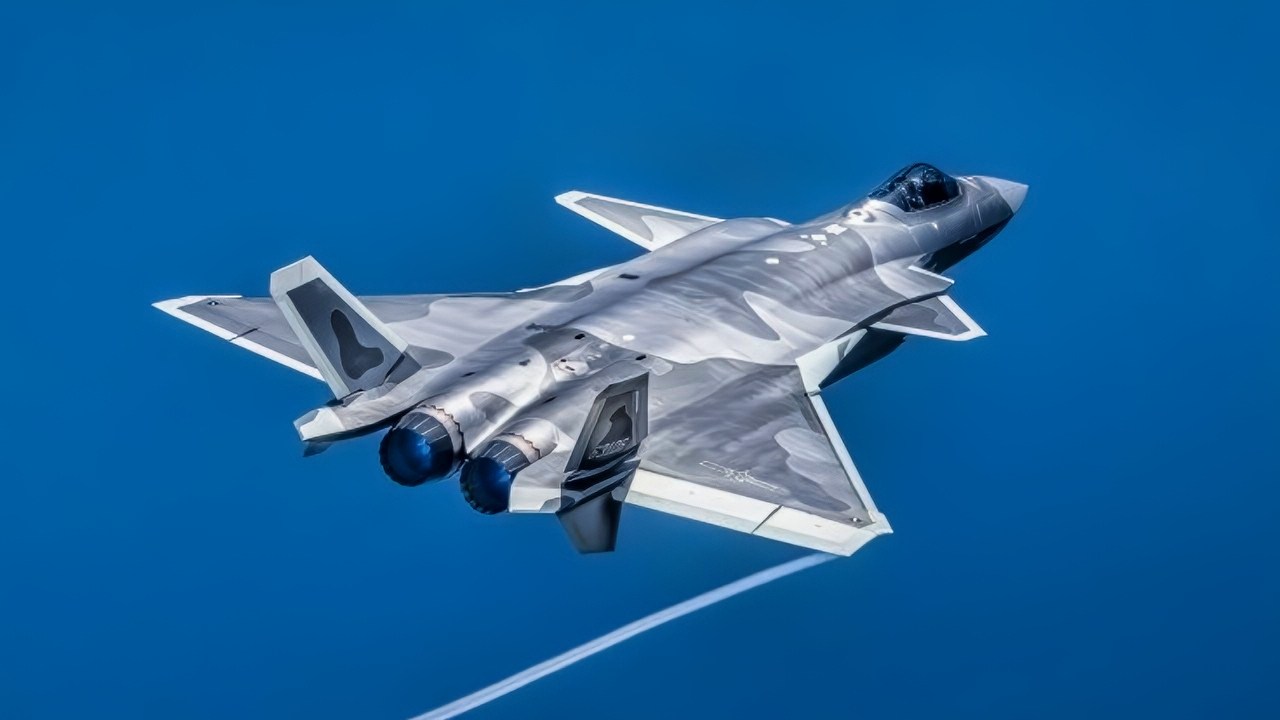
J-20 Fighter from China. Image from PLAAF.
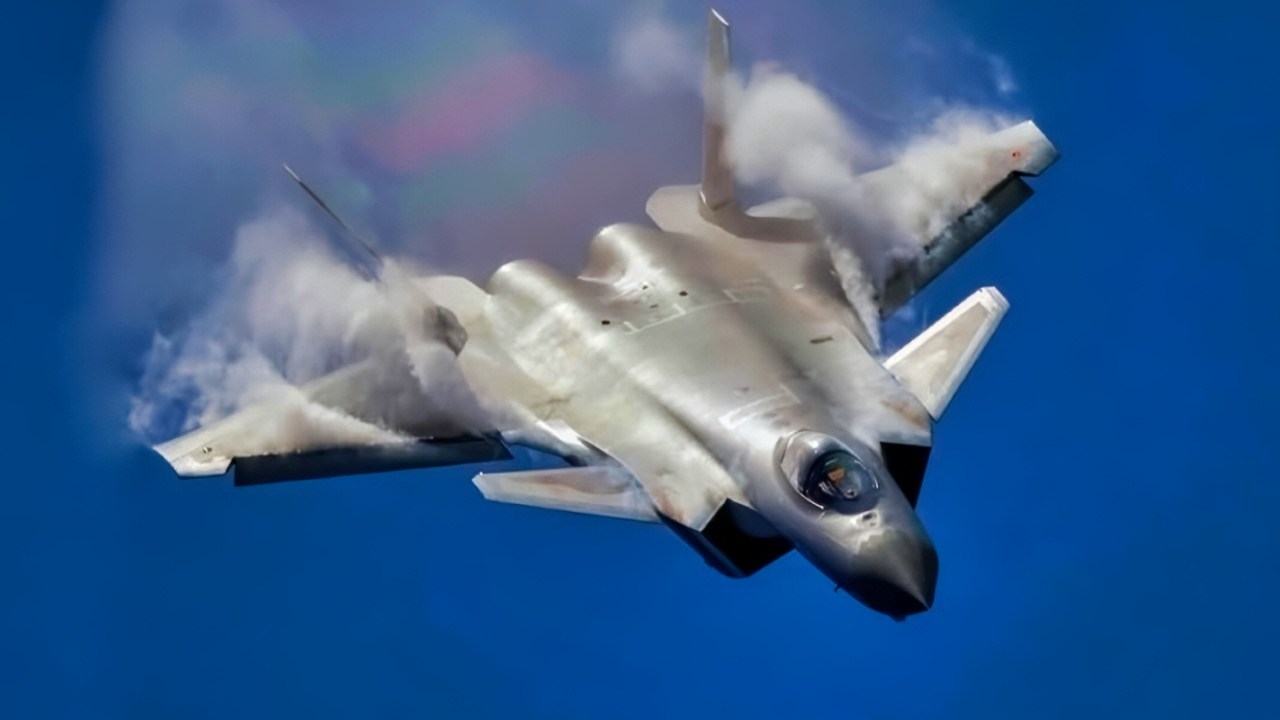
J-20S Fighter Chinese Internet Image.
Chinese media have described the CH-7 as “eyes for other combat units” – and that’s precisely what it is. Yes, it can strike – but it’s also watching everything China’s adversaries are doing in the region, too.
In 4 Words: A Real Powerhouse or Not?
And finally, there’s the opportunity for export orders. No export customers are confirmed for the CH-7, but the idea isn’t crazy, and some Chinese sources have floated the possibility of marketing new advanced UCAVs abroad.
After being photographed in flight for the first time this month, China’s CH-7 is closer than ever – and it will be consequential.
About the Author:
Jack Buckby is a British author, counter-extremism researcher, and journalist based in New York. Reporting on the U.K., Europe, and the U.S., he works to analyze and understand left-wing and right-wing radicalization, and reports on Western governments’ approaches to the pressing issues of today. His books and research papers explore these themes and propose pragmatic solutions to our increasingly polarized society. His latest book is The Truth Teller: RFK Jr. and the Case for a Post-Partisan Presidency.


