

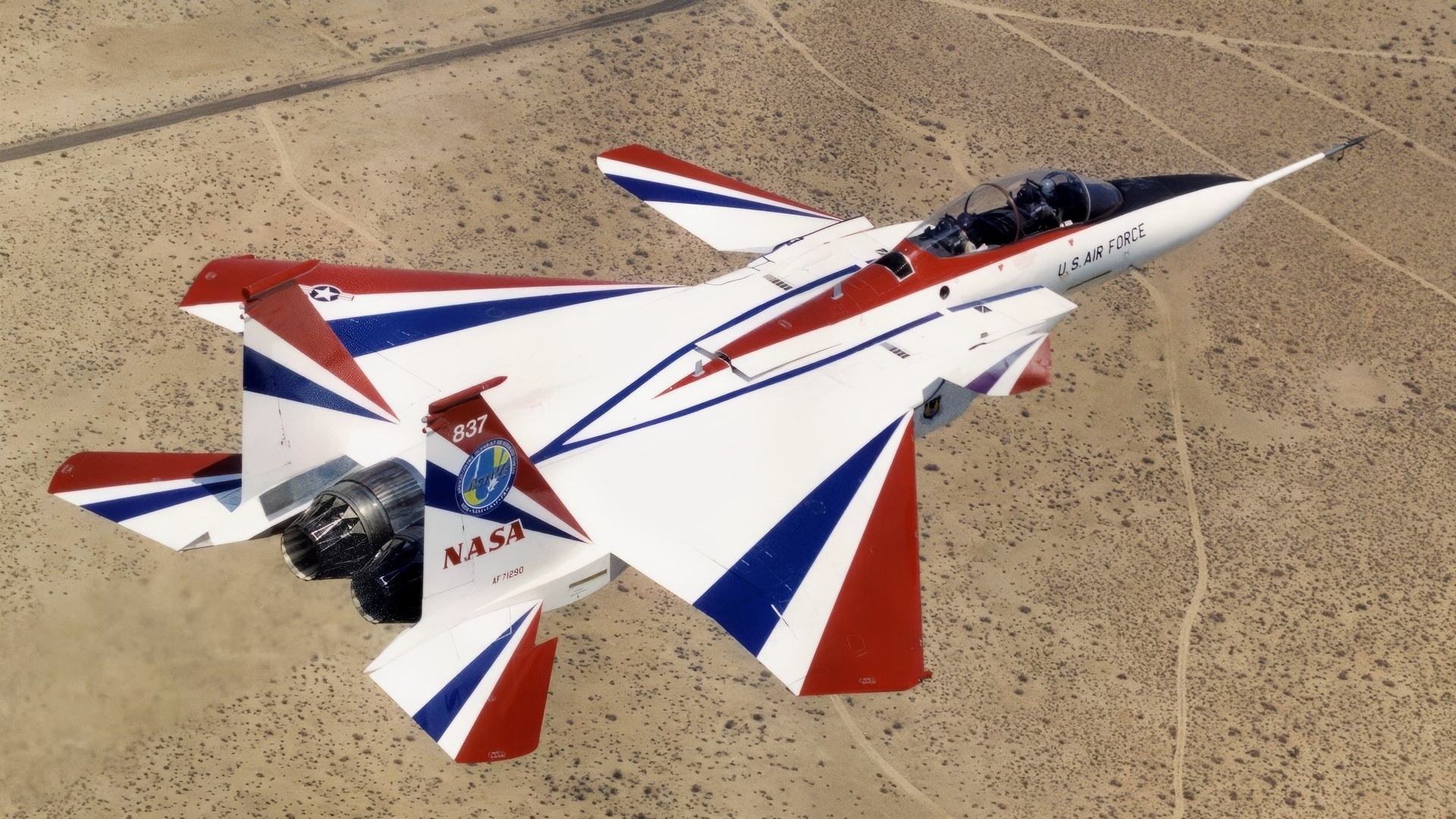
The F-15 STOL/MTD, and later the F-15 ACTIVE, were among the most unusual Eagle variants ever built. Experimental platforms, operated by NASA and the USAF, these specialized F-15s were used to test thrust vectoring, ultra-short takeoffs, and future fighter maneuverability concepts at a time when Soviet fears motivated technological expansion.
F-15 STOL/MTD: Origins of the Program
During the Cold War, the US and its allies were concerned about the vulnerabilities of runways to Soviet missile strikes. The thinking went that if the Soviets rendered runways unusable, the aircraft stationed there would be unusable in turn.
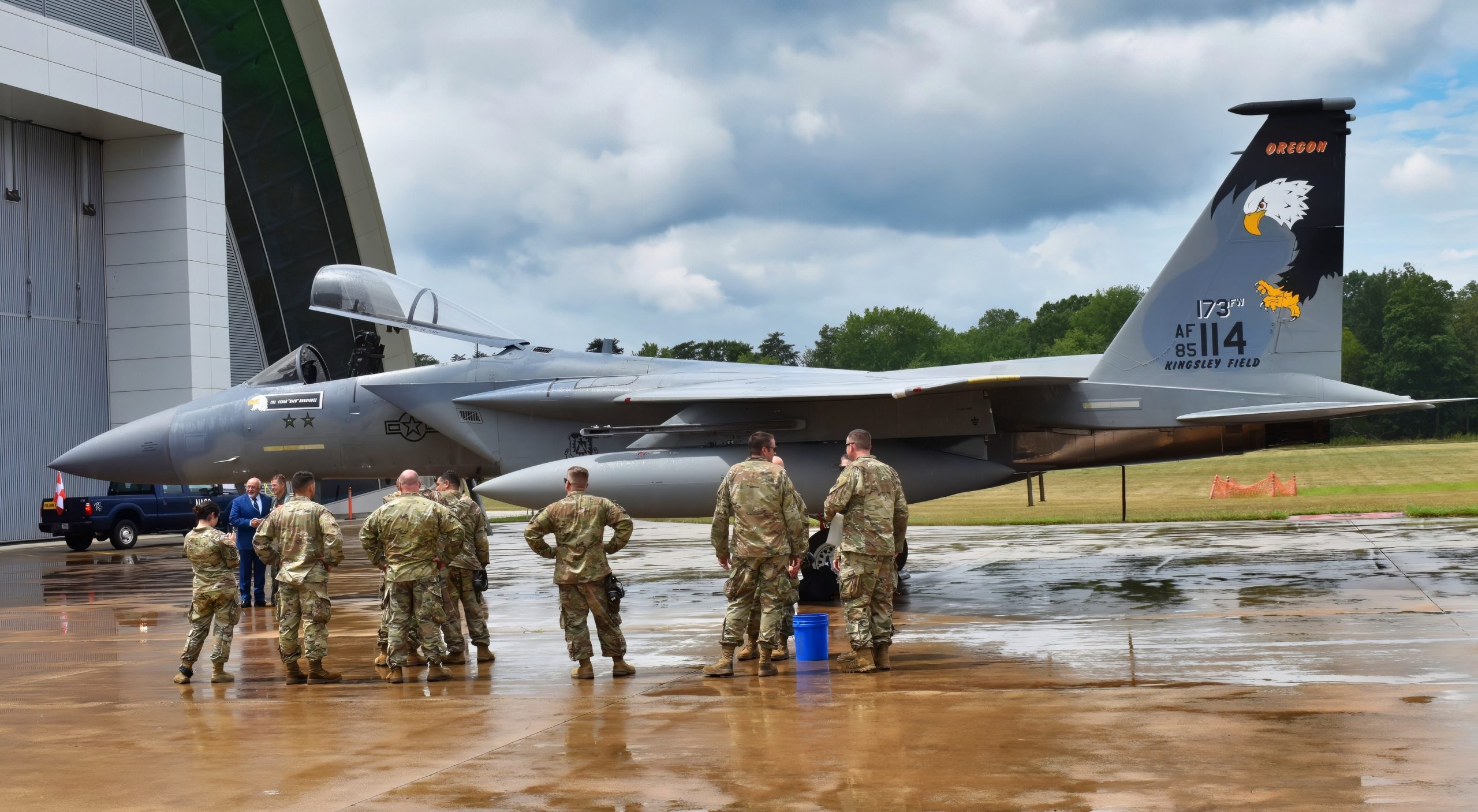
F-15C Fighter with Flight Crew. Image Credit: National Security Journal.
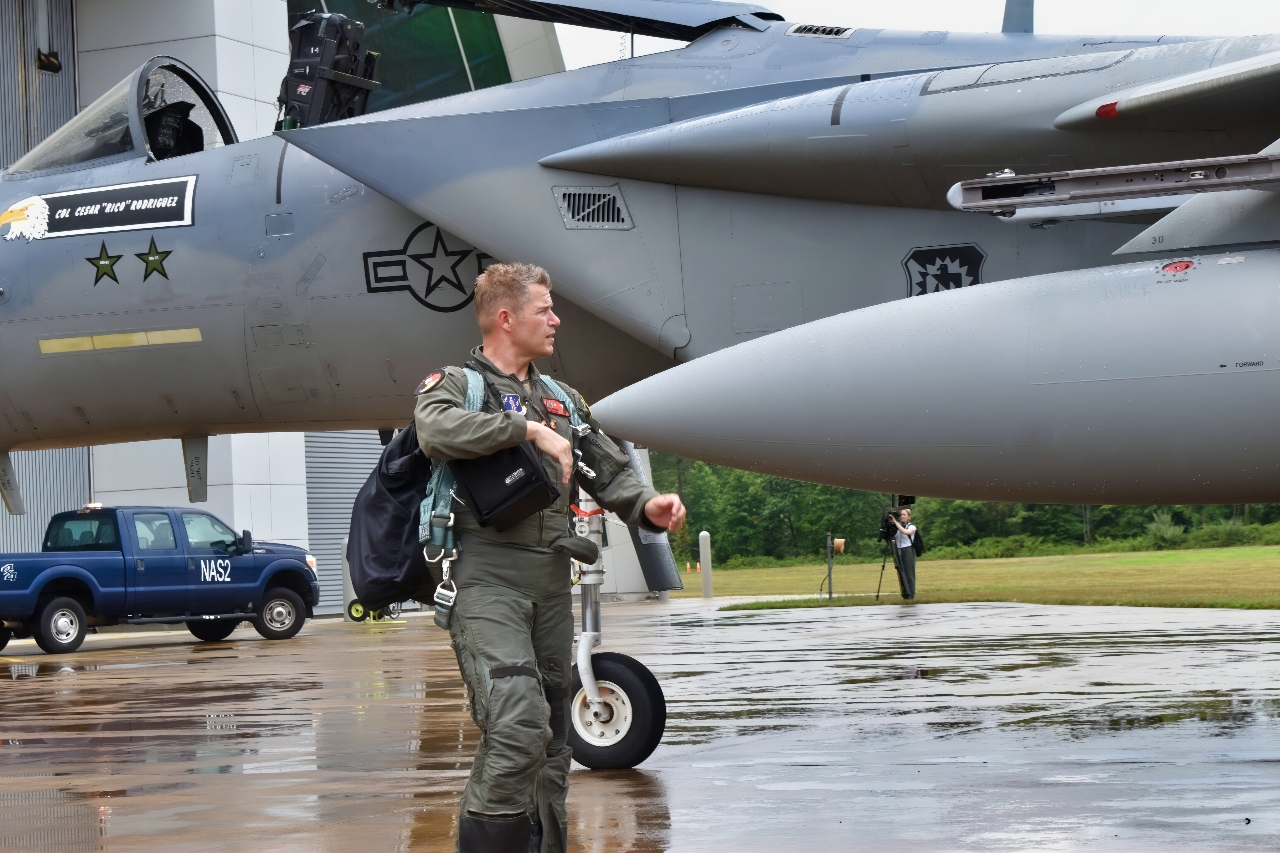
F-15C Pilot National Security Journal Photo. Image Credit: Brent M. Eastwood/National Security Journal.
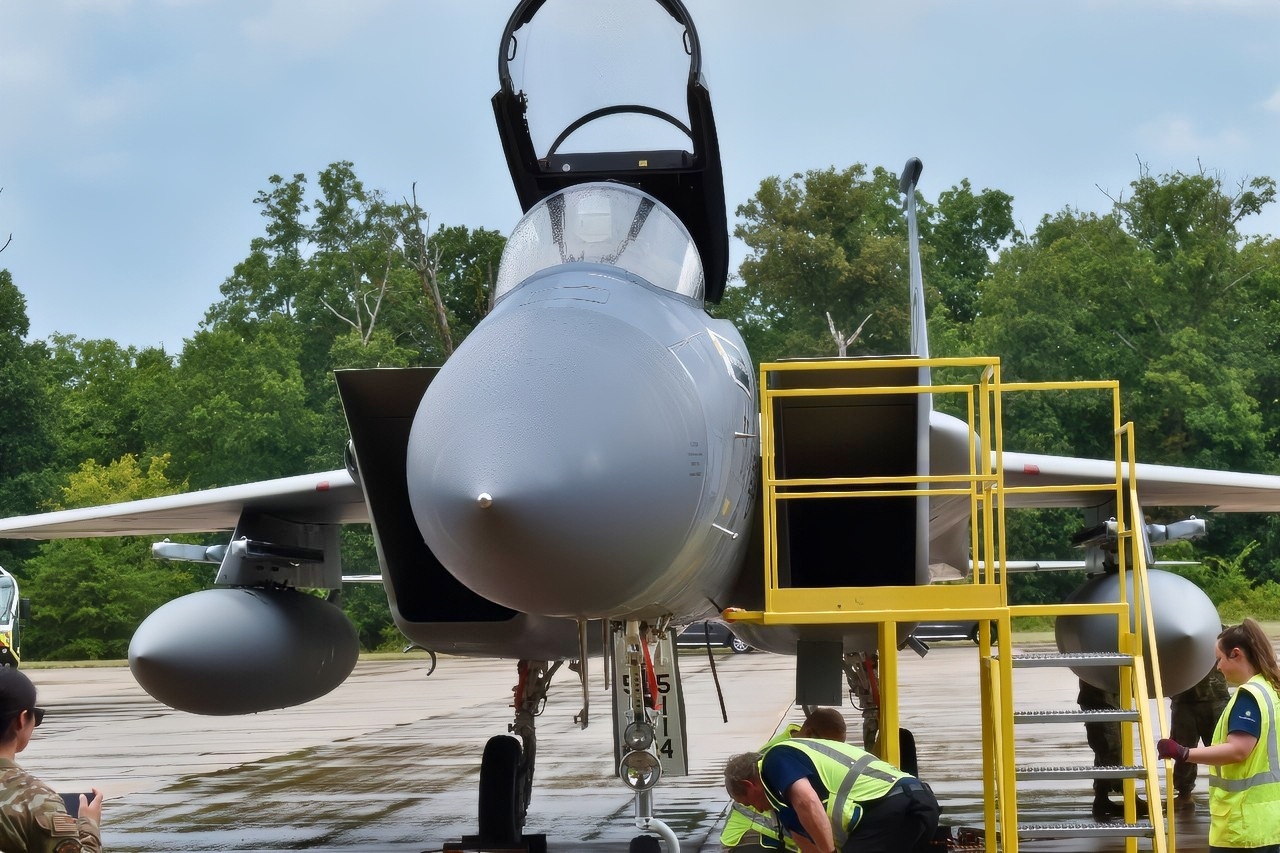
Rain on an F-15C Fighter at the Smithsonian National Security Journal Photo.
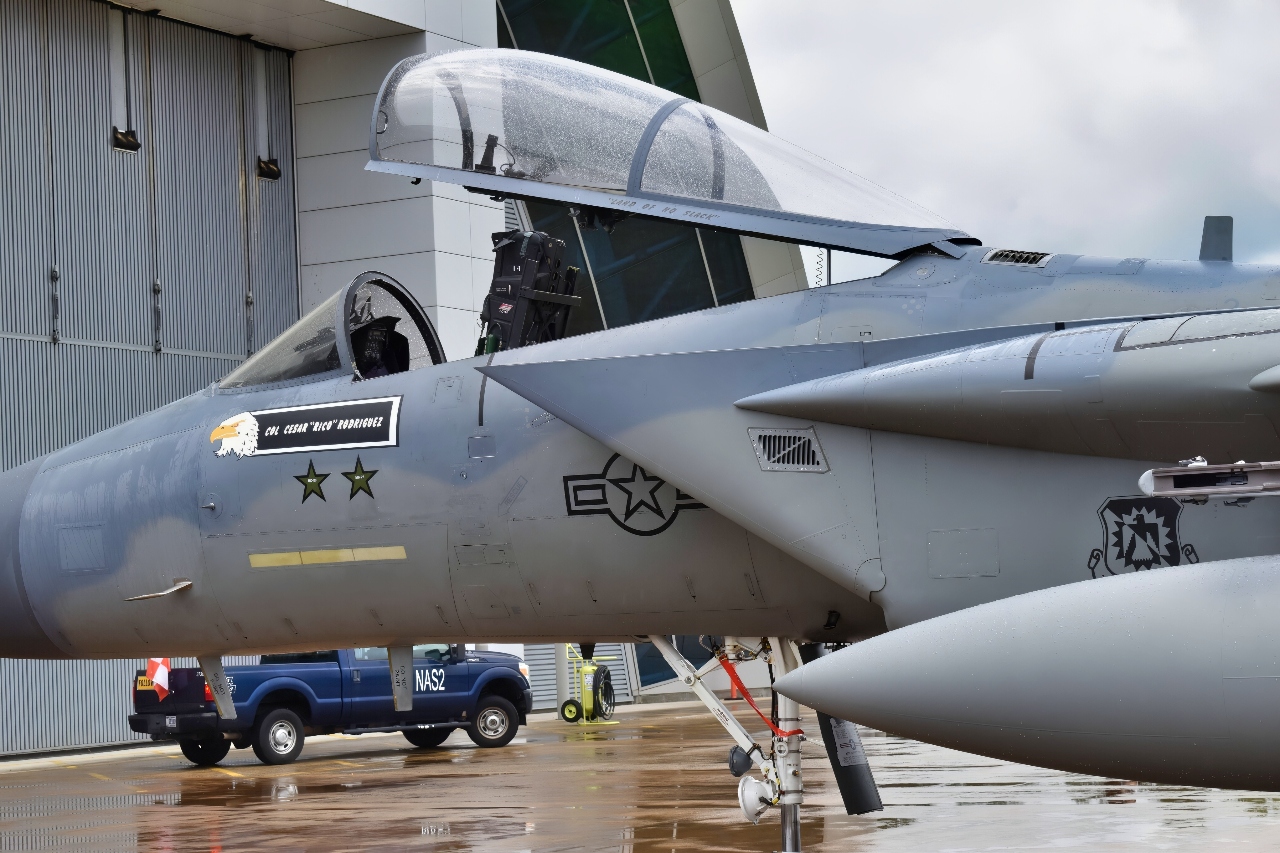
F-15C Fighter at Smithsonian August 13 2025. Image Credit: National Security Journal.
Accordingly, the USAF pushed for Air Base Operability (ABO), aiming to operate fighters from bomb-damaged, wet, or shortened runways. Cooperation on the project began in the 1970s, with a system-integration study of thrust vectoring and 2D nozzles.
Later, in 1984, the USAF awarded an advanced development contract to further advance the program.
A Heavily Modified F-15 Eagle
Based on the pre-production TF-15A/F-15B serial 71-0290, the F-15 STOL/MTD was the first two-seat F-15 ever built, and just the sixth F-15 off the assembly line. The jet would later be used as an avionics testbed for the F-15E Strike Eagle.
Key modifications to the aircraft included, most notably, 20-degree thrust-vectoring nozzles, reversible thrust capability, canard foreplanes near the cockpit, canards derived from F/A-18 stabilators, advanced digital flight controls, and, later during the ACTIVE phase of the program, full 3D thrust-vectoring nozzles.
Thrust vectoring nozzles, which have become more widely understood thanks to modern aircraft like the F-22 and the Su-57, use the engines themselves to help steer the aircraft, improving low-speed handling, enabling better control at high angles of attack, and permitting post-stall maneuvering capability.

F-15EX Eagle II In the Sky. Image Credit: Creative Commons.

An F-15EX Eagle II Fighter Jet assigned to the 85th Test and Evaluation Squadron, Eglin Air Force Base, Florida, taxis out from Nellis Air Force Base, Nevada, Oct. 21, 2021. The new F-15EX aircrafts are at Nellis AFB to test how effective and suitable the aircraft is for future use in our Air Force. (U.S. Air Force photo by William R. Lewis)
The thrust vectoring of the F-15 STOL/MTD was a major precursor to the F-22–style maneuverability concepts.
STOL/MTD Performance Characteristics
The F-15 STOL/MTD was well equipped to operate from degraded runways; it had a takeoff rotation at just 42 miles per hour, a 25 percent reduction in takeoff roll, and a landing distance of just 1,650 feet. For comparison, the standard F-15 needs about 7,500 feet—well over one mile. And in flight, the aircraft could rapidly decelerate thanks to thrust reversal.
The performance characteristics facilitated the dispersed basing concepts, in theory allowing for continued operational capability after a missile attack—the ability to operate from damaged airfields. Similar concerns are resurfacing today in Pacific scenarios—where the US would be heavily dependent upon airbases, and where China has steadily built an impressive missile arsenal. Flexibility in austere operating environments is once again a priority.
The ACTIVE Program
In 1993, NASA acquired the F-15 STOL/MTD from the Air Force and began the ACTIVE program. ACTIVE stood for “Advanced Control Technology for Integrated Vehicles.” NASA added the Pratt & Whitney F100-PW-229 engine and Pitch/Yaw Balance Beam Nozzles (P/YBBN). In effect, the aircraft evolved into a flying laboratory for future aerospace technology.
ACTIVE was used to test advanced flight control laws, the Intelligent Flight Control System (IFCS), supersonic shockwave research, High Stability Engine Control (HISTEC), the Space-Based Range Demonstration and Certification project, and modular aerospace experimentation. The program also achieved some notable kinetic metrics, like thrust vectoring at Mach 1.95, a top speed of Mach 2.0, and a service ceiling of 60,000 feet.
The ACTIVE program quietly shaped the design of future combat aircraft. Both ACTIVE and STOL/MTD informed the Advanced Tactical Fighter (ATF) program, which would culminate in the F-22 Raptor.
Indeed, the technologies and concepts from the F-15 STOL/MTD would carry into the F-22 era, thanks to a blend of NASA research and USAF operational concerns that drove innovative experimentation.
Retired but Still Influential
The F-15 STOL/MTD was retired in 2009 and is now on display at Edwards Air Force Base. The jet never entered production but heavily influenced the designs and maneuverability concepts of future fighters, especially the F-22.
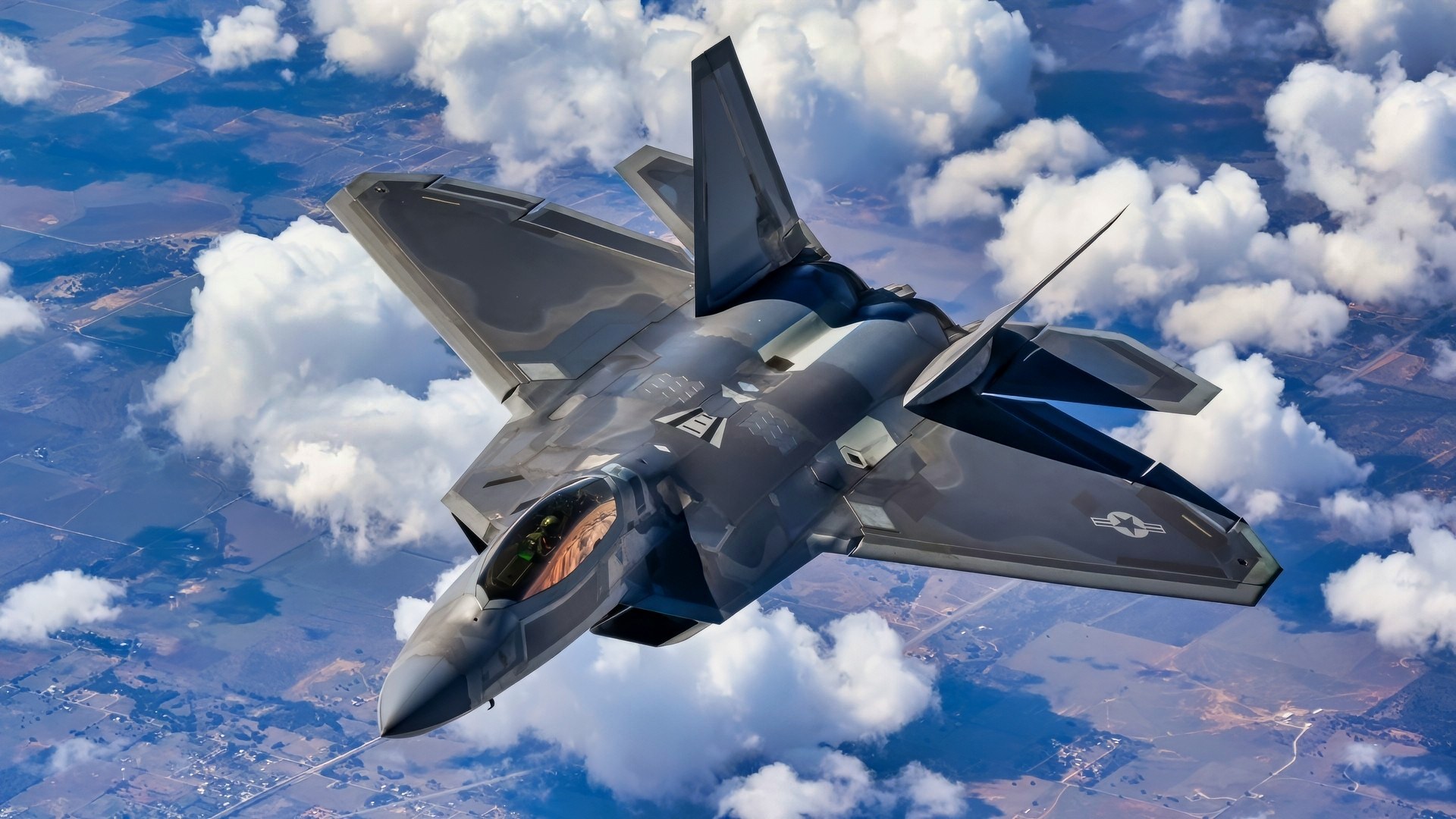
An F-22 Raptor Demonstration Team pilot flies towards Joint Base Langley–Eustis, Va., March 8, 2021. The F-22 team, assigned to Air Combat Command, received fuel from the 507th Air Refueling Wing during their flight back to home station after performing at an air show. (U.S. Air Force photo by Senior Airman Mary Begy)
From thrust vectoring to advanced flight controls, the F-15 STOL/MTD served as a bridge between fourth-generation legacy fighter aircraft and the fifth-generation stealthy, maneuverable jets that followed.
About the Author: Harrison Kass
Harrison Kass is a writer and attorney focused on national security, technology, and political culture. His work has appeared in City Journal, The Hill, Quillette, The Spectator, and The Cipher Brief. He holds a JD from the University of Oregon and a master’s in Global & Joint Program Studies from NYU. More at harrisonkass.com.


