


Key Points and Summary – China’s expanding fleet of J-20 and emerging J-35A stealth fighters is sharpening the airpower challenge over Taiwan and the Western Pacific.
-While Beijing may be closing the hardware gap with PL-15 long-range missiles and hundreds of fifth-generation jets, the United States and its allies still hold key advantages: combat-tested F-22s and F-35s, better training, and deeper experience.
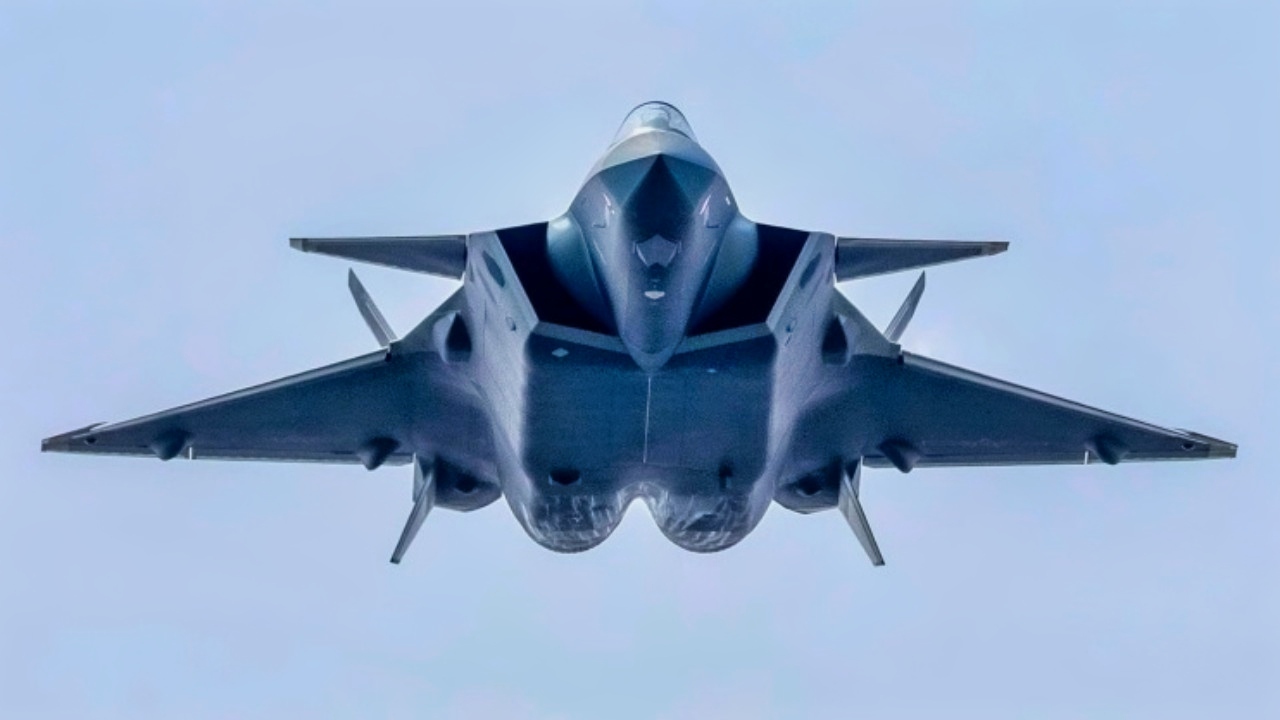
J-20 Fighter Screenshot from X. Image Credit: X.

China’s J-20 Fighter. Image Credit: Creative Commons.
-Japan and South Korea are building serious F-35 fleets, while Taiwan leans on upgraded F-16Vs. In any future fight, OODA-loop discipline, joint exercises, and pilot quality—not just stealth specs—will decide whether China’s “Mighty Dragons” rule the sky.
J-20 and J-35A: How Will the U.S. and Its Allies React to Chinese Stealth Fighters?
The Chinese think they have eclipsed the United States and its allies in stealth flight. They have between 250 and 500 J-20 radar-evading fighters – an astounding number that grows every month, and the J-35A is somewhat stealthy, but a threat, nonetheless. How will the United States and its allies respond?
Never fear, because the U.S. Air Force has the F-22 and F-35, two jets that are likely more stealthy than the J-20 and J-35A. There are two new sixth-generation fighters on the way: the F-47 NGAD and F/A-XX. These will outclass China’s fifth-generation warbirds.
The American Pilots Can Hold Their Own
Plus, American aviators are combat-tested, more experienced, and well-trained. The Chinese are better than they were 25 years ago, when some refused to fly at night or in bad weather, but they are still behind the Americans in skill and dogfighting ability.
Taiwan Might Be Holding a Bad Hand
Taiwan is lagging, though. The F-16V Viper is a high-performance aircraft that could outfox China’s non-stealthy jets, but the J-20 and J-35A remain threats. Plus, Taiwan flies the Dassault Mirage 2000-5s – probably no match for the Chinese stealth fighters.
Taiwan also has the homebuilt AIDC F-CK-1 Ching-kuo, which doesn’t impress me.
Taiwanese pilots will have to fly with their hair on fire to mitigate the advantages that the Chinese have with the J-20 and J-35A.
Japan Is the Strongest Air Force Ally
Japan may not come to Taiwan’s rescue if China invades, but it is much better prepared than Taiwan. The Japanese will fly F-35As and that’s a relief.
They have placed an order for a whopping 147 Lightning IIs. This is how serious the Japanese take the Chinese threat. The F-15J is much older and probably does not enjoy a good match-up against China’s stealth fighters.

J-20 Fighters from China. Image Credit: Creative Commons.

J-20 Stealth Fighter. Image Credit: Creative Commons.
There is also the homegrown F-2 that would have trouble. Japan is developing the sixth-generation Global Combat Air Program (GCAP) sixth-generation fighter. Japanese pilots, flying these warbirds, will someday outclass the Chinese.
However, Japan is a self-defense military force, and it remains to be seen whether it would enter into a battle with China over Taiwan. Like the United States, the Japanese government maintains a policy of “strategic ambiguity” vis-à-vis Taiwan.
If China controlled Taiwan, Japan’s sea trade routes would be compromised. If China attacks a close ally like the United States, then the Japanese could intervene, due to a legislative bill passed in 2015. Plus, the Americans and the Japanese have a mutual defense treaty.
Can the South Koreans Help Out With the Chinese?
South Korea, of course, is oriented to North Korea, and it is not clear if its air force could come to the defense of Taiwan or the United States during a conflict with China.
South Korea has the indigenously produced KF-21 Boramae, a high-quality aircraft that is becoming stealthier.
The older non-stealth KF-16 might have trouble against the J-20 and J-35. Thankfully, South Korea has 39 F-35As and wants 20 more.
This gives me a sense of relief that the Republic of Korea (ROK) air force can bring in a stealth model to the fight.
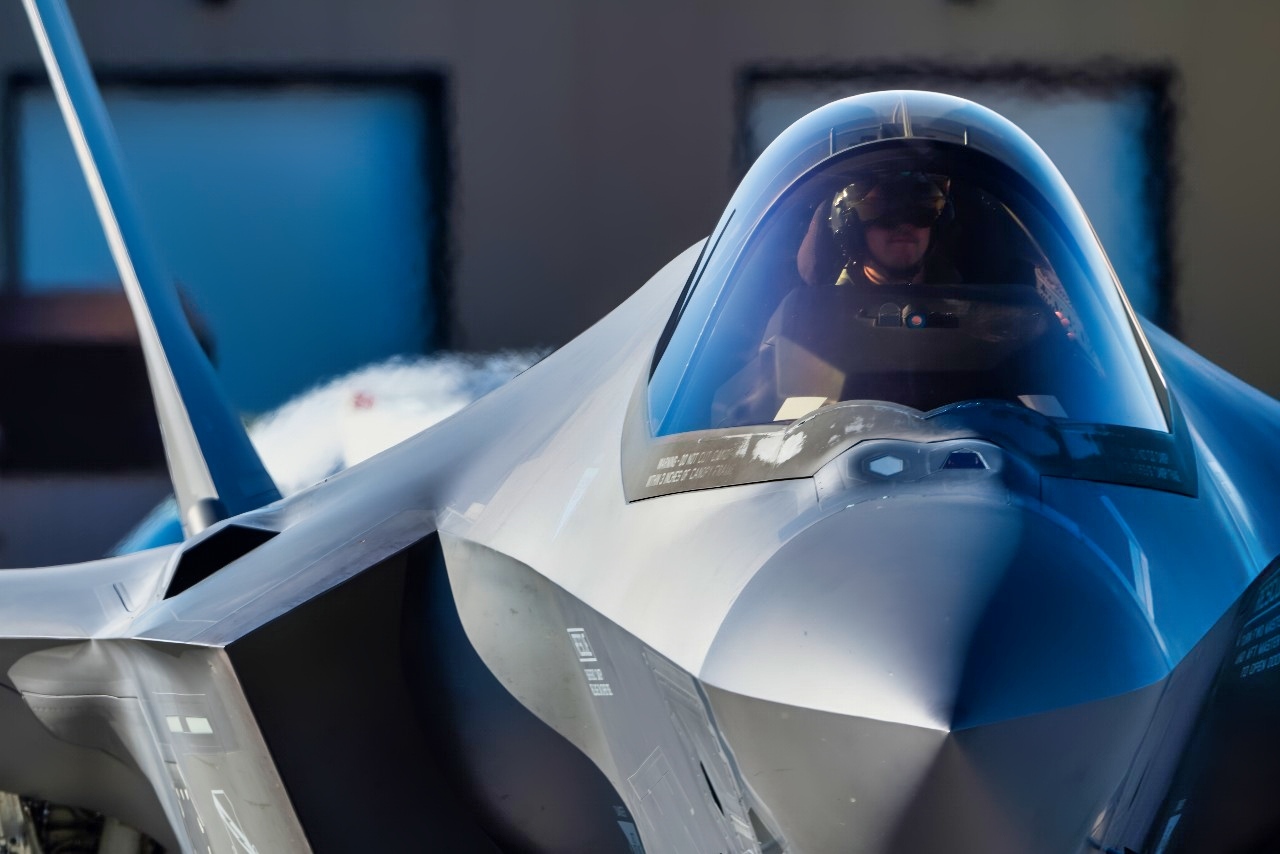
An F-35A Lightning II fighter jet, a single seat, single engine, all-weather stealth multirole fighter aircraft, assigned to the 466 fighter squadron prepares to taxi across the flightline at Hill Air Force Base, Utah, Oct. 5, 2024.

A new F-35A Lightning II fifth-generation fighter aircraft flies over the Alaska Canada Highway en route to its new home at the 354th Fighter Wing, Eielson Air Force Base, Alaska, April 21, 2020. The F-35 represents a new model of international cooperation, ensuring U.S. and Coalition partner security well into the 21st Century. (U.S. Air National Guard photo by Tech. Sgt. Adam Keele)
This all assumes that South Korea and Japan would come to the United States’ aid if the worst happened with China. This is a delicate diplomatic situation.
The South Koreans and Japanese also have no combat experience. The best pilots will win, but I can’t predict the outcome of a large dogfight.
China’s fighters are equipped with the powerful and successful PL-15 radar-homing, long-range air-to-air missile.
This beyond-visual-range projectile shifted the balance toward the Pakistanis against India in an extensive fighter-on-fighter engagement earlier this year. The Chinese are confident they can use this missile effectively.
Drill Baby Drill
The United States must continue military exercises with Japan, like the REFORPAC 2025 drill. Then the Americans must keep engaging in Freedom Shield exercises with the South Koreans. The United States and Taiwan do not have regular air force exercises. If they did, the Chinese would be furious. However, likely U.S. pilots are advising the Taiwanese aviators, which is encouraging.
Allied air force personnel must be constantly trained on the OODA loop of dogfighting that consists of the actions to Observe, Orient, Decide, and Act. This is the essence of flying a combat jet. The Taiwanese, South Koreans, and Japanese must continue to train in tactics driven by the OODA loop.
U.S. allies will be determined if they encounter the J-20 or J-35A in an aerial encounter. The Japanese and South Koreans will be flying F-35s, so that’s a good sign. The Taiwanese have no stealth jets, but the F-16V Viper is a much-improved variant.
The proof is in the pudding: it comes down to the quality of the pilots. I was in graduate school with two South Korean Air Force fighter pilots who had the swagger and confidence to match any American flyboy. These ROK pilots were aggressive and confident – just the type of personalities who wouldn’t be afraid of the North Koreans and Chinese.
It will take this kind of can-do attitude for the United States and its allies to face down the J-20 and J-35A. F-35s and F-22s are superior, but the Japanese, South Korean, and Taiwanese pilots must be at the top of their game.
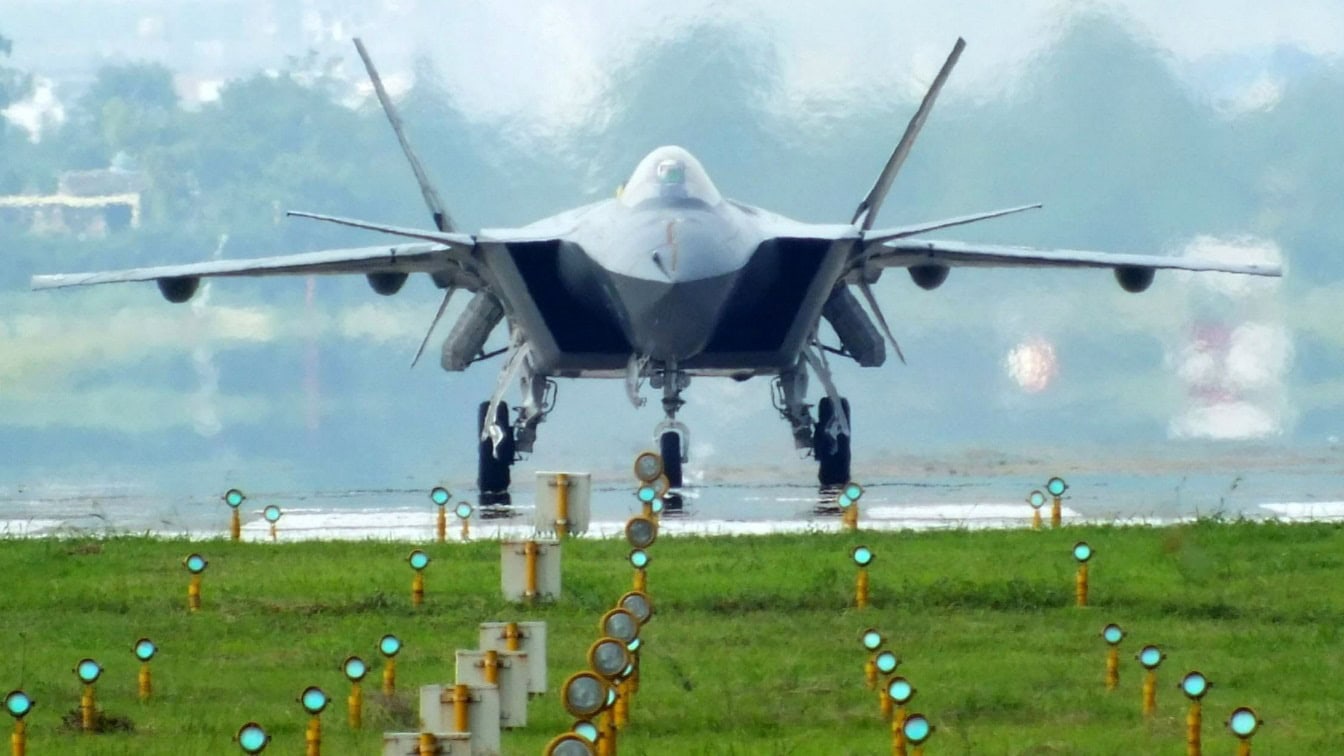
J-20 Fighter. Image Credit: Weibo.
China will push its airplanes to the limit, but questions remain about just how stealthy the J-20 and J-35A are.
If Japan and South Korea came to Taiwan’s defense if the United States got involved in a shooting war over Taiwan, the Americans could breathe easier. But the aerial battle may last only one day at most, and the U.S. Air Force would have to maintain combat effectiveness on its own.
There are numerous answers to the J-20 and J-35A; the pilots must be confident and well-trained and learn to outfox beyond-visual-range missiles from the Chinese.
And that OODA loop must become second nature to all allied pilots if China enters the airspace over Taiwan with the idea of waging a shooting war.
About the Author: Brent M. Eastwood
Author of now over 3,000 articles on defense issues, Brent M. Eastwood, PhD is the author of Don’t Turn Your Back On the World: a Conservative Foreign Policy and Humans, Machines, and Data: Future Trends in Warfare plus two other books. Brent was the founder and CEO of a tech firm that predicted world events using artificial intelligence. He served as a legislative fellow for US Senator Tim Scott and advised the senator on defense and foreign policy issues. He has taught at American University, George Washington University, and George Mason University. Brent is a former US Army Infantry officer. He can be followed on X @BMEastwood.
More Military
Could America Have Lost the Revolutionary War?
The Marines Don’t Have Tanks Anymore
The Essex-Class Aircraft Carriers Have An Embarrassing Message for the U.S. Navy
‘New’ Mach 4 MiG-41 6th Generation Stealth Fighter Has Warning for U.S. Air Force
Boeing’s F-47 NGAD 6th Generation Stealth Fighter Is No ‘Mission Impossible’


