


Key Points and Summary: MiG-41: Russia’s ‘Mach 4’ Stealth Fighter That Will Never Fly
-Russia’s MiG-41, also known as PAK DP, is advertised as a sixth-generation stealth interceptor that will fly at Mach 4 or even Mach 5, patrol near space, shoot down hypersonic missiles, and fire lasers at enemy targets.

MiG-41. Image Credit: Creative Commons.

MiG-41. Image Credit: Creative Commons
-On paper, it sounds like something out of a sci-fi movie.
-In reality, Russia can’t even field its Su-57 Felon fifth-generation fighter in serious numbers, is struggling to keep its aging air force flying over Ukraine, and is under crushing sanctions that choke its aviation supply chain.
-Add in cost, technology, and industrial limits, and the MiG-41 looks doomed to stay vaporware.
Moscow’s MiG-41 Dream Fighter Meets One Problem: It Can’t Be Built
Every few years, Moscow quietly admits something about its own air force without saying it out loud.
It happens when officials start talking up a new “super platform” that will fix everything: a tank that rewrites armored warfare, a stealth drone that will patrol the skies with impunity, or, in this case, an interceptor that supposedly flies at Mach 4 or 5, reaches near space, and carries lasers.
That is the MiG-41 in a nutshell.
On television, in glossy graphics, and in carefully worded interviews, Russia’s next-generation PAK DP interceptor is described as a sixth-generation stealth fighter that can shoot down hypersonic missiles, swat satellites, and outrun anything in the sky. In reality, Russia can barely build enough Su-57 Felons to fill a single regiment, is losing aircraft and pilots over Ukraine, and is watching its aviation industry slowly suffocate under sanctions.
The uncomfortable conclusion is simple: the MiG-41 is not a future fighter. It is a sales pitch for a Russia that no longer exists.
What Moscow Says the MiG-41 Will Be
On paper, MiG’s engineers promise an aircraft that would make the legendary MiG-31 Foxhound look slow.
The MiG-41, built under the PAK DP program, is advertised as the Foxhound’s successor: a high-altitude, long-range interceptor designed to defend Russia’s vast northern and Arctic airspace. Russian officials and industry figures have claimed it will:
-Reach speeds of Mach 4 to over Mach 4.3, with some offhand comments hinting at Mach 5.
Operate at “near-space” altitudes, high above conventional airliners and most fighters.
-Use advanced stealth shaping and materials to shrink its radar signature.

MiG-41 Artist Rendering. Image Credit: Creative Commons.
-Carry exotic weapons, including long-range missile “bus” systems to intercept hypersonic threats and even directed-energy or laser systems.
-Potentially transition to an unmanned version later in its life.
If you consider that in isolation and ignore Russia’s actual industrial base, it looks impressive. If you put it next to the balance sheet of United Aircraft Corporation, the number of Su-57s actually delivered, and the realities of Russia’s war in Ukraine, it starts to look absurd.
This is not just a “stretch goal.” It is a fantasy stacked on top of a fantasy.
Russia Can’t Even Mass-Produce the Su-57
Before you believe in a Mach 4 or Mach 5 sixth-generation interceptor with lasers, you have to believe Russia can mass-produce a conventional fifth-generation fighter.
That is already in doubt. And, in fact, that’s what make a MiG-41 push look impossible.
The Su-57 Felon first flew in the late 2000s and was supposed to be Russia’s answer to the F-22 and F-35. Instead, its production run has crawled. Well into the 2020s, only a few dozen Su-57s have been delivered. Outside analysts put the current operational fleet somewhere around the high twenties or low thirties, depending on how you count test aircraft and partially completed airframes.
Russian officials keep issuing upbeat statements about “serial production” and ambitious delivery targets. The reality is that Russia’s Su-57 line has never come close to the scale of U.S. or Chinese stealth production. The Felon shows up in Ukraine occasionally, firing standoff weapons from deep inside Russian airspace, but there is no sign of it operating as a true front-line workhorse or in large numbers.
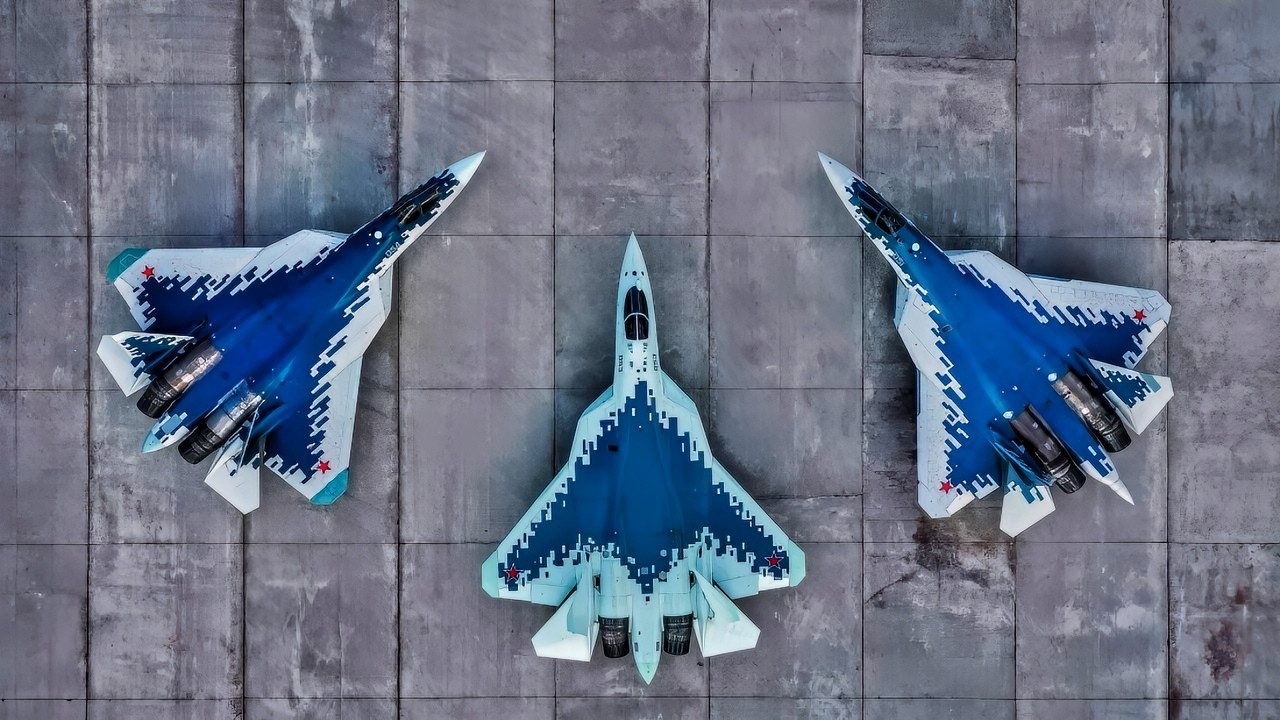
Su-57 Felon Screengrab from Russia. Image Credit: X Screengrab.
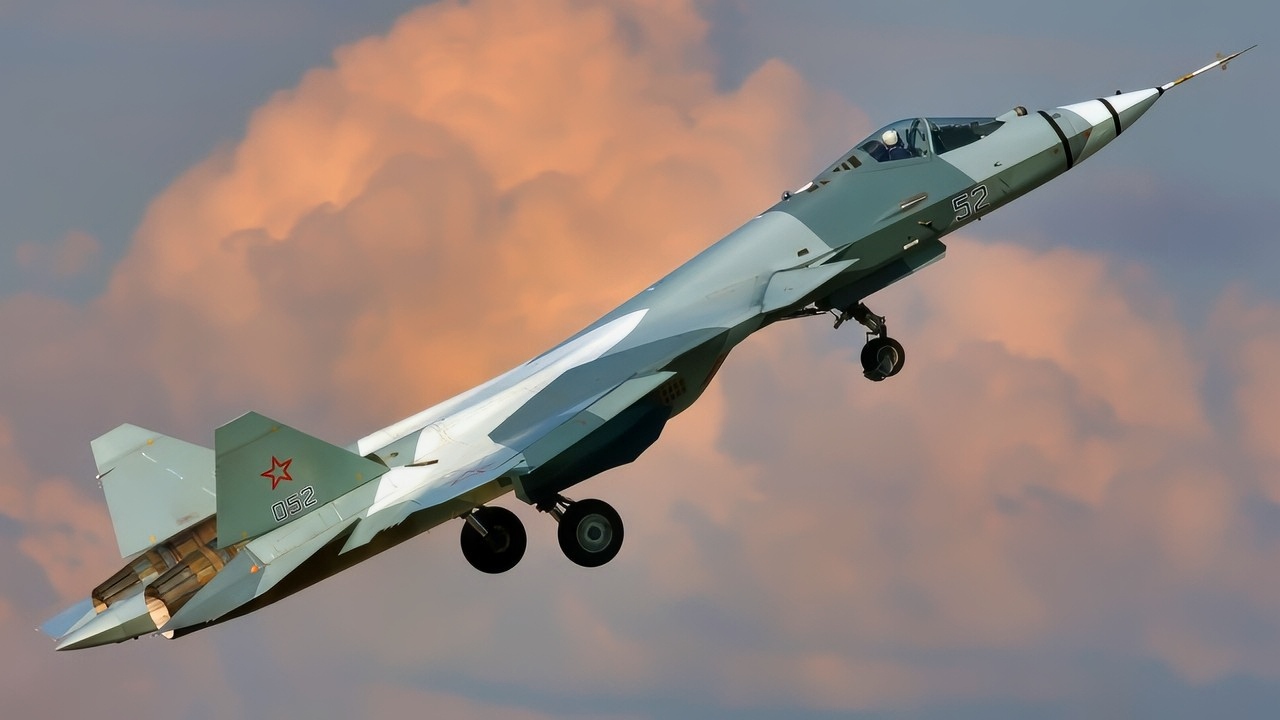
Su-57 Felon Stealth Fighter in the Sky. Image Credit: Creative Commons.
If Russia cannot produce more than a few dozen fifth-generation fighters in over a decade, what exactly is the plausible path to a far more complex sixth-generation airframe that flies twice as fast and demands exponentially more advanced materials, engines, and electronics?
MiG As a Brand Is Hollowed Out
There is also the institutional problem: this is a MiG program in a world where MiG is a shadow of its former self.
The MiG-29 was once the signature “export” Soviet fighter. Today, the MiG-35 — its highly upgraded descendant — is struggling to find customers at home and abroad. Russia’s own order is small, deliveries have been slow and inconsistent, and export interest has been tepid. In some cases, Moscow’s promises of deliveries had to be quietly pushed back because industry simply could not deliver on time.
Financial pressure and a lack of big new contracts pushed MiG into a forced merger under the United Aircraft Corporation umbrella. Russian reporting at the time was blunt: the country could no longer afford two parallel front-line fighter design bureaus. Sukhoi became the favored child, with the Su-57 and related projects receiving the bulk of resources and political backing.
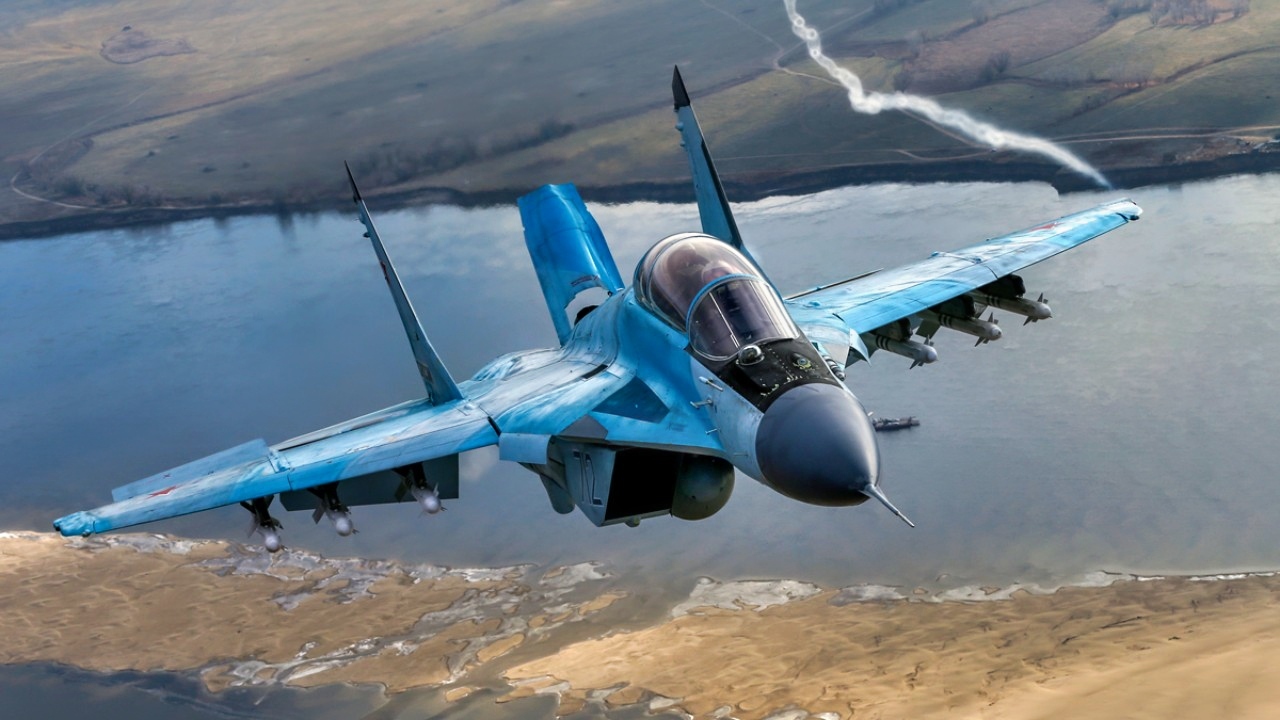
MiG-35 Russian Air Force Fighter. Image Credit: Creative Commons.

MiG-35 Fighter from Russia. Image Credit: Creative Commons.
That matters for the MiG-41 for two reasons.
First, it means MiG is trying to revive its relevance with a single moonshot program at a time when it struggles to deliver much simpler aircraft in volume. Second, it means any big bets on a sixth-generation interceptor will compete directly with Sukhoi’s own projects for funding, engineers, and scarce components.
If Sukhoi, with all its political backing, is barely keeping the Su-57 moving, what exactly is MiG going to build that is dramatically more advanced?
A Sanctions-Broken Supply Chain
Then there is the sanctions problem, which is no longer a vague talking point but a daily reality in Russian plants.
Western restrictions on microelectronics, machine tools, composites, and aerospace-grade materials have already hit Russia’s civil aviation sector hard. Airlines are cannibalizing aircraft for spare parts. A meaningful portion of the civilian fleet is grounded. Russian carriers are flying jets well beyond normal maintenance intervals because they simply do not have legal access to all the parts they need.
On the military side, multiple investigations have documented how deeply Russian fighter production depends on imported electronics and components. Thousands of foreign parts — especially high-end chips and sensors — have been traced into Russian aircraft, often rerouted through intermediaries, shell companies, and friendly third countries. Sanctions are not airtight, but they are raising costs, slowing timelines, and injecting enormous uncertainty into every major program.
United Aircraft Corporation itself has been running at a loss, even as the Kremlin orders it to increase output and keep multiple complex programs alive. Labor shortages, high interest rates, and export customers walking away because they do not want to trigger U.S. sanctions all compound the pressure.
Now layer the MiG-41 on top of that.
A Mach 4+ interceptor with advanced stealth, hypersonic interceptor weapons, and directed-energy systems would require a leap in materials science, engine technology, electronics, and thermal management — precisely the areas where sanctions and chronic under-investment hurt most. It is one thing to limp along producing upgraded Su-35s and small batches of Su-57s by raiding the grey market. It is another to field a genuinely new class of aircraft that pushes the edge of physics.
The Physics and Money Don’t Add Up
Strip away the propaganda and look at what Russia is promising technically with the MiG-41.
To cruise at Mach 4 or above in the atmosphere, an aircraft needs engines that operate at the edge of current design practice — ramjets, turboramjets, or extremely advanced afterburning turbofans. Those engines have to survive sustained thermal loads that would cook conventional airframes. The aircraft’s skin has to be built from high-temperature composites and metals that can handle heating that, at Mach 4 or 5, looks more like a hypersonic missile than a fighter.
At the same time, the airframe is supposed to be stealthy across multiple bands, which imposes its own constraints on shaping and materials. Add in the requirement to carry large internal weapons bays for massive air-to-air missiles or “missile bus” systems designed to spit out multiple interceptors against hypersonic targets, and you quickly end up with a very large, very complex, very expensive aircraft.
Now throw in the talk of onboard lasers and other directed-energy weapons. They demand huge electrical power, power conditioning, and, most challenging of all, thermal management to keep the system from cooking itself or the surrounding structure.
These are challenges even the richest aerospace ecosystems on earth — the United States, Western Europe, Japan — have not fully solved in operational combat aircraft. Russia, with a fraction of the R&D budget, a sanctions-choked supply chain, and an economy waging a grinding land war, is not going to suddenly leapfrog everyone.
The physics are unforgiving. The money is limited. That combination almost always ends in the same place: a beautiful model on a trade-show stand and not much else.
Ukraine Has Shown What Russia Can Actually Field
Ukraine has been the brutal stress test for Russia’s air force.
Instead of seeing cutting-edge aircraft sweeping Ukrainian skies, the world has watched something else: Russia leaning heavily on older Su-24s, Su-25s, Su-27s, Su-30s, and Su-34s, operating cautiously at low and medium altitudes to avoid Ukrainian air defenses. The Su-57 has appeared, but usually from the safety of Russian airspace, lobbing standoff weapons rather than dominating contested airspace.
The war has also chewed through aircraft, helicopters, and drones at a rate Russia did not anticipate. Each loss is not just a destroyed airframe; it is a blown-up package of imported components, hard-to-replace avionics, and trained pilots and maintainers who were already in short supply.
On the ground, Russia is still refurbishing and re-fielding Soviet-era tanks and armored vehicles because premier projects like the T-14 Armata never made it into meaningful serial production. In the air, the pattern is similar: ambitious announcements about next-generation systems, followed by delays, limited prototype batches, and a retreat back to upgrading older platforms.

T-14 Armata Tank. Image Credit: Creative Commons.
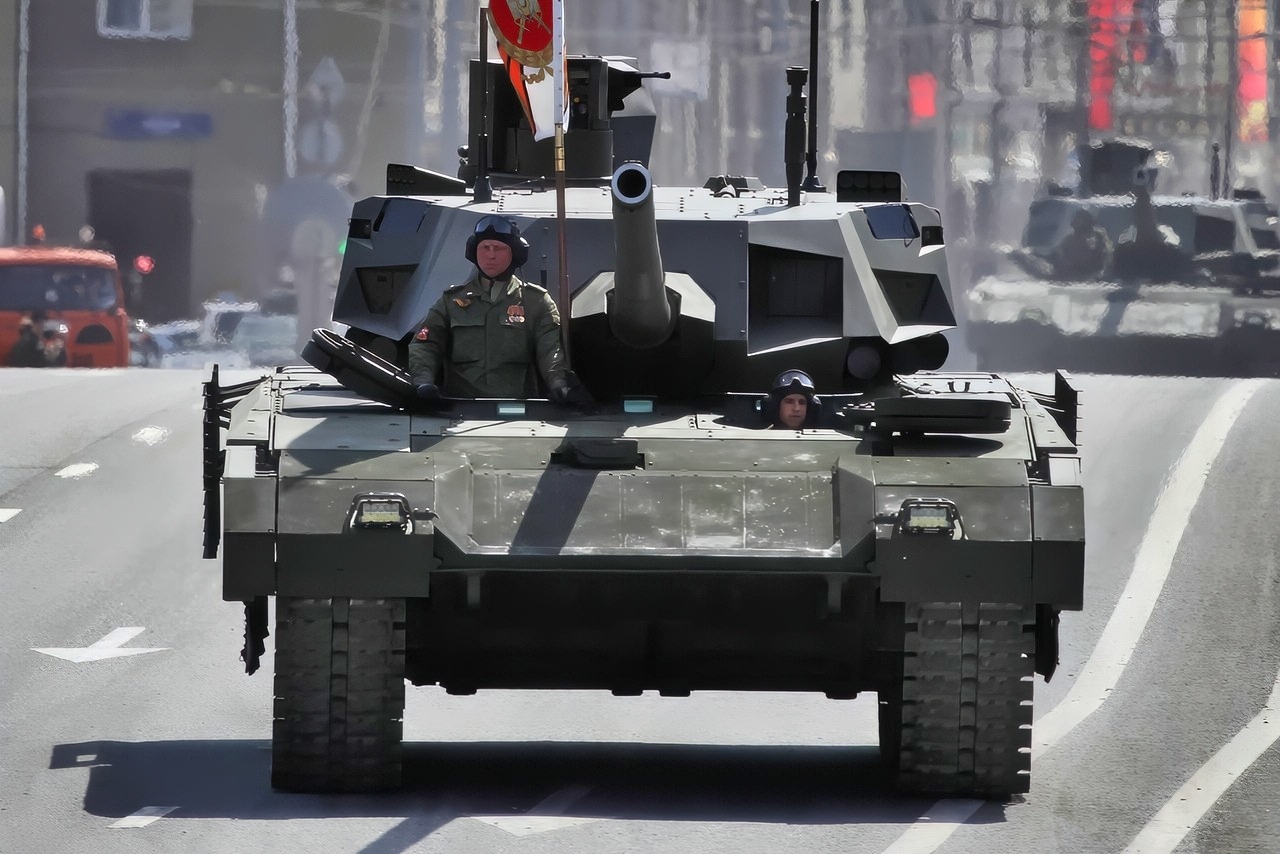
T-14 Armata Tank from Russia. Image Credit: Creative Commons.
The war has forced Moscow to prioritize what it can fight with now — artillery shells, drones, basic glide bombs — over what it might like to show off at an air show in fifteen years. In that environment, the MiG-41 is exactly the kind of high-risk, long-range science project that gets quietly pushed to the back of the line.
MiG-41 as Propaganda, Not a Program
If you look at Russia’s record over the last decade, a pattern emerges.
The T-14 Armata tank was supposed to revolutionize armored warfare. Instead, cost overruns, component issues, and sanctions have kept it from meaningful frontline service. The S-70 Okhotnik stealth drone was hyped as a “sixth-generation” unmanned wingman to the Su-57. Years later, only a tiny number of prototypes exist, and even those have been lost or kept far from routine combat.
The Su-57 was billed as Russia’s answer to the F-22. Today, it appears in such small numbers that its main value may be political signaling rather than operational transformation.

F-22 Raptor at USAF Museum. Image Credit: National Security Journal.

F-22 Raptor National Security Journal Image
The MiG-41 fits right into that pattern.
It allows Russian officials to talk about “sixth-generation” fighters, hypersonic interceptors, lasers, and near-space operations. It gives MiG a reason to exist on paper. It generates compelling CGI videos and keeps the idea of Russian technological parity with the West alive in domestic media.
What it does not do is solve any of the structural problems: the lack of real serial production capacity, the dependence on foreign electronics, the hemorrhaging of skilled labor, the financial weakness of United Aircraft Corporation, and the brutal demands of a war that is consuming equipment faster than Russian factories can replace it.
At best, the MiG-41 might one day yield a technology demonstrator — a handful of experimental airframes that test high-speed aerodynamics or new propulsion concepts. That would be an achievement in itself. But a full-up, stealthy, Mach 4 or Mach 5 interceptor in squadron service, built in dozens or hundreds, with lasers and hypersonic missile interceptors onboard?
That is not a program. It is a story Russia tells itself.
The MiG-41 Looks Like It Will Never Work
Russia will keep talking about the MiG-41. Its state media will keep running concepts and models. At defense expos, scale models will sit under bright lights with captions promising Mach 4+, hypersonic kills, and near-space patrols.
But the same country that has taken more than a decade to field a few dozen Su-57s, that cannot mass-produce its own “super tank,” that is struggling to keep domestic air travel running under sanctions, and that is burning through aircraft and crews over Ukraine is not going to conjure a sixth-generation interceptor out of thin air.
The MiG-41 will probably never be “canceled” outright. It will drift, relabeled, re-announced, and reimagined whenever Moscow needs a splashy headline. In that sense, it has already achieved its real mission: projecting an image of future power at a moment when Russia’s actual airpower is under historic strain.
In the real world — the one where metallurgy, microchips, budgets, and sanctions exist — the MiG-41 is less a fighter than a mirror. It reflects the gap between Russia’s ambitions and what its defense industry can actually build.
And that is why this “Mach 4” stealth fighter will almost certainly never fly.
About the Author: Harry J. Kazianis
Harry J. Kazianis (@Grecianformula) is Editor-In-Chief and President of National Security Journal. He was the former Senior Director of National Security Affairs at the Center for the National Interest (CFTNI), a foreign policy think tank founded by Richard Nixon based in Washington, DC. Harry has over a decade of experience in think tanks and national security publishing. His ideas have been published in the NY Times, The Washington Post, The Wall Street Journal, CNN, and many other outlets worldwide. He has held positions at CSIS, the Heritage Foundation, the University of Nottingham, and several other institutions related to national security research and studies. He is the former Executive Editor of the National Interest and the Diplomat. He holds a Master’s degree focusing on international affairs from Harvard University.
More Military
The Mach 2.2 YF-23 Black Widow II Stealth Fighter Has a Message for the U.S. Air Force
Mach 10 Missile Showers: China’s Aircraft Carriers Have 1 Big Advantage over the U.S. Navy
China’s New H-20 Stealth Bomber Keeps U.S. Air Force Generals Up at Night
The A-6 Intruder Has a Message for the U.S. Navy
How NATO Got Its Hands on Russia’s ‘Black Hole’ Kilo-Class Submarine


John Stow
November 17, 2025 at 8:22 am
An arguably propagandized article calling the Mig 41 propaganda. Got it….
Kenneth C. Brown
November 17, 2025 at 3:15 pm
Sounds like a flying “Potemkin Village” to me…
rom
December 2, 2025 at 8:19 pm
Oh Harry Harry… Any more revelations, exposures or words of wisdom? Here are some suggestions:
1. Due to a giant conspiracy, Grecian formula is out of stock!!!
2. Try not to sweat it like Giuliani in a court