


Key Points and Summary – The Marine Corps’ 2021 decision to scrap its M1 Abrams tanks looked radical, but in hindsight, it fits a clear vision of future war.
-Dr. Brent Eastwood argues that tanks are poorly suited for counterinsurgency and too slow and vulnerable for the fast, island-hopping fights the Marines expect against China or North Korea.
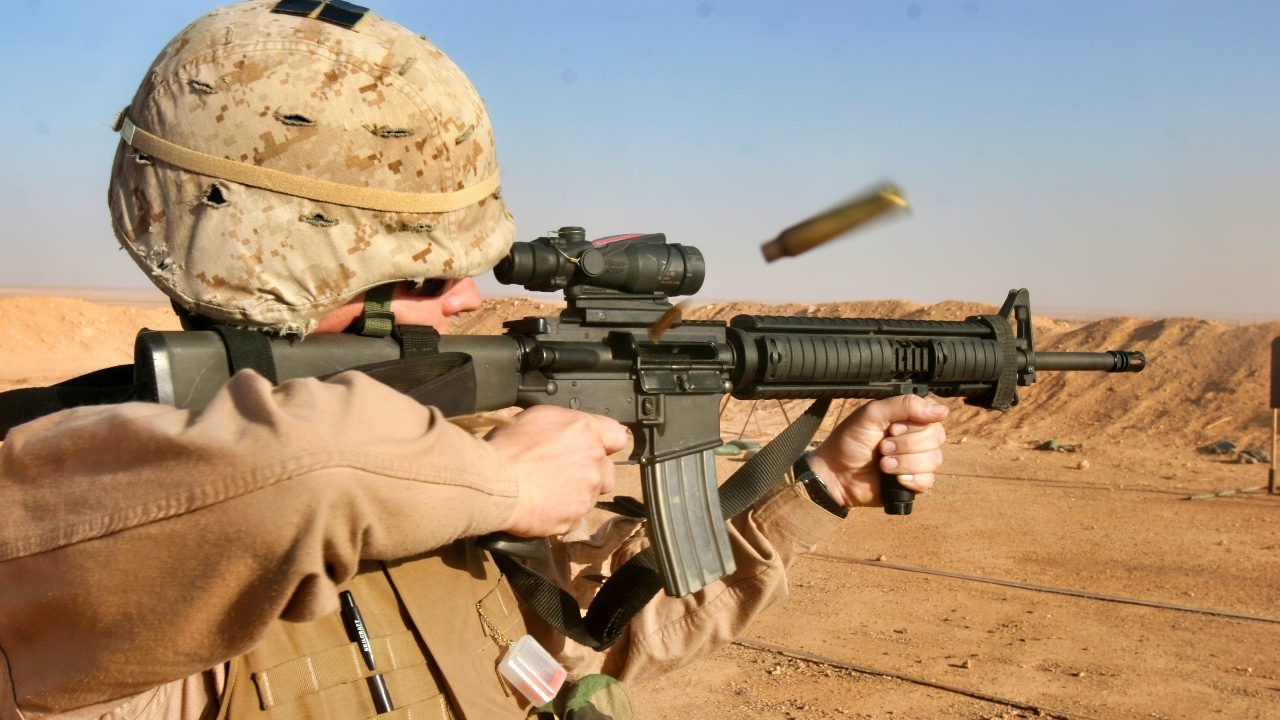
CAMP KOREAN VILLAGE, Iraq (May 15, 2007) – Sergeant Christopher L. McCabe fires his rifle during monthly range training here May 15. The Marines and sailors of Detachment 1, Combat Logistics Battalion 2, 2nd Marine Logistics Group (Forward), provide necessities and services to coalition forces throughout the area of operations. McCabe, a Bellaire, Ohio, native, is the staff noncommissioned officer-in-charge of the maintenance section, Det 1, CLB-2, 2nd MLG
-Force Design 2030 pivots the Corps toward “kinetic missile fights” with NMESIS, tighter integration with Navy air defenses, and a major investment in drones from FPVs to MQ-9A Reapers.
-Ukraine’s armored graveyard, high sustainment costs, and harsh littoral environments all suggest the Marines may have called this one right.
Were the Marines Right to Dump the Tank?
As part of a show of force and potential military action against Venezuela, the U.S. Marine Corps is conducting combined exercises with Trinidad and Tobago the week of November 17.
This comes as President Donald Trump has “made up his mind” about a potential strike against Venezuela. This group will consist of the 22nd Expeditionary Unit assigned to U.S. Southern Command in the Caribbean.
One asset this Marine force will not have is M1 Abrams tanks. The Leathernecks decided to retire their Abrams tanks in 2021.
At the time, I wasn’t comfortable with this decision. As an Army infantry officer originally trained at what was then the home of the armor branch at Fort Knox, I had a great affinity for tank warfare and armored cavalry operations.
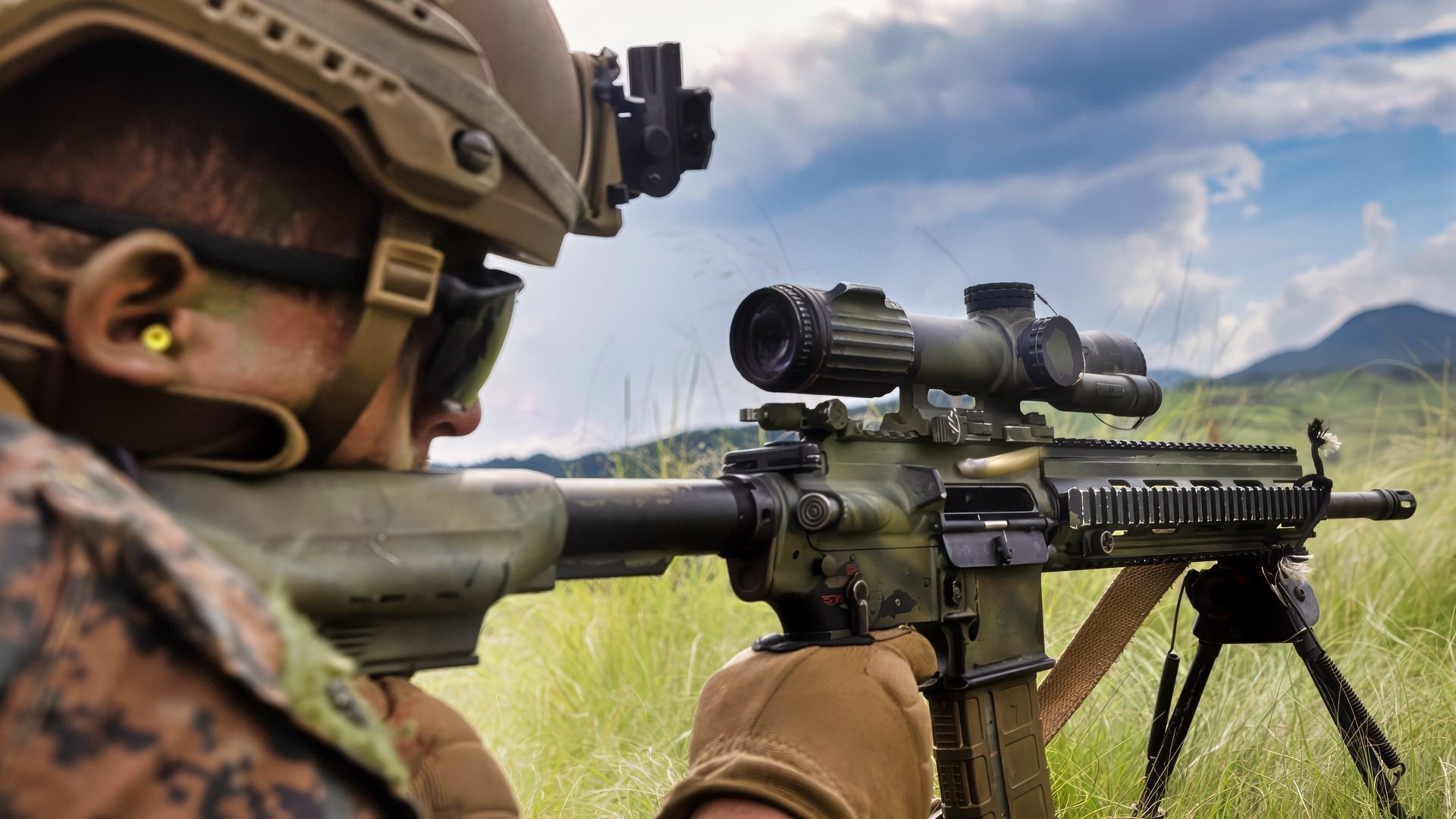
U.S. Marine Corps Cpl. Wyatt Mccullough, a rifleman with 12th Littoral Combat Team, 12th Marine Littoral Regiment, 3rd Marine Division, fires the M27 Infantry Automatic Rifle during Resolute Dragon 25 at Hijudai Maneuver Area, Oita Prefecture, Japan, Sept. 15, 2025. Resolute Dragon is an annual bilateral exercise in Japan that strengthens the command, control, and multi-domain maneuver capabilities of U.S. Marines in III Marine Expeditionary Force and Japan Self-Defense Force personnel, with a focus on controlling and defending key maritime terrain. Mccullough is a native of Texas. (U.S. Marine Corps photo by Lance Cpl. Rodney Frye)

An M1A1 Abrams tank from 1st Tank Battalion, 3rd Marines, maneuvers before a live fire assault at Shoalwater Bay Training Area, Queensland, Australia, on May 25, 2001 for Exercise Tandem Thrust 2001. Tandem Thrust is a combined military training exercise involving more than 18,000 U.S., Australian, and Canadian personnel who are training in crisis action planning and execution of contingency response operations.
(DoD photo by Sgt. Bob O’Donahoo, Australian Army. (Released))
Not the Correct Weapon Systems to Fight Terrorists and Insurgents
Later in South Korea, I saw Abrams tanks in training exercises and was impressed by the speed and firepower.
Were the Marines making the right decision? One after-action review that Marine brass had considered was the tank experience during the Global War on Terror.
The Abrams tanks were not the instrument to win hearts and minds during counterinsurgency warfare in Iraq and Afghanistan.
To be sure, the armored beasts were certainly survivable, but the bad guys could easily decide to never engage with a tank in a force-on-force battle.
The Abrams beasts were looking for targets and rolling snake eyes. A large, armored force was a solution in search of a problem.
The Marines were also looking to return to their amphibious warfare roots.
The wars in South Asia and the Middle East wrapped up, and the Marine command structure was looking into the 2030s and developing a new combat doctrine they called Force Design 2030.
What Was the Answer to the Rise of China?
One aspect of warfare that Marine battle planners considered was a conflict with China.
The Marines might be called upon to engage in battle against Chinese militarized islands in the South China Sea.
This would require an amphibious landing.
There would also need to be rapid deployments from Okinawa if North Korea ever invaded South Korea. Tanks were seen as an expendable piece of Cold War hardware that could be deployed anywhere, anytime.
It’s All About Missiles These Days
The Marines also correctly predicted what I call the “Kinetic Missile Fight” against China or North Korea. The Leathernecks needed firepower from surface-to-air missiles on the defense and ballistic rockets on the offense.
The Army has the Patriot air defense system layered with the Terminal High Altitude Area Defense (THAAD) system.
Marines trained with the Army to operate these systems, but the Devil Dogs needed their own medium-range air defenders.
This would protect Battalion Landing Teams attempting to secure amphibious landing zones.
The Marines thought they would someday deploy land-launched Tomahawk cruise missiles, but the launch system was considered too heavy and difficult to deploy quickly.
They didn’t know the Tomahawk would be effective in “austere littoral” environments.
Time for a Deadly Missile System
Instead, the Jarheads are developing the Navy-Marine Corps Expeditionary Ship Interdiction System (NMESIS).
These will be used to strike back against ships that threaten the Marines on land, while the rest of a Naval strike group could use the Aegis Weapon System to protect Marines from enemy aircraft, missiles, and drones.
This is a winning formula, although we have yet to see something like this in action aside from training exercises.=
What if tanks were included in the mix?
That wouldn’t seem to be practical with such a rapid amphibious attack.
Let the Army come in later with their own mechanized strike force that would include Abrams tanks and Bradley Fighting Vehicles in the second or third week of combat, assuming the Marines could establish a beachhead quickly.
The Ukraine Proving Ground Proved Tanks Have Seen Better Days
We also know that tanks are vulnerable in combat. Ukraine has been an armored graveyard.
Anti-tank missiles are precise. Swarming, kamikaze drones that loiter are lethal to tanks. The donated Abrams tanks to Ukraine have not seen much action. The Marines have thus made a prescient decision to divest themselves of tanks.
Plus, tanks are difficult to maintain and keep functioning properly, especially in potentially humid, hot environments in East Asia.
The Marines were able to jettison an entire unit of mechanics and technicians and redeploy these personnel to work on other types of military hardware.
The Marines can also now focus on their drone forces. Marines down to the platoon-level are equipped with first-person view (FPV) drones that have been so effective in Ukraine and Russia.
There may come a time when every Marine infantry fighter will have their own FPV drone that can be used quickly and efficiently.
The Marines have just sent a unit with MQ-9A Reaper drones to the Indo-Pacific to work with the Philippine military.
This group is called a Marine Unmanned Aerial Vehicle Squadron. The Reapers will help with surveillance and reconnaissance, close air support, search and rescue, and accurate missile strikes.
The Marine Corps’ decision on tanks is a good one. Their 2030 doctrine emphasizes speed, maneuverability, and surprise in lightning attacks that can shock the enemy into submission in a matter of days.
The tanks would have slowed down these operations. The Marines can now be focused on the Kinetic Missile Fight with the NMESIS system.
They will be working closely with the Navy during amphibious landings that use ships for their anti-air capabilities. Tanks are expensive to maintain, and anti-tank missiles and enemy drones would decrease their effectiveness.
Give credit to the Marines for looking ahead into future warfare five years ago. It was time for a change after the Global War on Terror.
The Marines may have positive memories of the Abrams, but the downsides of the tanks were adding up quickly.
Look for a rejuvenated group of Leathernecks to work with allies in the Western Hemisphere and be ready to fight if needed in the Caribbean.
About the Author: Brent M. Eastwood
Author of now over 3,000 articles on defense issues, Brent M. Eastwood, PhD is the author of Don’t Turn Your Back On the World: a Conservative Foreign Policy and Humans, Machines, and Data: Future Trends in Warfare plus two other books. Brent was the founder and CEO of a tech firm that predicted world events using artificial intelligence. He served as a legislative fellow for US Senator Tim Scott and advised the senator on defense and foreign policy issues. He has taught at American University, George Washington University, and George Mason University. Brent is a former US Army Infantry officer. He can be followed on X @BMEastwood.
More Military
The Mach 2.2 YF-23 Black Widow II Stealth Fighter Has a Message for the U.S. Air Force
Mach 10 Missile Showers: China’s Aircraft Carriers Have 1 Big Advantage over the U.S. Navy
China’s New H-20 Stealth Bomber Keeps U.S. Air Force Generals Up at Night
The A-6 Intruder Has a Message for the U.S. Navy
How NATO Got Its Hands on Russia’s ‘Black Hole’ Kilo-Class Submarine


