


Key Points and Summary – America Built 24 Essex-class Aircraft Carriers Fast. It Can’t Do Anything Like That Now
-The Essex-class aircraft carriers turned the U.S. Navy into a true superpower.
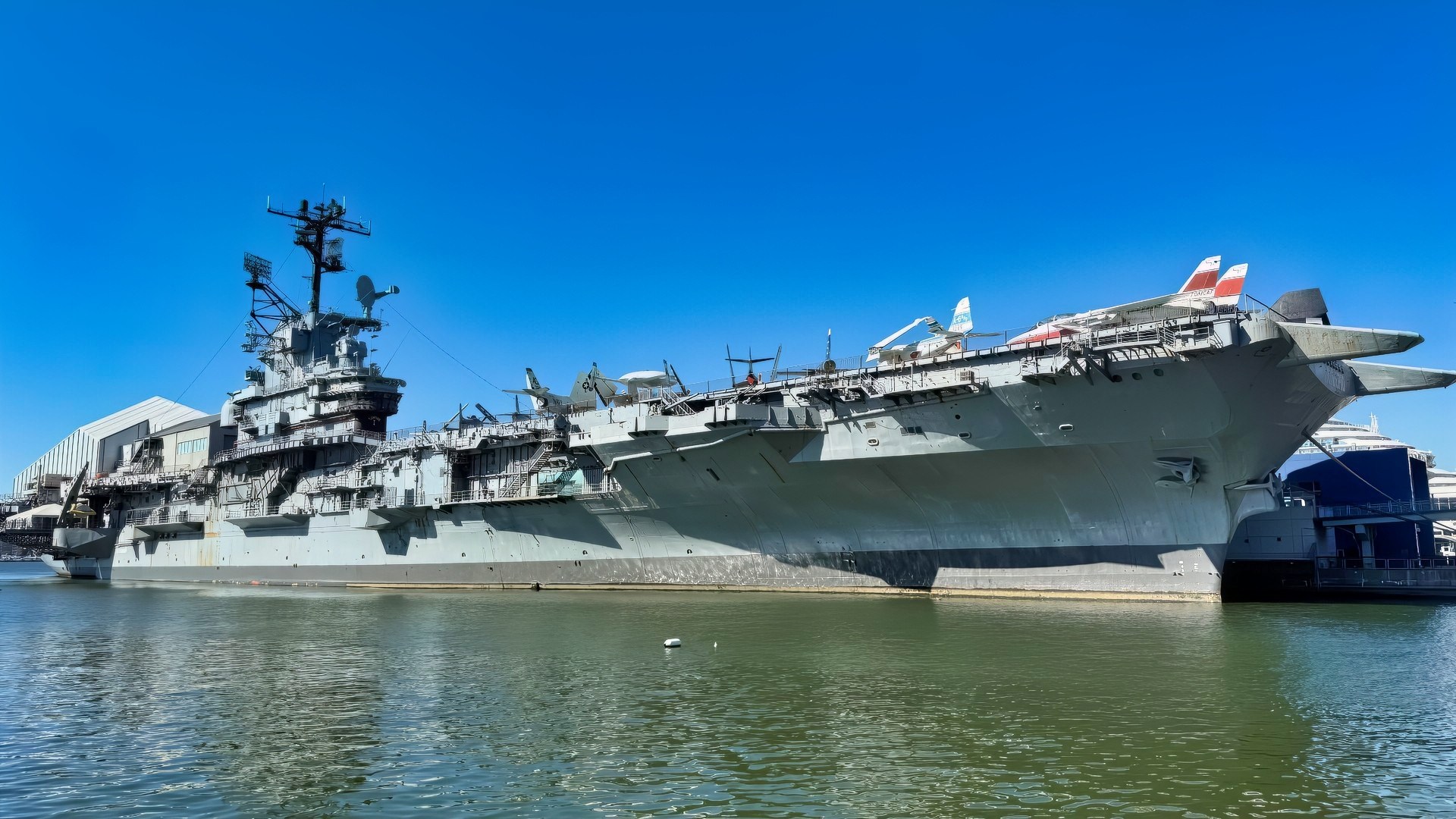
Essex-Class USS Intrepid Aircraft Carrier. Image Credit: National Security Journal.
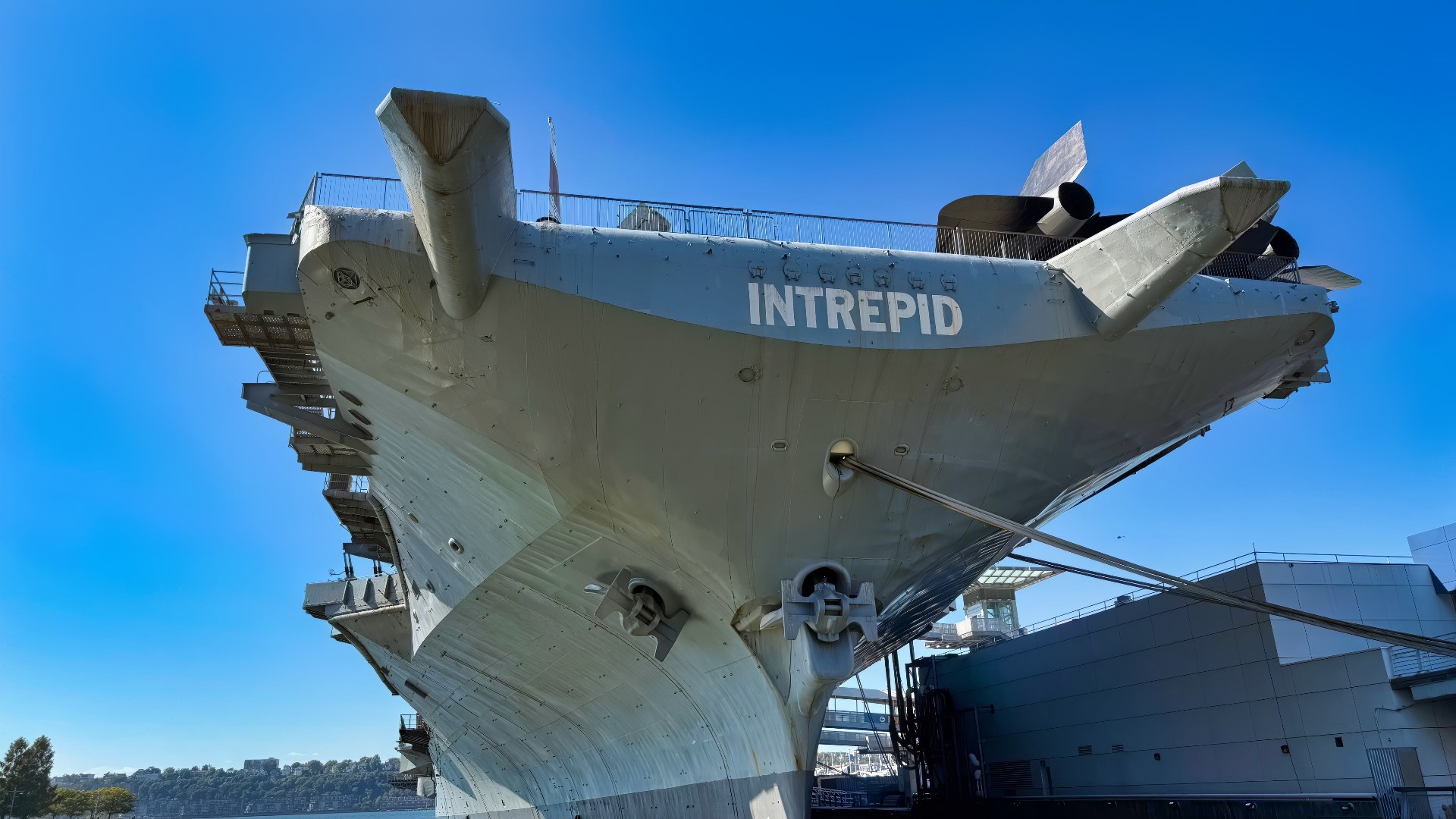
USS Intrepid Essex-Class Aircraft Carrier. Image Credit: National Security Journal.
-Built in astonishing numbers and speed during World War II, these ships became the backbone of American sea power from 1943 through Korea and Vietnam, modernized again and again for jets and even the space age.
-Yet their story hides an uncomfortable truth.
-The United States no longer has the shipyards, skilled workers, or industrial depth to repeat anything like the Essex-class aircraft carrier miracle.
-Today’s nuclear supercarriers are far more complex, but in a war with China, America might need numbers again — and it cannot surge new carriers on demand.
BONUS – National Security Journal presents photos from our time aboard the Essex-class aircraft carrier USS Intrepid in this article.
The Essex-Class Says A Lot About the U.S. Navy in 2025
If there is a single class of warship that turned the United States Navy from a powerful fleet into the backbone of a global superpower, it is the Essex-class aircraft carrier.
In fact, as a kid, I played a SNES game called PTO, a recreation of the Pacific Campaign during WWII. And the Essex-class aircraft carriers were the ones you wanted to take it to Japan.
Before World War II, the U.S. Navy was still a battleship navy. Carriers were important, but they were not yet the defining symbol of American sea power. That changed in the early 1940s, when the Navy bet big on a new class of fast carriers and then did something that still looks unbelievable today: it built them by the dozen.
Between 1943 and 1950, the United States completed 24 Essex-class carriers, making them the most numerous capital-ship class of the 20th century. These roughly 30,000-ton ships became the backbone of the Pacific war effort from 1943 onward, launching wave after wave of aircraft against the Japanese Empire. They survived typhoons, kamikaze attacks, and high-tempo operations without losing a single hull to enemy action. After the war, they were modernized to operate jets, fought in Korea and Vietnam, recovered Apollo astronauts, and served into the 1990s.
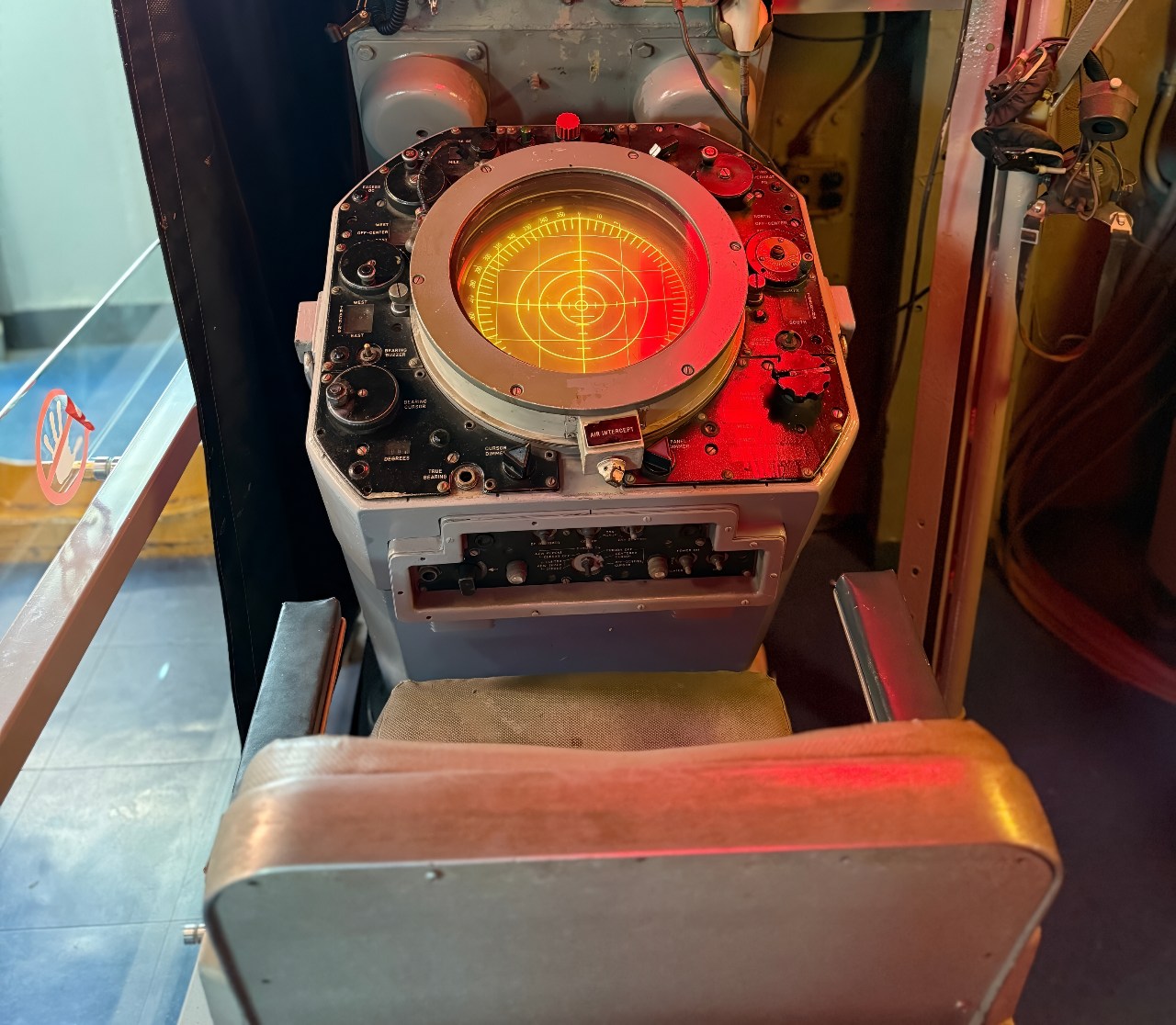
Essex-Class USS Intrepid Radar Station Photo. Image Credit: National Security Journal.
That is the legend. But embedded in that success is a darker, very current lesson: the United States does not have the industrial muscle to do anything like that again.
Mass-Produced Power: How the Essex Fleet Won the Pacific
The Essex story starts before Pearl Harbor.
With Japan abandoning naval arms-control limits in the 1930s, Congress passed major naval expansion laws that allowed the Navy to move beyond the treaty carrier designs of the 1930s and think seriously about a larger, more capable class. USS Essex (CV-9) was ordered in 1940 and commissioned at the end of 1942, just as the United States was shifting from shock to mobilization.
The design was straightforward but powerful: about 27,000 tons standard displacement, a big open hangar deck, and enough aviation fuel, ordnance storage, and maintenance space to support large air groups for sustained combat operations. The ships were faster, tougher, and more efficient than their predecessors. They carried bigger air wings, with better elevators and deck layouts that allowed high sortie rates.
Then the real miracle began.
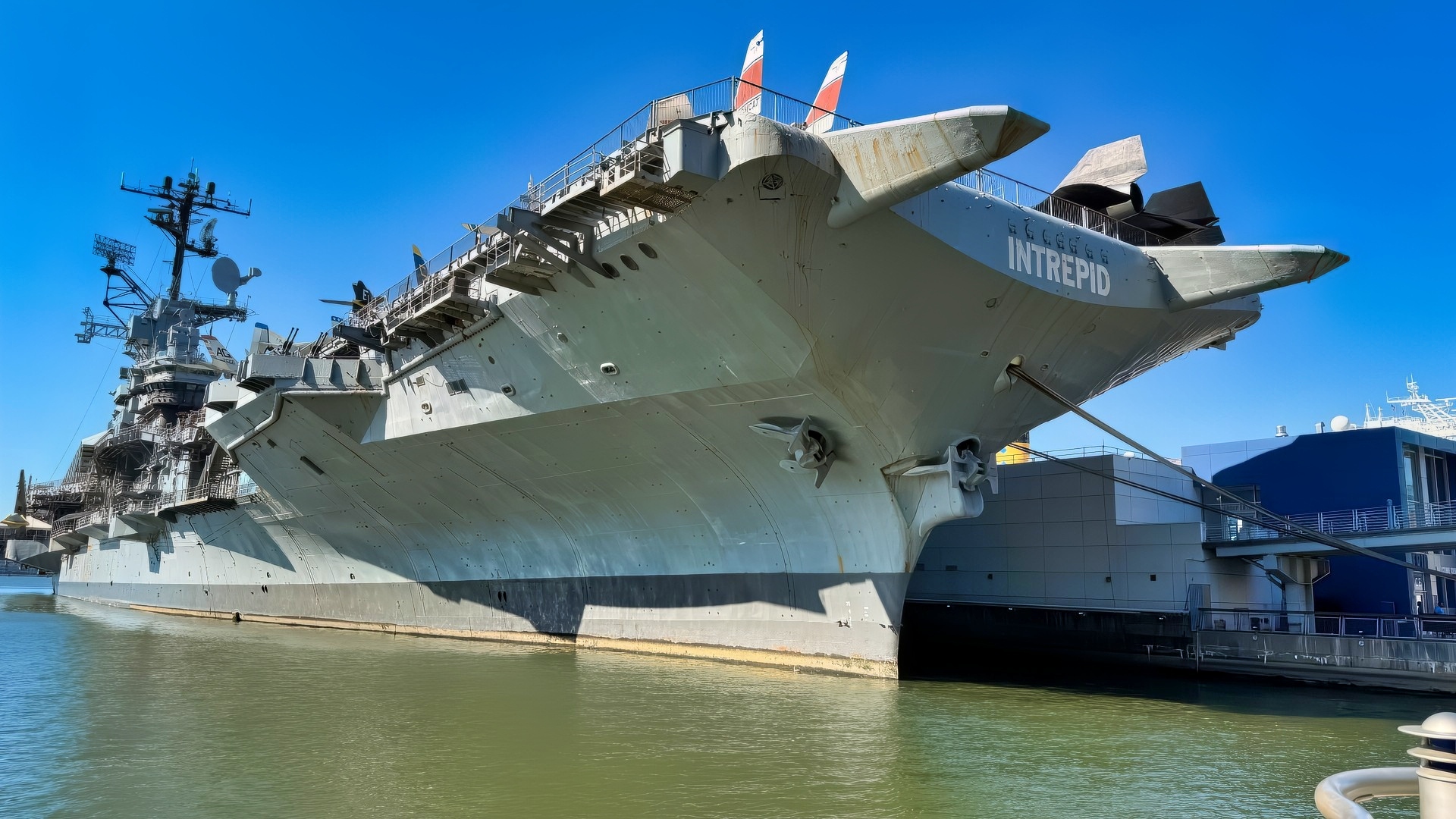
USS Intrepid in New York Harbor. Original National Security Journal Photo.
American shipyards in Newport News, Brooklyn, Philadelphia, Norfolk, and Fore River in Massachusetts all began churning out Essex hulls. Some were completed in a little over a year from keel laying to commissioning. At the peak, multiple carriers were under construction simultaneously, with workers and material flowing around the clock.
By mid-1943, Essex-class carriers were pushing into the Central Pacific, covering the Gilbert and Marshall Islands campaigns. By 1944–45, they were a central feature of fast carrier task forces that battered the Marianas, the Philippines, Iwo Jima, Okinawa, and ultimately the Japanese home islands. Their aircraft sank ships, destroyed airfields, and provided air cover for amphibious assaults. When older pre-war carriers faltered or fell out of the fight, Essex-class decks kept the pressure on.
Quantity mattered. Instead of a handful of precious decks, the U.S. Navy fielded a carrier force large enough to absorb damage, rotate ships for repair, and maintain continuous offensive pressure. When a kamikaze slammed into one Essex, there were others already on station, and more coming behind.
That industrial surge — the ability to build 24 front-line carriers in roughly seven years — is the foundation on which post-war American naval power rested.
From Propeller Planes to Jets and the Space Age
The Essex story did not end with Japan’s surrender.
In the late 1940s and 1950s, the Navy found itself facing a jet age and a Cold War. Instead of scrapping their wartime carriers, planners chose to rebuild them. Many Essex hulls received major modernization packages: stronger flight decks, new catapults, reinforced arresting gear, improved aviation fuel systems, radar upgrades, and, crucially, angled flight decks and optical landing systems.
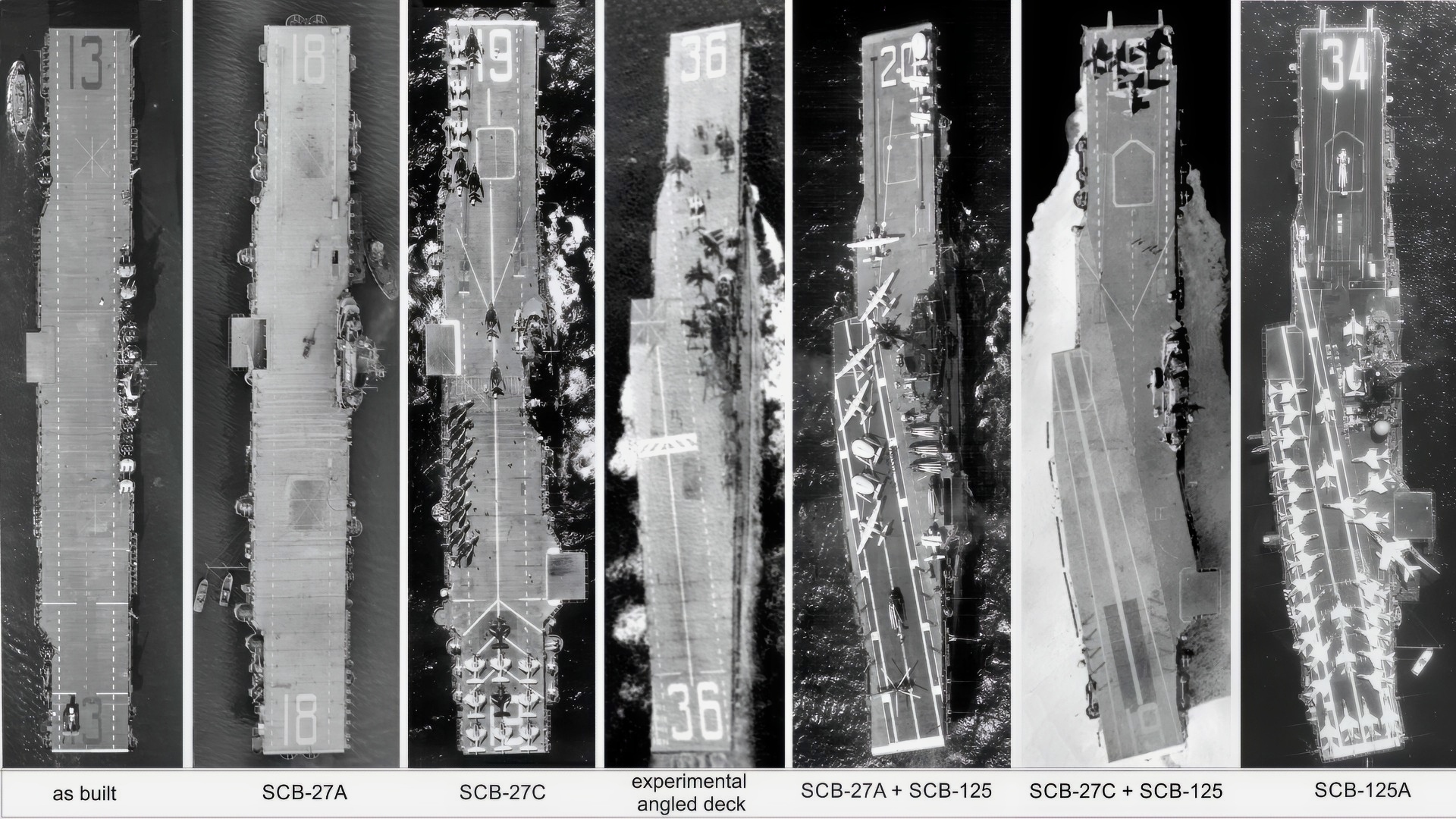
The Mighty Essex-Class Aircraft Carrier. Image Credit: Creative Commons.
Those upgrades turned what started as straight-deck, piston-era carriers into capable platforms for early jets and heavier, faster aircraft. The class went on to fight in Korea, launching close air support missions and strikes against North Korean and Chinese targets. In Vietnam, Essex carriers in their later guises still flew combat sorties, even as larger “supercarriers” took on the heaviest loads.
They did almost everything a carrier can do. Essex decks supported anti-submarine warfare, attack missions, and helicopter operations. Some were converted to amphibious assault ships. Others became recovery ships for America’s early space missions, plucking astronauts and capsules from the ocean. The last of the breed, USS Lexington, served as a training carrier until 1991.
From the last days of battleships to the age of Apollo, one class of carriers quietly formed the spine of American sea power. Part of the reason they could be modernized over and over was smart, robust design. Another part was that there were so many of them. Losing one or two to age, accidents, or evolving roles never gutted the fleet.
That is what an industrial-scale carrier program can deliver: not just a ship, but a deep bench.
The Dark Secret: America Can’t Do Essex Again
Now comes the uncomfortable part.
The United States could not possibly repeat the Essex experience today — not even close. It is not just that nuclear-powered supercarriers are bigger and more complex. It is that the industrial ecosystem that made Essex possible has withered.
During World War II, American shipbuilding was a mass industry employing hundreds of thousands of workers. Dozens of shipyards across both coasts were laying keels for everything from destroyer escorts to fleet carriers. That industrial base has been shrinking for decades. Today, U.S. shipyards account for a sliver of global commercial shipbuilding, and the remaining large yards are almost entirely dependent on Navy work.
There is only one yard in the United States that builds aircraft carriers: Newport News Shipbuilding in Virginia. It is an impressive facility, but it can only do so much. The Ford-class program is struggling with delays, cost growth, and a learning curve for new technologies like electromagnetic catapults and advanced arresting gear. When one Ford-class carrier’s schedule slips, there is no second yard ready to pick up the slack.
On top of that, the Navy and industry both warn about shortages of skilled welders, pipefitters, electricians, and other trades. Surveys of the carrier industrial base show suppliers preparing to shut production lines and lay off experienced workers if new carrier orders are delayed. Once those people and facilities are gone, bringing them back is slow, expensive, and sometimes impossible.
Even if the United States decided tomorrow to build a batch of simpler, conventional carriers modeled on Essex for a future fight, it would run into the same bottlenecks: not enough shipyards, not enough trained people, and a supply chain that has been allowed to hollow out in favor of just-in-time efficiency.
The Essex story proves the United States once knew how to mobilize industry at scale. The hard truth is that it no longer can — at least not quickly, and not without a sustained, deliberate national effort to rebuild capacity long before a crisis.
Nuclear Giants, Glacial Timelines
Defenders of the status quo will say, correctly, that today’s carriers are far more capable than an Essex. A single Gerald R. Ford–class supercarrier displaces more than 100,000 tons and carries an air wing whose striking power would have stunned a World War II admiral. Its nuclear reactors give it essentially unlimited range. Its catapults and arresting systems are designed around modern jets, not propeller planes.
All true — and all beside the point if you start losing them in a high-intensity war.
Nuclear carriers are tough to build, and that complexity imposes glacial timelines. A modern supercarrier can take close to a decade from early funding to commissioning, with several more years before it is fully worked up for sustained combat operations. Life-of-ship refueling overhauls take entire carriers out of the fleet for years. Every delay cascades down the line, stretching the time between carrier deliveries and straining workers and suppliers.
In peacetime, with no serious naval peer challenge, you can muddle through with slow, boutique production. In a war against a country like China, operating massed anti-ship missiles, submarines, and drones, the calculus shifts. The United States might need not just very capable carriers, but more of them, or at least some way to surge deck space and aviation capacity quickly.
That is precisely what the Essex-class delivered in its time: numbers, not just brilliance.
A China War and the Carrier Math Problem
Imagine a long, grinding war in the Western Pacific.
The U.S. Navy starts the fight with its finite number of big-deck carriers, supplemented by amphibious assault ships that can carry F-35Bs and a mix of land-based aircraft. China, meanwhile, operates from home waters with land-based anti-ship ballistic missiles, cruise missiles, submarines, and a growing carrier force of its own. Both sides have to worry about losing major ships.
In that scenario, even a couple of carrier losses would be a profound shock for the United States. Those are not losses you can replace in any politically relevant timeframe. There is no way to snap your fingers and have a new Ford-class ship delivered in 18 months. The idea of laying down half a dozen new hulls and marching them out of multiple yards in a few years is pure nostalgia.

F-14D Tomcat Onboard USS Intrepid, Essex-class aircraft carrier in NYC. Image Taken by National Security Journal on 9/19/2025.
Essex-class production showed what American industry can do when it is organized, funded, and focused on a single, brutally clear mission: get hulls in the water quickly. That effort rested on an enormous, diversified industrial base that no longer exists.
Today, the carrier math looks much more brittle. The United States can struggle just to maintain a legal minimum of 11 carriers in service while older Nimitz-class ships age out. Funding decisions on a single hull reverberate through a fragile supplier network. A long war with China would force Washington to make hard choices about where to operate its carriers, how much risk to accept, and what happens if risk turns into loss.
In other words, the Essex class doesn’t just represent past success. It marks the high-water line of American naval industrial capacity.
Learning the Right Lesson From Essex-Class
The point is not to pretend the United States should go back to building 1940s-style carriers. That world is gone. The platforms, technologies, and threats are different.
But the Essex experience still offers practical lessons.
First, design matters. The Essex-class was relatively simple by today’s standards, but it was designed from the start to be built in multiple yards, upgraded, and adapted. There was enough margin in the hull to absorb multiple rounds of modernization. That kind of “designed for change” thinking is just as relevant for future light carriers, amphibious ships, or drone motherships.
Second, capacity matters. The reason the Navy could afford to lose ships, rotate them, and keep fighting was because there were so many. Quantity really does have a quality all its own — especially in a theater as vast as the Pacific.
Third, industrial policy is national security policy. The Essex class was not just a Navy project. It was a national mobilization effort that employed huge numbers of workers, expanded shipyards, and left behind infrastructure that supported decades of post-war sea power.
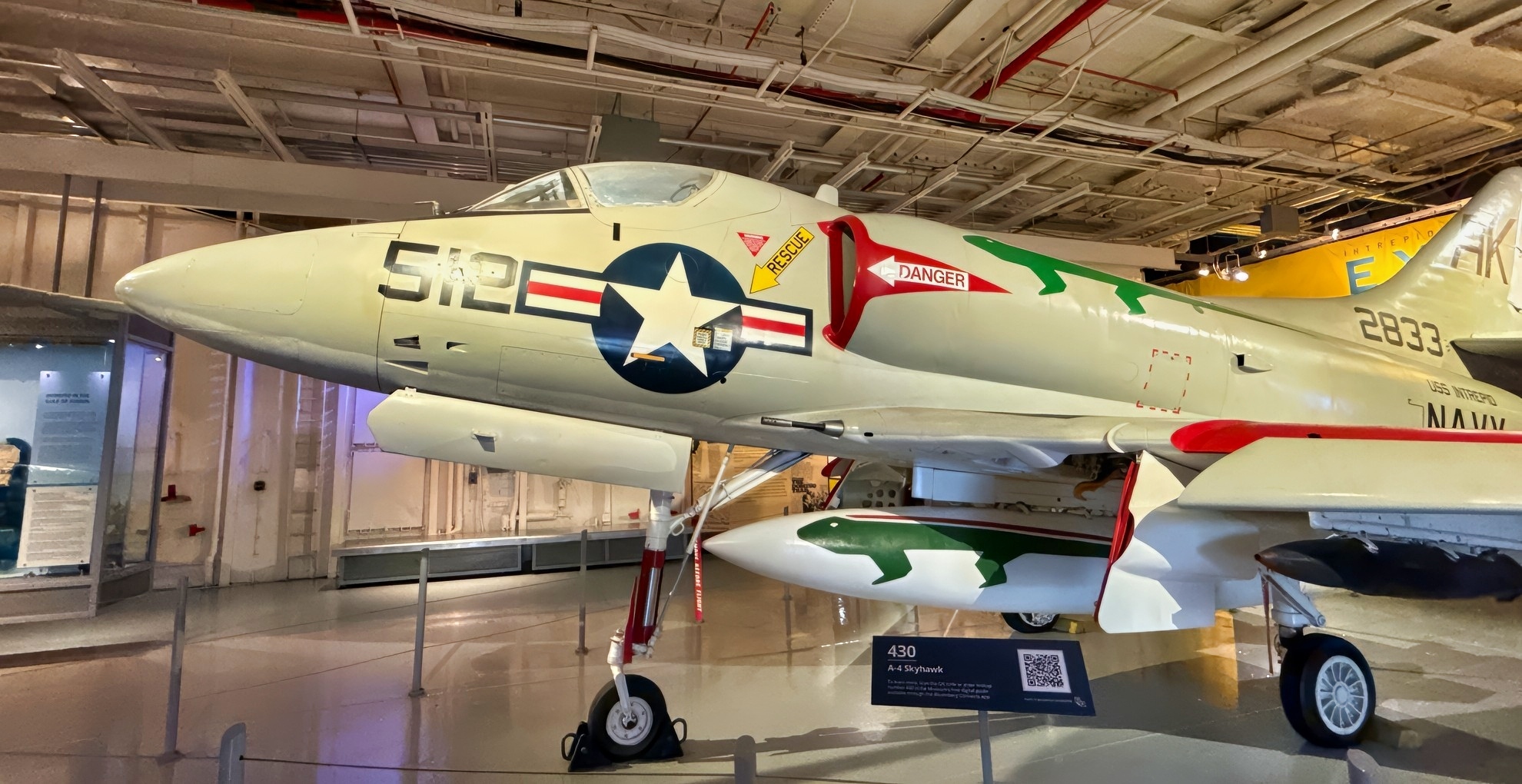
A-4 Skyhawk National Security Journal Museum Visit onboard Essex-class USS Intrepid. Image Taken by Jack Buckby on September 18, 2025.
Rebuilding even a fraction of that depth will take time, money, and political will. It means investing in shipyards, training the next generation of skilled workers, and giving industry a steady demand signal instead of lurching from one-year budget to one-year budget.
The Essex-Class As a Teacher
The Essex-class carriers are rightly remembered as the workhorses that helped win the Pacific and underwrote America’s rise as a maritime superpower. They were tough, adaptable ships that served in three wars and into the space age. They also embodied something even larger: a United States that could conceive, fund, and deliver a whole fleet of major warships in a handful of years.
That is the part of the story that should keep today’s planners up at night.
In an era when the Navy struggles to deliver a single nuclear carrier on schedule, when one shipyard holds the entire carrier portfolio, and when the industrial workforce is stretched thin, the Essex class looks less like a relic than a rebuke. It is a reminder that strategy rests on steel, welders, and the quiet grind of industry as much as on concepts and PowerPoint slides.
If the United States is serious about preparing for a potential great-power war in the Pacific, it cannot just admire the Essex-class at museums or in history books. It has to face what those ships really represented: a level of industrial capacity and national focus that today’s America has let slip away — and would need to rebuild long before the shooting starts.
About the Author: Harry J. Kazianis
Harry J. Kazianis (@Grecianformula) is Editor-In-Chief and President of National Security Journal. He was the former Senior Director of National Security Affairs at the Center for the National Interest (CFTNI), a foreign policy think tank founded by Richard Nixon based in Washington, DC. Harry has over a decade of experience in think tanks and national security publishing. His ideas have been published in the NY Times, The Washington Post, The Wall Street Journal, CNN, and many other outlets worldwide. He has held positions at CSIS, the Heritage Foundation, the University of Nottingham, and several other institutions related to national security research and studies. He is the former Executive Editor of the National Interest and the Diplomat. He holds a Master’s degree focusing on international affairs from Harvard University.
More Military
The Mach 2.2 YF-23 Black Widow II Stealth Fighter Has a Message for the U.S. Air Force
Mach 10 Missile Showers: China’s Aircraft Carriers Have 1 Big Advantage over the U.S. Navy
China’s New H-20 Stealth Bomber Keeps U.S. Air Force Generals Up at Night
The A-6 Intruder Has a Message for the U.S. Navy
How NATO Got Its Hands on Russia’s ‘Black Hole’ Kilo-Class Submarine


