

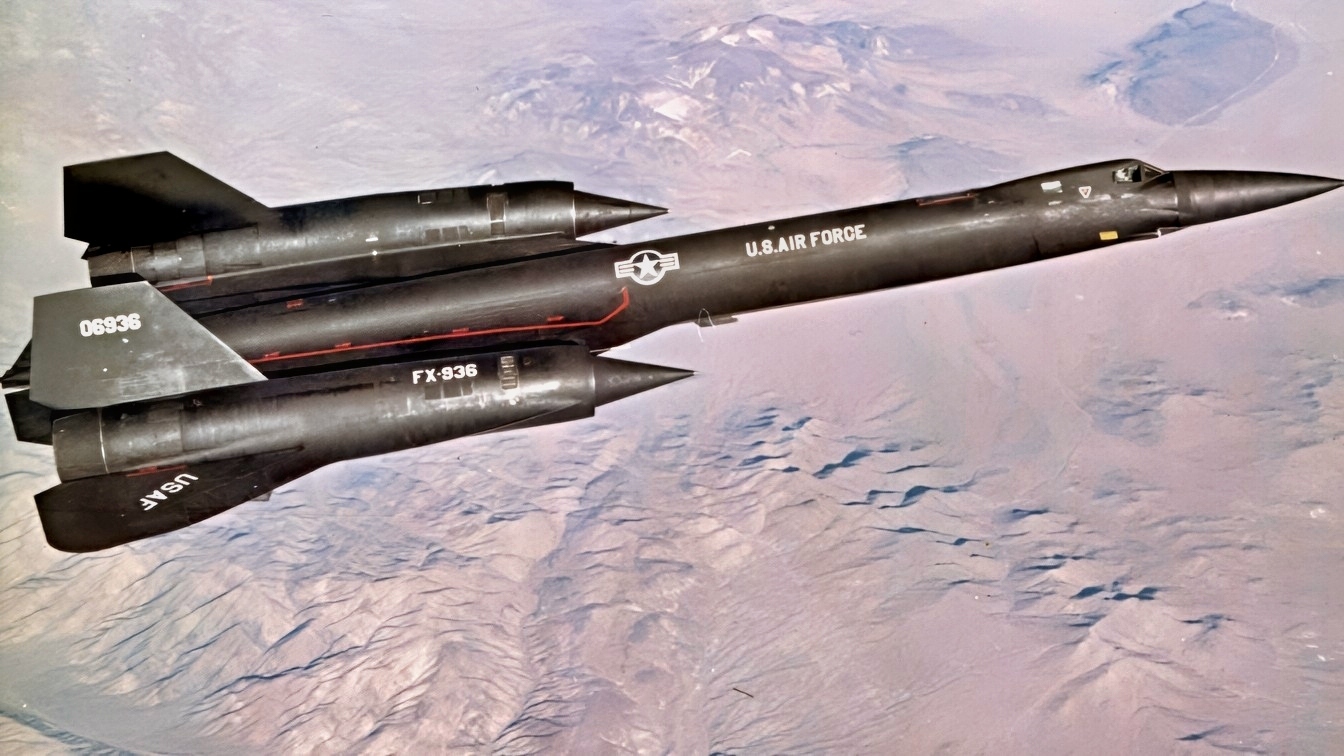
Lockheed’s YF-12A was a Mach 3.2 Cold War interceptor born from the same Skunk Works lineage that produced the A-12 and SR-71. Built to hunt Soviet bombers before they could threaten North America, the aircraft combined titanium construction, JP-7 fuel, J58 engines, advanced pulse-Doppler radar, and internal AIM-47 missiles. It could fly near 80,000 feet and outrun almost anything in the sky, but its extreme engineering came at a steep cost. Only three were built before changing nuclear strategy; ICBMs, missile defenses, and maintenance demands pushed the YF-12A into history rather than full production.
The YF-12A From Lockheed Was A Speed Demon
The YF-12A was among the fastest combat aircraft ever built.
Developed in the early 1960s by Lockheed Skunk Works, the YF-12 was derived from the A-12 reconnaissance aircraft for long-range interception of Soviet bombers.
With Mach 3.2 speed and an 80,000-foot operational altitude, the YF-12A was a technological marvel.
Though the aircraft never entered full production, it represented the extreme edge of Cold War interceptor theory and heavily influenced SR-71 development and high-speed aerospace research.
Creating the YF-12A
During the Cold War, the US was concerned with Soviet nuclear bomber fleets like the Tu-95 Bear and M-4 Bison, and, later, potential supersonic platforms.
The USAF demanded the creation of an interceptor capable of outrunning and outclimbing threats to engage Soviet bombers far before they ever reached US territory.
This was before ICBMs were reliable and bomber interception was still a central mission, so it was given a high priority.
The solution, as devised by Skunk Works, was to adapt the CIA’s A-12 spy plane platform into a missile-armed interceptor that could combat the primary existential threat of the time: Soviet bombers.

YF-12A. A similar plane to the A-12 Oxcart and SR-71. Credit: NSJ.
Derived from the A-12
The YF-12A was derived directly from the A-12 reconnaissance plane; the YF-12A was the armed interceptor derivative. And later, the SR-71 would serve as the evolution of the reconnaissance version.
Shared characteristics between the platforms include titanium construction, chines along the fuselage, a blended body design, and Mach 3 cruising speeds.
From an aesthetic perspective, the YF-12A was distinct for its large radar nose and missile bays under the fuselage chines.
Functioning as both a real interceptor project and as a strategic camouflage for America’s black reconnaissance programs (the A-12 and SR-71), the Johnson administration publicly revealed the YF-12’s existence in 1964, partially to cover up the existence of the high-tech reconnaissance aircraft being developed.
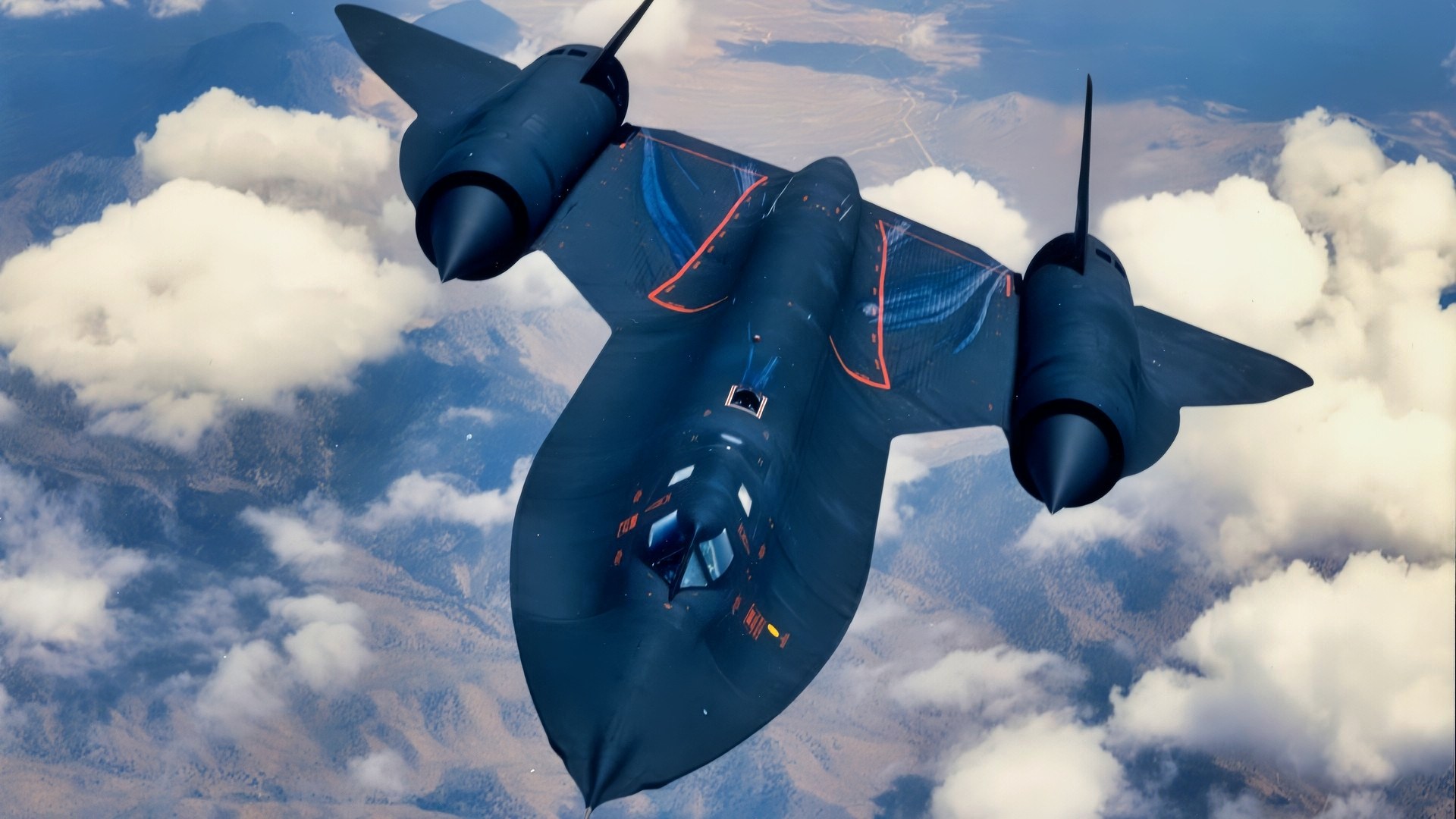
SR-71 Spy Plane in the Sky. Image Credit: Creative Commons.
Extreme Engineering
The YF-12A was a remarkable machine, capable of Mach 3.2-plus speeds and an 80,000-foot service ceiling.
The aircraft’s primary challenge was aerodynamic heating, as Mach 3 speeds caused significant heating of the airframe.
Accordingly, the airframe was constructed from 90 percent titanium, as aluminum would have softened or melted at sustained Mach 3.
Notably, the aircraft was also constructed to accommodate thermal expansion, which was inevitable at the high temperatures of Mach 3 travel.
So the aircraft was essentially “loose” on the ground; the panels were left so intentionally loose that the aircraft leaked fuel on the ground, before heating expansion sealed the gaps and plugged the fuel leaks.
Specialty Systems
JP-7 specialty fuel was engineered for use with the YF-12A. The JP-7 was extremely heat-resistant and also functioned as a heat sink for the cooling systems.
For propulsion, the YF-12A relied on the Pratt & Whitney J58, a hybrid turbojet/ramjet. For radar, the aircraft was outfitted with the Hughes AN/ASG-18, the first pulse-Doppler radar ever installed in a fighter-sized aircraft.
This was important because it could detect low-flying targets and filter ground clutter.
The target range was reportedly 100 miles. For missiles, the YF-12A carried three AIM-47s internally. The AIM-47 was radar-guided, with Mach 4-plus speed, and was once considered for a nuclear warhead option.
Between the speed, the radar, and the missiles, the YF-12A was designed to kill Soviet bombers before they were able to approach North America.
Flight Performance
The two-crew YF-12A was surprisingly stable at high speeds but difficult to take off or land because the long and narrow fuselage was optimized for high speed, not the relatively low speeds of takeoff and landing.
And of course, the YF-12A was not built for dogfighting; the aircraft had an enormous turning radius and was instead optimized for maximum speed and intercept geometry.
Indeed, the aircraft was designed to intercept and run away at high speed if necessary, not to maneuver in close-quarters combat.
Canceling the Program
The YF-12A was eventually canceled due to the program’s high cost.
At the same time, ICBMs began overtaking bombers as a nuclear threat. Missile defense systems evolved, too, with SAMs improving rapidly.

Russian Mobile ICBM Nuclear Weapons. Image Credit: Creative Commons.
And the aircraft itself proved troublesome; the titanium construction was difficult and expensive, requiring specialized logistics and maintenance.
In the end, only three YF-12s were built before being overtaken by changing strategic realities.
About the Author: Harrison Kass
Harrison Kass is a writer and attorney focused on national security, technology, and political culture. His work has appeared in City Journal, The Hill, Quillette, The Spectator, and The Cipher Brief. He holds a JD from the University of Oregon and a master’s in Global & Joint Program Studies from NYU. More at harrisonkass.com.


