

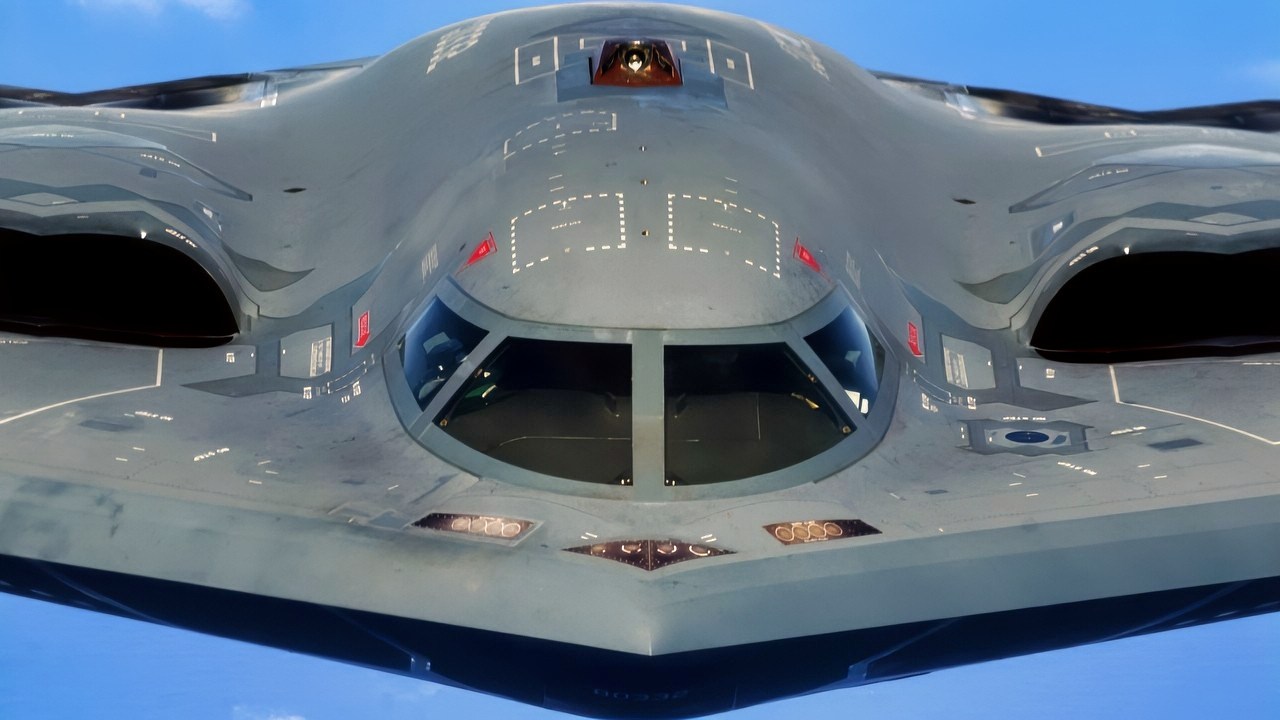
Key Points and Summary – China’s H-20 flying-wing bomber keeps slipping as Beijing teases a first flight.
-Five factors loom: bomber-scale radar-absorbent coatings that are hard to perfect; uncertainty over a quiet, efficient powerplant (WS-20 variants or stopgaps fall short); industrial and budget strain from J-20/J-35, drones, and missiles; workforce and expertise gaps; and unforgiving manufacturing and fly-by-wire integration unique to large stealth bombers.
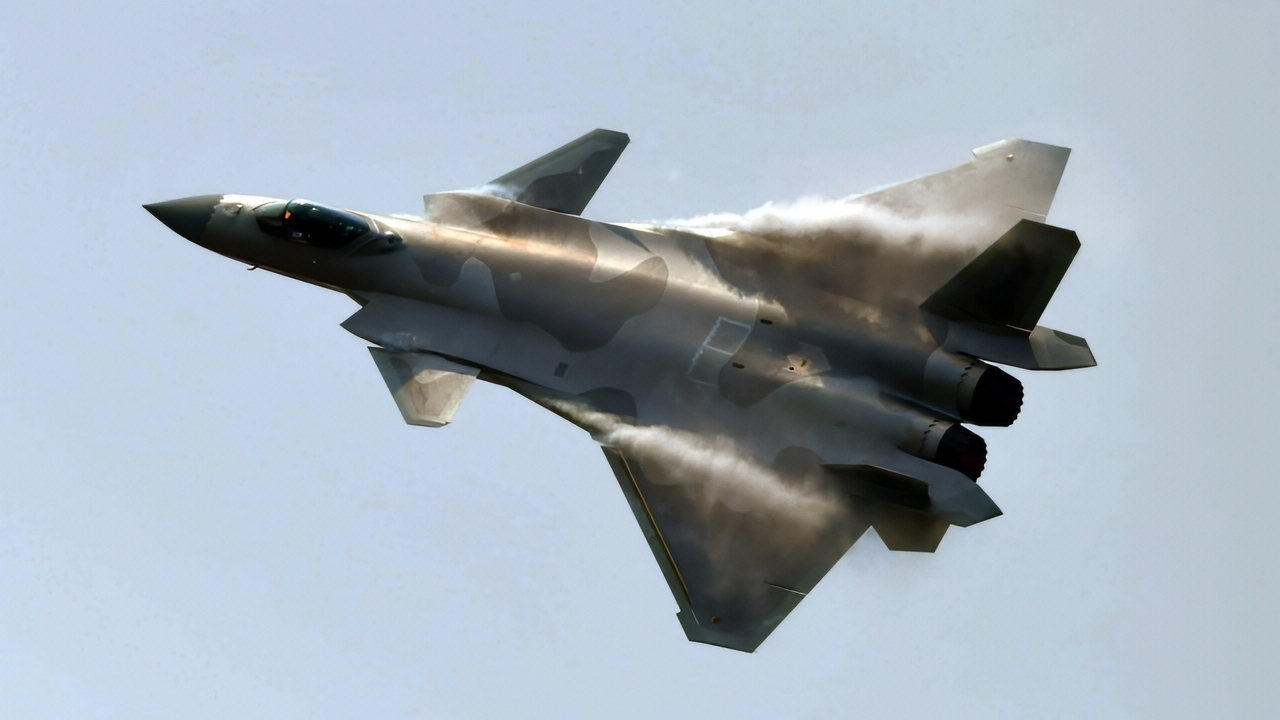
J-20 Fighter. Image Credit: Chinese Air Force.
-The result is likely IOC drift into the 2030s. If fielded, range could threaten Guam and beyond—but for now, coatings, engines, and production capacity remain the bottlenecks U.S. and allied analysts will watch.
Five Reasons China’s Proposed H-20 Stealth Bomber Has Been Delayed
China’s H-20 stealth bomber’s first flight is expected to be just around the corner, but the People’s Republic just can’t seem to produce it in numbers.
The flying-wing design, which many observers believe was stolen from the American B-2 stealth bomber, has undergone significant delays.
Chinese generals claim that the deep-strike airplane will fly soon.
There are several reasons for this late delivery, so let’s examine five possible causes of the delay. The H-20 may not be ready to rip until at least 2030.
The H-20 will be a long-range (6,214 miles) bomber capable of striking anywhere, anytime.
It has the range to attack the United States and could easily raid Guam and Hawaii with conventional or nuclear arms.
The H-20 can also menace China’s neighbors near and far, including Taiwan, Japan, and South Korea in Northeast Asia, as well as Vietnam, the Philippines, Singapore, Malaysia, Indonesia, and Australia in Southeast Asia.
Stealth Coatings Are Not That Easy to Produce for Large Bombers
But first, the Chinese must somehow assemble this airplane so it can reach active duty and carry its ten tons of weapons.
There seems to be a problem engineering the airplane’s stealth coating. The airframe is a large flying wing, and technicians likely do not have the production of radar-absorbing materials ready for prime time.
“The thing with the H-20 is when you actually look at the system design, it’s probably nowhere near as good as US [low observable; stealthy] platforms, particularly more advanced ones that we have coming down,” a US intelligence official said during a briefing in April 2024, according to Defense One. “They’ve run into a lot of engineering design challenges, in terms of how do you actually make that system capability function in a similar way to a B-2 or B-21,” the War Zone noted.
The Engine Technology Is Not Ready
China’s defense industry will also need to develop a highly efficient and advanced new indigenously built engine to power the airplane. Xi’an has developed the Woshan-15 or WS-15 engines for the highly successful J-20 stealth fighter program, but that is only for a small air superiority fighter.
For the People’s Liberation Army Air Force to strike that far away, a new fuel-conserving, quiet, and large powerplant must be devised.
This engine is likely to be a variant of the WS-20, featuring a high-bypass design. This is used on the Y-20 cargo airplane. The WS-20 engine may not have the acceleration and thrust required to propel the warbird and its ten-ton payload to targets across the Pacific Ocean.
The D-30KP turbofan engine is another choice that could be fitted on the H-20. This is for the H-6K bomber, but it is not intended for stealthy airplanes.

PLAAF Xian H-6M makes a turn over central Changzhou.
China Has Many Other Priorities
China also has competing objectives for its aerospace industry. The priority is the J-20 that must be produced regularly. The J-35 is also taking up time, money, and resources. There are the sixth-generation fighters such as the J-36 and J-50.
The H-20 may have to wait until these airplanes can be made in high numbers before the engineers can focus on the new stealth bomber.
There Could Be a Worker Shortage
China would need to train a skillful and expert generation of designers, engineers, and technicians to build the H-20. These efforts can add delays to the program. Along with new airplanes, the Chinese must also produce a large number of missiles and drones.
Its unmanned program is extensive, with around ten remotely-piloted and autonomous craft in production. China is also gearing up for the missile fight against U.S. aircraft carriers with its DF-21D and DF-26B anti-ship missiles that could sink a flat-top.
Copying the Americans Is Not Simple This Time
China is also new to the stealth bomber game. This is evident in its copycat tendency to mimic the B-2 Spirit. The United States has a long history with the B-2, and now the Americans have transferred their knowledge and experience to the B-21 Raider stealth bomber program.
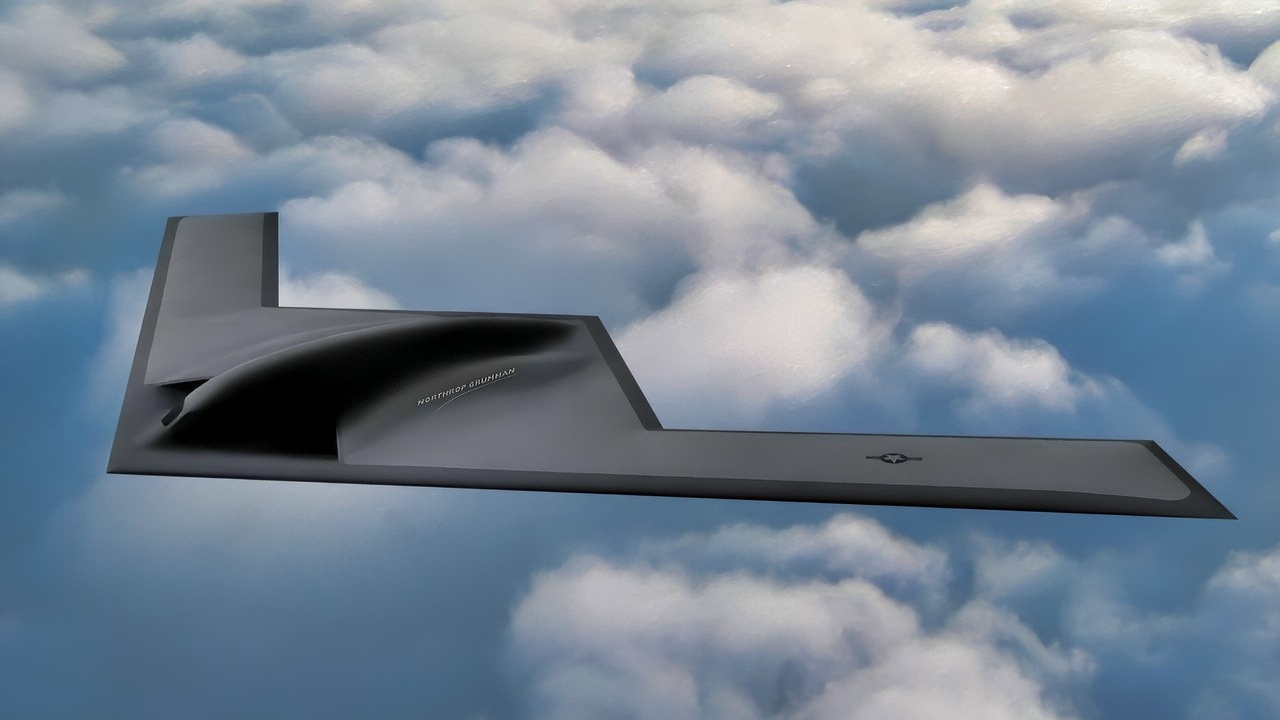
B-21 Raider Bomber Photo. Image Credit: Northrop Grumman.
The Chinese are behind the United States in this regard.
Creating such a large stealth bomber may be an immature effort that requires time to master. China usually sprints out in front of the competition to assemble new airplanes, but the People’s Liberation Army Air Force might be stumped here. They lack experience in building stealth bombers, which is creating delays.
Stealth Bomber Manufacturing Processes Have High Hurdles
Finally, the manufacturing process must be highly advanced. The radar absorbent materials are delicate and challenging to work with. Composite materials are not easy to handle. The fuselage surface must be completely smooth with no gaps or seams.
Workers must have new, custom-built tools that do not yet exist. Flying wings are also unstable, and an advanced fly-by-wire system is needed. New computers and software are required to make minute adjustments repeatedly in flight.
China may not have the stealth materials ready to go for the H-20. Low-observability materials are scarce, and the H-20 may not be as stealthy as the B-2. The PLAAF may not know whether it will convert an existing engine or produce a wholly new powerplant for the H-20.

China’s H-20 Stealth Bomber. Image Credit: Creative Commons.
The H-20 is also competing with other stealth airplanes and the manufacturing of missiles and drones. Work crews are likely still being trained as the aerospace industry recruits new engineers and scientists who can conduct the research and development necessary. Manufacturing processes for stealth bombers are highly complex and challenging to replicate.
We’ll keep track of the H-20 for you. This bomber is a crucial component of China’s nuclear triad. It will be able to bully its neighbors and perhaps reach the continental United States. The H-20 may not be ready for active duty until the 2030s.
Still, US and allied intelligence analysts should keep a close eye on its development, examine the reasons for its delay, and assess whether China can address its problems.
About the Author: Brent M. Eastwood
Brent M. Eastwood, PhD is the author of Don’t Turn Your Back On the World: a Conservative Foreign Policy and Humans, Machines, and Data: Future Trends in Warfare, plus two other books. Brent was the founder and CEO of a tech firm that predicted world events using artificial intelligence. He served as a legislative fellow for US Senator Tim Scott and advised the senator on defense and foreign policy issues. He has taught at American University, George Washington University, and George Mason University. Brent is a former US Army Infantry officer. He can be followed on X @BMEastwood.
More Military
‘Skipper, We Have Been Hit’: Tiny Nuclear Sub ‘Sank’ $4.5 Billion U.S. Navy Aircraft Carrier
China’s Military ‘Quantum Leap’ Doesn’t Add Up
Russia’s Air Defenses Are Springing Leaks—and Ukraine Is Exploiting Them
Japan Might Be Ready to Fight for Taiwan. Would America Do the Same?


Krystal cane
November 12, 2025 at 8:13 pm
Is it Hong Kong phooey