


China’s H-20 Stealth Bomber: “Soon” Isn’t A Schedule
Summary and Key Points – China’s defense industry looks unstoppable—new ships, fighters, and drones roll out at speed. But the H-20 stealth bomber remains perpetually “almost here.”

H-20 Bomber Mock Up. Image Credit: X Screenshot.
-Reported as a diamond-shaped, long-range strike platform with a ten-ton payload and a massive combat radius, the H-20 would put U.S. bases across the Indo-Pacific at risk and, with refueling, extend reach even farther.
-Yet public sightings remain ambiguous, and U.S. assessments have suggested a debut closer to the early 2030s.
-The delays hint at hard problems—engines, coatings, manufacturing lines, and confidence in real-world stealth and range. If it were ready, Beijing would likely be showing it off.
6,000-Mile Combat Radius? Why The H-20 Still Hasn’t Debuted
We give China much credit for its burgeoning defense acquisition prowess. New airplanes, aircraft carriers, surface ships, and submarines are frequently brought online. The Chinese keep shipyards and production lines busy, pumping out military hardware with ease. At the same time, state-run media outlets trumpet the latest marvels that emerge from factories in never-ending, breathless news releases.
However, China has encountered difficulty with a new, secretive bomber – the emergence of which always seems to be just around the corner. The H-20 is frequently promised, but it has yet to be delivered.
The stealthy diamond-shaped airplane is designed to be extremely stealthy and capable of long-range strikes with a ten-ton payload. The H-20 is reported to have a whopping combat radius of over 6,000 miles, which means it could hit anything in the Indo-Pacific, placing U.S. installations in South Korea, Guam, and Japan well within range. With aerial fueling, it could even attack North America.
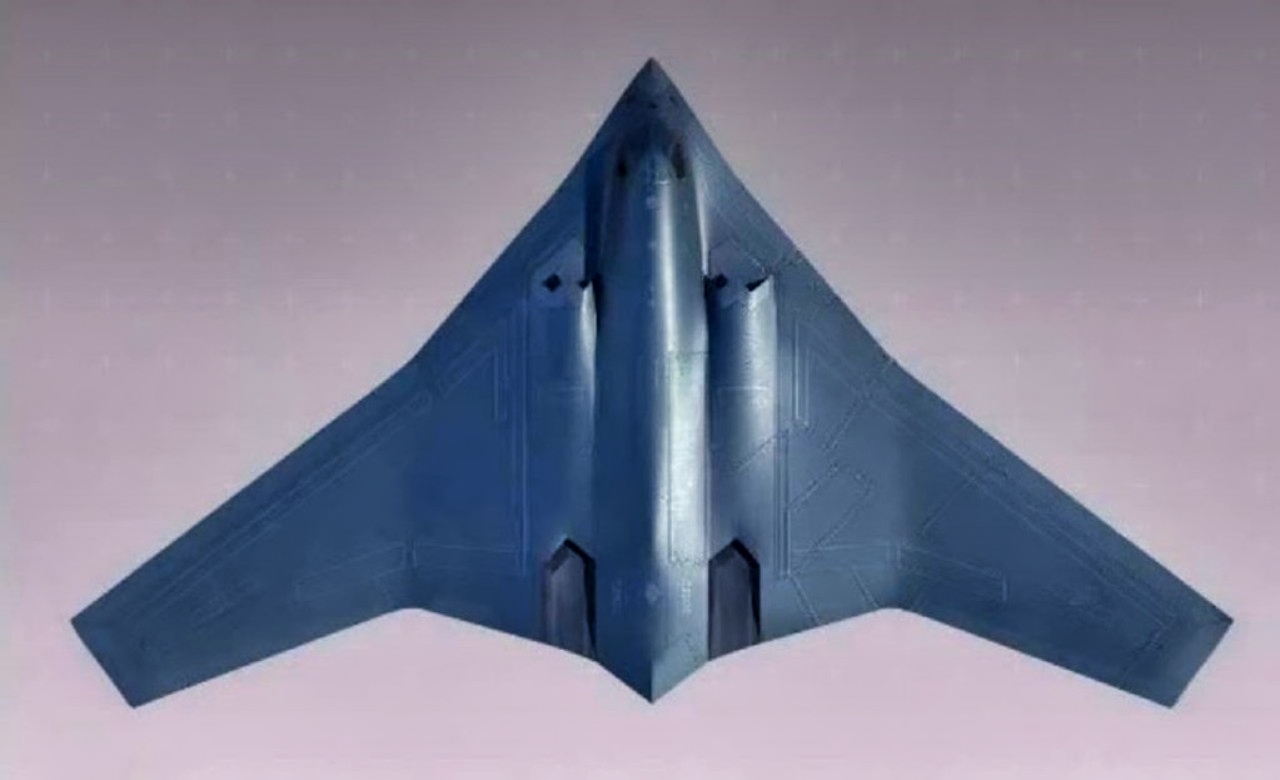
H-20 Bomber from China Artist Rendition. Creative Commons.
Is the H-20 Already Flying?
In January, the Air and Space Forces reported that they may have spotted imagery of what appeared to be a large-sized bomber with the appearance of the H-20.
“The new footage shows a large aircraft that has an overall stealthy diamond shape, in which the planform edges agree with each other’s angles for low radar cross section. It is not, however, a ‘flying wing,’ with distinct and lengthy wings, a large empennage, and a large central fuselage.” Air and Space Forces wrote.
US DOD Not Sure the H-20 Will Be Ready This Decade
However, the US Department of Defense, despite the alleged sighting, had previously stated that the H-20 would not make its debut until the early 2030s. The Chinese responded to this criticism by stating that the bomber would arrive “soon.”
“The PLAAF is seeking to extend its power projection capability with the development of a new H-20 stealth strategic bomber, with official PRC state media stating that this new stealth bomber will have a nuclear mission in addition to filling conventional roles,” the annual 2024 report to Congress on Chinese military developments stated. “The PLAAF is developing new medium- and long-range stealth bombers to strike regional and global targets.”
B-2 Spirit Is Dominating, and Soon the B-21 Will Too
However, the H-20 is not expected to be as stealthy as the existing B-2 Spirit or the new B-21 Raider. The Raider will someday be the stealthiest airplane on earth, and the Chinese are surely aware of the Raider’s low radar cross-section, new stealth coatings, and its “ghost-like” stealth capabilities.
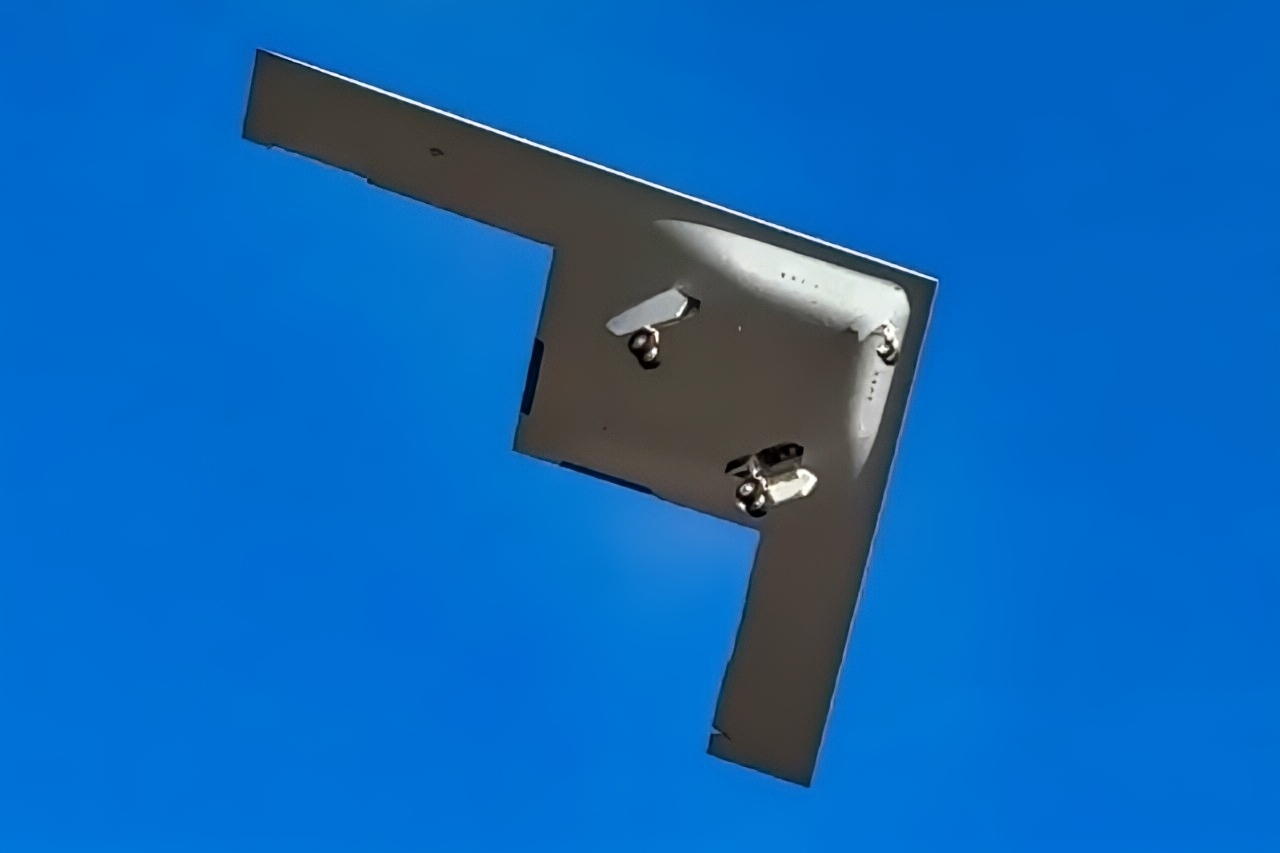
B-21 Raider New Flight of Second Bomber. Image X Screenshot from Video Posted.
China believes its scientists and engineers can match the capabilities of the B-21. A Chinese air force general said that there were no “bottlenecks” in the program and that any development issues could be solved quickly.
However, the PLAAF has been crowing about the H-20 for nearly a decade, and it still has not emerged in numbers other than the purported test flight described above. It is rare for the Chinese aerospace industry to struggle with delays.
Operation Midnight Hammer Taught Iran a Lesson
That’s fine with the Americans who lead the world in stealth bombers. The PLAAF must be concerned with the US Air Force’s B-2 Spirit bomber that punished Iranian nuclear infrastructure during Operation Midnight Hammer. The B-2s neutralized three of Tehran’s atomic sites and set the nuclear weapons program back for years.
However, perhaps the Chinese are just waiting for the right moment to unveil the H-20 for maximum propaganda effect. The PLAAF’s non-stealth fighters, such as the J-10C, are basking in the sun with a successful outing during a huge dogfight between Pakistan and India this year. The Pakistanis, flying J-10Cs, outperformed the Indians, who were operating Dassault Rafales. That showdown was widely reported in Chinese state-run media and became a point of national pride.
China desperately needs a long-range strategic stealth bomber. The American B-2 was developed in the 1980s and remains in service. Beijing is likely frustrated that it cannot replicate the stealthiness and power of that airplane. In fact, National Security Journal has even seen a B-2 Spirit stealth bomber at the U.S. Air Force Museum in Dayton, Ohio. China can’t match what is collecting dust.

B-2 Stealth Bomber at USAF Museum July 19 2025. Image Credit: Harry J. Kazianis/National Security Journal.
H-20 in 4 Words: The Wait Won’t End
Moreover, the Chinese may be struggling with various components and systems. The engines must be powerful to enable such a long range, and China does not always produce the most reliable power plants indigenously. Full stealth coatings and radar-absorbent materials are not easily installed on such a large airplane.
The PLAAF also needs a dedicated production line for the H-20. The Americans already have one in Palmdale, California, where Northrop Grumman is working hard on the B-21. The US Air Force announced in September that the second Raider had arrived for testing.
China is making significant progress with its J-20 Mighty Dragon program. There may be between 250 and 500 of the fifth-generation warbirds on active duty, and more are on the way each month. The PLAAF is a leader in drone production and unmanned technology. The Navy has three aircraft carriers with a fourth nuclear-powered flat-top reportedly on the way.
But the H-20 is struggling. If it were ready, the bomber would have been displayed at military parades and air shows already. The Chinese do not play around when it comes to public relations. Airplanes are a symbol of national prestige, and having a stealth long-range bomber that could challenge U.S. primacy in flight would be extra special and rolled out like a blockbuster movie.
That means that the PLAAF is having difficulty getting the airplane ready for prime time. The Chinese are likely not satisfied that the bomber can display such a dynamic range for a nuclear attack, and the stealthiness is likely not up to par. We will be watching for Internet sleuths to spot it in the air, but the H-20 is not ready for serial production, and that’s good news for the Americans and their allies.
About the Author: Brent M. Eastwood
Brent M. Eastwood, PhD is the author of Don’t Turn Your Back On the World: a Conservative Foreign Policy and Humans, Machines, and Data: Future Trends in Warfare, plus two other books. Brent was the founder and CEO of a tech firm that predicted world events using artificial intelligence. He served as a legislative fellow for US Senator Tim Scott and advised the senator on defense and foreign policy issues. He has taught at American University, George Washington University, and George Mason University. Brent is a former US Army Infantry officer. He can be followed on X @BMEastwood.


Michael
November 7, 2025 at 11:03 am
Obviously a copy built from information a spy gathered and gave to the Chinese. I only hope as China rises to their heights we have similar perforations in their protections and security as they sought in America. Certainly not honorable in any way. I sincerely hope China will act with greater attention to honor in the future. America has much work to do, as does the world. Let us hope for peace in whatever comes.
PBinLostAngeles
November 7, 2025 at 1:54 pm
As a former B-2 Program employee beginning in 1980, I can summarize up China’s H Program in just 3 words: Not even close!
Bill Buxton
November 7, 2025 at 8:59 pm
I read these articles with fascination and have listened to how far advanced the US equipment is. And that our enemies, particularly China, are not even close. That is true now, but they are catching up fast. They are learning from their mistakes, manufacturing beyond that of the US, and developing/stealing what they cannot yet engineer.
The German military leaders said the allies did not win WWII through prowess. Instead through manufacturing and ingenuity.
America has lost that edge. It seems in the swift pace of current warfare we may not be able to manufacture what will be lost in battle quickly enough to win.
David
November 8, 2025 at 12:22 am
China sums it up in four words:
“You make, we steal.”