


Key Points and Summary – China is poised to challenge U.S. air dominance with its new H-20 stealth bomber, a strategic ‘flying wing’ aircraft “almost here,” according to a top PLAAF general.
-This intercontinental bomber is a key part of Xi Jinping’s plan to expand China’s nuclear triad and aims to hold U.S. allies in the Indo-Pacific at risk.

A US. Air Force B-2 Spirt assigned to the 509th Bomb Wing, Whiteman Air Force Base receives fuel from a U.S. Air Force KC-135 assigned to the 185th Air Refueling Wing, Iowa Air National Guard in the sky over northwest Missouri on August 29, 2018.
U.S. Air National Guard photo by Senior Master Sgt. Vincent De Groot
-With the potential to strike Guam, Hawaii, and even the continental U.S., the H-20’s development is accelerating the arms race, forcing the U.S. and its partners to find new ways to counter this significant new threat.
China’s H-20 Stealth Bomber Has U.S. Allies Taking Notice
China is developing a new stealth bomber that could shift the military balance of power in the Indo-Pacific.
The People’s Liberation Army Air Force (PLAAF) has heady plans for a new intercontinental radar-evading bomber that aims to challenge the United States and its allies in East Asia.
The Xi’an H-20 will have a flying wing design similar to the U.S. Air Force’s B-2 Spirit bomber, which is enjoying a moment due to its successful attack on Iranian nuclear infrastructure during Operation Midnight Hammer earlier this year.
China likely has studied that stupendous American feat to neutralize Iran’s burgeoning atomic sites.
The People’s Republic would love to have the kind of global firepower that the Americans have.

B-2 Bomber. Image Credit: Creative Commons.
We Know Little Details About the H-20
The H-20 is the “Big Idea” of Xi Jinping, who is always ready for a new strategic super weapon to force the United States and its network of allies in the Far East to duck their heads in fear when it comes time to bring in new nuclear firepower.
China released information about the H-20 to the world in 2016, but details have since been scarce. Over the last years, the Chinese have been tight-lipped about the program.
Still, the Deputy Commander of the PLAAF, Lieutenant General Wang Wei, stated in 2024 that the H-20 is “almost here,” according to U.S. Army Training and Doctrine Command (TRADOC).
TRADOC revealed that the PLAAF is close to serial production and that Wang believed there would be no “technological bottlenecks” in the program.
The H-20 Could Allow China to Threaten the United States and Its Partners
What’s clear is that China wants to enter an elite club that can deliver nuclear weapons with a stealth bomber anywhere, anytime.
This will serve to keep the Americans down and out in the region, and with aerial refueling, the H-20 could even reach the continental United States.

A U.S. Air Force Maj. B-2 pilot marshals a B-2 Spirit bomber, deployed from Whiteman Air Force Base, Missouri, at Andersen Air Force Base, Guam in support of Valiant Shield 24, June 13, 2024. The speed, flexibility, and readiness of our strategic bombers plays a critical role in our ability to deter potential adversaries and signal our unwavering support to our allies and partners. Counter-maritime missions provide valuable training opportunities to improve our interoperability and demonstrate that our forces are capable of operating anywhere, anytime, to meet any challenge decisively. (U.S. Air Force photo by Staff Sgt. Kristen Heller)
The idea is also to deter American allies in the region and challenge the primacy of top U.S. partners like Japan, South Korea, and Australia.
The H-20 could have a dual conventional-nuclear payload of ten tons with the range to hit Guam and Hawaii and threaten critical U.S. military installations.
However, the H-20 may not come online until the early to mid-2030s. This is when the U.S. Air Force expects the new B-21 Raider stealth bomber to enter active duty.
H-20 Is a Significant Part of Chinese Nuclear Strategy
The PLAAF would love to have as many as 100 H-20s produced by then. This boosted bomber force would match the United States in quantity and perhaps quality.
The H-20 would give China an essential leg of its nuclear triad.
Xi’s military possesses around 600 nuclear warheads and wishes to have 1,000 devices by 2030. There are no plans for Xi to enter into strategic arms limitation talks with the Americans. China has walked away from talks due to U.S. support for Taiwan and weapons sales to Taipei.
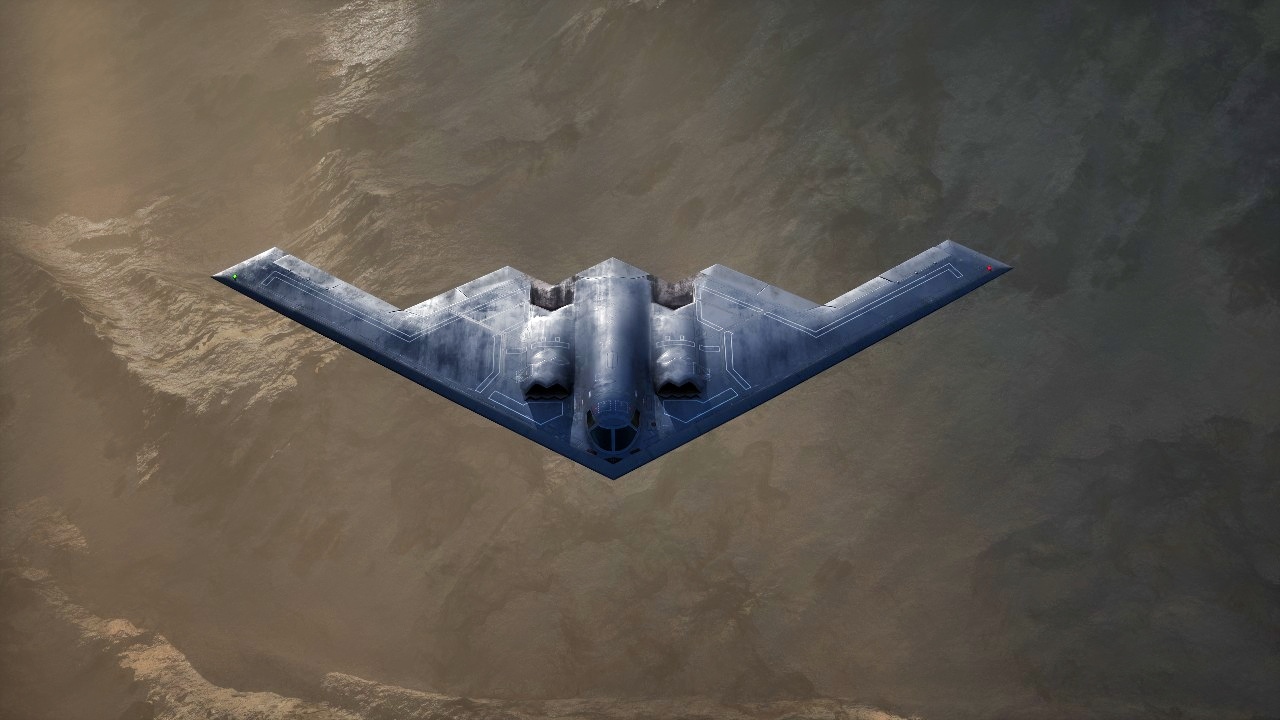
B-2 Stealth Bomber. Image Credit: Creative Commons.
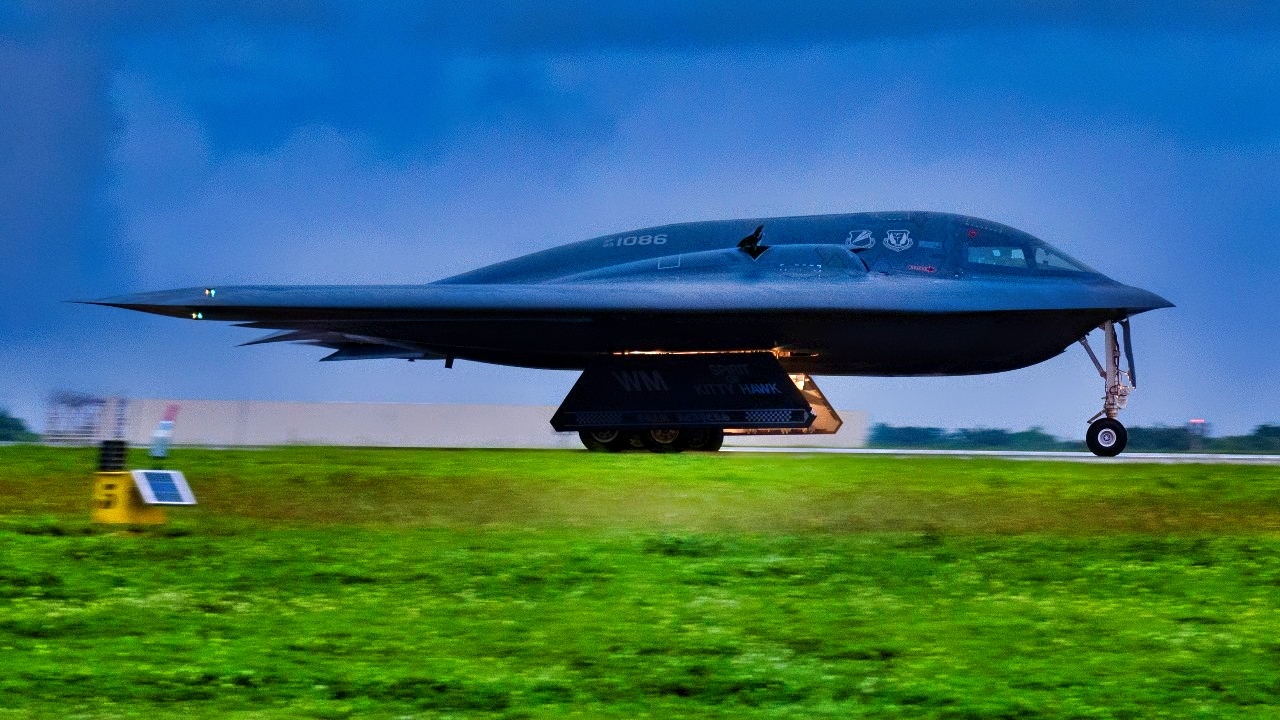
A U.S. Air Force B-2 Spirit, deployed from the 131st Bomb Wing, Missouri Air National Guard, takes off from Andersen Air Base Guam after completing a hot pit refuel on Andersen Air Force Base, Guam, Sept. 10, 2024. Hot pit refueling involves providing fuel to an aircraft immediately after it lands and engines running to minimize time spent on the ground and extend power projection capabilities. Bomber missions continue to contribute to joint force lethality and deter aggression in the Indo-Pacific by demonstrating the USAF’s ability to operate anywhere in the world at any time in support of the National Defense Strategy. (U.S. Air Force photo by Tech. Sgt. Eric Summers Jr.)
The Americans Test an ICBM
China has also noticed that the United States, amid prodding from President Donald Trump, has just tested an ICBM. This was an unarmed Minuteman III launched from Vandenberg Space Force Base in California on November 5.
The test flight was nicknamed “Glory Trip 254,” and the missile traveled 4,200 miles.
These types of tests will also encourage Xi to test ICBMs. This also makes the Chinese determined that the X-20 strategic bomber needs to become operational as soon as possible.
The recent ICBM testing and China’s wish to achieve parity with nuclear weapons compared to Russia and the United States, assuredly has America’s network of allies worried in the Indo-Pacific.
Two ‘Great Basins’ of U.S. Allies
I have written about what I call the “Great Basin of Allies” in Northeast Asia and Southeast Asia. This includes a group consisting of Taiwan, Japan, and South Korea, closest to China, and the Southeast Asian countries of the Philippines, Indonesia, Malaysia, Vietnam, and Singapore.
But what can these allies do against China’s H-20?
They all depend on the United States for a nuclear backstop in both “Basins.” The United States would have fighter jets and bombers based in Japan and Guam, and it would periodically send airplanes to the Philippines.
The H-20 could still place the Great Basins in jeopardy if Trump decided not to come to the aid of Taiwan if were to be attacked by the H-20.
Japan, South Korea, and Australia have capable militaries. Still, Australia is far from the action, South Korea is always facing North Korea, and Japan is supposed to have no more than a self-defense force.
They all need the U.S. Air Force and U.S. Navy for protection. The H-20 would make it difficult for all stakeholders in the Indo-Pacific to develop tactics, operations, and strategy. The stealthiness, range, and payload are problematic.
For these reasons, the Great Basins may ask the United States to explore negotiating with China to improve arms control policies. So far, Trump and Xi have resisted these limitation talks and focused more on the trade war between the two countries.
The Great Basins may have to spend more on their air forces and air defense assets. This could neutralize the H-20’s advantages. This stealth bomber will be a difference-maker in the region’s strategic outlook and force the Americans to work more quickly on the B-21.
However, the H-20 may not be ready for several years, giving the Great Basins time to prepare. Each ally must create a situation in which they can afford greater spending on defense, improved interaction, and training operations with the United States. China can be mitigated through a rejuvenated and united front of U.S. allies rowing in the same direction.
China engages in various “charm offensives” similar to what they are now executing with Vietnam, but in real terms, the Chinese have few friends in their own neighborhood.
H-20 Bottomline In 2 Words: A Gamechanger?
This is where the United States has a greater advantage with the Great Basin’s unity and its deterrence against new weapon systems like the H-20.
This airplane poses a threat, but the allied network is strong and forward-leaning, and can be reinforced by U.S. strength and the sustainment of military assets in East Asia.
The H-20 may not be such a super weapon for Xi when it enters active duty.
About the Author: Brent M. Eastwood
Brent M. Eastwood, PhD is the author of Don’t Turn Your Back On the World: a Conservative Foreign Policy and Humans, Machines, and Data: Future Trends in Warfare plus two other books. Brent was the founder and CEO of a tech firm that predicted world events using artificial intelligence. He served as a legislative fellow for US Senator Tim Scott and advised the senator on defense and foreign policy issues. He has taught at American University, George Washington University, and George Mason University. Brent is a former US Army Infantry officer. He can be followed on X @BMEastwood.
More Military
China Might Have a Way to ‘Swarm’ U.S. Navy Aircraft Carriers
India Leases Russia’s ‘Stealth’ Nuclear Attack Submarines
The Mach 3 SR-71 Blackbird Deserves A Better Fate Than This
The F-14 Tomcat Fighter Was ‘Notoriously Difficult and Costly to Keep Operational’


