

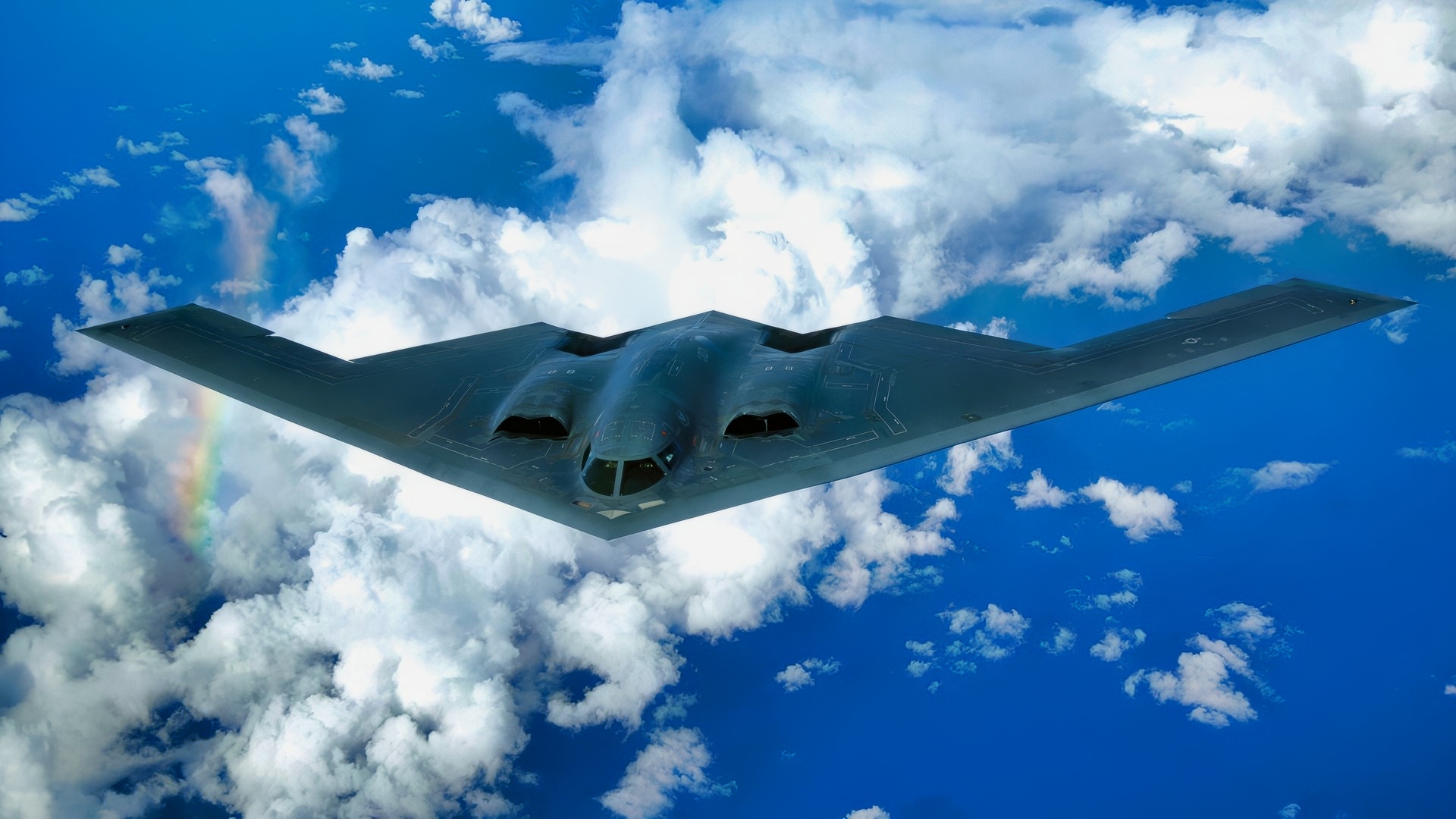
Key Points and Summary – China mirrors U.S. programs with the H-20 stealth bomber, a flying-wing design intended for global conventional and nuclear strike.
-While DF-26 “Guam-killer” missiles already threaten U.S. hubs, Beijing is likely to field both systems in numbers, not choose between them.
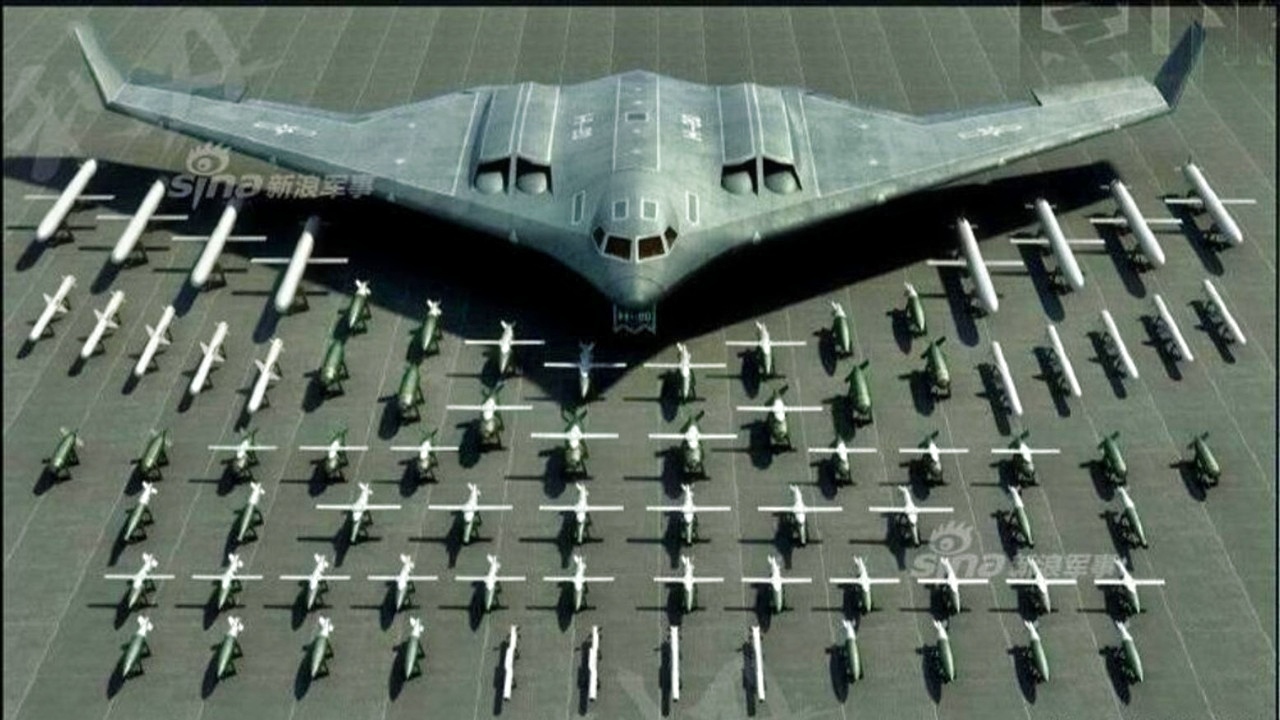
H-20 Bomber. Chinese Internet Social Media Screenshot.
-A DoD estimate pegs H-20 range beyond 10,000 km, extendable by refueling.
-Backed by J-20/J-35 stealth know-how and politics that shield big programs, China can grow its triad while the U.S. rolls out the B-21.
-Together, bombers and missiles could saturate Guam and complicate allied defense, demanding new dispersal, hardening and long-range counterstrike plans, plus integrated air and missile defense.
China’s “Guam Killing” H-20 Stealth Bomber and Missiles: Build Both in Numbers
China has a follower’s mentality when it comes to producing military hardware. If America has two stealth fighters, China develops two stealth fighters. If the United States unveils a new aircraft carrier, then China does the same. And with the United States moving closer to introducing the sparkling B-21 Raider stealth bomber, here comes China’s H-20 radar-evasive strike airplane.
Why China Will Build the H-20 In Numbers
The H-20 looks good on paper, but do the Chinese even need it? This is the era of missile and drone warfare. Russia and Ukraine have shown that stand-off attacks with unmanned aircraft and ballistic missiles are the main means to achieve military dominance.
China could take the money and resources saved from producing just a few H-20s and produce more carrier-killing projectiles or additional ground-fired ballistic missiles. It could aim these at assets on Guam, and other U.S. and allied military targets.
China Wants to Conduct a ‘Midnight Hammer’ Operation Too
The H-20 has many advantages. It is a long-range, flying-wing heavy bomber that resembles the American B-2 and B-21. The Chinese air force wants the ability to conduct intercontinental strikes anywhere, anytime, and the H-20 will be fit for the task.
The People’s Liberation Army Air Force (PLAAF) learned from the Americans’ recent attack on Iranian nuclear infrastructure. Operation Midnight Hammer set the Iranian nuclear program back years. The U.S. Air Force used 4,000 personnel working at high levels of secrecy to make Operation Midnight Hammer a success. Seven B-2s traveled for 30 hours into Iranian airspace. The Americans used their 30,000-pound Massive Ordnance Penetrator for the first time, and it was a massive success.
The H-20 Is a Big Ticket Item
The United States is the only country in the world that could conduct such an intricate mission with so many moving parts, but China is enthralled at the idea of having the same capability with the H-20. The stealth bomber could also be a strategic asset, carrying nuclear weapons throughout the Indo-Pacific and helping to provide China’s nuclear triad.
What the U.S. Department of Defense Knows
China is keeping the H-20 hush-hush, and U.S. intelligence is also vague about what it knows concerning the future Chinese bomber.
“The PRC is developing a new generation of long-range bombers, likely named the H-20,” the Department of Defense said in an unclassified report released late last year. “The H-20, which may debut sometime in the next decade, will have a range of more than 10,000 km, enabling the PLAAF to cover the Second Island Chain and into the western region of the Pacific. The H-20 bomber’s range could be extended to cover the globe with aerial refueling. It is expected to employ conventional and nuclear weaponry and feature a stealthy design.”
Sinking the Unsinkable Aircraft Carrier (Guam)
The H-20 could strike Guam. If it did so successfully, it would give the Chinese a huge advantage in any conflict with the United States. Guam is a strategic hub of U.S. military might in East Asia. Losing its combat efficacy would be unthinkable for the United States. However, China already has long-range DF-26 ballistic missiles that are nicknamed “Guam Killers” by Chinese propaganda organs.
Does this mean the H-20 is not needed after all? Money is no object to Beijing when it comes to matching U.S. defense capabilities, nor does China tend to ever cancel big-ticket programs. The People’s Republic is likely to produce both more DF-26s and the H-20 at the same time.
Checking the Box On Stealth
The Chinese have ample experience with stealth flight. There are two stealthy PLA fighters – the J-20 and J-35. Work is being conducted on two sixth-generation fighter jets. The H-20 flying throughout East Asia as a low-observable beast that can be re-fueled in the air is a plausible vision.

J-35 Stealth Fighter from China. Image Credit: Creative Commons.
Politically, major programs are not a problem for China. There is no independent legislature to nix defense programs. The Chinese think up projects and execute them without media oversight and government watchdogs to put the brakes on wasteful defense acquisition products.
This means that the Chinese will produce both long-range ballistic missiles and the H-20, keeping the PLAAF and the Chinese rocket forces in business. That leaves the Americans and their allies in the Indo-Pacific wondering how to counter the Chinese nuclear triad. The triad is a major deterrent and signals that China is a military world power that can do more than dominate its region and protect its borders. The H-20 might even fire nuclear-tipped hypersonic weapons someday.
China is watching the development of the B-21 Raider stealth bomber. Two have been produced, and more on their way toward active duty by 2030. If China can make the H-20 quicker, it would be a huge advantage.

The B-21 Raider program is on track and continues flight testing at Northrop Grumman’s manufacturing facility on Edwards Air Force Base, California. The B-21 will have an open architecture to integrate new technologies and respond to future threats across the spectrum of operations. The B-21 Long Range Strike Family of Systems will greatly enhance mission effectiveness and Joint interoperability in advanced threat environments, strengthening U.S. deterrence and strategic advantage. (U.S. Air Force photo)
Look for China to focus on its two Guam-killing choices – stealth bombers and long-range ballistic missiles. Beijing has no need to choose one over the other; China can carry forward both programs concurrently to craft a future Chinese advantage in long-range strike. The H-20 will be on active duty as the B-21 comes online.
Money is no object. Chinese engineers and technicians have shown they can copy and build stealth airplanes, and there are no watchdogs to trim the wings of military-hardware programs, even as they come in delayed and over-budget. They just keep pursuing weapons programs to rival the United States. More ballistic missiles and additional strategic bombers are needed to neutralize American assets in places such as Guam. So, the H-20 is in business for the long haul.
About the Author: Brent M. Eastwood
Brent M. Eastwood, PhD is the author of Don’t Turn Your Back On the World: a Conservative Foreign Policy and Humans, Machines, and Data: Future Trends in Warfare plus two other books. Brent was the founder and CEO of a tech firm that predicted world events using artificial intelligence. He served as a legislative fellow for US Senator Tim Scott and advised the senator on defense and foreign policy issues. He has taught at American University, George Washington University, and George Mason University. Brent is a former US Army Infantry officer. He can be followed on X @BMEastwood.
More Military
The Japan-China Senkaku Islands War of 2025: Who Would Win?
The J-20 Stealth Fighter Bomb Truck: What We Know
The F-35’s ‘Air Dominance’ Could Be At Risk
The U.S. Air Force Isn’t Ready for What Is Coming
Eurofighter Typhoon vs. China’s New J-20S Stealth Fighter: Who Wins?


