


Russia’s Black Sea Fleet was once a dominant regional naval force. But the fleet has been severely weakened, resulting in a shift from an offensive force to a defensive “fleet-in-being.” What’s notable about the fleet’s degradation is that Ukraine didn’t need a traditional navy to inflict it; rather, it used drones, missiles, and targeting to strip the Black Sea Fleet of its ability to operate, offering another example of asymmetric, cheap measures crippling traditional, expensive military platforms.
Scale of the Losses
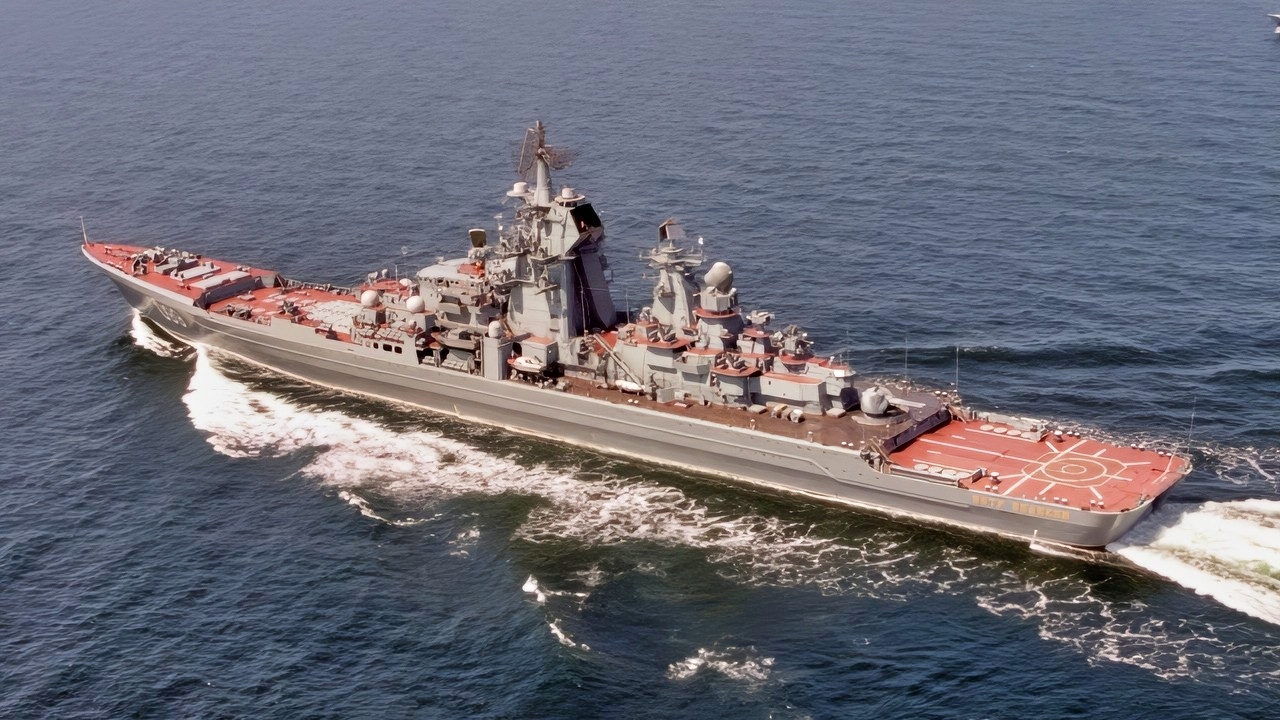
Russian Navy Kirov-Class. Image Credit: Creative Commons.

Kirov-Class from the Russian Navy. Image Credit: Creative Commons.
Russia is believed to have lost 30 percent of its Black Sea Fleet, either to damage or outright destruction. That’s 24–29 vessels lost. Key losses include the flagship vessel, the Moskva cruiser, and multiple landing ships.
The remaining strike force consists of seven offensive warships, including two frigates, three corvettes, and two submarines. So the fleet still exists, but its offensive capabilities have collapsed.
Missile Capability Degradation
The primary weapon in the fleet’s arsenal is the Kalibr cruise missile. Before the Russo-Ukrainian War, the fleet had the capability to launch large missile salvos. But now the Kalibr can be launched from just five surface ships and two submarines, limiting the fleet’s ability to launch its pre-war missile salvos.
Additional issues include damage to launch systems and slower reload cycles, further limiting the ability to sustain missile salvos. So while Russia still has missiles, it has far fewer platforms from which to launch them.
How Ukraine Did It
Ukraine used multiple methods to degrade the Black Sea Fleet. Ukraine used sea drones—low-cost, unmanned surface vessels—with explosive payloads in swarm configurations to attack Russian vessels.
The swarm attacks were complemented with cruise missile precision strikes on ships and ports.
Deep strikes targeted the headquarters, shipyards, and infrastructure needed to maintain and operate the fleet. Ukraine also targeted radar sites and surveillance platforms, degrading Russia’s ability to coordinate and “see.”
In sum, Ukraine targeted not just ships but the entire system that allows a navy to function. The result was a “blinded” fleet with a reduced reaction time.
Loss of Bases
Ukraine has also targeted Russian naval bases. Sevastopol, the primary naval hub, has been repeatedly struck, forcing the fleet to relocate. But the new base, Novorossiysk, has also been under attack.
The result has been that Russia no longer has a secure naval base in the Black Sea, which has obviously degraded its ability to maintain a meaningful presence there. And now, with the fleet concentrated in Novorossiysk, Ukraine has a base under constant drone threat, limiting the fleet’s ability to maneuver.
As a defensive measure, the ships rarely leave port, and the submarines hide near the bases. So the existing fleet is effectively contained—still present but operationally inactive.
Maintenance Collapse
The fleet has suffered from a maintenance collapse. The core issue is that there is no dry dock, and the Bosporus Strait has been closed. The result is that no major repairs have been made, and overall readiness has been severely degraded.
Damaged ships have been forced to simply remain damaged, meaning that even ships that survive are slowly losing their effectiveness.
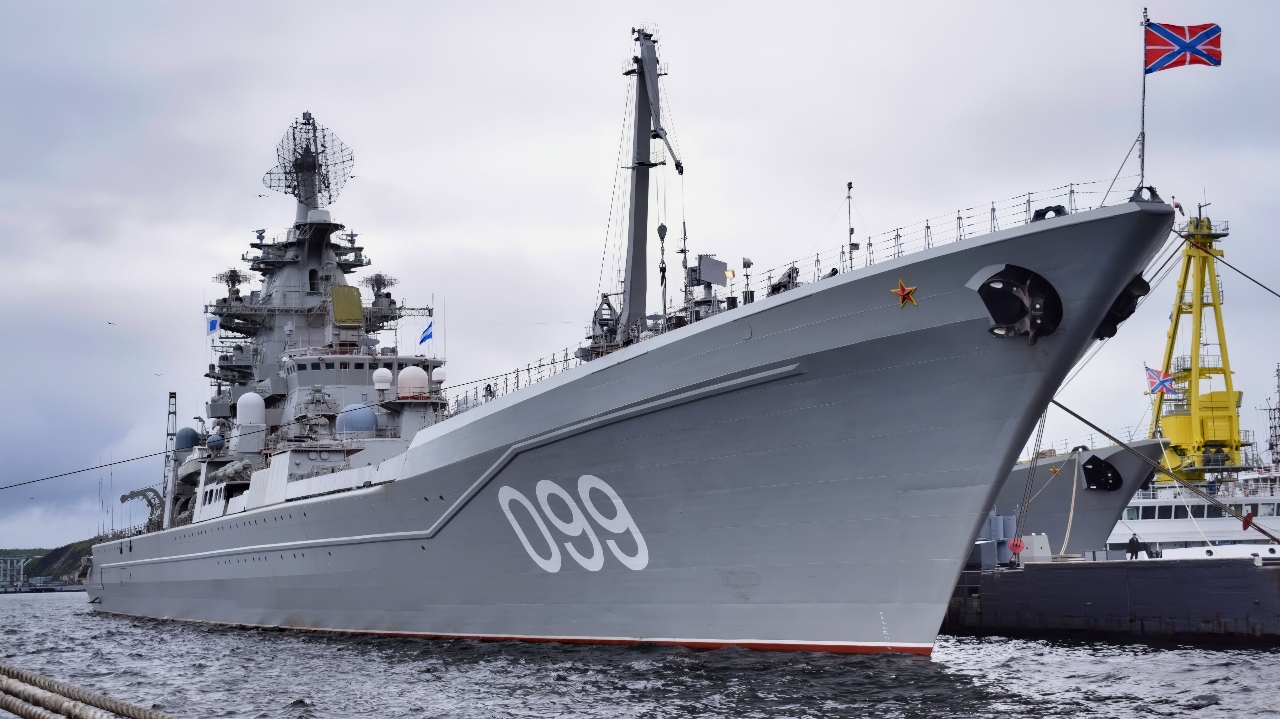
Kirov-Class Russian Navy Cleaned Up. Image Credit: Creative Commons.
Can Russia Recover?
The Montreux Convention prevents the passage of reinforcements through the Bosporus.
Russia has tried some workarounds, like moving small ships via canals. But this offers only limited capability and limited relief. In the longer term, a rebuild might be possible at Novorossiysk, but, obviously, it would take years and offer no immediate relief.
As long as access to the Mediterranean is restricted, Russia’s ability to recover is extremely constrained.
Strategic Implications
The destruction of Russia’s Black Sea Fleet suggests that large ships are now vulnerable to cheap and effective drones that adversaries can deploy in swarms.
Sea control has been redefined; Ukraine does not have a traditional navy, yet it still managed to deny Russia’s ability to use a traditional navy to control the seas.
The global lesson here is that fleets can be neutralized without a fleet-on-fleet battle. The Black Sea may offer a glimpse into the future of naval warfare, where distributed, low-cost systems are effective counters to legacy systems.
About the Author: Harrison Kass
Harrison Kass is a writer and attorney focused on national security, technology, and political culture. His work has appeared in City Journal, The Hill, Quillette, The Spectator, and The Cipher Brief. He holds a JD from the University of Oregon and a master’s in Global & Joint Program Studies from NYU. More at harrisonkass.com.


George
May 2, 2026 at 9:40 am
and retains 100% of their nuclear weapons. We should attack them before they attack us, right?
chrisford1
May 2, 2026 at 9:19 pm
This isn’t Ukraine sinking ships. It is NATO, with Ukie lunch button button pushers involved.
America provides the ISR.
Britain, which is recklessly aggressive in running the naval war against US wishes is responsible for most naval damage and port facility damage and going the targeting of Russian refineries is unable to defend itself. It’s military has withered to horrifying low levels. And it counts on the US saving Starmer & friends if Russia retaliates against Britain.
The EU and America until 2025, gave the broke Ukies 300 billion in funds for the war and to further enrich the Ruling Elites of America, Europe, Israel, and Ukraine. Without outside money, the Ukies couldn’t pay for an army, or pay for a Ukrainian government, or its pensioners.