
The Pentagon is considering a major reduction or relocation of American forces in the Persian Gulf after nearly six months of war with Iran exposed just how vulnerable some of the United States’ largest military bases in the region are.
The discussions could ultimately result in U.S. troops and military equipment being moved farther west away from installations in Kuwait, Bahrain, Qatar, and other Gulf states that have faced Iranian missile and drone attacks since the war began in February, and it could mean that the war in Iran ultimately decides the future of America’s global military presence.
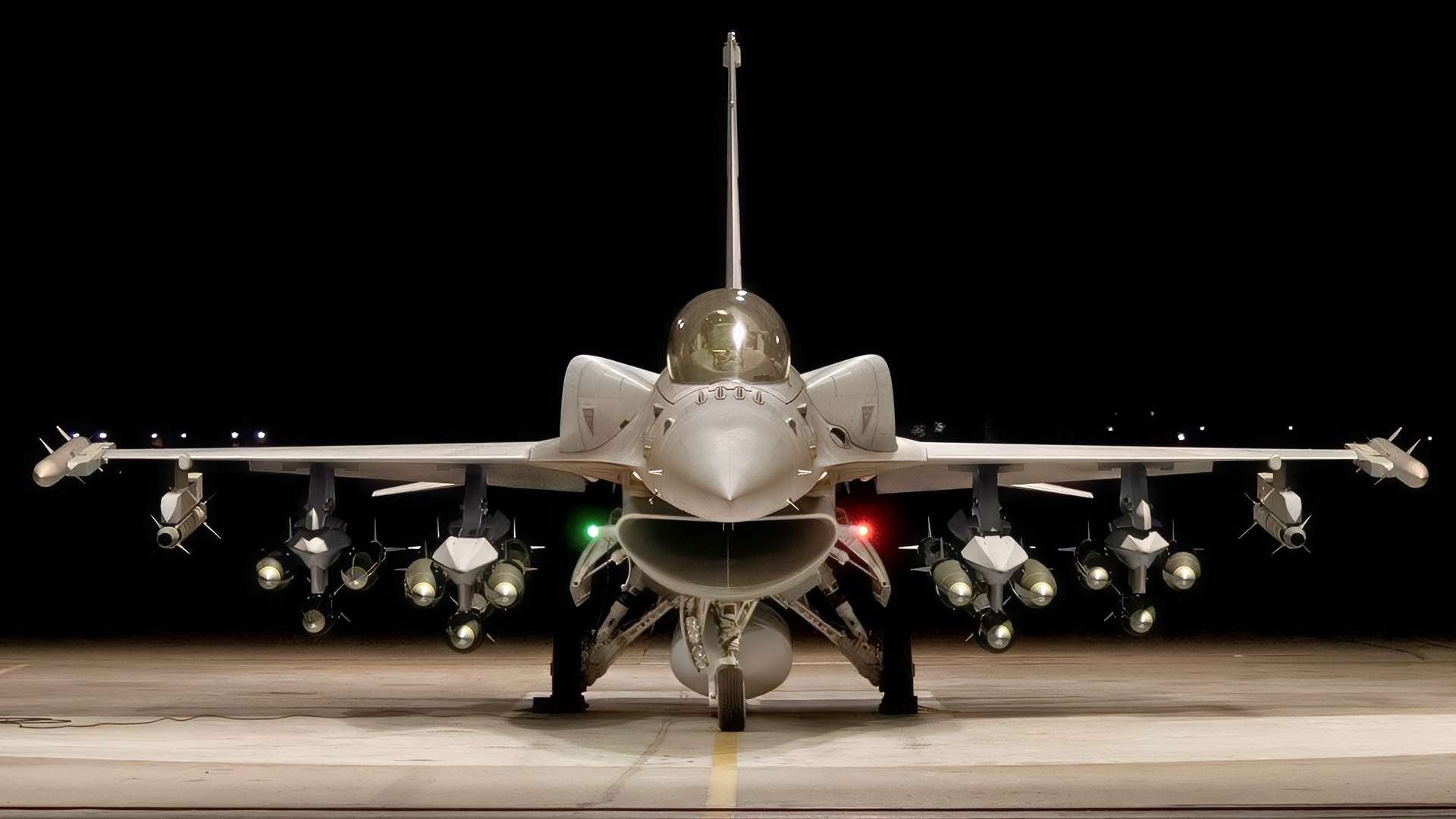
F-16V Viper Lockheed Martin Image.
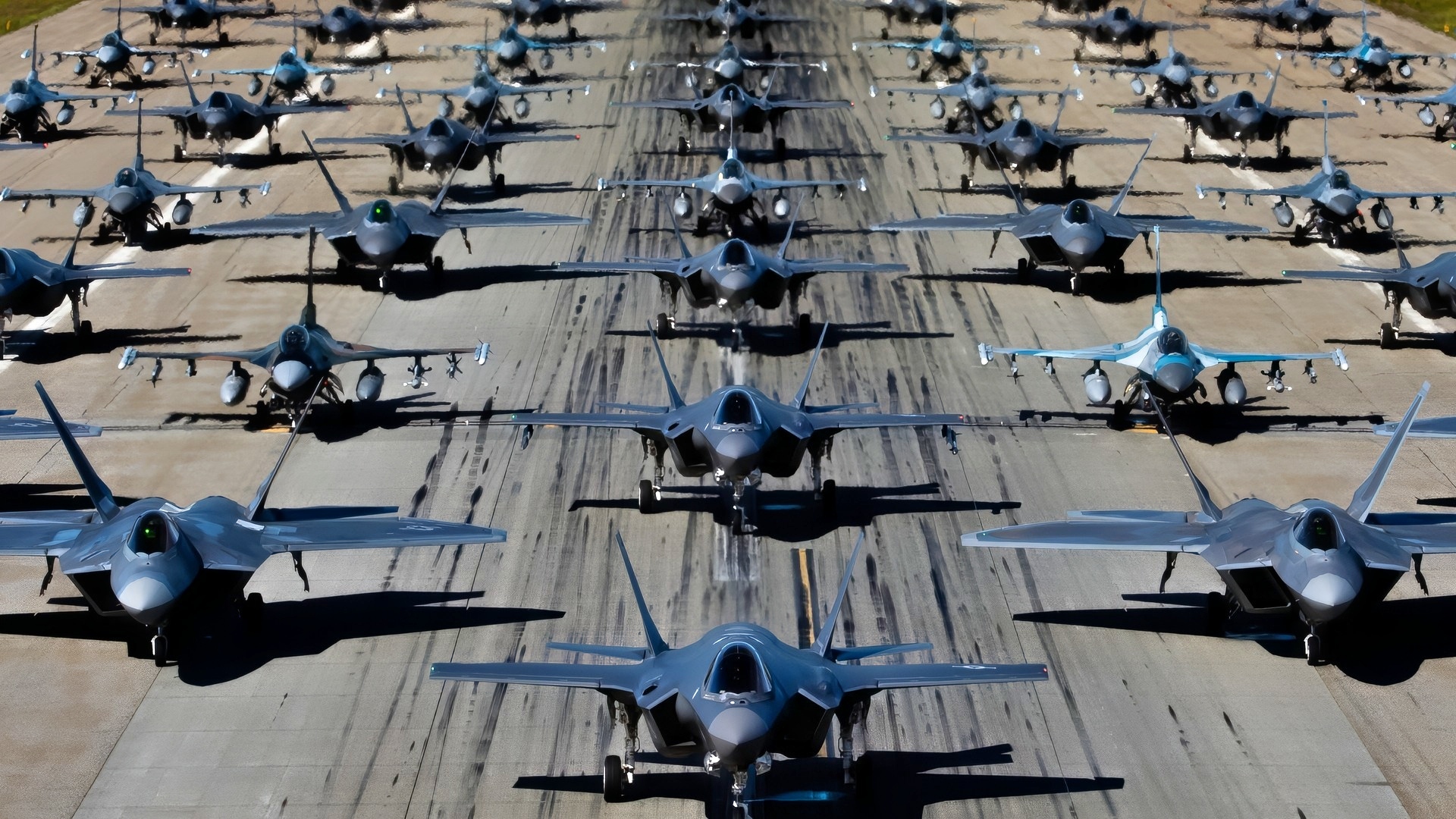
The 354th Fighter Wing conducts a 75-fighter jet formation at Eielson Air Force Base, Alaska, Aug. 12, 2022, in honor of the U.S. Air Force’s 75th Anniversary. This capabilities demonstration included F-35A Lightning II, F-16 Fighting Falcon and F-22 Raptor aircraft from across Pacific Air Forces. (U.S. Air Force photo by Senior Airman Gary Hilton)

A Polish F-16 pilot awaits instructions from his crew chief after completion of a Baltic Air Policing sortie at Šiauliai Air Base, Lithuania, Aug. 30, 2017. The Polish air force recently relinquished control of the NATO Baltic Air Policing mission to the U.S. Air Force for the forty-fifth rotation of allied protection of the sovereign skies of the Baltic region since Baltic Air Policing operations began in 2004. (U.S. Air Force photo/ Tech. Sgt. Matthew Plew)
The assessment, first reported by the Washington Post on Tuesday, August 18, is not yet a formal review ordered by Defense Secretary Pete Hegseth.
Instead, the report suggests that the Pentagon’s policy office, Joint Staff, and U.S. Central Command are all considering whether it makes sense to rebuild the heavily damaged installations in their existing form.
On Wednesday, August 19, Iran also gave Washington another reason to reconsider where it stations its forces.
Iran Issues Warning to Countries Hosting U.S. Forces
The Chief of the General Staff of the Armed Forces of the Islamic Republic of Iran, Ali Abdollahi, issued a warning to Gulf governments on Wednesday.
Abdollahi said that any country providing assistance to American forces risks being treated as a full participant in U.S. military operations against the country, and therefore vulnerable to future strikes.
Abdollahi also specifically questioned whether the large number of American aircraft operating from regional facilities could be doing so without the knowledge of host governments, and said that Tehran was aware of U.S. activities despite Gulf governments previously insisting that their territories would not be used in attacks against Iran.
And that’s a problem for Washington.
For decades, large permanent bases around the Gulf have allowed the United States to position its aircraft, troops, air defenses, naval forces, logistics, and infrastructure close to Iran.
And now, Tehran is not only demanding that the United States withdraw its military presence from the Gulf to secure a negotiated peace deal, but also threatening Gulf governments to comply with the demand.
The same proximity that made these bases useful for the U.S. military for decades has now made them relatively easy targets for Tehran’s massive missile and drone arsenal – and Iran is threatening to start striking them.
More than 200 U.S. Facilities Damaged
While the scale of the damage caused by the United States to Iranian infrastructure and military sites is enormous compared to damage caused by Iranian strikes, there has still been substantial damage to American overseas bases.
The damage is extensive enough that the Pentagon has now been forced to reconsider assumptions that shaped that posture for years.
Under normal circumstances, CENTCOM maintains around 40,000 personnel at nearly 20 locations stretching approximately 1,500 miles from Jordan to Oman.
Bahrain also hosts the headquarters of the U.S. Fifth Fleet, while Qatar and Kuwait host major American air and ground facilities. Reports say that more than 200 U.S. structures have now been damaged or destroyed during the Iran war.
Six U.S. service members were also killed when Iran struck Port Shuaiba in Kuwait in March.
Another four U.S. personnel were also killed in an Iranian attack in Jordan last month, after CENTCOM moved soldiers and assets farther away – proving that anything less than a dramatic shift of U.S. resources and personnel leaves them vulnerable and would force the U.S. to expend valuable interceptor missiles just to defend those sites.
Amid reports that the U.S. is now alarmingly short on Patriot missiles and other precision-guided missiles, it should come as no surprise that the United States is looking to move its military assets out of the Gulf region.
Moving West Doesn’t Solve the Problem
Moving American forces farther from Iran may not put them beyond Tehran’s reach, which is likely why Washington is considering a withdrawal, or at least considering the possibility of not rebuilding damaged bases. But the problem for Washington is that Iran’s huge missile arsenal still has considerable reach.
On August 19, the Financial Times reported that Iranian authorities have been examining potential attacks against U.S. military assets located in southern and southeastern Europe if Washington escalated the war. Potential targets reportedly include American facilities in Bulgaria and Cyprus.
Reports on Tuesday described how CENTCOM commander Adm. Bradley Cooper supports considering whether American forces should be moved west, while former U.S. Ambassador to Saudi Arabia Michael Ratney told the Post that moving troops further away could reduce their exposure to Iranian attacks. It is, therefore, being taken seriously.
But there is also evidence that increasing the distance doesn’t solve the threat, not least because Iran is motivated to cause damage.
An Iranian attack in Jordan killed four U.S. service members in July, for example, proving that American personnel remain within Iranian striking range even outside the Gulf.
About the Author: Jack Buckby
Jack Buckby is a British researcher and analyst specializing in defense and national security, based in New York. His work focuses on military capability, procurement, and strategic competition, producing and editing analysis for policy and defense audiences. He brings extensive editorial experience, with a career output spanning over 1,000 articles at 19FortyFive and National Security Journal, and has previously authored books and papers on extremism and deradicalization.


