


Summary and Key Points: Military analysts evaluate how Operation Epic Fury is reshaping PLA procurement priorities for the H-20 and JH-XX stealth programs.
-While China previously prioritized “carrier-killer” ballistic missiles, the 2026 conflict has demonstrated that reusable stealth platforms provide a level of “sustained pressure” on hardened targets that expendable munitions cannot match.

Right Up Front B-2 Bomber USAF Museum. Image by Harry J. Kazianis/National Security Journal.
-This report analyzes the Xian Aircraft Industrial Corporation’s push to finalize the H-20 as a direct response to the B-21 Raider, and the JH-XX as a regional tool for the Second Island Chain.
-The “bomber renaissance” is now at the center of Beijing’s great-power war planning.
H-20 vs. B-21 Raider: Evaluating China’s Urgency to Close the Intercontinental Stealth Gap
Wars have a way of revealing where warfare is heading. The Iran war may end up doing that for China’s bomber programs. A campaign unfolds, certain capabilities begin to matter more than expected, and planners elsewhere start taking notes.
Beijing has made a habit of studying American wars in exactly this way. Chinese strategists pored over Desert Storm. They studied NATO’s Kosovo air campaign in 1999. The wars in Iraq and Afghanistan produced a large body of PLA writing on expeditionary warfare, coercive airpower, and the limits that appear once occupation begins.
The current war involving Iran will be studied the same way.
And if the operational picture now coming into view holds—especially the apparent ability of stealth aircraft to work their way through defended airspace—one lesson may start hardening inside Chinese military circles: stealth strike aviation still has more value than a lot of analysts had lately assumed.
If that judgment takes hold, it could strengthen the case for two long-discussed Chinese aircraft programs: the H-20 stealth bomber and the JH-XX medium-range stealth strike-fighter.

H-20 Bomber Mock Up. Image Credit: Creative Commons.

H-20 Bomber from China. Image Credit: Creative Commons.
The Iran war may reshape more than Middle Eastern security. It may also push China harder in the direction of stealth bombers.
The Operational Lesson Emerging from the Iran War
For the better part of the last decade, most airpower arguments have revolved around missiles and drones. Precision strike, long-range missiles, autonomous systems—those have carried most of the intellectual fashion.
But this war is also bringing an older reality back into view.
Aircraft can do things missiles cannot. They can get into contested airspace, strike, return, and go back again. They can adjust to changing targets and to a campaign that is still unfolding rather than fixed at launch.
Missiles matter, obviously. China knows that as well as anyone. But they are spent when fired. Aircraft are not. And once those aircraft also have stealth characteristics, they become useful in a very different way: not just as delivery systems, but as platforms that can keep pressure on hardened targets over time.
That matters in a war against a state with real military depth. Missile sites, command facilities, protected industrial nodes—those are not always targets you solve with one clean burst of fire and then move on.
If stealth aircraft are showing that kind of operational usefulness in this war, Chinese planners will pay attention.
They always do.
China Watches American Wars Closely
For the People’s Liberation Army, foreign wars are not just news events. They are case studies.
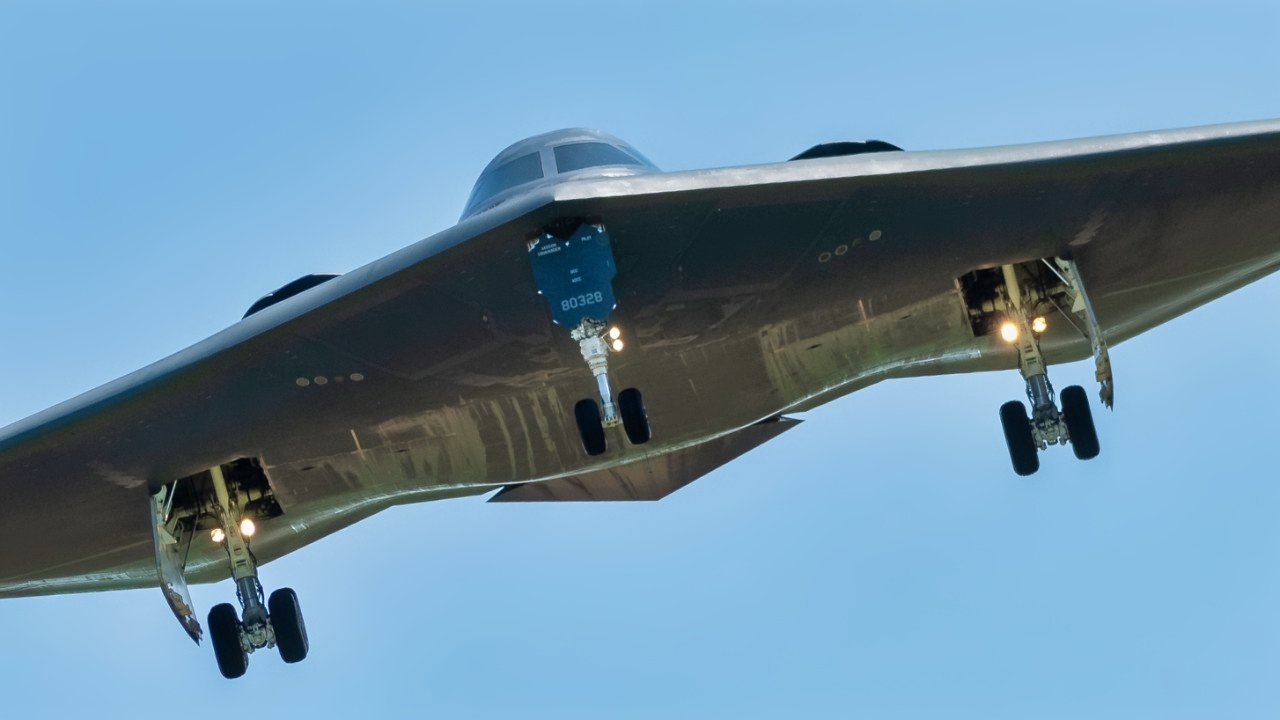
A B-2 Spirit returns to Whiteman Air Force Base, Missouri, from a deployment to Diego Garcia, British Indian Ocean Territory, May 9, 2025. The 509th Bomb Wing and its fleet of B-2 aircraft serve as part of the U.S. Air Force’s conventional and strategic combat force with the capability to project U.S. airpower anywhere around the world. (U.S. Air Force photo by Senior Airman Devan Halstead)
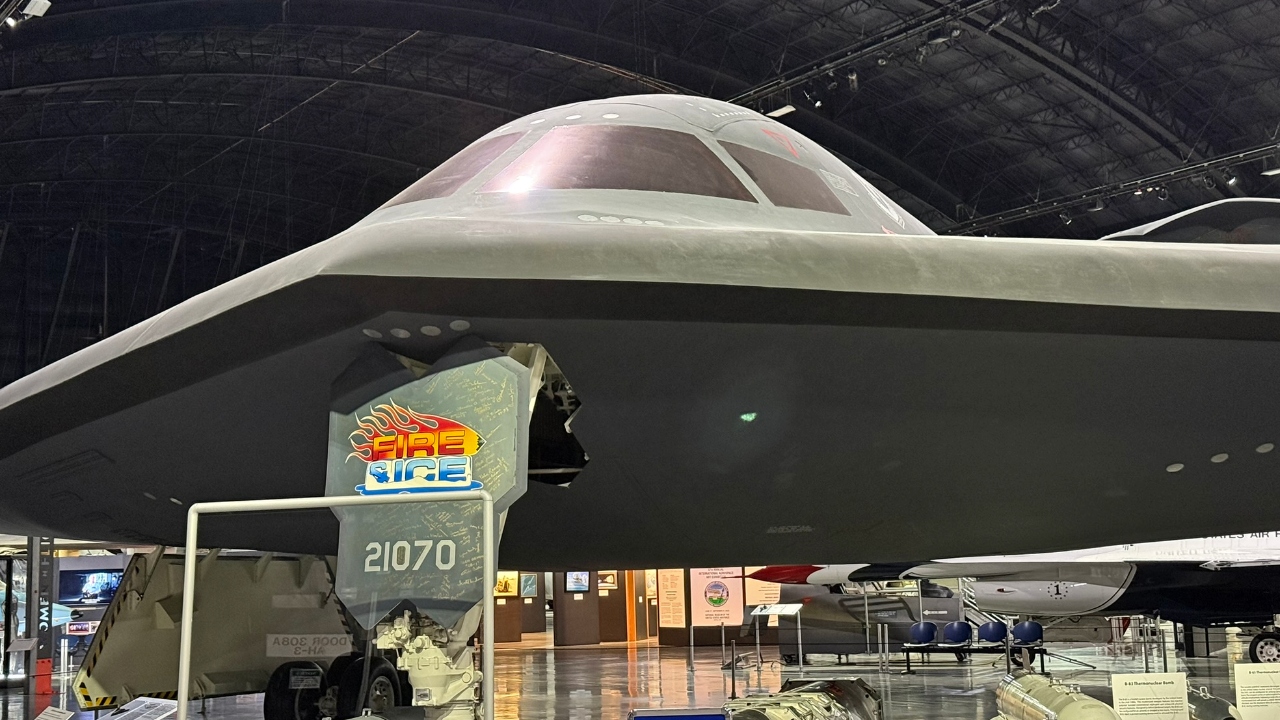
B-2 Bomber @ U.S. Air Force Museum. Image Credit: National Security Journal.
Chinese analysts have spent years studying American campaigns less out of admiration than out of strategic curiosity. They want to know what modern force actually looks like in use, what survives contact, what proves harder than expected, and what works well enough to force a revision in doctrine.
Previous American wars had a lasting impact on Chinese thinking. Precision warfare, coercive air campaigns, and the operational reach of expeditionary forces all became the focus of prolonged study within the PLA.
The Iran war will be added to that file.
Chinese military journals and research institutes will spend years pulling apart the details—strike patterns, aircraft survivability, the interaction between stealth and air defense, the larger operational design behind the campaign.
That is not merely an academic exercise. Those observations feed into arguments inside the PLA about force structure, procurement, and future war.
One of those arguments concerns long-range stealth aircraft.
Why the Lesson Matters for Taiwan
For China, the most serious military scenario remains a war over Taiwan.
That kind of war would not happen in a sealed box. American forces in Japan and Guam would almost certainly matter from the start, whether through logistics, airpower, reinforcement, or all three.
From Beijing’s point of view, then, a Taiwan campaign would likely require early strikes against forward bases and the infrastructure that makes those bases useful.
China has built substantial missile capabilities for exactly that kind of problem. Runways, fuel storage, command sites, logistics hubs—those are all target sets the PLA has thought about for years.
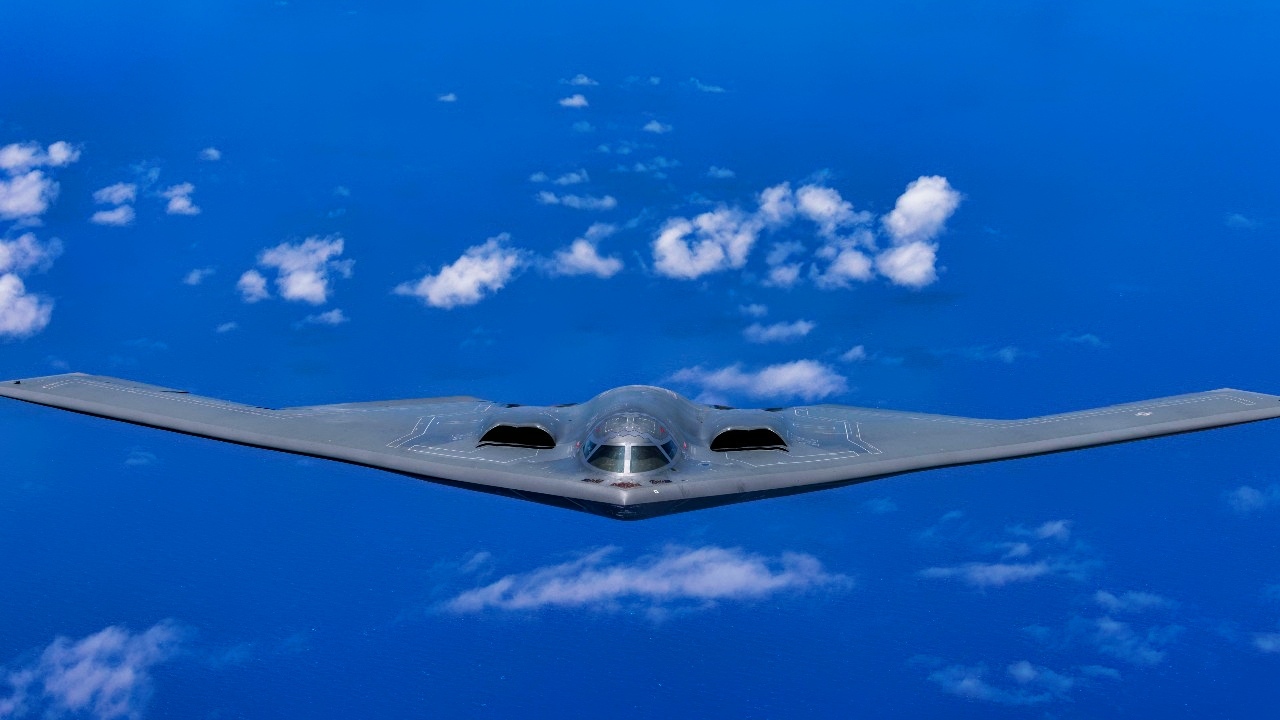
A U.S. Air Force B-2 Spirit bomber flies over the North Pacific Ocean, June 13, 2024. The speed, flexibility, and readiness of the Air Force’s strategic bombers plays a critical role in deterring potential adversaries and signaling unwavering support to allies and partners. Counter-maritime missions provide valuable training opportunities to improve interoperability and demonstrate that Air Force forces are capable of operating anywhere, anytime, to meet any challenge decisively. (U.S. Marine Corps photo by Sgt. Jose Angeles)
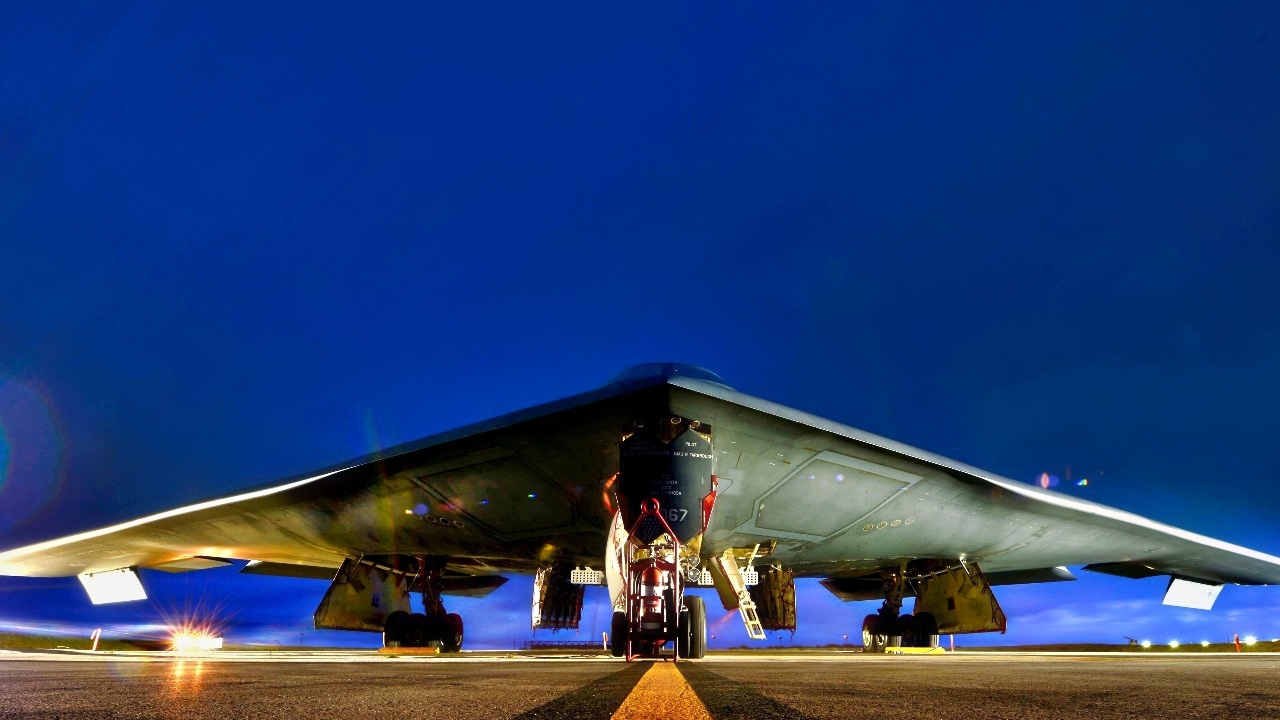
A U.S. Air Force B-2 Spirit aircrafts deployed from Whiteman Air Force Base, Mo., sits on the parkway after landing from a local training flight at Andersen Air Force Base, Guam, Jan. 17, 2017. Close to 200 Airmen and three B-2s deployed from Whiteman Air Force Base, Mo., and Barksdale Air Force Base, La., in support of U.S. Strategic Command Bomber Assurance and Deterrence missions. USSTRATCOM units regularly conduct training with and in support of the Geographic Combatant Commands. USSTRATCOM, through its global strike assets, helps maintain global stability and security while enabling units to become familiar with operations in different regions. (U.S. Air Force photo by Tech. Sgt. Andy M. Kin)
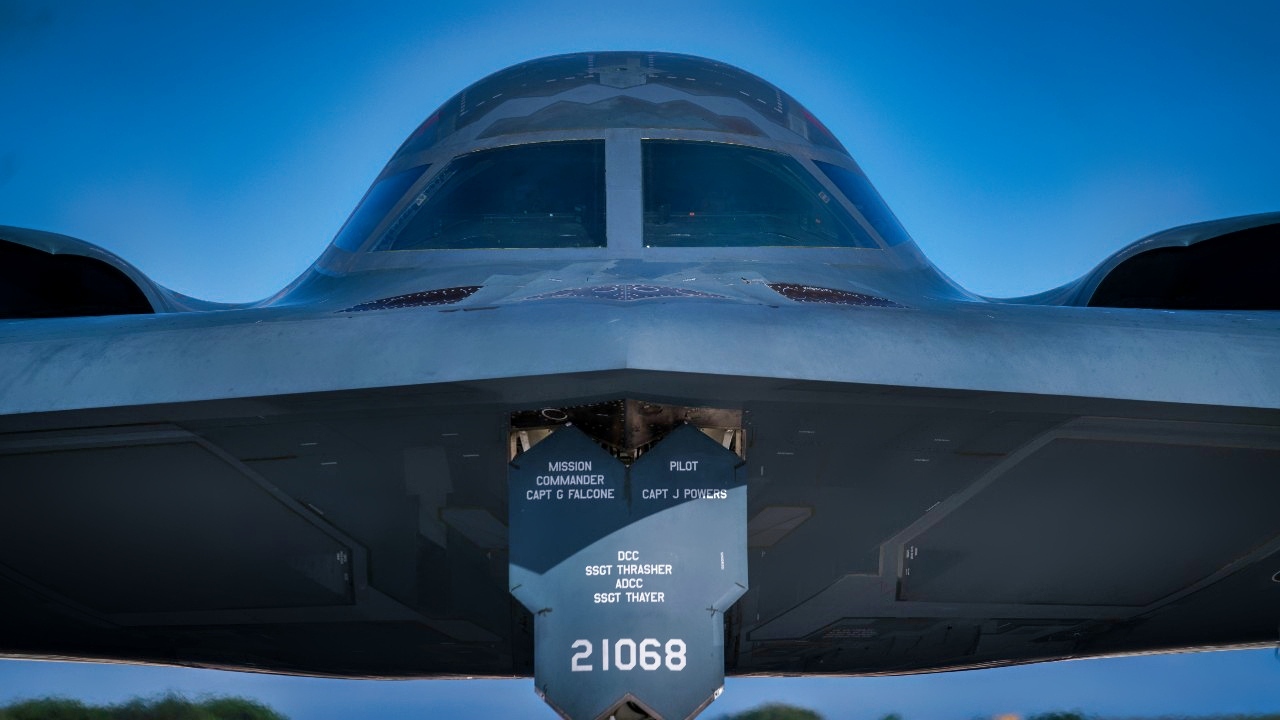
A B-2 Spirit, assigned to the 509th Bomb Wing, Whiteman Air Force Base, taxis on the flightline Jan. 8, 2018, at Andersen Air Force Base, Guam. Approximately 200 Airmen and three B-2 Spirits from Whiteman Air Force Base (AFB), Missouri, deployed to Andersen AFB in support of U.S. Pacific Command’s (PACOM) Bomber Assurance and Deterrence mission. U.S. Strategic Command bombers regularly rotate through the Indo-Pacific region to conduct U.S. PACOM-led air operations, providing leaders with deterrent options to maintain regional stability. During this short-term deployment, the B-2s will conduct local and regional training sorties and will integrate capabilities with key regional partners, ensuring bomber crews maintain a high state of readiness and crew proficiency (Air Force photo by Staff Sgt. Joshua Smoot) .
But missiles by themselves do not solve everything in a long fight. Runways get repaired. Fuel can be moved. Logistics networks bend and recover unless pressure is sustained.
That is where stealth strike aircraft enter the picture. They offer a way to revisit targets, keep hitting them, and adapt as the campaign changes.
If the Iran war appears to be demonstrating the value of that kind of capability against defended targets, Chinese planners are unlikely to miss the relevance to Taiwan.
The H-20 and JH-XX Question
China is widely believed to be pursuing a stealth bomber capability.
For years, analysts have expected the eventual unveiling of the H-20, a long-range stealth bomber often described as China’s answer to the B-2 and, more recently, the B-21 Raider. If fielded, it would give China its first true long-range strategic stealth bomber.
Alongside that program, there have also been persistent discussions of another aircraft, often referred to as the JH-XX—a reported regional stealth strike concept intended more for theater operations than global reach.
That distinction matters.
The H-20 would be about strategic reach across the wider Pacific. The JH-XX, if the reporting on it is broadly correct, would fit more naturally into regional missions: maritime strike, attacks on forward bases, suppression of air defenses, that sort of work.
If stealth penetration appears to be paying off in the Iran war, both programs stand to gain from that lesson.
Inside any military bureaucracy, weapons programs compete. They compete for money, attention, political backing, institutional prestige. A capability that can seem expensive and abstract in peacetime can look considerably more concrete once a war starts demonstrating where the battlefield is moving.
Iran War Means the Return of the Bomber
None of this is happening in isolation.
The United States is already moving forward with the B-21 Raider, a new stealth bomber built for operations in heavily defended airspace. Russia, despite delays and obvious constraints, still talks in terms of next-generation bomber development.
So the larger pattern is already there. Major powers are investing again in long-range strike aviation.
The Iran war may end up reinforcing that trend.
If stealth aircraft continue to show real utility in penetrating defended airspace and attacking hardened targets, other militaries will notice. Beijing certainly will.
Wars do not usually invent the future from scratch. More often they clarify what had already been taking shape, half-seen, before the shooting started.
And if this conflict reinforces the value of stealth strike aviation, China may draw a fairly direct conclusion.
The bomber is not going away.
It may be returning to the center of great-power war planning.
About the Author: Dr. Andrew Latham
Andrew Latham is a non-resident fellow at Defense Priorities and a professor of international relations and political theory at Macalester College in Saint Paul, MN. You can follow him on X: @aakatham.


Sir-Nuke
March 10, 2026 at 9:10 pm
From a wide long-ranging perspective, the h-20 is merely a child’s kindergarten project.
If you have a fleet of h-20s, Sam paparo could wipe out your h-20 bases in one hour or less. Then, no more kiddies’ jets.
Seeing the result of the 2026 Iran war, or Iran onslaught, missiles, bombs and drones are most important (b,m,d).
Not manned bombers.(The US-israeli attack on Iran was a pearl harbor-type sneak attack.Had the Iranians been forwarded, they could have swarmed all the US and israli air bases with hypersonic warheads.)
Manned and/or unmanned bombers are best reserved for the space corps.