

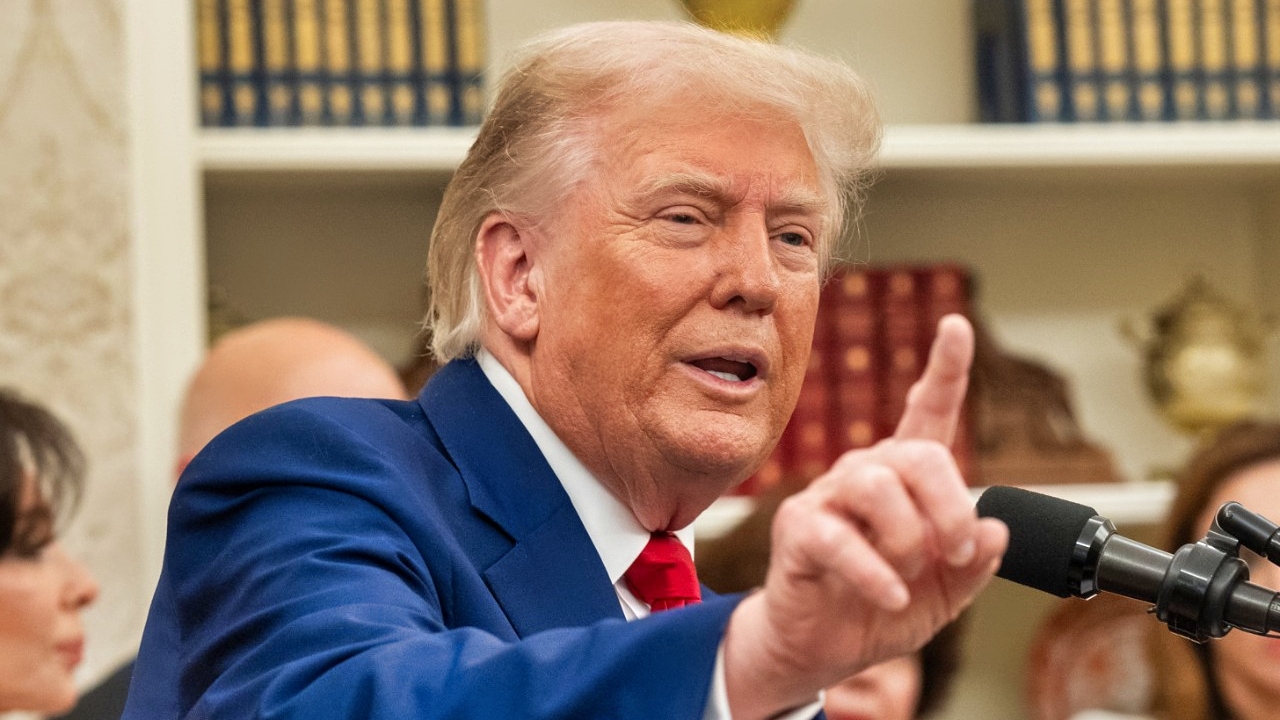
Summary and Key Points: President Trump campaigned on restraint, yet his administration has already used force and now is moving military power toward Iran, including two aircraft carriers.
-The question is whether another strike would serve a narrow, achievable U.S. objective—or lock Washington into a familiar escalation cycle.

Iran Missiles. Image Credit: Creative Commons.
-The argument is that deterrent posture can protect bases, shipping, and allies without discretionary bombing.
-After last summer’s B-2 attack, Iran demonstrated it can respond with missiles, proxies, drones, and pressure in the Strait of Hormuz. Any use of force should be tied to imminent threats and core interests, weighed against munitions, ISR, and Indo-Pacific readiness.
Trump’s Iran Decision: Two U.S. Aircraft Carriers, One Big Question—Strike or Deterrence?
President Donald J. Trump ran for office on a platform of foreign policy restraint, promising to avoid military overreach and entanglement. But since taking office, Trump has conducted a foreign policy that echoes forward-leaning administrations—bombing Iran, extracting the President of Venezuela, threatening Greenland.
Now, as the U.S. moves visible military power toward Iran, including two aircraft carriers in the Gulf region, the public question becomes whether this is preparation for another strike, and more importantly, would a second strike be wise.
While deterrence and posture are sensible enough, discretionary bombing is not worthwhile unless tied to a narrow, achievable objective fully aligned with U.S. strategic interests.
Deja Vu on Iran Crisis
Last summer, the U.S. launched a B-2 strike against Iranian underground nuclear facilities.
The strike was considered a tactical success, though it violated Iranian sovereignty and reaffirmed a familiar cycle of U.S.–Iran confrontation. And though tension between the U.S. and Iran has been consistent for decades, the region is now changing: Tehran’s missile and drone posture is more networked, and asymmetric risks to U.S. assets have increased, creating tools that accelerate escalation.

Iran’s missile capabilities. Image Credit: Creative Commons.
Interests Not Impulses
Any commitment of U.S. military force should be tied directly to core U.S. priorities—but we should also ask: is preventing Iran from acquiring a nuclear weapon itself a vital U.S. interest worthy of a military campaign?
Many U.S. officials, including the Trump administration, have repeatedly stated that they do not want Iran to obtain a nuclear weapon.
But that stated policy does not automatically make bombing the country a prudent or necessary step. Core priorities must be defined in context—including whether diplomatic and economic tools have been exhausted or whether the nuclear issue actually threatens the U.S. homeland. Officially, the White House has reaffirmed denying Iran a nuclear weapon as policy, but U.S. intelligence has also assessed that Iran has not definitively decided to build one, complicating the link between stated policy and strategic justification.
Bombing Specifics
The Trump administration has several tactical options: a limited punitive strike, a degrading strike, or a nuclear infrastructure strike.
But each option likely generates a response, a counter-response, and the risk of wider escalation. Bombing is rarely the end of an interaction. Last June was no exception; after the U.S. B-2 strike, Iran launched a symbolic missile salvo at a U.S. base in Qatar.
Bombing Iran remains a risky bet. Tehran can respond asymmetrically. Proxies can hit U.S. forces in Iraq or Syria; drones and missiles can target Gulf bases; maritime harassment in the Strait of Hormuz can disrupt the global economy. The escalation ladder is diverse and incremental—a U.S. strike likely results in tit-for-tat reprisals.
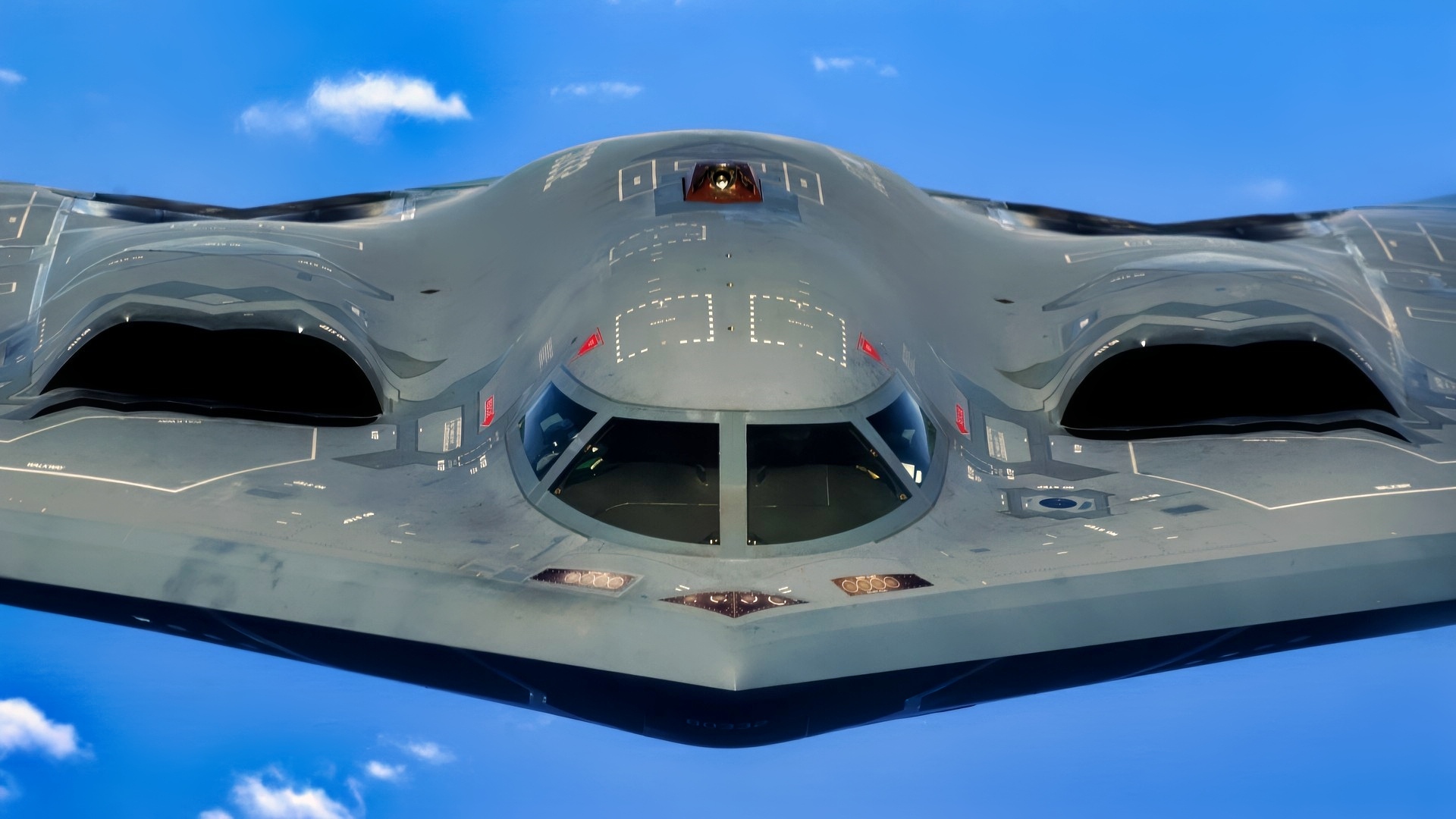
B-2A Spirit Stealth Bomber USAF Image.

U.S. Airmen from the 393d Bomber Generation Squadron inspect and secure protective covering on the B-2 Spirit stealth bomber at Whiteman Air Force Base, Mo., July 25, 2024. Crew chiefs directly support the B-2 by inspecting and maintaining it daily to ensure its mission ready at a moment’s notice. (U.S. Air Force photo by Airman 1st Class Bryce Moore)
While the B-2 strikes last summer were relatively simple, the massing of military power near Iran suggests a more persistent and elaborate air campaign. Such a campaign would consume ISR, tankers, munitions stockpiles, and political bandwidth—resources that compete directly with readiness in the Indo-Pacific, where core U.S. strategic competition lies.
Trump, Iran, and Middle East Regional Stability
The U.S. has an interest in Middle Eastern regional stability—but not necessarily a direct need to resolve Iran’s nuclear issue through military force. Israel, for example, has a more immediate Iran problem than the U.S., and its advocacy for strikes reflects that dynamic.
But U.S. strategy should not be subcontracted to allied regional concerns. If the U.S. focuses rigidly on its own strategic priorities rather than reacting to regional pressures, it avoids convoluted aims and unnecessary entanglement.
Potential Upside of Posture
Deploying firepower can serve purposes aside from direct action. Moving assets to a region can deter adversaries, reassure allies, and protect shipping and bases. Demonstrating capability without firing can be the point itself. Force accumulation can improve air and missile defense for bases, counter-drone coverage, and maritime escort and ISR. These are potentially worthwhile when tied to U.S. priorities and paired with restraint.
Advocates argue that Iran only respects force and that failure to strike invites further attacks, that true deterrence requires retaliation. But deterrence can be achieved through posture and calibrated responses. Indiscriminate bombing can erode deterrence and squander political capital. Military strength is harnessed and amplified by choosing only the fights that serve national priorities.

President Donald Trump gives remarks after presenting the newly-created “Medal of Sacrifice” to three fallen officers’ families from the Palm Beach County Sheriff’s Office, Monday, May 19, 2025, in the Oval Office. (Official White House Photo by Joyce N. Boghosian)

President Donald Trump attends an event celebrating the 2025 NCAA Division 1 Men’s Basketball Champion Florida Gators, Wednesday, May 21, 2025, in the East Room of the White House. (Official White House Photo by Daniel Torok)
When Might Force Be Justified?
For the U.S. to consider bombing Iran, the rationale should be tied to clear, imminent, and direct threats to U.S. security or interests—not generalized fear of future capability. Preventing nuclear weaponization is legitimately on the U.S. agenda, but that goal alone is not sufficient cause for broad military action unless the threat is both present and immediate.
Conclusion on Iran Crisis: Restraint Is Strategic, Not Weak
The U.S. should take care not to drift into another Middle East escalation cycle. Trump can deploy firepower to deter and defend without actually striking; the administration should apply U.S. power selectively and intelligently rather than reflexively.
About the Author: Harrison Kass
Harrison Kass is an attorney and journalist covering national security, technology, and politics. Previously, he was a political staffer and candidate, and a US Air Force pilot selectee. He holds a JD from the University of Oregon and a master’s in global journalism and international relations from NYU.


birbir
February 13, 2026 at 3:51 pm
Donald trump says fear is a powerful motivator, and he’s right.
When you have nothing to lose, you have to fight to the death. The fear of not inflicting serious hurt on the enemy is a very great incentive to fight with every tooth and nail you have.
Thus when he attacks Iran, trump will get a nasty surprise. Iran now has nothing to lose, as many people (lacking moral backbones) are willing to work for US and Israel, and other external enemies, like several top EU countries that are both pro-US and pro-israel.
So, when trump pompously hits Iran, he will get a real nasty surprise.
Iran will unleash all its might against the US forces, and set the whole of the middle east alight.
Let”s see how trump’s going to handle that.
Iran still has a formidable rocket arsenal, including hypersonic maneuvering warheads. And now, today, in 2026, it has PLA intelligence and satellite support.
A nasty surprise awaits trump, a man whose name apparently appears over a million times in the Epstein files.
Beware of biting off more than you could chew.
Bob Emb
February 14, 2026 at 12:05 pm
That is a very very big bus that Mr Harrison throws the people of Iran under. They are carrying the weight of cruel justice, capricious freedom, and no democracy. The nuclear ambitions of the mullahs is just one symptom of the danger of Ayatollah khamanei, but the danger they present to Iran, the Middle East, and the civilized world. Now is the time to correct the catastrophic mistake made by Jimmy Carter.
Carlos123
February 15, 2026 at 2:39 pm
The author ignores the real alternatives that the US faces. If Iran continues to develop its missile capability-it already has a limited quantity of Mach 16 missiles that could obliterate targets in Isarel and Saudi Arabia and would threaten even our carriers, if it gets hundreds more what realistically would prevent it from developing a nuclear bomb.
If it does Israel will likely attack-and if its cities are destroyed by missiles they would likely retaliate with some or most of their 200 nukes. Similarly, If Iran gets the bomb the Saudis have apparently indicated that they will as well. –and they could simply pay Pakistan enough to transfer a handful of their weapons in exchange for billions of needed currency.
oakhill1863
February 15, 2026 at 7:06 pm
The evidence presented ny the author is that the medieval, evil, messianic, murderous Iran regime has made continual major advances in its nuclear, ballistic missile, and proxy terrorist organizations since the day it was born in a successful Beer Hall Putscht in which the American Embassy was sacked and its staff taken hostage.
The solution the author proposes is to continue the policies that allowed those continual advances to be made.
The author’s position is illogical. In its place, the United States, a truly revolutionary nation, must ptotect its revolution and obliterate the Iranian terrorist regime.
Zulfiqar Ahmad
February 17, 2026 at 6:03 pm
The writer is right; the U.S. wants to keep its carriers operational during the first week of a war to maintain its image of invincibility.After 47 years of dehumanizing, supporting Saddam, and imposing extreme trade and monetary embargoes, the U.S. is determined to maintain its military dominance.USA wants to keep Israel hegemonic control over middle east.