

The House of Representatives has passed another measure aimed at ending U.S. military action in Iran after seven Republicans voted with the Democrats.
The House voted 220-204 to pass another War Powers Resolution on Tuesday, 15th September, in the third congressional effort to end the war with Iran.
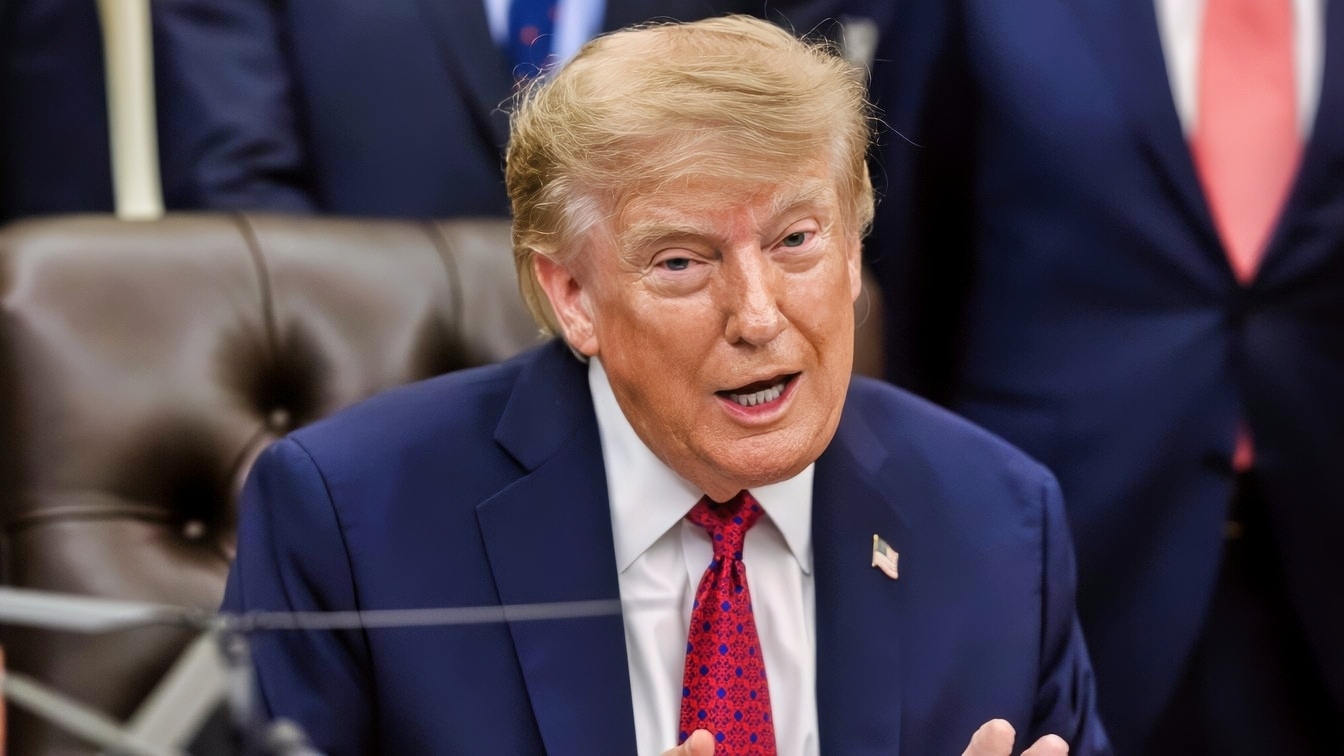
President Donald J. Trump participates in a Most Favored Nation Drug Pricing for American Patients announcement, Monday, August 31, 2026, in the Oval Office at the White House. (Official White House Photo by Molly Riley)

President Donald Trump walks to the Oval Office after attending a Back to School and Education Freedom event, Monday, August 24, 2026, in the White House Rose Garden. (Official White House Photo by Joyce N. Boghosian)
Although the bill is unlikely to halt military action, the move matters, with more Republicans voting with the Democrats amid growing discomfort with the conflict.
Constitutional Context
Tuesday’s vote was the third since the conflict began to end U.S. military action in Iran, following earlier votes in June and July.
Passed in 1973, the War Powers Resolution limits the president’s power to engage in prolonged conflict without congressional approval.
Under its terms, the president must notify Congress within 48 hours of committing the armed forces to military action.
Any action is limited to 60 days, with a further 30 days permitted for withdrawal.
Under the Constitution, Congress can declare war on a foreign state.
No declaration of war has been issued for the conflict with Iran, with President Donald Trump instead announcing a short-term military operation he claimed would last no more than six weeks. The conflict is now in its seventh month.
Seven Align with Democrats
On previous votes to end the war, four Republicans sided with the Democrats, allowing the bill to pass: Tom Barrett of Michigan, Warren Davidson of Ohio, Brian Fitzpatrick of Pennsylvania, and Thomas Massie of Kentucky.
On Tuesday night, that number increased to seven, with Reps. Zachary Nunn and Mariannette Miller-Meeks from the battleground state of Iowa, and the retiring Rep. Nancy Mace of South Carolina. The bill passed 220-204, with the seven Republicans joining all 213 voting Democrats.
“I’ve been consistent on that since the war powers provision expired after 60 days of engagement,” Rep. Barrett told Fox News ahead of last night’s vote. Rep. Nunn echoed a similar view, stating that “with the negotiating window closed, sustained combat operations now require congressional authorization.”
“I will not support another open-ended war,” he added.
An End in Sight?
Whether the bill reaches the Senate is one question, and whether Senators vote in favor of it is another. Both, however, are somewhat irrelevant as Trump holds a veto.
An unlikely two-thirds supermajority would be needed to overrule the President’s veto.
Alas, Tuesday’s vote is unlikely to end hostilities.
The debate stretches beyond whether Republican lawmakers support the war with Iran; as Reps. Barrett and Nunn alluded to, there’s a broader question as to whether President Trump has overstepped his presidential powers.
Rep. Massie went one step further than his defecting GOP colleagues earlier in the day by filing articles of impeachment against Defense Secretary Pete Hegseth.
It’s an unusual case, as Massie has long been critical of the President’s foreign interventions and will leave Congress after losing to a Trump-backed candidate at Kentucky’s Republican primary earlier in the year.
Congress will vote on the impeachment proceedings by Thursday.
Growing Unpopularity
Although most dissenters cited congressional authority in siding with the Democrats, the political battle ahead will also matter, particularly for those from battleground states.
All 435 seats are up for grabs in November’s midterms, with Republican candidates facing escalating questions over the prolonged Iran war.
A majority of voters do not support the conflict, with disapproval leading by an average of 24 percentage points.
The conflict has raised living costs in the U.S., costing each American household an average of $1,200 so far. This is largely due to rising fuel prices, with diesel averaging above $6 per gallon in recent weeks, worsened by Iran’s ongoing closure of the Strait of Hormuz.
President Trump has responded by repeatedly citing Iran’s desire for a nuclear weapon as justification for the war in a bid to win over voters who may be critical of his foreign policy.
Trump, mindful of the prospect of a final two years in office with Democrats in control of at least one of Congress’ two chambers, has promised $5,000 to all American adults if his party wins the midterms, although it remains unclear as to how this would be funded or delivered.
About the Author: Shay Bottomley
Shay Bottomley is a British journalist. He has written for the Western Standard, Business Insider, Maidenhead Advertiser, Slough Express, Windsor Express, Berkshire Live and Southend Echo.