
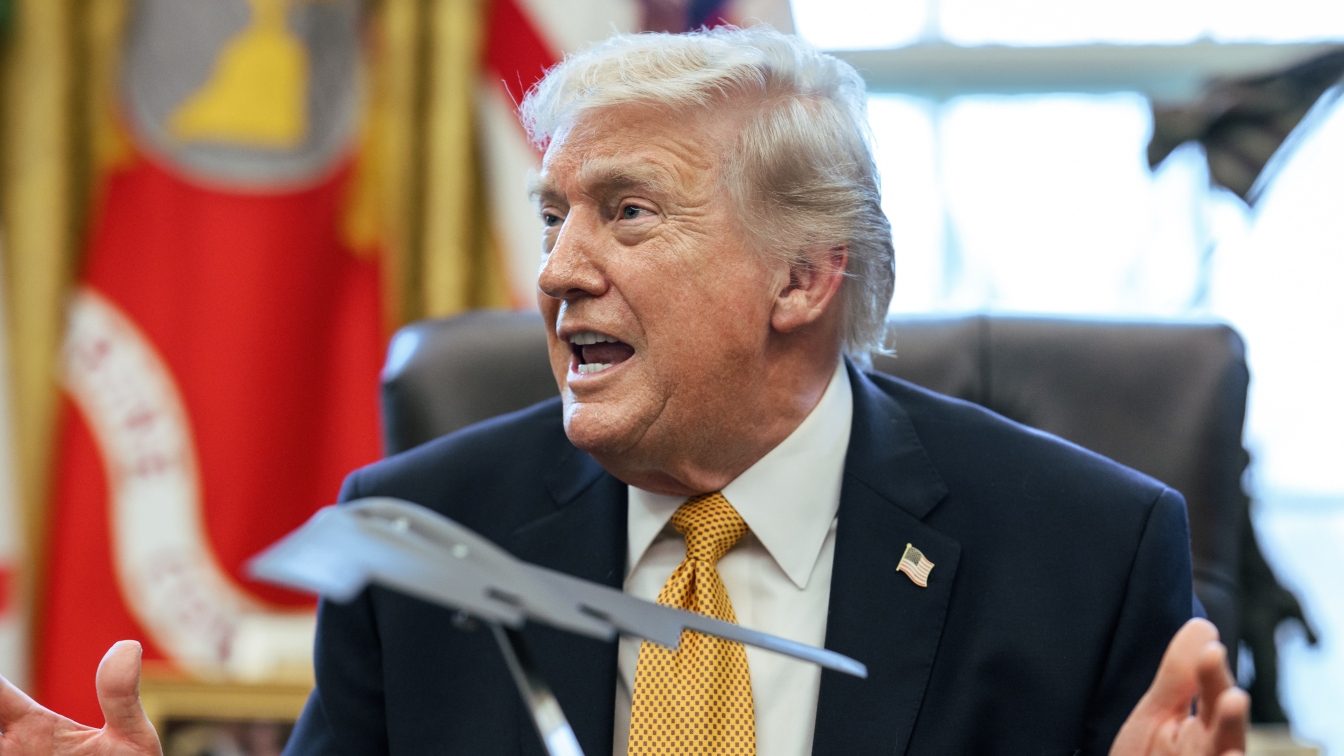
Trump Seems to Drop a Hint He Will Attack Iran Again, But There Is Hope for A Deal: President Donald Trump said the United States still had “one or two” targets to address in Iran despite ongoing diplomatic efforts to end the war.
Speaking to reporters at Mar-a-Lago on Saturday, October 31, Trump suggested the remaining sites could be dealt with quickly by the U.S.

A B-2 Spirit stealth bomber assigned to Whiteman Air Force Base takes off from Oscoda, Michigan, Aug. 5, 2025. Maintainers and pilots conducted a flight crew changeover during Exercise Northern Strike, a National Guard Bureau sponsored training event designed to build readiness with joint and partner forces in all domains of warfare. (U.S. Air National Guard photo by Staff Sgt. Whitney Erhart)
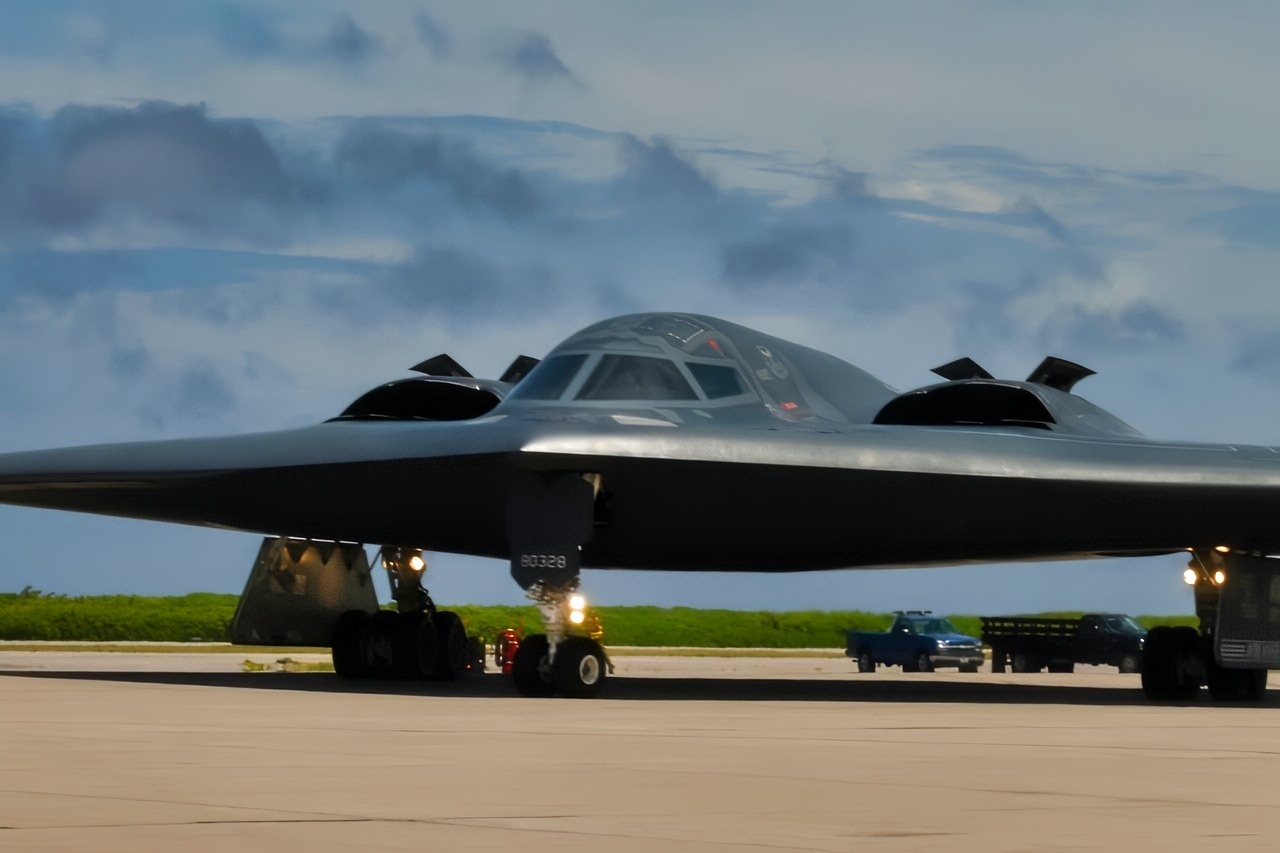
A B-2 Spirit Stealth Bomber, deployed from Whiteman Air Force Base, Missouri, taxis for take off at Naval Support Facility Diego Garcia, in support a Bomber Task Force mission, Aug. 26, 2020. BTF missions allow U.S. Strategic Command to provide persistent, long-term bomber presence to aid in U.S. Indo-Pacific Command’s commitment to a free and open Indo-Pacific. (U.S Air Force photo by Tech. Sgt. Heather Salazar)
His comments renewed the threat of military action shortly before Tuesday’s midterm elections.
Pickaxe Mountain Is A Deeper Problem That the US Military Wants to Admit
Trump told reporters that while U.S. operations had decimated Iran’s military and nuclear program, there were still several sites that Washington must “take care of.”
“We’ve knocked out their nuclear [program],” Trump said on Saturday. “We still have to take care of, I would say, one or two sites, but we can do that in 10 minutes.”
He added: “You probably could look at Pickaxe Mountain, and you have to take care of that. We can do that all very quickly.”
Pickaxe Mountain is a suspected underground nuclear complex in the Karkas Mountains in Iran’s Isfahan province.
The heavily fortified site is situated approximately one mile south of the Natanz nuclear complex.
The Iranian government has denied that any nuclear work is carried out there.
Independent satellite research has highlighted the difficulty of determining what is inside the complex. The complex is also very deep underground, and could be hard for conventional US forces to attack.
A September analysis by the Center for Strategic and International Studies identified construction and reinforcement activity but could neither substantiate nor refute reports that centrifuges had been moved underground.
A later assessment by the Institute for Science and International Security said that blocked entrances and restricted access suggested the facility was neither operational nor undergoing major construction.
Rubio Leaves Room for Diplomacy
At a G20 press conference in Atlanta on Saturday, Secretary of State Marco Rubio emphasized American military capabilities while saying the president preferred a peaceful outcome.
He also declined to provide a deadline for the diplomatic process, but said discussions had continued through mediators, with some contacts taking place directly.
“[The president] hasn’t made a decision,” Rubio told reporters. “What the president expresses to you is incredible confidence that if we needed to do something militarily, we would have the ability to do it, and really we have everything we need to be successful. But we would prefer to do it peacefully.”
While diplomacy may be the preferred option, President Trump has openly raised a possible return to full-scale military action in recent weeks, while U.S. officials have, according to the Associated Press, warned Middle Eastern allies to prepare for a potential campaign and subsequent retaliation by Iran.
U.S. Central Command chief Adm. Brad Cooper met with the president and Defense Secretary Pete Hegseth on Thursday, October 29, and presented options for potential strikes in a rare face-to-face meeting.
Iranian Threats
Although Iranian officials met with Qatari mediators in Doha over the weekend, tensions remain high with Supreme Leader Mojtaba Khamenei reportedly urging military chiefs to respond to “any kind and level of threat” from the U.S. and Israel with immediate action outside of “geographic limits.”
Similarly, Mohsen Rezaei, secretary of Iran’s Supreme National Security Council, warned on social media that any strike would bring “devastating blows on the aggressor using new weapons.” However, in an interview with state television, Rezaei said “the tone has completely changed” from the U.S., describing it as a “very good sign.”
Doha Deliberations
Iranian negotiators departed Doha on Sunday after discussions over the weekend. While the delegation left the Qatari capital without an agreement to end the war, Foreign Ministry spokesman Esmaeil Baghaei said that discussions were continuing. “However, the issue is complex,” he said, adding that messages with the U.S. were being exchanged through mediators.
The Strait of Hormuz and Iran’s nuclear capabilities remain key sticking points.
The latest proposal that Iran has publicly discussed would see a full reopening of the strait if Washington meets several conditions.
These conditions include the lifting of the U.S. naval blockade, the release of Iranian frozen funds, and “an end to the war on all fronts,” among other demands by Tehran.
Iran’s nuclear program is a key issue for Washington, with the Trump administration demanding immediate negotiations over Tehran’s nuclear ambitions. Iran insists its program is peaceful.
Preventing the country from obtaining a nuclear weapon has been the most often-stated reason for the war by President Trump.
About the Author: Shay Bottomley
Shay Bottomley is a British journalist. He has written for the Western Standard, Business Insider, Maidenhead Advertiser, Slough Express, Windsor Express, Berkshire Live and Southend Echo.