


Iran is stepping up attacks on commercial ships around the Strait of Hormuz as officials in Tehran seek to keep oil prices high before the November 3 U.S. midterm elections.
Two senior Iranian officials told Reuters that Tehran has changed its tactics against vessels that defy its shipping restrictions.
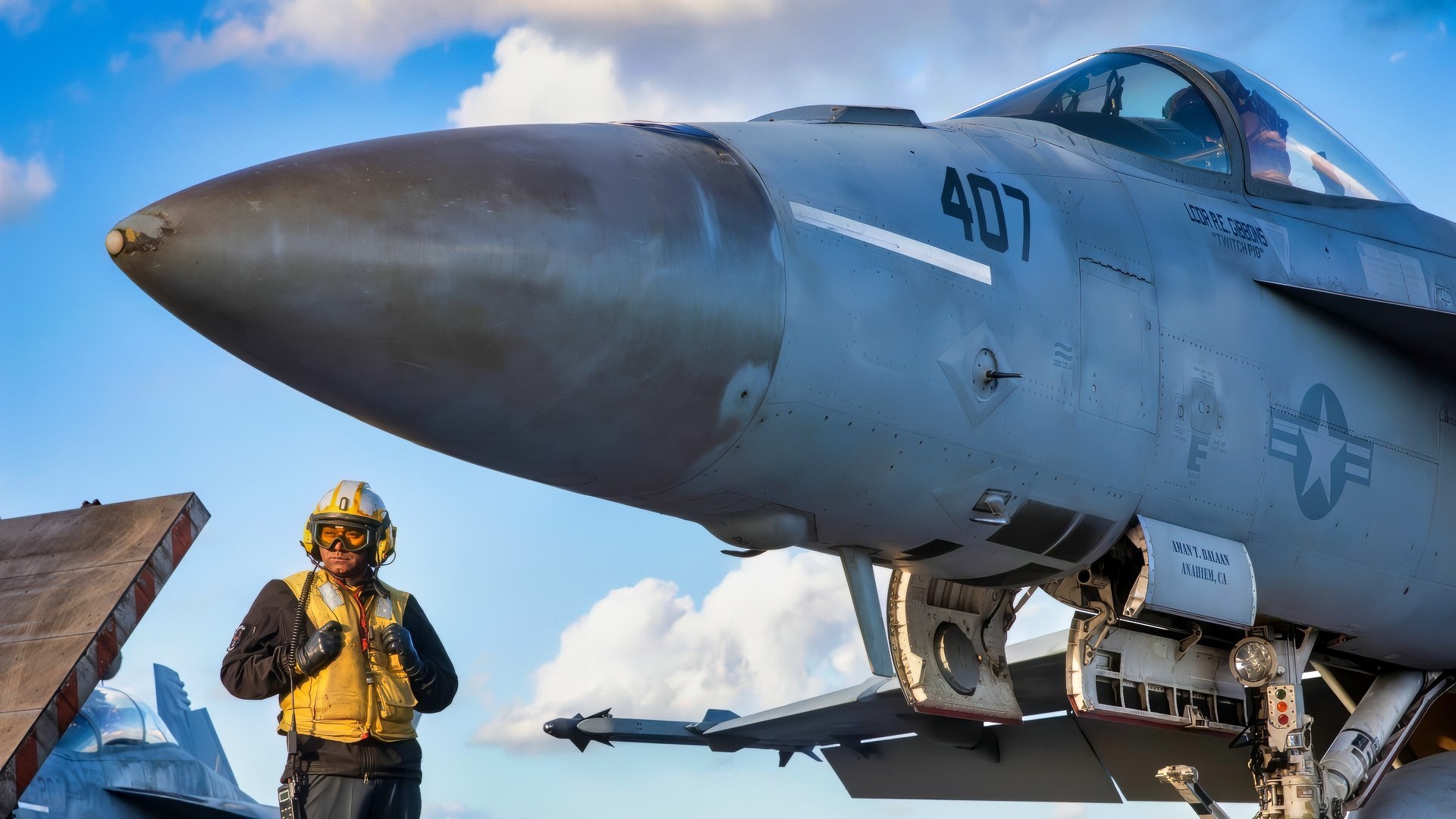
Aviation Boatswain’s Mate (Aircraft Handling) 1st Class Jose Mejiacastro, assigned to Air Department aboard the world’s largest aircraft carrier, USS Gerald R. Ford (CVN 78), prepares to signal to a Carrier Air Wing 8 F/A-18E Super Hornet attached to Strike Fighter Squadron 87 on the flight deck, Sept. 26, 2025. Gerald R. Ford, a first-in-class aircraft carrier and deployed flagship of Carrier Strike Group Twelve, is on a scheduled deployment in the U.S. 6th Fleet area of operations to support the warfighting effectiveness, lethality and readiness of U.S. Naval Forces Europe-Africa, and defend U.S., Allied and partner interests in the region. (U.S. Navy photo by Mass Communication Specialist 2nd Class Mariano Lopez)
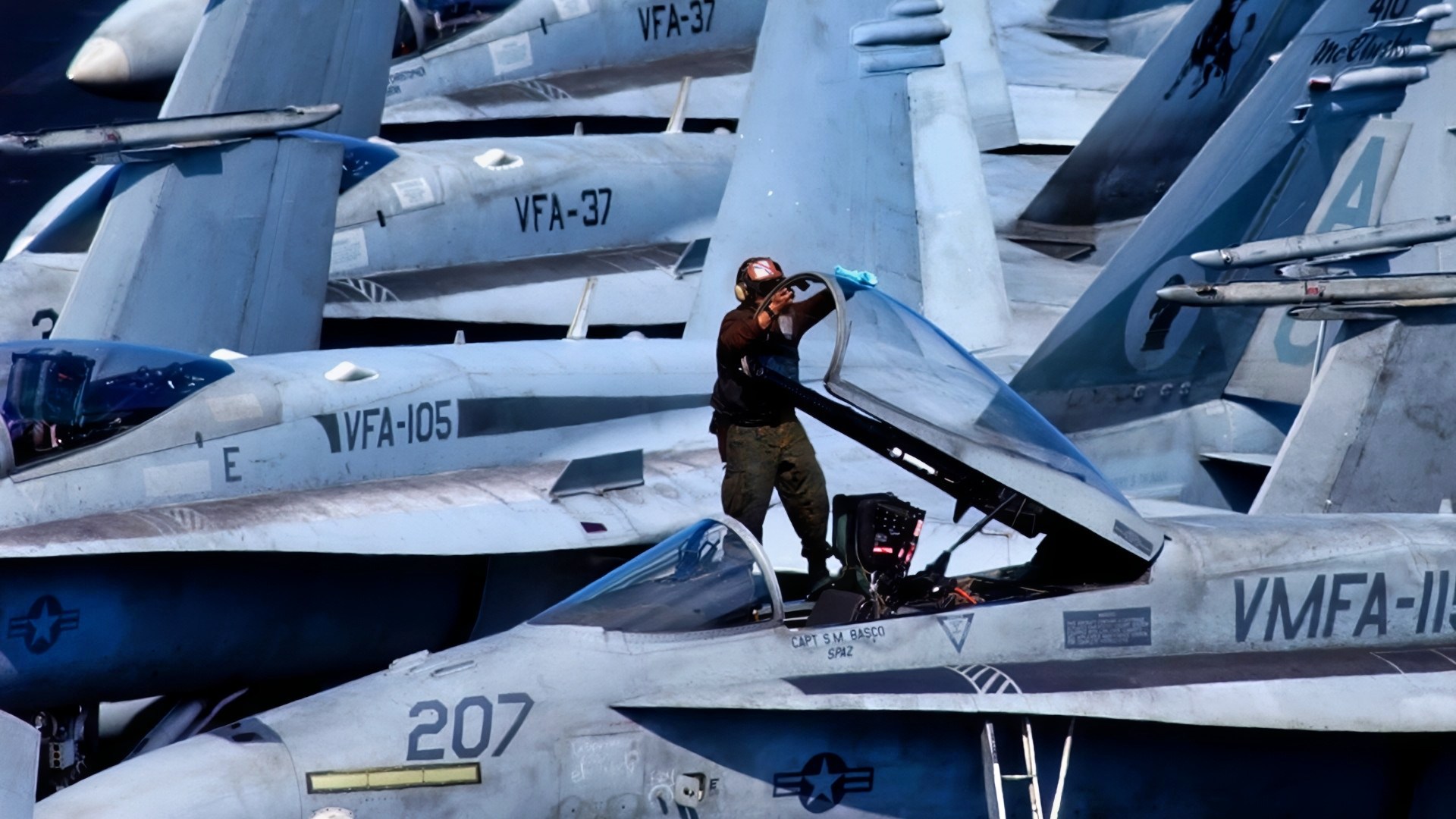
Marine Cpl. Rodger Lagrange cleans the canopy of a Marine F/A-18A+ Hornet onboard the USS Harry S. Truman (CVN 75) while the aircraft carrier operates at sea on Feb. 14, 2005. The Truman Strike Group and Carrier Air Wing 3 are conducting close air support, intelligence, surveillance, and reconnaissance missions over Iraq. Lagrange is attached to Marine Fighter Attack Squadron 115 deployed from Marine Corps Air Station Beaufort, S.C.
(DoD photo by Airman Philip V. Morrill, U.S. Navy. (Released))
The campaign has continued despite U.S. efforts to protect traffic through the waterway and restore Gulf oil exports.
Two Iranian officials told The Washington Post that the weeks before the midterms offered a critical opportunity to pressure Trump. They spoke anonymously to discuss sensitive diplomacy.
“They’re obsessed,” an Arab diplomat told the newspaper. “They think they can bring down a presidency.”
Amena Bakr, Kpler’s head of Middle East energy, warned that shipping’s high “costs and risks” would keep energy prices elevated. She estimated that geopolitical risk was adding $30 to the price of a barrel of oil.
U.S. Vice President J.D. Vance claimed last week that “in some ways” Washington has “won decisively” in its conflict with Iran.
“But… they [Iran] have responded in certain ways. And so, to step back a little bit, why did the president of the United States do this?” he continued.
“Iran, the largest state sponsor of terrorism in the world, cannot have a nuclear weapon,” Vance told a CBS News town hall ahead of the November 3 polls.
Voters will decide every seat in the U.S. House of Representatives and one-third of Senate seats. On Monday, Polymarket traders estimated a 65% likelihood of Democrats taking the Senate, and a 91% chance of Democrats taking the House.
Strikes on Ships Reach Wartime Peak
The Financial Times counted 24 ships targeted in the two weeks to October 11, compared with 13 during the first two weeks of March. Shipowners who had accepted the risks of high freight rates began turning away.
Ships Sink as Attacks Spread Beyond Hormuz
Singapore’s Maritime and Port Authority confirmed last Wednesday that the container ship GFS Pride had sunk after sustaining damage from a strike. It was reportedly struck by an unidentified projectile while transiting Hormuz on October 13.
“All 21 crew members were safely evacuated,” the authority said. “No injuries have been reported.”
The bulk carrier Cape Dao also sank near the strait last week after a projectile strike on September 23. One crew member was killed in the initial attack; others were evacuated.
The danger extends into the Persian Gulf.
On October 17, a tanker reported being attacked with a rocket-propelled grenade from a small boat northeast of Saudi Arabia’s Al Jubail, according to Seatrade Maritime’s account of reports from United Kingdom Maritime Trade Operations (UKMTO).
The Royal Navy-linked monitoring body also warned that its tally was incomplete.
It knew of incidents through other sources but was “constrained on reporting through lack of verification” because many attacked vessels were not reporting to it.
Iranian Officials Describe Plans to Keep Oil Prices High
The officials said Iran’s leadership had approved the changes.
“The aim is to frustrate efforts by the United States and its allies to bring down global oil prices,” one said.
The other described the contest as a “game of chess.” The officials said operations would expand beyond Hormuz into the Gulf of Oman and farther afield.
A U.S. military official told Reuters that Iran’s Revolutionary Guard had begun using unarmed spotters in small boats to identify targets after American strikes destroyed much of its radar capability.
Reuters also cited an October 11 Joint Maritime Information Center assessment that rated the threat to merchant shipping in Hormuz as “severe.” The United States was also maintaining its naval blockade of Iranian ports.
The Cost of Delivering Gulf Oil
The Financial Times, citing Kpler, reported that 2.9 million barrels passed through Hormuz on October 11. Kpler cautioned that the figure could rise as it identified additional vessels using satellite imagery.
Getting crude out of the Gulf also leaves refiners facing a steep delivery bill.
In an October 19 Reuters column, Ron Bousso explained that shipping and insurance could account for as much as 30% of delivered crude costs for some refiners, compared with the usual 3% to 7%, according to Reuters Open Interest calculations.
“The devil is in the delivery,” he wrote.
Brent crude futures traded at $108.41 a barrel at 11:52 a.m. GMT on Monday, October 19, Reuters reported, down $1.45 after Friday’s close at its highest level since May 19.
About the Author: Georgia Gilholy
Georgia Gilholy is a journalist based in the United Kingdom who has been published in Newsweek, The Times of Israel, and the Spectator. Gilholy writes about international politics,


