

Around 6,000 sailors are trapped near the Strait of Hormuz as attacks on commercial ships mount, the head of the United Nations’ International Maritime Organization (IMO) warned, as Washington and Tehran battle over allegations that the Islamic Republic is threatening crews.
“The situation continues to be severe and critical when it comes to international shipping,” UN International Maritime Organization Secretary-General Arsenio Dominguez told Fox News Digital on October 18.
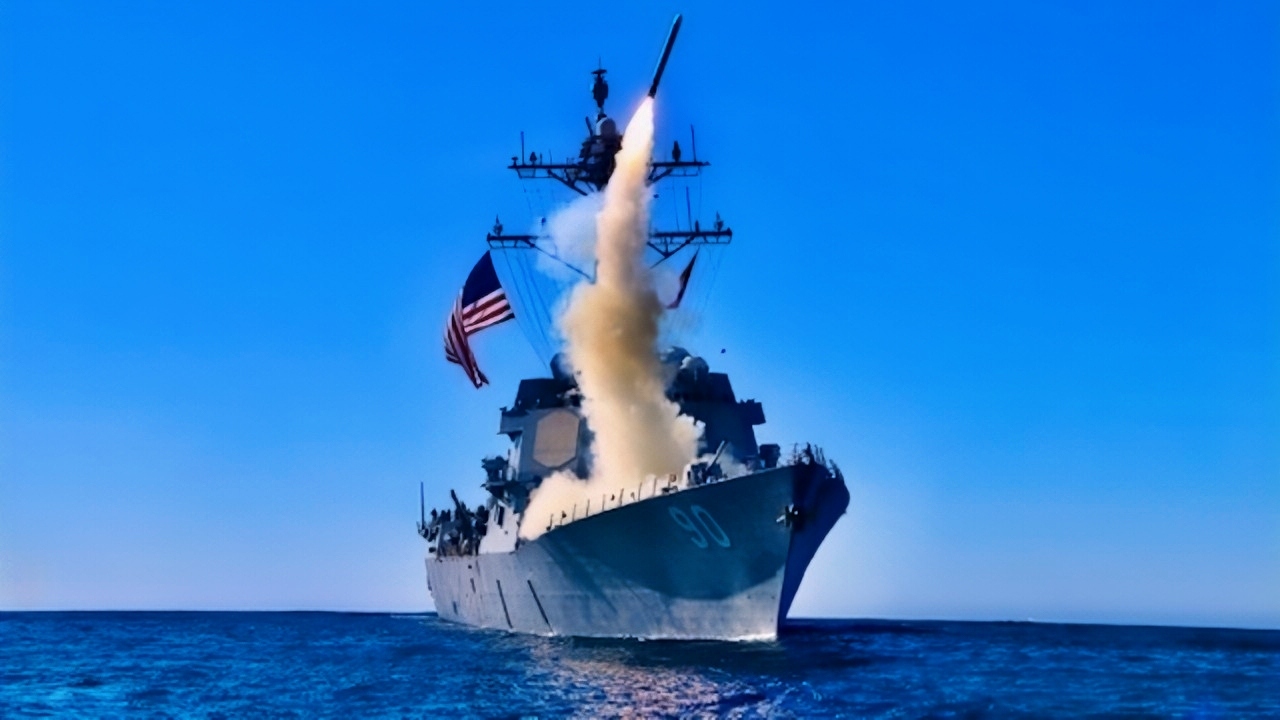
(Dec. 01, 2020) – The guided-missile destroyer USS Chafee (DDG 90) launches a Block V Tomahawk, the weapon’s newest variant, during a missile exercise. This event marked the first time a Block V Tomahawk missile was operationally tested, marking the Navy’s transition to a more advanced capability for the fleet. Block V includes an upgrade that will enhance navigation performance and provide robust and reliable communications. Chafee is currently assigned to Carrier Strike Group ONE and is homeported in Pearl Harbor. (U.S. Navy photo by Ens. Sean Ianno/Released)
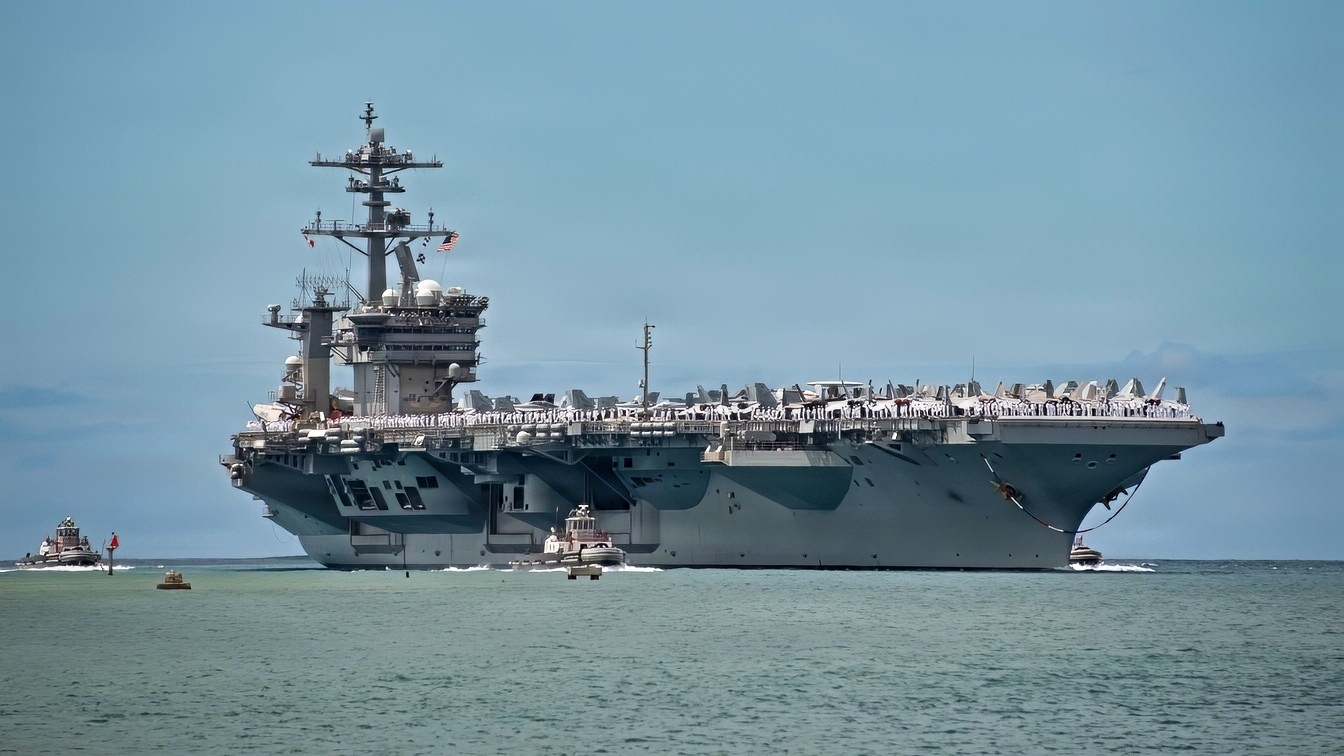
Nimitz-class aircraft carrier USS Theodore Roosevelt (CVN 71) arrives at Joint Base Pearl Harbor-Hickam, Hawaii, to participate in Exercise Rim of the Pacific 2026, June 23, 2026. Thirty-one nations, more than 36 surface ships, 5 submarines, 15 national land forces, more than 206 aircraft and 25,000 personnel are participating in RIMPAC in and around the Hawaiian Islands, June 24 to July 31. The world’s largest international maritime exercise, RIMPAC provides a unique training opportunity while fostering and sustaining cooperative relationships among participants critical to ensuring the safety of sea lanes and security on the world’s oceans. RIMPAC 2026 is the 30th exercise in the series that began in 1971. (U.S. Navy photo by Mass Communication Specialist 1st Class Erik Melgar)
His comments followed a Financial Times report that documented 24 attacks on vessels over the course of nearly two weeks, the largest number since fighting began in February.
The IMO’s public registry of attacks logs 113 incidents as of October 14, with 24 mariners killed since the start of the war.
UN Warns Against Strait of Hormuz Transits
Dominguez said there was a “double blockade” of commercial ships and warned that thousands of sailors had been trapped since the war began.
He warned shipping firms against transiting the region because crews lack security guarantees.
The warning comes as ships are increasingly being attacked farther from the strait. On October 14, Reuters reported that Iranian officials acknowledged a shift in tactics to increase pressure on ships.
‘Severe’ Threats to Region’s Shipping
The U.S. Navy has called the threat to commercial shipping “severe.”
VHF Channel 16 is an international maritime distress and safety net. Still, Iran’s envoy to the IMO, Seyed Ali Mousavi, said American vessels had used it for weeks “to convey threatening messages to Iranian ships.” He said Washington was using communications to exert “psychological pressure” on civilian crews.
Fox News reported that Iran produced no documentation or transcripts to back up the allegations, and they could not be corroborated.
According to the IMO, a document on proper procedures designates VHF Channel 16 for “distress, urgency, brief safety communications and initial on-scene communications.” However, the U.S. military has directed civilian ships seeking to transit a naval blockade to use Channel 16 to contact U.S. authorities.
An official CENTCOM release on July 13 said U.S. vessels would resume their blockade against ships traveling to and from Iranian ports, but continue to facilitate other commercial traffic.
On October 15, CENTCOM said the United States communicates professionally with vessels attempting to transit the Strait of Hormuz and that it provided multiple warnings before enforcing its rules of engagement.
Commercial Ships Hit Last Week
This intensification has included attacks on two commercial ships registered in Singapore on October 13 and 14.
The Maritime and Port Authority of Singapore confirmed that unknown projectiles struck GFS Pride and GFS Giselle.
GFS Pride “caught fire and sank,” but rescuers saved all 21 crew members.
A different projectile damaged GFS Giselle’s hull, but the vessel reached a nearby anchorage and the 22 crew members were uninjured.
Singapore called the attack “unprovoked, unjustifiable, and a breach of international law.”
In addition to those attacks, a Reuters article on October 14 reported that the bulk carrier Cape Dao sank on October 14 after having been struck by an unknown projectile last month.
One crew member was killed when the ship was hit.
Oil Markets Face Further Disruption
Reuters reported that Brent crude settled at $109.86 a barrel on Friday, the highest since May.
Prices eased up on Monday.
Iranian Foreign Minister Abbas Araqchi said Iran’s offer to open the strait within a week remained on the table, but a deal seemed unlikely.
Dominguez told Fox News that there has been an “increase in fraudulent registries with false flags that are taking the risk and acting as shuttle tankers to bring goods in and out… That’s one of the reasons that we’re seeing an escalation.”
He slammed “irresponsible shipowners” for “taking the risk to actually be able to trade and move some of the goods and the cargoes.”
Dominguez said that his discussions with Iran continued even though he did not have direct contact with the Islamic Revolutionary Guard Corps (IRGC). This terrorist group oversees most of Iran’s naval power.
About the Author: Georgia Gilholy
Georgia Gilholy is a journalist based in the United Kingdom who has been published in Newsweek, The Times of Israel, and the Spectator. Gilholy writes about international politics.


