

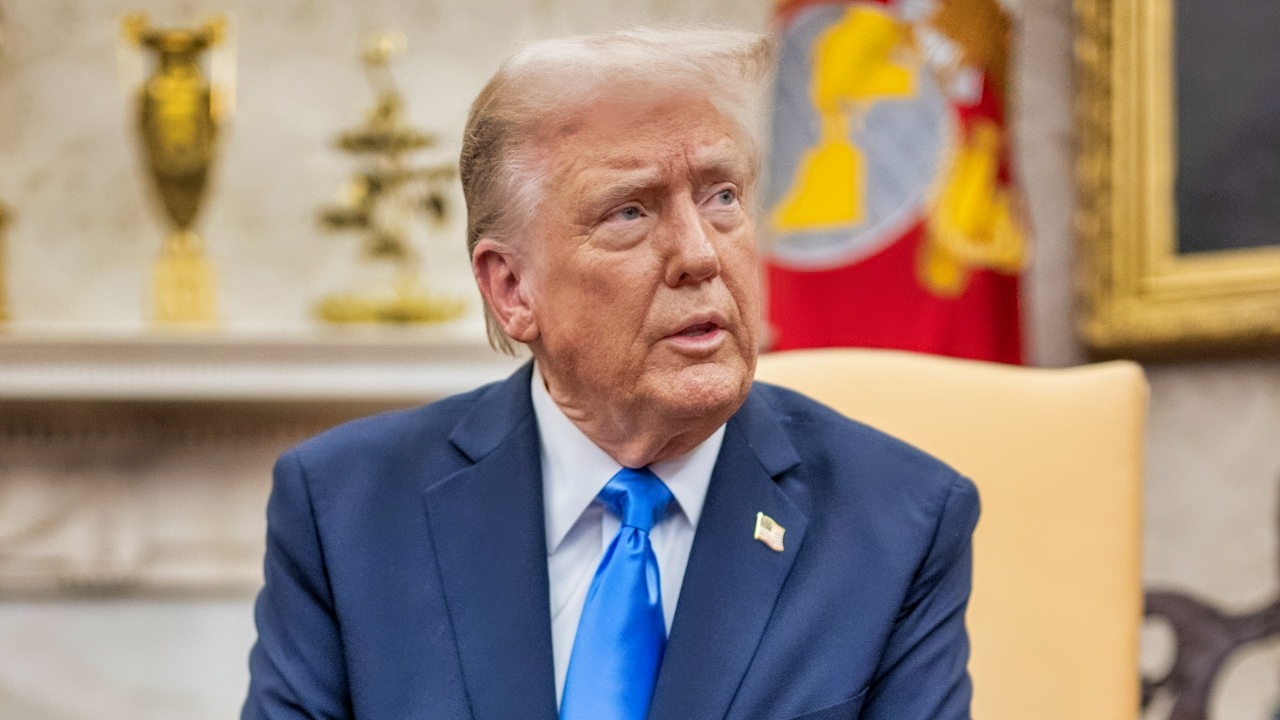
Donald Trump’s first term as president wasn’t exactly known for its discipline. There were constant firings, resignations, and behind-the-scenes chaos.
Trump employed four different White House chiefs of staff in four years, with numerous cabinet secretaries and other officials cycling out of the administration.
Can Trump Change? It Looked Like It…
The constant churn stemmed largely from Trump’s distrust of certain individuals in government, and even his growing disillusionment with former loyalists, such as Attorney General Jeff Sessions, with whom he had lost faith.
The conventional wisdom, in the first term, was that Trump was not expecting to win, had tossed Chris Christie’s transition plans after winning, and therefore came into office not prepared to run the government.
That was, at least in part, the idea behind Project 2025, and the notion that Trumpworld would be better prepared for a second term, with more ideas in advance about which department and agency would be doing what, and who might secure key jobs in each part of the government.
Both Trump’s 2024 campaign and the early days of the second presidency did seem more disciplined than their predecessors, at least, however disciplined an operation run by Donald Trump can be.
Susie Wiles, the White House chief of staff who also had a top role in the campaign, has been praised for running a tighter ship than any of Trump’s first-term chiefs of staff did. And with its flurry of executive orders and other actions in the opening weeks, there’s no doubt that the administration got a lot done in its opening stretch, although whether the things they did were good or bad is a separate question.
But as a newly published analysis says, that’s no longer the case, as the second Trump presidency approaches the 100-day mark.
The Donald Trump Chaos is Back
The Times wrote in a news analysis this week, by White House correspondent Luke Broadwater, about how the “veneer of discipline” of the early days of Trump’s second terms has gone away, thanks to “mistakes, miscommunications and flip-flops,” from the Signalgate scandal to the chaos related to tariffs and the president’s implication that he plans to fire Fed Chairman Jerome Powell.
Other issues have included the “mistaken” deportation of a man to El Salvador, the revolving door in the leadership of the IRS, and reports of chaos at the Pentagon.
“There was a good reason to believe it would be more disciplined this time around,” Hans C. Noel, a government professor at Georgetown University, told the Times, but that doesn’t appear to have held.
What’s different in the second term, as opposed to the first?
With the premium in the new administration on loyalty and true believers, other things have been de-emphasized, such as Washington experience.
“The agency heads running the country often lack experience in managing large institutions or even traditional policy backgrounds,” the Times analysis says.
The Hegseth Example
The embattled Secretary of Defense, Pete Hegseth, is said to be on thin ice, but not really for a reason that looks anything like any of the cabinet departures during Trump’s first term as president. Rather than a Washington hand whose loyalty to Trump has been questioned, Hegseth is a Trump ultra-loyalist with a nontraditional resume.
Hegseth, who before his service in the Pentagon was best known as a Fox News host, has never run a bureaucracy anywhere close to the size of the Defense Department. Most other recent Defense Secretaries have been either former senators, White House chiefs of staff, retired generals, or former secretaries of the military branches.
The Pentagon, under Hegseth, has been beset by internal chaos, staff departures, and low morale, with one recently departed spokesman even writing an op-ed for Politico about a “month from hell” at the department, and the author, a self-described friend of the Defense Secretary, even declaring that “it’s hard to see Defense Secretary Pete Hegseth remaining in his role for much longer.”
About the Author:
Stephen Silver is an award-winning journalist, essayist and film critic, and contributor to the Philadelphia Inquirer, the Jewish Telegraphic Agency, Broad Street Review and Splice Today. The co-founder of the Philadelphia Film Critics Circle, Stephen lives in suburban Philadelphia with his wife and two sons. For over a decade, Stephen has authored thousands of articles that focus on politics, technology, and the economy. Follow him on X (formerly Twitter) at @StephenSilver, and subscribe to his Substack newsletter.
What You Might Have Missed from NSJ
U.S. Navy Nuclear Attack Submarine Smashed Into an ‘Underwater Mountain’
F-35B Fighter Is Now Armed with ‘No Escape Zone’ Meteor Missile


Pingback: Most DC Bureaucrats Who Voted for Harris Would Disobey a Lawful Trump Order: Survey - National Security Journal