


Summary and Key Points: On June 23, 2023, Yevgeny Prigozhin’s Wagner Group — a private army the Kremlin itself had built — seized the Russian city of Rostov-on-Don and drove toward Moscow, halting just over 120 miles away.
-For one stunning day, Putin’s vaunted security state could not stop an armed challenge on its own soil. Rather than crush the mutiny, Putin cut a deal. The march exposed his grip as a bluff — and proved a coup in Russia, once unthinkable, is no longer.
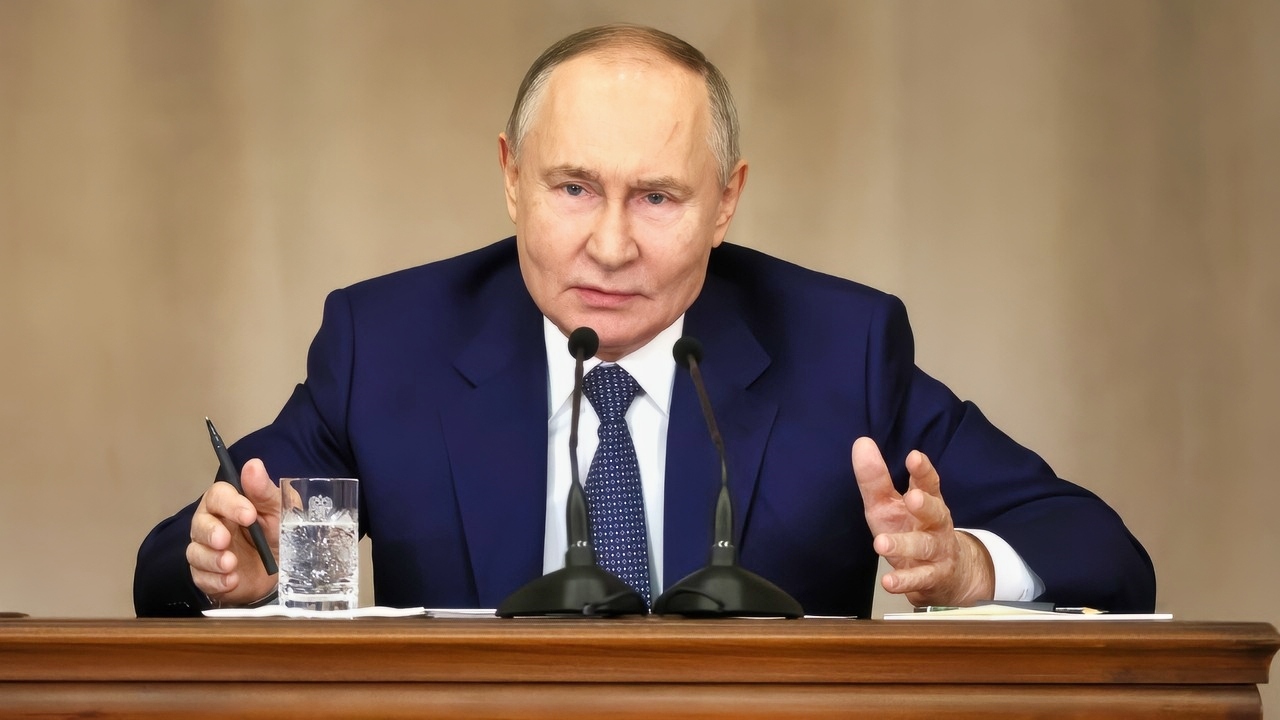
Putin Speaking in 2025. Image Credit: Creative Commons.
The Wagner Mutiny Proved Putin Can Be Touched — And That Changes Everything
On June 23, 2023, a column of mercenaries belonging to the Wagner Group crossed from Ukraine into Russia and began driving north toward the capital. They were not a foreign invader. They were a private army that the Russian state itself had built, funded, and armed, now turned against the Ministry of Defense that had tried to absorb it. Within hours, Wagner fighters had rolled into Rostov-on-Don, a city of more than a million people, and seized the headquarters of the Southern Military District. That building was not a symbolic target. It was the nerve center overseeing the military supply line feeding Russia’s entire war in Ukraine, and a mercenary column took it almost without resistance.
From Rostov, the convoy pushed north along the M-4 highway. Wagner forces moved through the Voronezh region, roughly 300 miles south of Moscow, then through the Lipetsk region farther north, as Russia declared a counter-terrorism operation and scrambled to organize a defense. Some Wagner personnel reached the town of Kolomna, about 120 kilometers south of Moscow, before the advance stopped. By the time Yevgeny Prigozhin ordered his men to turn around, his lead elements were, by his own account, just 200 kilometers from the Russian capital with a claimed force of 25,000 fighters behind them.
The most important fact about that day is the one that is easiest to lose in the retelling. A column of armed men hostile to the Russian Ministry of Defense drove most of the way from the Ukrainian border to Moscow, and for most of that drive, almost nothing stopped them.

T-80 Tank Russian Army. Image Credit: Creative Commons.
The Capital Braced For Impact
What happened in Moscow during those hours tells you more about the state of Putin’s grip than anything Prigozhin did.
The Russian capital did not respond with the calm confidence of a government that knew it was in control. It responded like a city preparing to be attacked.
Authorities erected checkpoints with armored vehicles and troops on the southern edge of the city. Red Square was shut down, and the mayor urged motorists to stay off the roads. The government that had spent two decades projecting an image of total command over every corner of Russian life was visibly improvising a defense of its own capital against a force that the Kremlin itself had created.
The optics were devastating, and they were broadcast in real time to the entire world and, more importantly, to every ambitious figure inside the Russian power structure who had spent years assuming that Putin was untouchable.
Putin Cut A Deal Instead Of Crushing The Mutiny
The resolution is the part that should keep Kremlin loyalists awake at night. Faced with the most serious challenge to his rule in more than two decades, Putin did not crush the mutiny with overwhelming force. He negotiated his way out of it through an intermediary. The convoy of Wagner vehicles traveling along the northbound highway halted just 124 miles from Moscow, and the order to stop came not from a battlefield defeat but from a phone call.
The deal that ended the march was brokered not by Putin but by Belarusian President Alexander Lukashenko, who negotiated with Prigozhin after discussing the matter with the Kremlin. Prigozhin agreed to halt the advance and accept exile in Belarus, and the criminal case against him for armed rebellion was initially dropped.
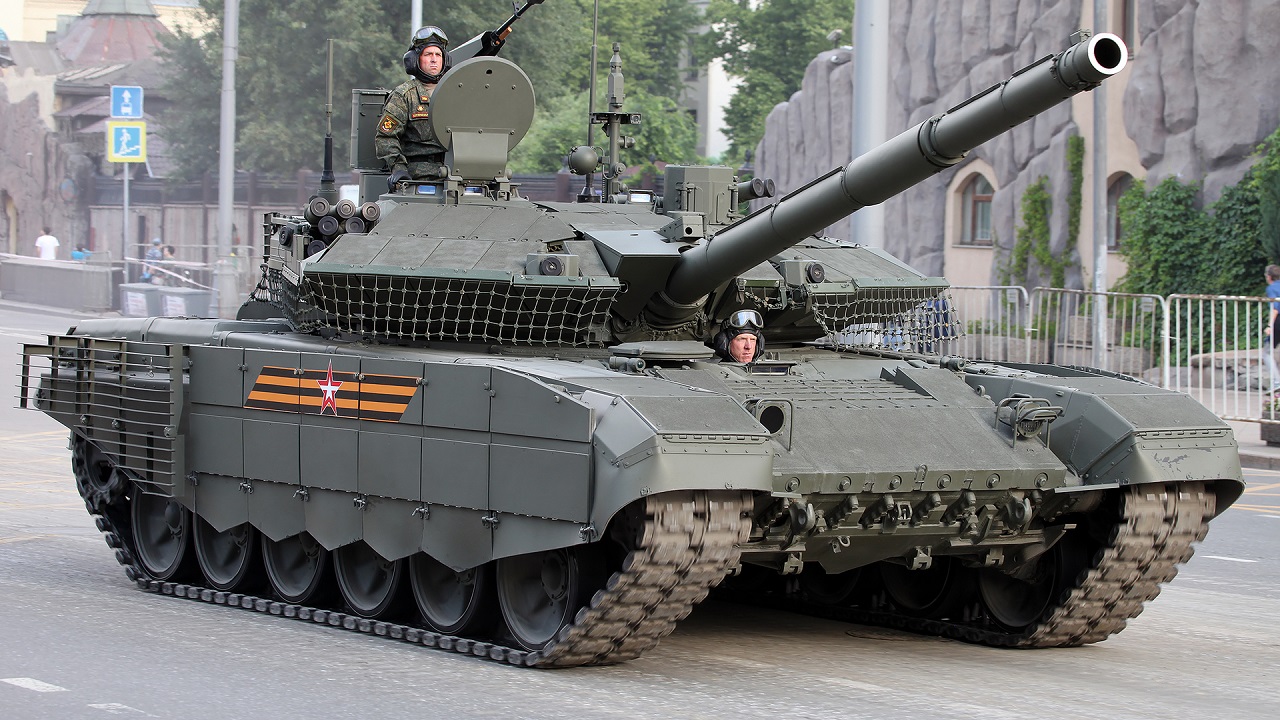
T-90M. Image Credit: Creative Commons.
A man who had seized a major Russian city and marched an army toward Moscow was allowed, at least at first, to simply walk away.
Putin had stood in front of the nation earlier that day and accused Prigozhin of betrayal, called the mutiny a stab in the back, and vowed to punish all traitors. Hours later, he cut a deal with the traitor. The gap between the rhetoric and the action was the whole story.
Prigozhin died two months later when his private jet fell out of the sky, and few people anywhere believed it was an accident. But the delayed revenge did not undo the lesson of June 23. For one full day, the Russian state had been unable to stop an armed challenge to its authority, and everyone who mattered in Moscow saw it happen.
What The Mutiny Actually Revealed
The Wagner rebellion was the most significant internal security threat Putin’s Russia had faced since the second Russian-Chechen war, and it exposed something the Kremlin’s propaganda machine works tirelessly to conceal.
Putin’s control over Russia is not the seamless, total grip it appears to be from the outside. It is a balance of competing power centers, security services, oligarchs, and armed factions held in place by the perception that challenging Putin is crazy.
The Wagner mutiny cracked that perception.
It demonstrated that the security forces would not necessarily rush to defend the regime, that Russian soldiers along the route were willing to let the column pass, and that ordinary Russians in Rostov greeted the mercenaries with something closer to curiosity than hostility.
The Russian military reportedly fired on the Wagner column from the air as it advanced, and Wagner reportedly shot down several Russian aircraft in response. Russians were killing Russians on Russian soil over a power struggle at the top, and the state could not immediately stop it. That is not the profile of an unshakable dictatorship. That is the profile of a regime whose stability depends on a bluff that was, for one day, called.
Why A Coup Or Revolution Is No Longer Unthinkable
None of this means Putin is about to fall.
He survived the mutiny, eliminated the man who led it, purged elements of the Wagner structure, and reasserted control. A successful overthrow of the Russian president remains unlikely, and anyone predicting an imminent collapse is getting ahead of the evidence. The Russian security state is vast, the propaganda apparatus is effective, and the population has shown a high tolerance for hardship.

Su-30. Image Credit: Creative Commons.
But unlikely is not the same as impossible, and before June 2023, a serious internal challenge to Putin was treated as essentially inconceivable. That is no longer true. The conditions that produced the mutiny have not disappeared.
The war grinds on with mounting casualties, the economy is straining under the weight of military spending and sanctions, and the same factional rivalries that pushed Prigozhin to march on Moscow continue to simmer beneath the surface. The longer the war continues without a victory Putin can sell to his own elites, the more those pressures build.
Yes, Putin Can Be Toppled Is the Lesson
History is unkind to leaders who appear permanent right up until the moment they are not. The Soviet Union looked stable until it suddenly dissolved. The Russian monarchy seemed eternal until it collapsed within days in 1917. Putin has built a system designed to make his removal unthinkable, and for most of his rule, it has worked.
The Wagner mutiny showed that the system has a crack in it, that a determined armed faction can reach the outskirts of the capital, and that the man at the top responds to a real challenge by negotiating rather than crushing it. The next figure who decides to test that weakness may be more capable than Prigozhin, may have more of the security services behind him, and may not turn his column around 120 miles from Moscow.
About the Author: Harry J. Kazianis
Harry J. Kazianis (@Grecianformula) was the former Senior Director of National Security Affairs at the Center for the National Interest (CFTNI), a foreign policy think tank founded by Richard Nixon based in Washington, DC. Harry has over a decade of experience in think tanks and national security publishing. His ideas have been published in the NY Times, The Washington Post, The Wall Street Journal, CNN, and many other outlets worldwide. He has held positions at CSIS, the Heritage Foundation, the University of Nottingham, and several other institutions related to national security research and studies. He is the former Executive Editor of the National Interest and the Diplomat. He holds a Master’s degree focusing on international affairs from Harvard University.


FRED T ADAMS
June 1, 2026 at 1:17 pm
The problem with Toppling Putin is the usual one with toppling Russian tyrants. What then? For 500 years, the Russian state has been a tyranny and Russians know no better. They can’t step up and make their country into a marvel of modern self-determination because the Russian mind has no model for it. Given that, the question becomes what monster will fill the vacuum That Putin leaves. Toppling the known monster in favor of an unknown devil is poor planning and likely not particularly appealing to the average Russian.