

Key Points and Summary – Europe’s sixth-generation Future Combat Air System (FCAS) fighter jet program is in trouble, plagued by delays and internal friction.
-The core issue is a lack of teamwork between the lead contractors, France’s Dassault and the multinational Airbus, with executives from both sides publicly expressing frustration.

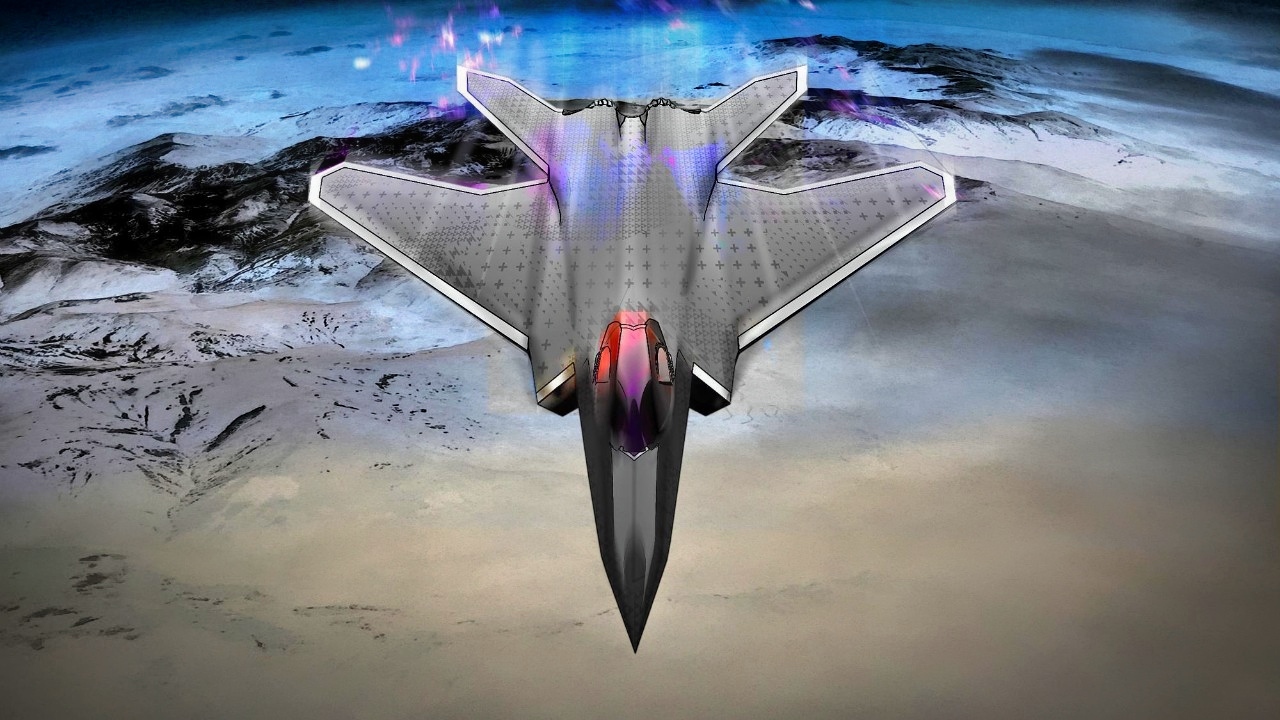
FCAS Fighter Mock Up. Image Credit: Creative Commons.
-After eight years, the ambitious project remains stuck in the conceptual phase, with disagreements over design, control, and pace.
-This infighting threatens to derail a program critical for Europe to keep pace with rival next-generation fighter developments in the U.S., Russia, and China.
FCAS: Why Is the European Sixth-Generation Fighter Jet Having Problems?
There may be too many cooks in the kitchen to get the forthcoming European airplane off the ground.
The Future Combat Air System (FCAS) is a next-generation fighter jet being produced by a consortium that includes France, Germany, and Spain. Some wonder if this airplane will ever make it to production.
Airbus and Dassault are experiencing problems. There is a lack of smooth teamwork during the crucial design and development phase of the FCAS. One can look into the tea leaves of the following statement and realize that it shows the two behemoth aviation firms are having trouble working together.
The Finger Pointing Begins
“Clearly, we have observed with this [1B] phase, difficulties in the execution and facing the problem there are different ways to look at it, different types of problem statements,” said Jean-Brice Dumont, head of air power at Airbus Defence and Space. “We have to go faster. I think that’s one key motto of the program. We have to accelerate,” Dumont told reporters this summer.
Can Cultural Differences and the Language Barrier Be Overcome?
The FCAS is an ambitious project that requires considerable patience and skill to build with different defense contractors. Simply consider the language barrier and cultural differences. What one group of engineers and designers wants can be lost in translation as various workers try to communicate clearly in their mother tongues. Staying on time with deadlines can be challenging. One defense contractor could believe that it is operating at top speed, while the other accuses it of slow-walking.
While “we are not stopping [phase 1B], we are reflecting on how to do it differently to ensure that we meet the scheduled objectives that the nations have set us,” Dumont said. “Phase 1B revolves around the two manufacturers settling on what the next generation fighter and new drones will look like.”
Keeping Up with Russia and China
It appears that Airbus is getting frustrated, and that is not what the Europeans want. They prefer everyone to work smoothly as a team and wish to avoid any drama that could set the program back. Time is of the essence. Russia is forging ahead with its two stealth fighter programs: the Su-57 and Su-75. China has two radar-evasive fighters: the J-20 and J-35.
Meanwhile, Dassault wants more control over design and production. Dassault CEO Eric Trappier seems frustrated with the Airbus team, who he believes are not being team players and are responsible for delays in signing the Phase 1B contract.
More Competition Has Cropped Up
This comes during a time when FCAS has ample competition. There is another next-generation fighter program called the Global Combat Air Program (GCAP). The United Kingdom, Italy, and Japan are developing this project.
FCAS has a long way to go before it can be called a success. The manufacturing consortium has plans for it to be integrated with swarming drones in a concept called “remote carriers.” This is something the Americans are trying to accomplish with the F-47 NGAD. Keep in mind that the Donald Trump national security team gave the sixth-generation fighter to one contractor – Boeing, not different companies.
Time will tell if Boeing alone can deliver all the bells and whistles of the F-47 on time and under budget. Workers at Boeing who will produce the F-47 are currently on strike, and the company is trying to hire replacement workers.
FCAS builders do not have that problem. The malady appears to stem from how each manufacturer in each country perceives the level of progress being made.
Carrier-borne Model Of the FCAS Would Be Great
The FCAS is planned to be a sixth-generation fighter that can outclass Russia and China. FCAS will also have a version that can land and take off from aircraft carriers. This would solve a big problem that could allow the advanced warbird to be deployed outside the region.
The Americans are faced with their own conundrum. The Air Force wants the F-47 while the Navy prefers its own sixth-generation fighter called the F/A-XX. At least the Europeans can build just one sixth-generation warbird to be active in both their air forces and navies.
FCAS goes back to 2017, and the countries and their defense champions have not always rowed with both oars in the water. Eight years have elapsed, and the airplane is still in conceptual mode. This suggests that the program may be in trouble unless the issues among teammates are resolved.
I’m not a big fan of these multinational consortium projects. Incorporating a system of systems approach with more than one contractor is problematic. We are discussing various players who have multiple perspectives on what makes for the most effective features and concepts.
How do technicians and engineers communicate? What do they believe are the most adept acquisition practices from the different militaries? How will this airplane be tested and evaluated? Different air forces have varied operational standards. What is considered a “green” or “go” aspect of the fighter could mean a “red” or “no go” to a different group of testers.
The FCAS requires everyone to operate at high levels without any lack of communication or distractions. This fighter could be delayed even more. It is time for all participants to get on the same page, or this fight will never come to fruition.
The Europeans could put a new sixth-generation fighter to good use, especially if there are conventional and carrier-borne options. We’ll keep track of this program to see how it progresses the rest of the year. To stay on track, all participants need to step up their game and work together more effectively.
About the Author: Brent M. Eastwood
Brent M. Eastwood, PhD is the author of Don’t Turn Your Back On the World: a Conservative Foreign Policy and Humans, Machines, and Data: Future Trends in Warfare plus two other books. Brent was the founder and CEO of a tech firm that predicted world events using artificial intelligence. He served as a legislative fellow for US Senator Tim Scott and advised the senator on defense and foreign policy issues. He has taught at American University, George Washington University, and George Mason University. Brent is a former US Army Infantry officer. He can be followed on X @BMEastwood.
More Military
F-22 ‘Super’ Could Be the Best Fighter on Earth
The F/A-18 Super Hornet Fighter Has Reached the End of the Line
The Ferrari F-35 Could Be a Sky Monster


