

Key Points and Summary – Switzerland is quietly scaling back its 2021 decision to buy 36 F-35As after Bern concluded it can no longer afford the full package within its CHF 6 billion, voter-approved budget.
-Inflation, raw material costs, lingering post-COVID supply chain issues, and US tariffs on Swiss exports helped blow up what the Swiss thought was a fixed-price deal under the FMS system.

Capt. Andrew “Dojo” Olson, F-35 Demonstration Team pilot and commander performs a high-speed pass during the Melbourne Air and Space Show March 29, 2019 in Melbourne, Fla. The air show featured the North American Debut of the all-new F-35 Demonstration. (U.S. Air Force Photo by Senior Airman Alexander Cook)

A U.S. Marine Corps plane captain assigned to the Marine Fighter Attach Squadron 225 (VMFA-225) signals to a pilot in a F35B Lightning II as it taxis on the flightline after landing in the U.S. Southern Command Area of Responsibility, Sept. 13, 2025. U.S. military forces are deployed to the Caribbean in support of the U.S. Southern Command mission, Department of War-directed operations, and the president’s priorities. (U.S. Air Force photo by Senior Airman Katelynn Jackson)
-With no agreement on price interpretation, Bern has opted to reduce the number of jets while leaning on domestic industrial offsets like RUAG’s RIGI assembly project.
-A full 36-jet fleet could be revisited after 2026, but nothing is guaranteed.
Switzerland to Reduce Its 2022 F-35 Fighter Commitment
Last week, Switzerland’s military stated it could no longer sustain the order for 36 of the Lockheed Martin F-35A 5th-generation fighter aircraft that it had decided to procure in the summer of 2021. The decision to reduce the numbers is reportedly due to a price increase for the entire 36-aircraft buy, which totals some US$610 million.
The Swiss Federal Department of Defence, Civil Protection and Sport released an official statement that “due to foreseeable cost overruns, maintaining the originally planned number of 36 F-35As is not financially feasible,” the government said. The Swiss have procured the exact, reduced number, which has not been revealed.
However, the program authorities in Bern stated the number to be included in the acquisition will be the “maximum” number of aircraft that can be procured within the previously allocated CHF (Swiss Franc) 6 billion, fixed price budget. The sum is roughly equivalent to US$7.5 billion and was approved by a very narrow margin in a national referendum held in 2020.
The Swiss government did hold out some hope that the original buy of 36 might be restored. While not making any commitments, officials said they would conduct a new assessment of whether any additional steps should be taken to boost Switzerland’s defense capabilities during the 2026-2027 timeframe.
Depending on the conclusions reached, the cabinet could decide to enable it to get the original target of 36. Switzerland has also pledged to increase its defense spending by an additional 1 per cent of GDP by 2032.
The government also said that, due to changes in the European security situation, it would take measures to modernize Switzerland’s air defenses.
Current planning calls for the Swiss to operate 55 to 70 modern fighter jets, but the assessment determining the required number would be conducted independently of any specific aircraft type.
Rising Costs and Tariffs
“Talks held with the US in the summer revealed that Switzerland cannot enforce the contractually agreed fixed price for the F-35A fighter jet,” read the Swiss government statement. “The US cites increased costs due to inflation, rising raw material prices, and other factors.”
Some of those “other factors” are what a US industry official described as one of the remaining “hangovers” from the COVID-19 pandemic—namely, supply chain issues. “We are still trying to get our supply chains back to something resembling the pre-COVID situation that existed before that Chinese virus scrambled them all.”
This past summer, the Swiss government reaffirmed its commitment to buying the F-35s – even after Washington had imposed 39 per cent tariffs on Swiss exports. Following an agreement reached last month, the Swiss said this past Wednesday that those tariffs had been reduced to 15 per cent.
The Swiss had previously expressed frustration that what they had regarded as a fixed-price agreement with the US had since been abandoned. The US Government later stated that the price figures had been a misunderstanding.
At the time, the Swiss government made its own assessment; their estimates also projected that, between inflation and tariffs, the cost for the entire program could increase to some amount between CHF 650 million and 1.3 billion.
Contractual Confusion
Part of what has been described as a contract dispute over cost increases is reportedly due to the US Foreign Military Sales (FMS) framework. Under this system, aircraft costs are determined by production lots rather than a guaranteed, fixed amount over the entire program.
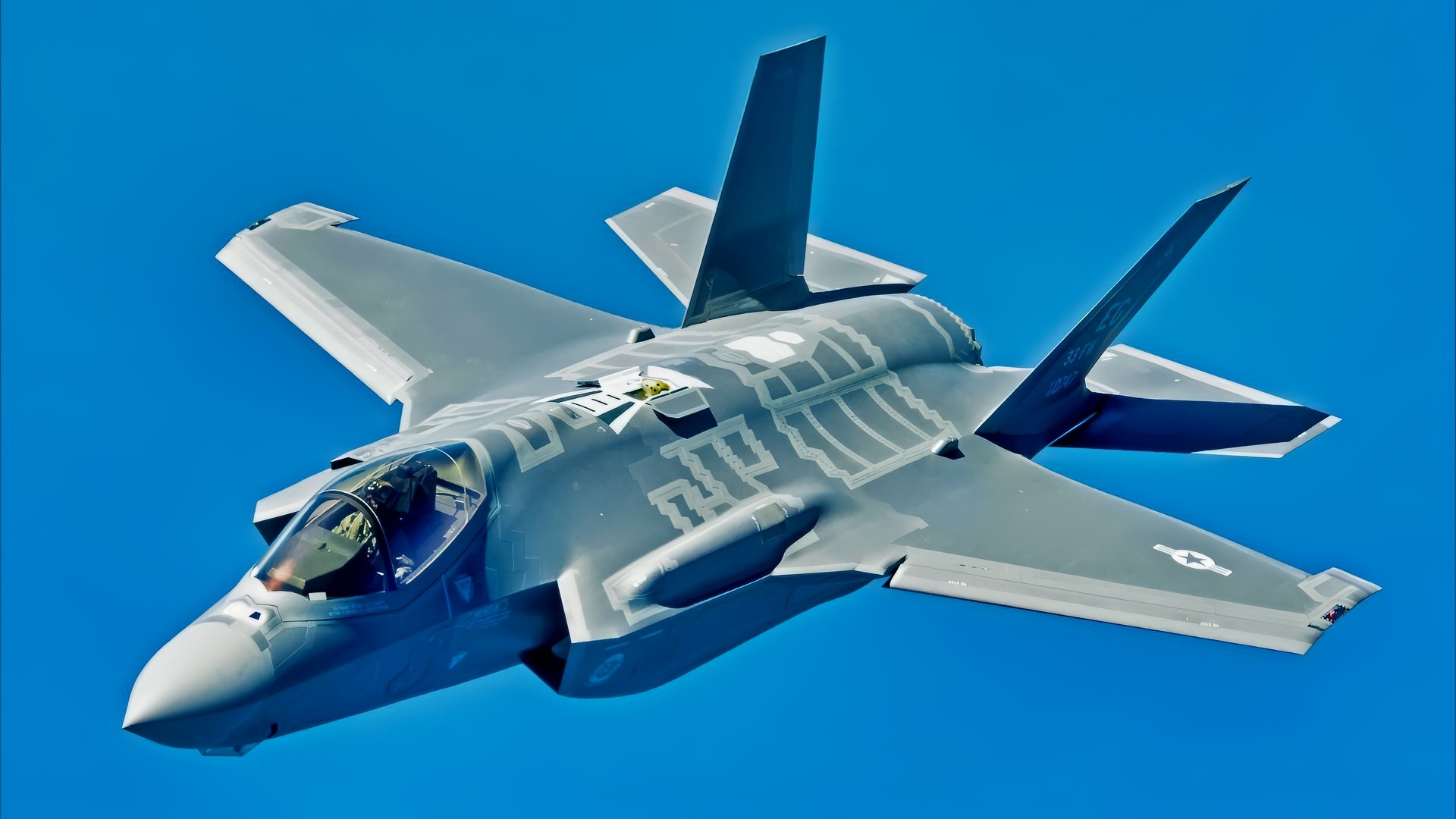
U.S. Air Force F-35A Lightning II Joint Strike Fighter pilots from the 58th Fighter Squadron, 33rd Fighter Wing, Eglin AFB, Fla., navigate their aircraft toward an Air Force Reserve KC-135 Stratotanker from the 336th Air Refueling Squadron, March ARB, Calif., May 16, 2013, off the coast of northwest Florida. The 33rd Fighter Wing is a joint graduate flying and maintenance training wing that trains Air Force, Marine, Navy and international partner operators and maintainers of the F-35 Lightning II. (U.S. Air Force photo by Master Sgt. John R. Nimmo, Sr./RELEASED)
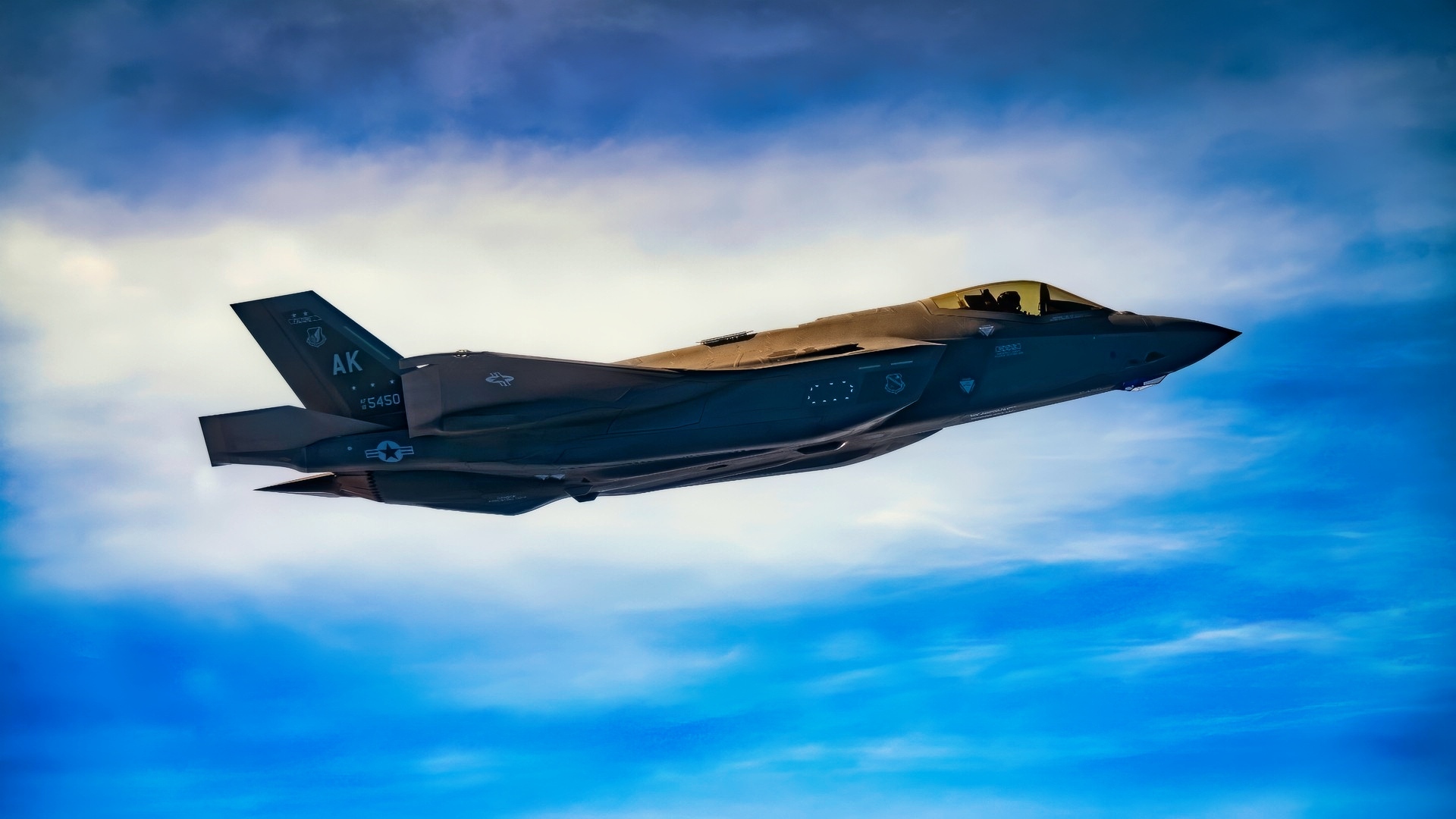
A U.S. Air Force F-35A Lightning assigned to the 356th Fighter Squadron, Eielson Air Force Base, Alaska, flies alongside of a U.S. Air Force KC-46A Pegasus assigned to the 77th Aerial Refueling Squadron, Seymour Johnson AFB, North Carolina, over the Pacific Ocean while enroute to the Singapore Airshow 2022, Feb. 11, 2022. The Singapore Airshow is the largest defense exhibition and biennial international tradeshow in the Pacific attracting thousands of participants from 50 countries. The U.S. Military is participating in Singapore Airshow 2022 by providing aerial demonstrations and static aircraft to demonstrate commitment and build upon partnerships with Singapore. (U.S. Air Force photo by Master Sgt. Richard P. Ebensberger)
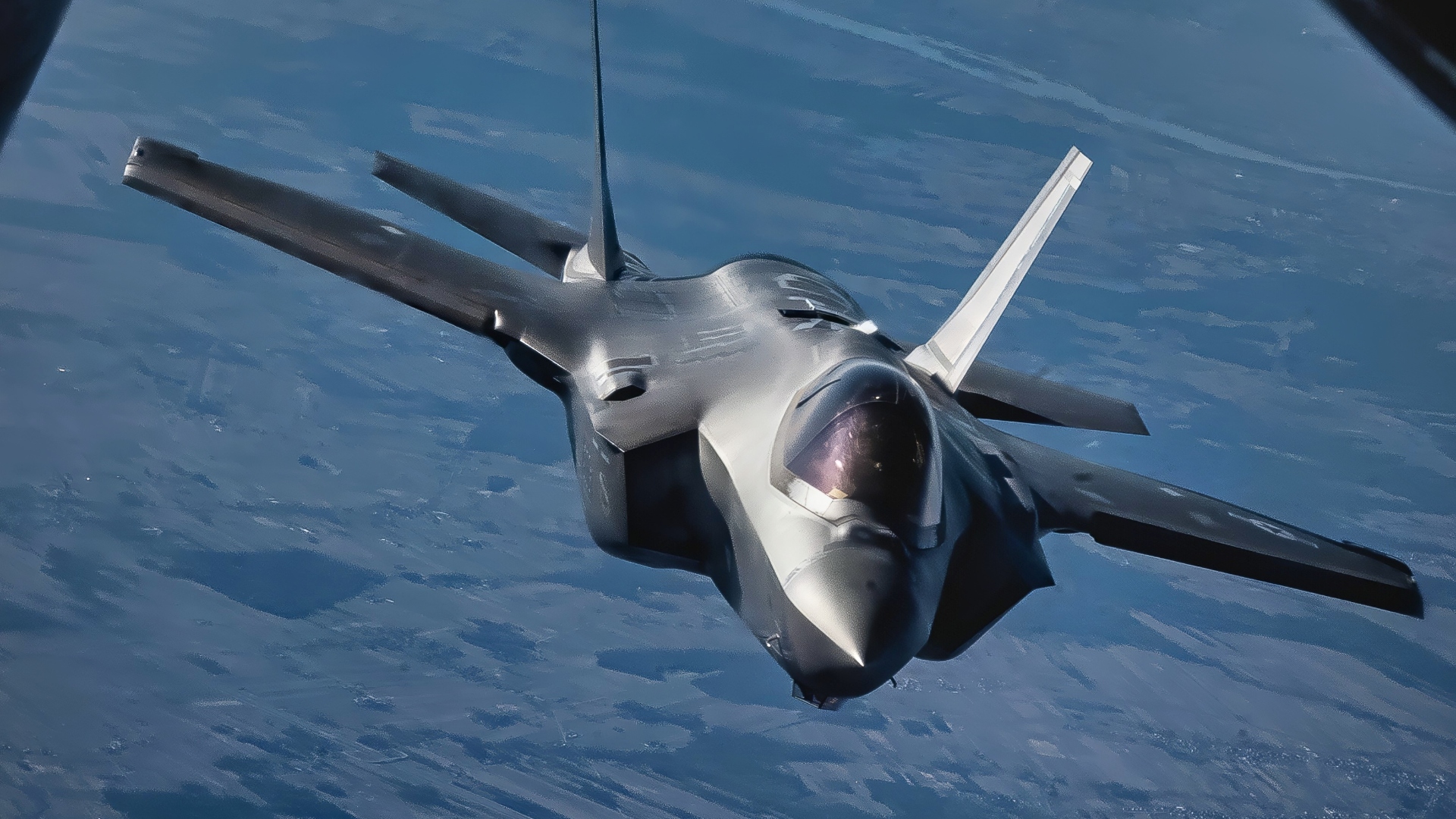
The 388th Fighter Wing’s F-35 Lightning II fifth-generation fighter cruises in Eastern European airspace, Feb. 28, 2022, in support of NATO’s collective defense. U.S. Air Forces in Europe – Air Forces Africa’s ability to support and integrate with NATO’s air policing missions continually hardens the alliance’s solidarity, collective resolve, and ability to adapt to a dynamic warfighting environment. (U.S. Air Force photo by Airman 1st Class Edgar Grimaldo)
The F-35 Joint Program Office reportedly stated that the Swiss had ordered eight aircraft as part of production Lot 19, which was awarded in September.
It referred inquiries for any further details to the Swiss Federal Office for Defence Procurement.
Reportedly, negotiations between Switzerland and the United States on the interpretation of this fixed-price agreement concluded in August 2025 without reaching an agreement.
Following this impasse, the Swiss began exploring alternative options, including reducing the total number of aircraft to be procured, renegotiating offset arrangements, and exploring supplementary sources of credit.
Switzerland has also sought to reduce program cost by using its own national companies that are part of the F-35 global supply chain. These companies are engaged primarily not on their own accord but because of the industrial offset obligations that are part of Switzerland’s F-35A procurement.
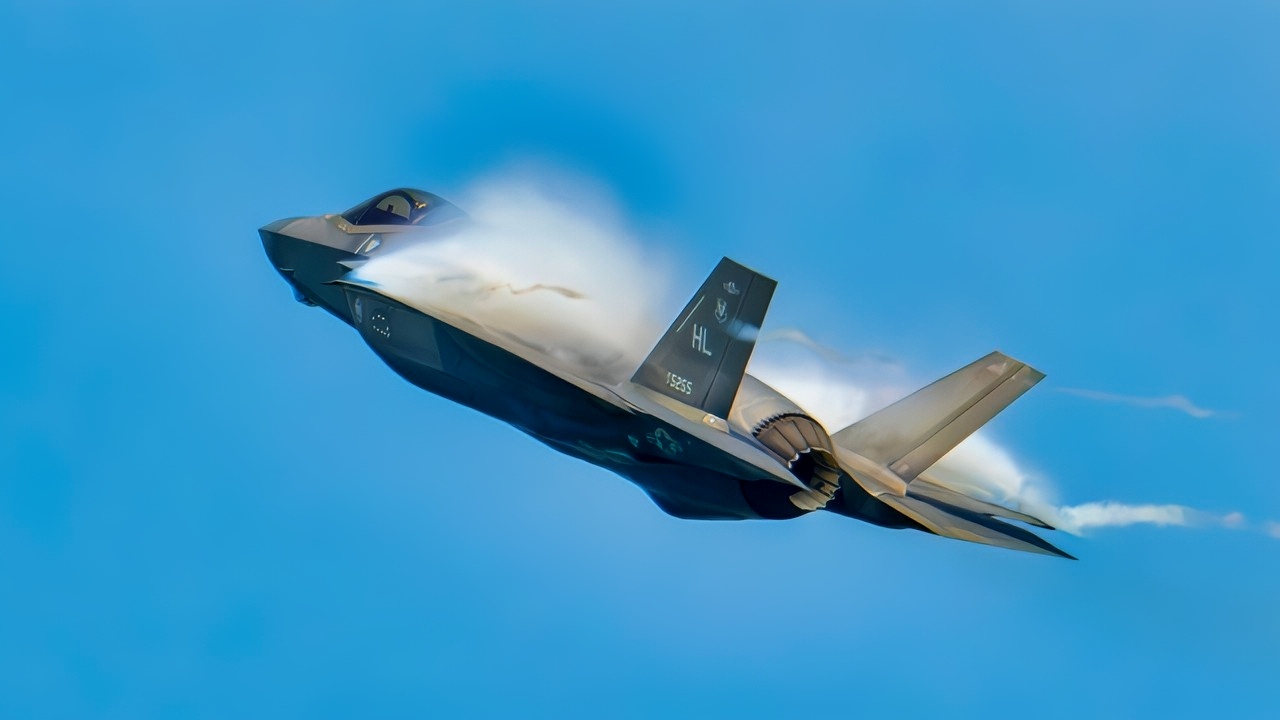
U.S. Air Force Maj. Melanie “Mach” Kluesner performs aerial maneuvers during a demonstration at the Oshkosh AirVenture Airshow in Wisconsin, on July 25, 2025. The demonstration highlights the team’s mission to showcase the precision, agility, and combat-relevant capabilities of the F‑35A Lightning II and the professionalism of its Airmen. (U.S. Air Force photo by Senior Airman Nicholas Rupiper)

A U.S. Air Force F-35A Lightning ll assigned to the 388th Fighter Wing, Hill Air Force Base, Utah, sits in a hangar at Lakeland Linder International Airport, Lakeland, Fla., following a aerobatic routine by the F-35A Lightning ll demonstration team at the Sun ‘n Fun Holiday Flying Festival, Dec. 4, 2020. The Lightning II is a stealth-capable, multi-role attack fighter designed to penetrate the most hostile areas of the world without the threat of detection. (U.S. Air Force photo by Staff Sgt. Codie Trimble)
By and large, these firms have not been long-established production partners in the aircraft’s core program. A prime example is the RIGI project, which received pre-approval only in June 2024.
This effort allows RUAG, the major Swiss defense industrial conglomerate, to assemble and test four Swiss F-35A aircraft in concert with technical support from Lockheed Martin.
About the Author: Reuben F. Johnson
Reuben F. Johnson has thirty-six years of experience analyzing and reporting on foreign weapons systems, defense technologies, and international arms export policy. Johnson is the Director of Research at the Casimir Pulaski Foundation. He is also a survivor of the Russian invasion of Ukraine in February 2022. He worked for years in the American defense industry as a foreign technology analyst and later as a consultant for the U.S. Department of Defense, the Departments of the Navy and Air Force, and the governments of the United Kingdom and Australia. In 2022-2023, he won two awards in a row for his defense reporting. He holds a bachelor’s degree from DePauw University and a master’s degree from Miami University in Ohio, specializing in Soviet and Russian studies. He lives in Warsaw.


