

U.S. Central Command said Saturday that two American service members were tragically killed in action in Jordan on Friday, July 17, and that one more is missing in action, as American and partner forces defended against Iranian ballistic missile and drone attacks. Four others were evacuated to Jordanian hospitals and have since been discharged. CENTCOM is withholding the names until twenty-four hours after the next of kin are notified. Axios reported that at least two Iranian ballistic missiles struck Muwaffaq Salti Air Base.
They are the first American deaths from Iranian fire since March, and they bring the U.S. combat toll in this war to sixteen.

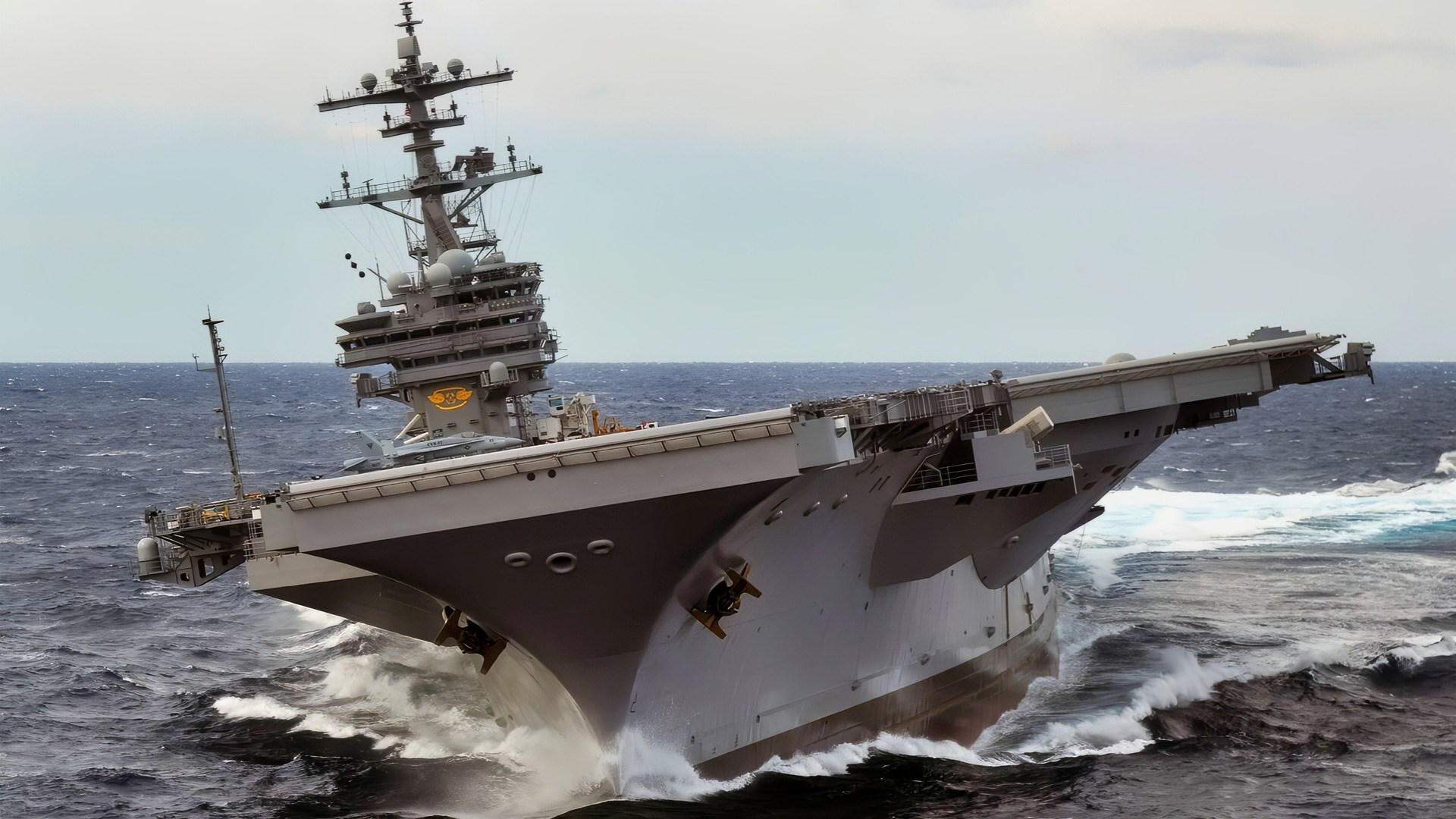
The Nimitz-class aircraft carrier USS Dwight D. Eisenhower conducts rudder turns during sea trials. Dwight D. Eisenhower completed a nine-month planned incremental availability at Norfolk Naval Ship Yard on June 10 and is scheduled to resume underway operations this summer.
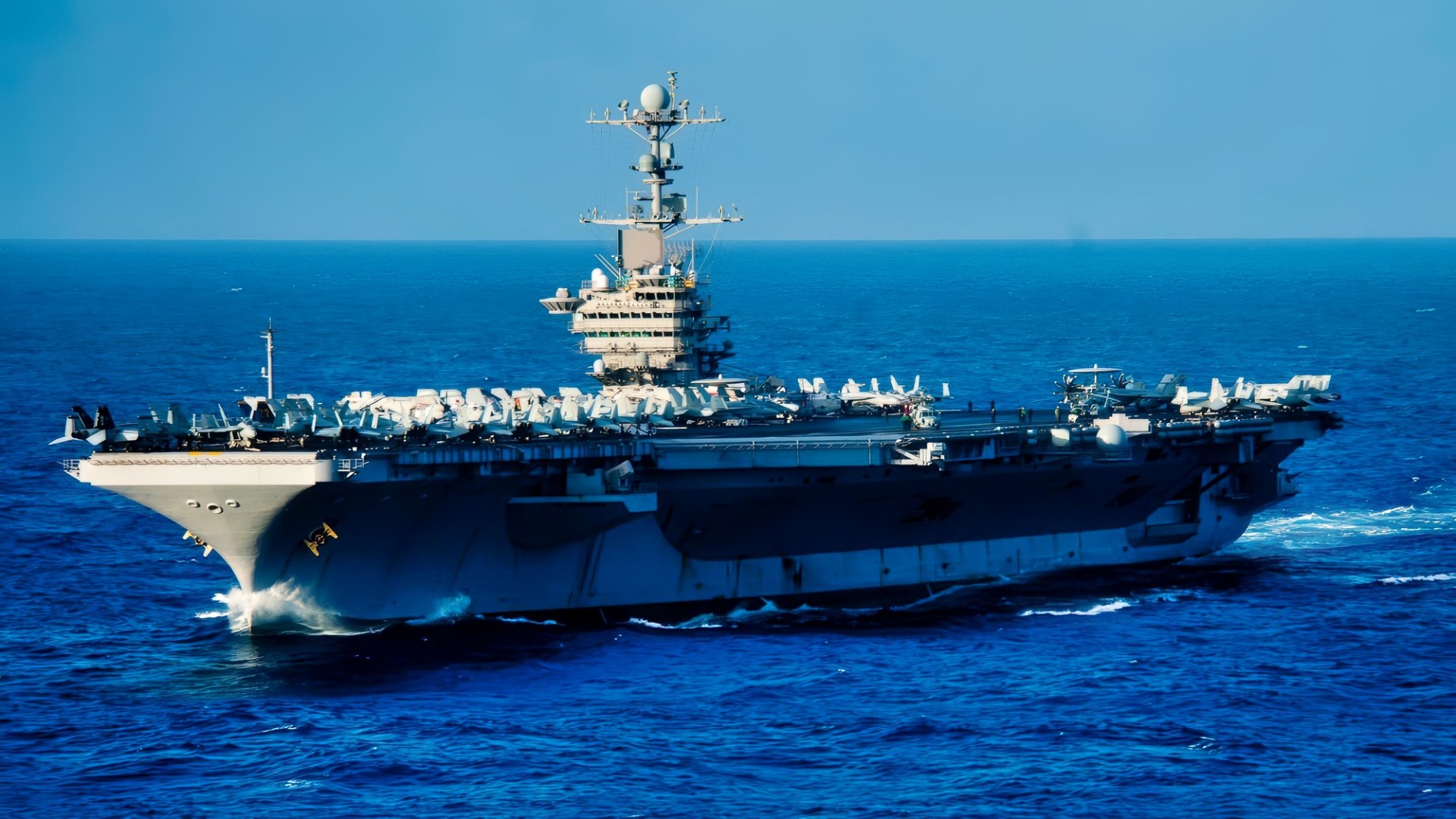
USS John C. Stennis Carrier. Image Credit: Creative Commons.
The response did not wait. Retaliatory strikes began at 6 p.m. Eastern on Saturday at the president’s direction, which CENTCOM said were intended to punish Iranian forces and degrade Iran’s ability to threaten commercial shipping in the Strait of Hormuz. Jordan said it intercepted ten Iranian missiles early Saturday without casualties. Iran’s supreme leader promised “unforgettable lessons” if American attacks continue.
The Line That Was Already Behind Us
Within hours, the coverage had settled on a frame: Iran has crossed President Trump’s red line, and all-out war follows.
That red line comes from the Wall Street Journal reporting that Trump told aides early last month he would end the ceasefire and return to war if Iran killed American troops. The wording is what matters. It was a condition for ending the ceasefire.
That ceasefire is gone. The memorandum of understanding collapsed this week. Iran’s deputy foreign minister said Saturday that Tehran is suspending its commitments under it, and Friday’s attack came after seven consecutive nights of American strikes on Iranian targets. Fourteen Americans had already tragically died in this war before Friday.
The threshold, in other words, describes a decision that events made days ago. What followed the deaths on Saturday evening was not the opening of a new war. It was the eighth night of an existing one.
What Happened the Last Time
There is a precedent, and it is unusually close.
On January 28, 2024, a drone launched by an Iran-backed militia struck Tower 22, a small American logistics outpost in northeastern Jordan near the Syrian border that housed roughly 350 personnel. Three U.S. soldiers were killed and dozens wounded. Washington treated it as a threshold moment, and Senator Lindsey Graham publicly urged strikes on targets of significance inside Iran itself.
That is not what the United States did. Five days later, it struck more than eighty-five targets in Iraq and Syria with over a hundred and twenty-five precision munitions, hitting facilities tied to the IRGC’s Quds Force and the militias it arms, and it reinforced Tower 22’s defenses. It did not strike Iran.
The differences deserve to be stated plainly rather than elided. Tower 22 was the target of a proxy attack that Tehran denied directing. CENTCOM attributes Friday’s attack to Iranian missiles and drones directly, and the two countries are already at war. The precedent is not a template.
But it is evidence about how this particular kind of threshold gets answered when someone has to choose the answer, and the answer was calibrated to avoid the war the rhetoric implied.
What Escalation Would Cost
The more useful question is what escalation is materially available.
The United States has fired more than a thousand Tomahawk cruise missiles in this war, the largest expenditure of that weapon in its history, drawn from an inventory that analysts estimate at roughly two to three thousand remaining. Air-launched standoff weapons and interceptor stocks have been drawn down alongside it, and the production line that replaces Tomahawks built fewer than a hundred a year before the war began.
The other constraint is the strait. Iran’s conventional forces have been wrecked, and its economy is reeling, and it still retains enough capability to keep commercial shipping away from the waterway that five months of bombing have not reopened.
None of that predicts what the administration will decide. It does suggest that the binding constraint on escalation here is material rather than rhetorical. “All-out war” implies a reserve of unused force waiting to be released, and what the last five months produced instead was a campaign fought at a rate the arsenal cannot sustain indefinitely, against an adversary whose principal leverage has survived it.
What changed on Friday was the tragic casualty list and the target list. The constraints that shaped the war before Friday, the magazine, the strait, and the absence of a military answer to either, look the same on Sunday as they did on Thursday.
About the Author: Harry J. Kazianis
Harry J. Kazianis (@Grecianformula) was the former Senior Director of National Security Affairs at the Center for the National Interest (CFTNI), a foreign policy think tank founded by Richard Nixon based in Washington, DC. Harry has over a decade of experience in think tanks and national security publishing. His ideas have been published in the NY Times, The Washington Post, The Wall Street Journal, CNN, and many other outlets worldwide. He has held positions at CSIS, the Heritage Foundation, the University of Nottingham, and several other institutions related to national security research and studies. He is the former Executive Editor of the National Interest and the Diplomat. He holds a Master’s degree focusing on international affairs from Harvard University.


