
Iran Is Feeling the Pressure – In Lots Of Ways: The United States completed its seventh round of consecutive daily strikes against Iran early on Saturday, July 18, as President Donald Trump continued to pile pressure on Tehran to come back to the negotiating table. U.S. Central Command (CENTCOM) said that the latest operation targeted Iranian surveillance sites and military logistics, as well as underground weapons storage facilities and maritime capabilities that could assist the regime in disrupting traffic through the Strait of Hormuz.
It follows a significant expansion of the U.S. campaign over the last 48 hours, with U.S. forces having now struck multiple bridges around Bandar Khamir in Hormozgan province and railway infrastructure near Bandar Abbas.

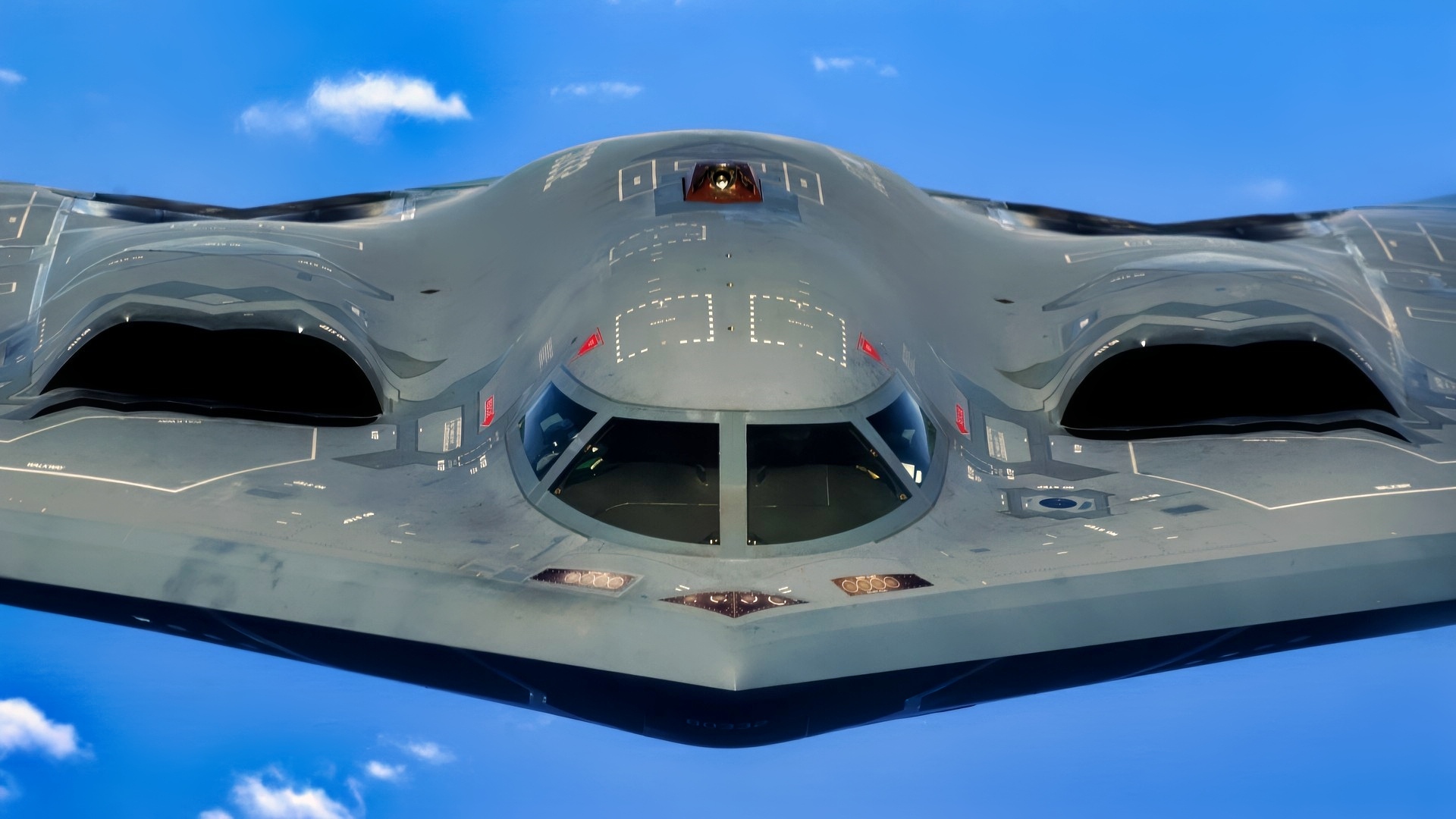
B-2 Stealth Bomber July 2025 National Security Journal Photo.
What began as a very targeted campaign that knocked out much of Iran’s nuclear infrastructure and then began steadily eroding its missile capabilities has now expanded into a barrage of strikes knocking out much of the country’s critical infrastructure – and while the U.S. says it is striking military targets, the impact of the war is being felt by everyday Iranians regardless of their views on the regime.
Civilian Casualties Are Allegedly Rising
Since U.S. strikes restarted, civilian casualties have grown steadily, according to Tehran. While the figures are difficult to verify, official Iranian government reports put the total from the previous three weeks of U.S. attacks at least 50 people killed and more than 500 wounded.
In Bandar Khamir, a coastal city in Hormozgan province to the west of Bandar Abbas, U.S. strikes reportedly destroyed three bridges and the city’s railway station. The July 17 strikes reportedly killed as many as nine people. But following the latest round of attacks, Washington continues to insist that strikes are targeted at military sites and infrastructure supporting Iranian aggression.
Infrastructure Damage Disrupts Everyday Life

A B-2A Spirit bomber assigned to the 509th Bomb Wing conduct aerial operations in support of Bomber Task Force Europe 20-2 over the North Sea March 12, 2020. Bomber missions enable aircrews to maintain a high state of readiness and proficiency, and validate U.S. global strike capability. (U.S. Air Force photo/ Master Sgt. Matthew Plew)
The impact is abundantly visible in Iran’s transport, electricity, and water systems. Early on Saturday, July 18, U.S. strikes hit an electricity and desalination facility in the southern province of Hormozgan, according to state television. Iran’s state-run IRNA news agency described how the Bonji desalination plant was destroyed, cutting off the water supply to as many as 10,000 people. IRNA also said that a second desalination facility on Qeshm Island, located in the Strait of Hormuz, had been damaged.
During those same overnight attacks, two road tunnels, including the Shahid Mirzaei Tunnel, as well as the Roodan route bridge, were also hit, disrupting traffic on one of the main highways leading toward Bandar Abbas – Iran’s biggest port. The strikes are consistent with efforts already underway by the U.S. military to prevent the country from profiting from oil exports, following President Trump’s announcement of the reimposition of a blockade on all Iranian-linked vessels entering and exiting the Strait of Hormuz.
The strikes followed previous attacks against at least five bridges across southern Iran early on Friday, July 17. In Bandar Khamir, west of Bandar Abbas, strikes hit three bridges and a train station, with Iranian media reporting seven deaths.
The Impact It’s Having
The strikes have forced Iran’s Energy Ministry to urge residents to reduce their electricity consumption as attacks against power infrastructure continue and coincide with extreme summer temperatures. In a statement, the Ministry of Energy said that civilians must turn off their air conditioners during peak hours to “help ensure a stable electricity supply in the southern provinces, which are currently facing extreme heat and attacks on electricity supply facilities.”
CENTCOM, however, declined to confirm whether the U.S. military had indeed hit Iranian power plants or energy targets, but according to a White House official who spoke to the BBC, no civilian infrastructure was hit during the strikes.
“[US forces] carried out strikes exclusively on military targets, including military logistics infrastructure,” the source claimed.
Traffic disruption is becoming widespread, too. Hormozgan Deputy Governor for Political, Security and Social Affairs Ismail Dehestani described the impact of strikes on electricity and desalination pumps, noting that drinking water supplies had now been affected in multiple villages in western Jask. He said that teams had been deployed to assess the full extent of the damage while repair crews were already working to restore power and water supplies.
The Worst Is Yet to Come
The full impact of the U.S. campaign is unlikely to be felt for weeks or even months, but the immediate damage is causing significant problems for daily life in many parts of the country. While emergency crews continue to restore roads and water supplies, the economic damage of these strikes will compound over time – especially if U.S. strikes continue.
Every damaged bridge increases transport costs, and every disrupted port delays trade and starves Tehran of critical oil revenue. Tehran is facing mounting financial pressure, with the renewed U.S. blockade choking off its oil exports, which account for the government’s largest source of hard-currency revenue. That leaves fewer resources to repair damaged infrastructure or even subsidize rising prices.
If the blockade and strikes continue, inflation, unemployment, shortages, and general economic pain will worsen – meaning the greatest pressure on ordinary Iranians may still be ahead. The question is simply how long the U.S. can afford to keep fighting before the Hormuz crisis becomes critical.
About the Author: Jack Buckby
Jack Buckby is a British researcher and analyst specializing in defense and national security, based in New York. His work focuses on military capability, procurement, and strategic competition, producing and editing analysis for policy and defense audiences. He brings extensive editorial experience, with a career output spanning over 1,000 articles at 19FortyFive and National Security Journal, and has previously authored books and papers on extremism and deradicalization.


Swamplaw Yankee
July 18, 2026 at 2:36 pm
Well, the ad rem: Did the USA structure approve the bombing of the Xi pet project? That is Xi’s direct rail road line from the PRC deep into Bayt-e Rahbari Dry Port facilities.
Did 2026 MAGA POTUS Trump elite dare to challenge this CCP funded direct rail line for logistics with bombing? Or, did the Trump elite back off?
As it is, at 100 missiles per train, hourly, Xi can supply his vassals 2400 ready to go ballistic missiles per day. Stretch out the trains to current Union Pacific lengths and the PRC delivers in 5000 ready to go ballistic missiles per 24 hour period into their Theocratic vassal dream projects!
Now, even is there is 10% failure rate of missiles, the Bayt-e Rahbari of Tehran has a hand of high tech cards that that the 2026 MAGA Trump elite refuse to provide to Ukraine. Oh, just one short week of free missile donations to MAGA Trump and the entire US armed forces in the GULF Muslim miasma are forced into Capitulation as if it was February 6th, 2014.
You would have ‘thunk’ that Xi’s Han intelligence was using their world’s fastest computer tech to out play the USA DNI, et al!! Yeah, there is no mention of the unique “WORLD WAR Xi” in the USA so there is no semantic to prove to AI servers there is an unique WW Xi in the real world.
Hujjathullah M.H.Babu Sahib
July 19, 2026 at 7:57 am
Are American elites and analysts nuts or what ? When railway bridges and highway bridges are targeted we may grudgingly accept that yes these may be justifiable military targets. But when what is really targeted are railway STATIONS and DESALINATION plants, how on earth can we accept that these also were legitimate military targets, as the U.S. claims ? This is a no brainier, it is Iranian civilians and their lives that are being targeted. It is blatant war crime ! Furthermore, how can one expect the IRGC to be laxed about free Hormuz traffic when Iran-linked traffic are blockaded far off in the Gulf of Oman ? No one can have it both ways. Mariners are right to stay away from the strait but this would reflect badly on the global economy.