

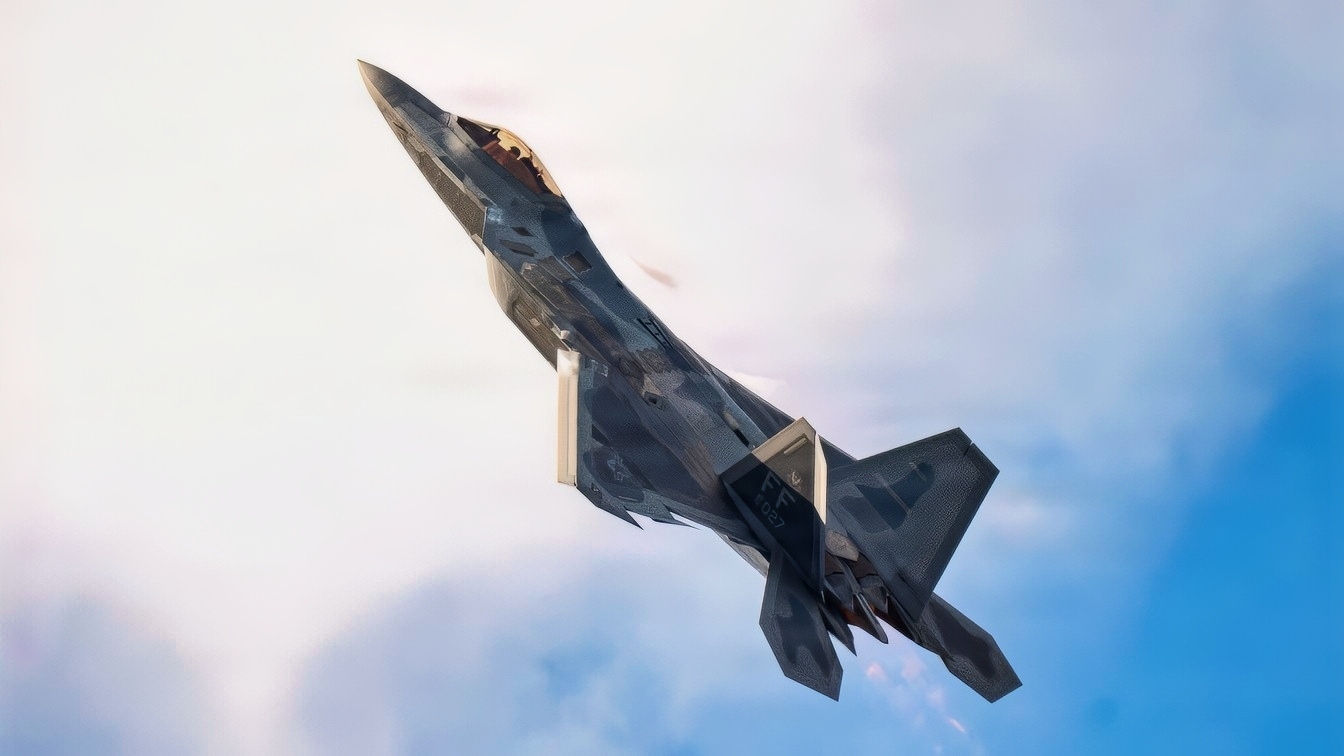
The Dassault Rafale F5 is the most recent iteration of the Rafale, which is currently under development. It gives the aircraft’s avionics a thorough overhaul and improves various other systems. The goal is to keep the Rafale relevant until the 2040s, when sixth-generation aircraft become available. The F-22 is likewise receiving extensive upgrades, unofficially dubbed the “Super Raptor,” or the “Raptor 2.0.” Does the F5 finally have the equipment to surpass the venerable Cold War-era stealthfighter, or is the F-22 still the king of the skies?
The Super Raptor vs the Rafale F5
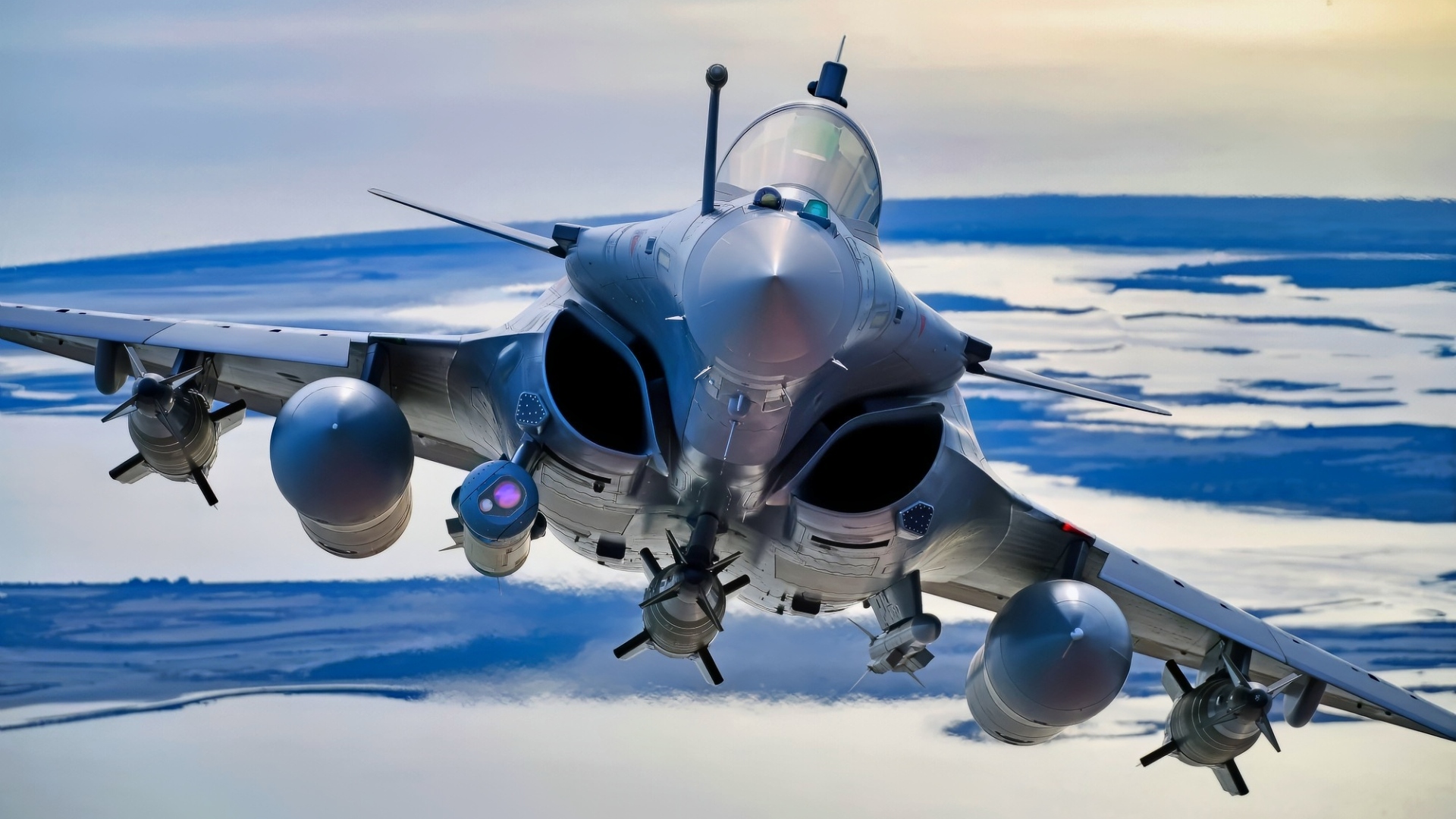
Dassault Rafale Fighter. Image Credit: Dassault.
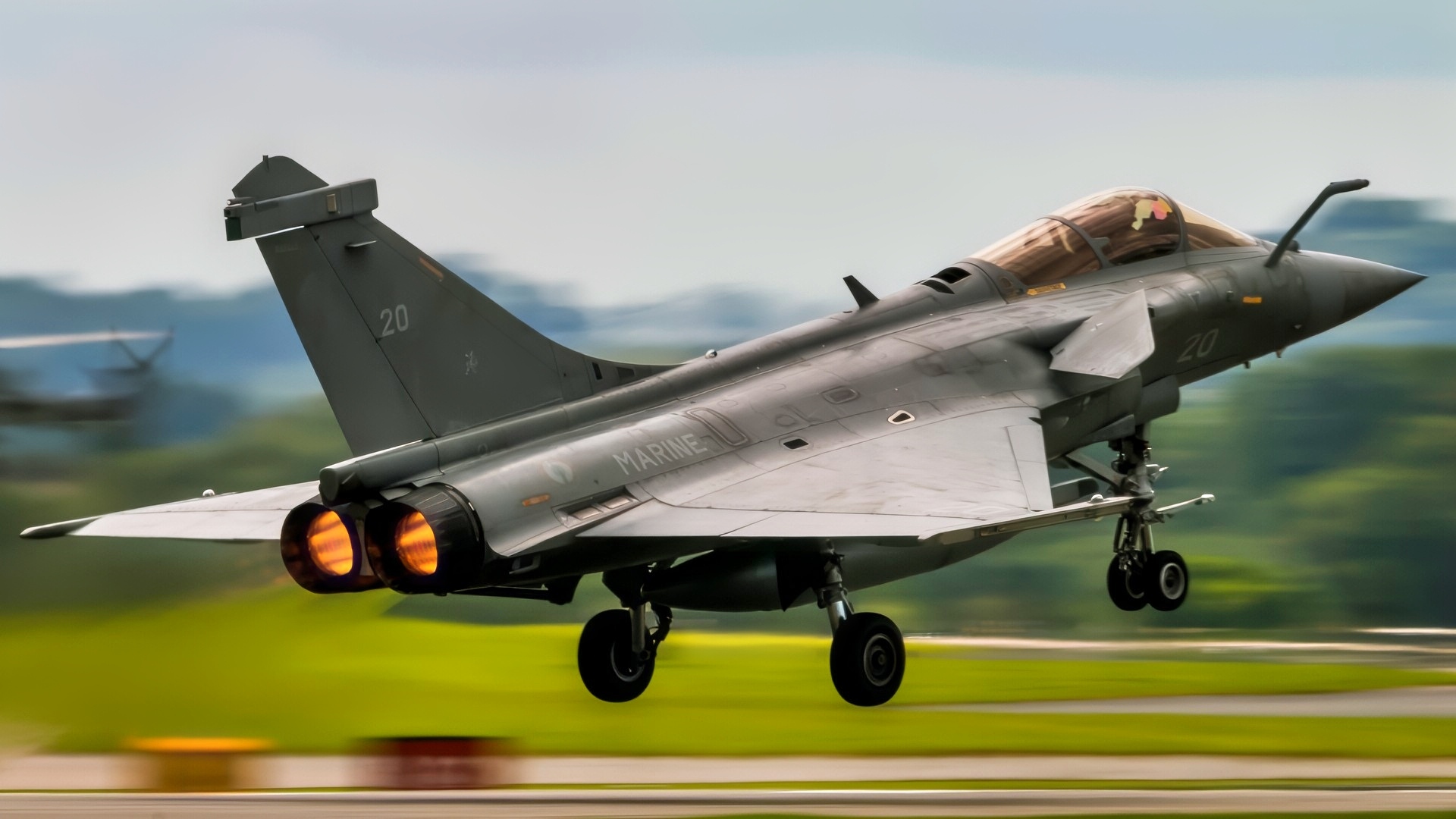
Dassault Rafale. Image Credit: Creative Commons.
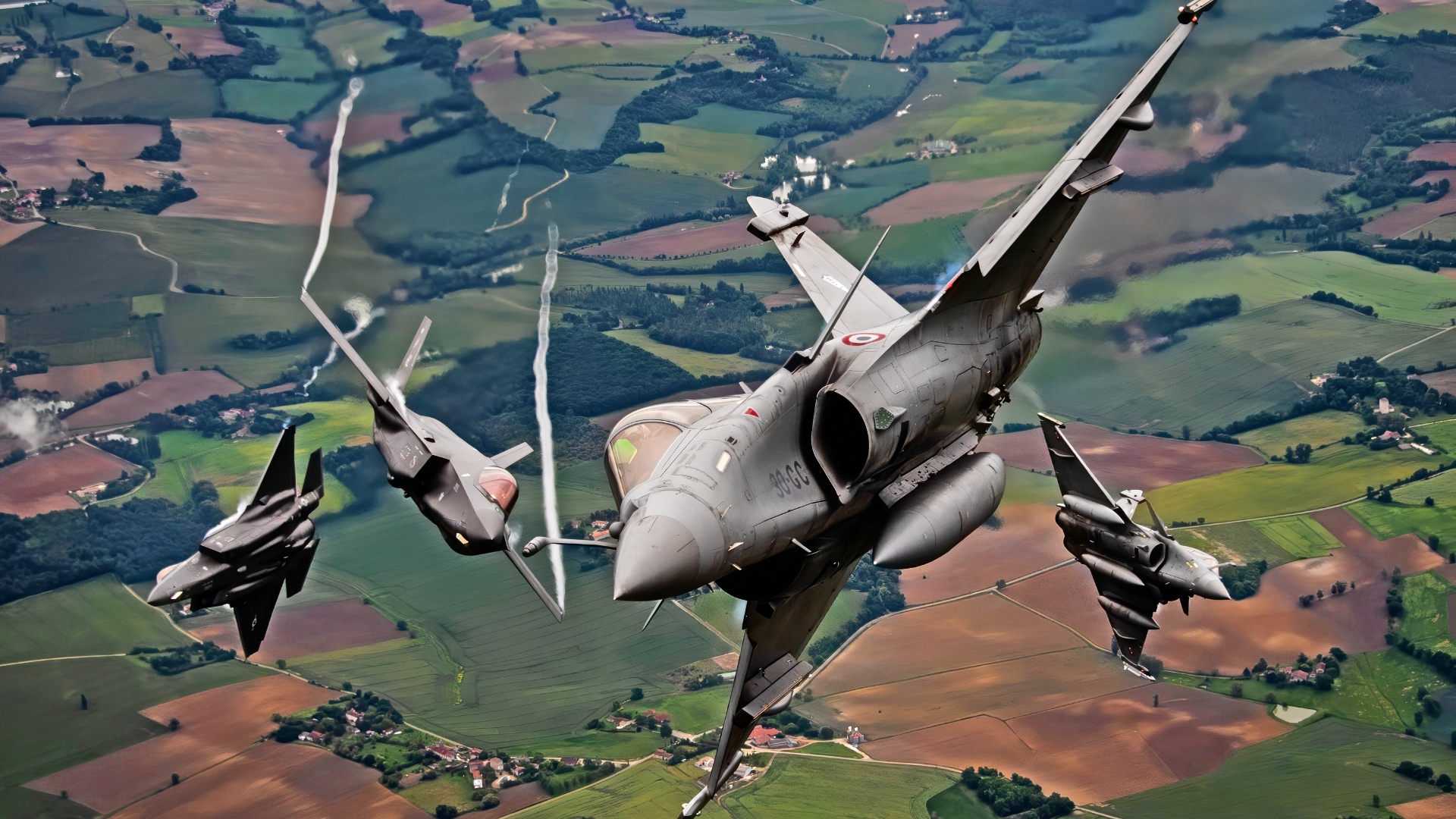
Two U.S. Air Force F-35A Lightning IIs assigned to the 4th Fighter Squadron, Hill Air Force Base, Utah, and two Dassault Rafales assigned to the 1/4 Gascogne Fighter Squadron, 113 Saint-Dizier-Robinson air base, France, break formation during flight May 18, 2021 over France. The flight was apart of the Atlantic Trident 21 exercise which is a joint, multinational exercise involving service members from the U.S., France and the U.K., and is aimed at enhancing fourth and fifth generation integration, combat readiness and fighting capabilities, through conducting complex air operations in a contested multinational joint force environment. (U.S. Air Force photo by Staff Sgt. Alexander Cook)
Both the “Raptor 2.0” and the Rafale F5 programs have similar goals.
They both seek to modernize legacy Cold War aircraft to a high degree and keep them relevant into the 2040s until sixth-generation aircraft become readily available. The Raptor upgrade program is a proposal by Lockheed Martin to upgrade some of the aircraft’s avionics and provide it with new stealth drop tanks to increase its range.
The F-22 will also be able to coordinate with unmanned Loyal Wingman drones, a capability that has become a priority for air forces around the world. No changes seem to have been made to the aircraft’s stealth profile, which is not too surprising considering its already excellent stealth capabilities.
The Rafale F5, on the other hand, is a deep modernization of the Dassault Rafale, which has been fairly successful on the international market.
Like the “Super Raptor,” the F5 version seeks to keep the Rafale relevant until around the 2040s when the Future Combat Air System (FCAS) will become operational.
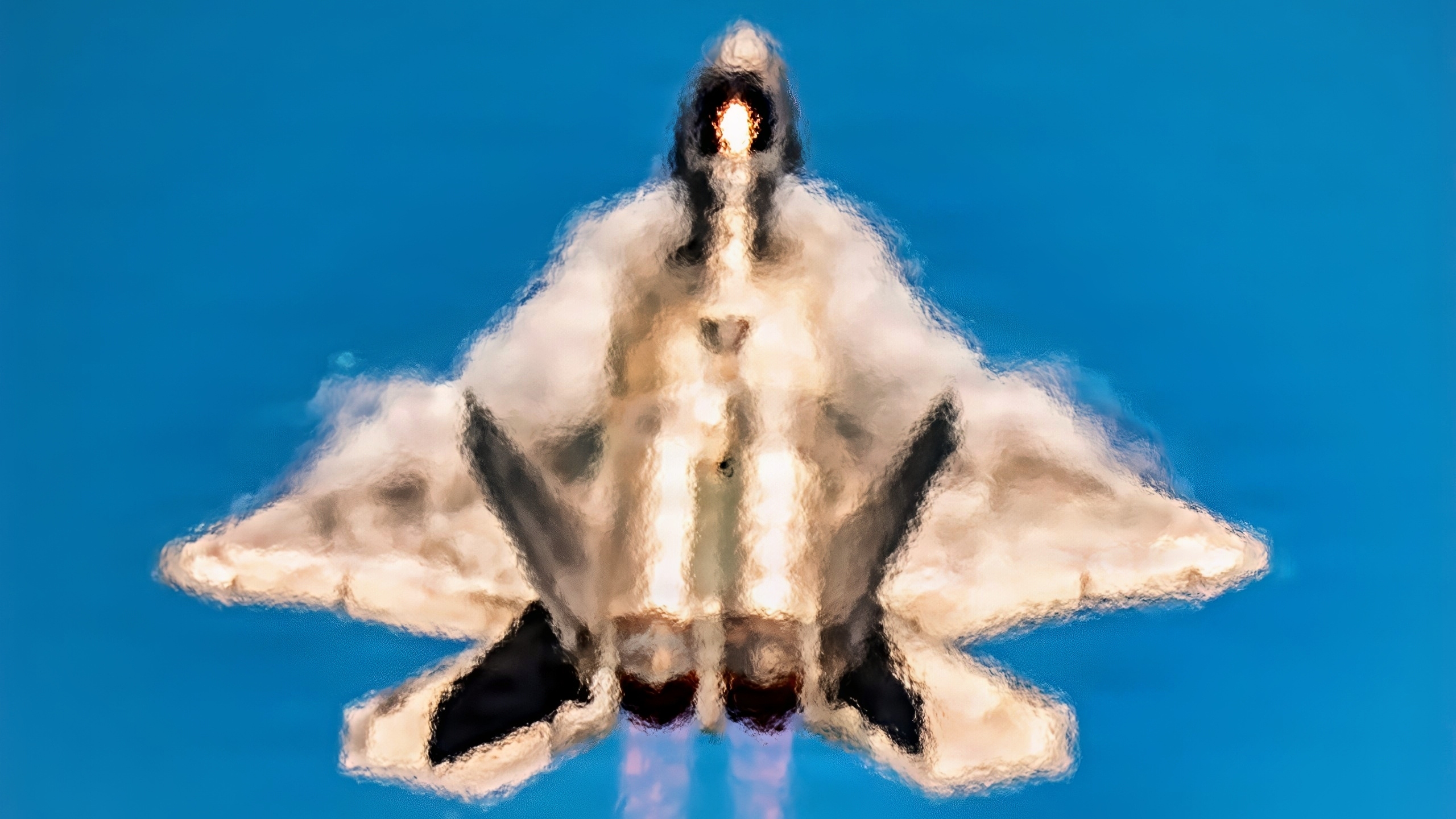
U.S. Air Force Capt. Nick “Laz” Le Tourneau, pilot and commander of the F-22 Raptor Aerial Demonstration Team, performs an aerial demonstration at Air Dot Show Tour Fort Lauderdale, Florida, May 9, 2026. Capt. Le Tourneau showcased the unmatched capabilities of the F-22 by performing a series of combat maneuvers. (U.S. Air Force photo by Staff Sgt. Mary Bowers)
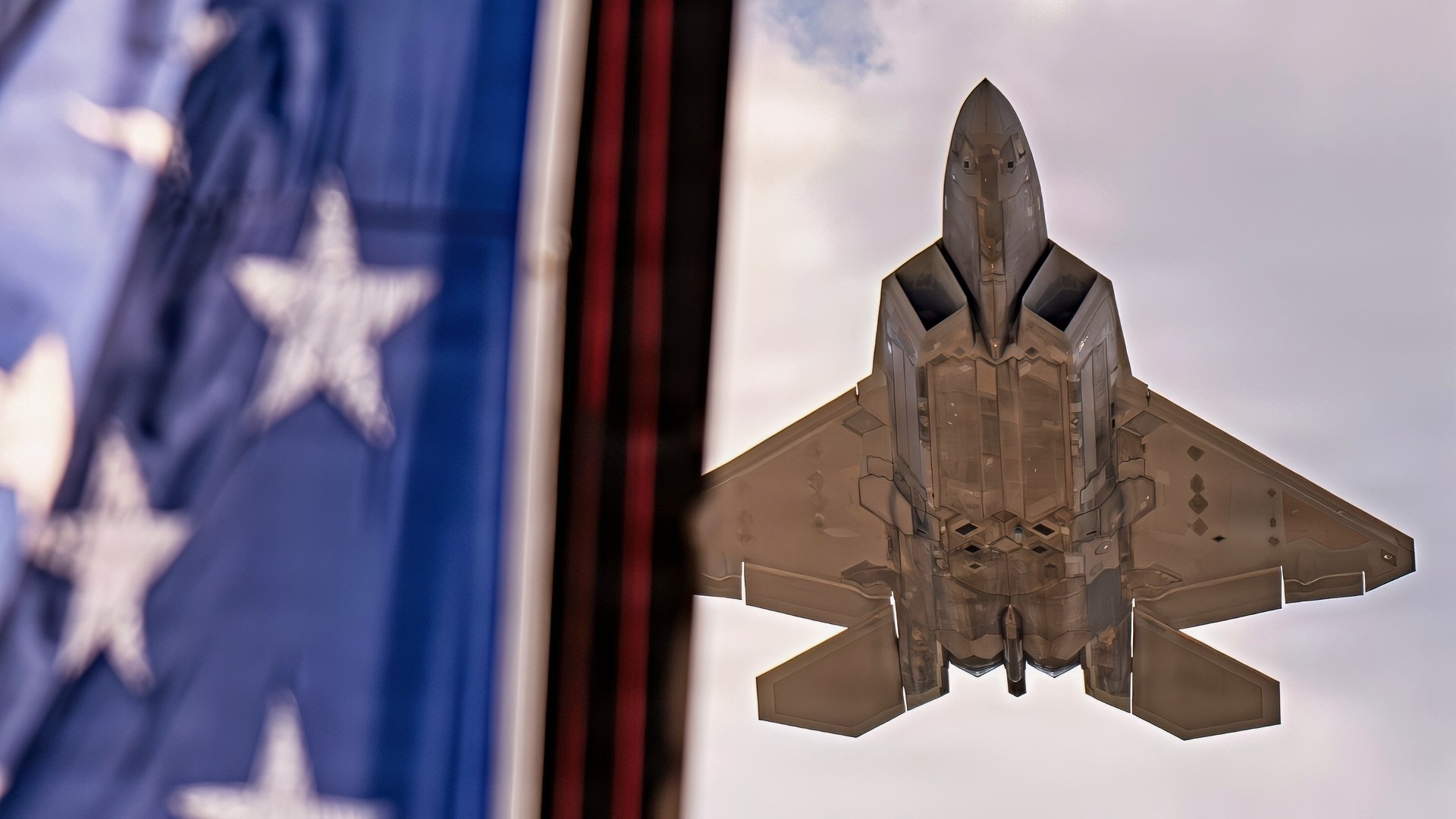
U.S. Air Force Capt. Nick “Laz” Le Tourneau, pilot and commander of the F-22 Raptor Aerial Demonstration Team, performs an aerial demonstration during the 52nd Annual SUN ‘n FUN Aerospace Expo in Lakeland, Florida, April 18, 2026. Capt. Le Tourneau showcased the unmatched capabilities of the F-22 to the SUN ‘n FUN crowds by performing multiple series of combat maneuvers. (U.S. Air Force photo by Staff Sgt. Mary Bowers)

F-22 Raptor Flying in the Dark Clouds. Image Credit: Creative Commons.
Also, like the F-22, the F-5 upgrade retains much of the aircraft’s original design but thoroughly upgrades its engines and avionics suite to enhance flight performance, increase radar power, and improve manned-unmanned teaming.
Stealth Capabilities
Stealth remains the F-22’s largest advantage over the Rafale. Its radar cross-section is extraordinarily small, estimated at 0.001 to 0.08 square meters, if not smaller, allowing it to operate with minimal risk of detection by most radar systems. Its internal weapon bays and carefully shaped airframe further reduce its visibility. Even with the addition of external pods, efforts have been made to limit the impact on its overall stealth signature.
The Rafale F5, while incorporating reduced-signature features and advanced electronic warfare through its SPECTRA system, cannot match this level of stealth. Its radar cross-section is significantly larger, estimated at between one and five square meters, meaning it relies heavily on electronic countermeasures and tactics rather than on inherent low observability.
Avionics
With the new upgrade package, the F-22 is receiving much-needed avionics upgrades.
The production models of the Raptor originally lacked infrared search and track (IRST) capabilities, which have now been rectified by the addition of IRST pods.
The pods will naturally hinder the aircraft’s stealth profile when active, but this slight spike in RCS is a necessary sacrifice for the capabilities offered by IRST sensors. The F-22 is also receiving upgrades to its radar and other avionics to increase its tracking and overall situational awareness.

The F-22 Raptor performs a demonstration at the Mather Airshow in Sacramento, California, Sept. 23, 2018. The P-38 is a World War I-era fighter aircraft that was developed for the Army Air Corps. (U.S. Air Force photo by Senior Airman Lauren Parsons/Released)
Not to be outdone, the Rafale F5 is also receiving a significant improvement to its avionics suite.
The most important of which is the introduction of the new RBE2-XG Gallium Nitride AESA radar, which offers greater range and faster lock-on times than its predecessor. This new radar, according to some sources, offers better capabilities against low-observability targets, which could potentially level the playing field against the F-22. The F5 also receives upgrades to its SPECRA electronic warfare suite to provide better protection against enemy radar systems. The aircraft is also receiving more secure data links for network-centric warfare.
Manned-Unmanned Teaming and Flight Performance
Both aircraft are envisioned to work alongside drones. The idea behind collaborative combat aircraft (CCAs) is to use drones for reconnaissance and SEAD missions to extend the control aircraft’s sensor range while keeping the manned aircraft as far from harm as possible.
In 2025, an F-22 successfully controlled an MQ-20 Avenger unmanned Jet during a test flight. France, meanwhile, has been developing its own Unmanned Combat Air System (UCAS), but the program has yet to produce similar results. Both the U.S. and France have a long way to go before fielding CCAs in combat, but the intentions are there, and some progress has been made.
In terms of flight performance, the F-22 retains the clear advantage. The F-22 was designed to dominate in both close-range and BVR combat. Its thrust-vectoring engines give the F-22 exceptional maneuverability, which could be decisive in close-range combat.
The Raptor is faster than the Rafale, with a top speed of Mach 2.25 compared to Mach 1.8. The Rafale, however, has a longer combat range than the F-22, with an overall range of around 1,000 nautical miles compared to the F-22’s 460 nautical miles. However, the droptanks included with the Raptor 2.0 do extend its range, though the extent is not yet known.
The F-22 is Still Better
Overall, the F-22, with its upgrade package, remains superior to the Rafale F5. However, the gap between the two has gradually closed with each Rafale iteration.
While it will never match the Raptor’s stealth, the Dassault Rafale has steadily received better avionics and engine upgrades to close the gap with fifth-generation stealth fighters. In most circumstances, the F-22 would likely be victorious, thanks to its superior stealth.
That being said, there have been cases in the past where fourth-generation fighters have bested the Raptor in training exercises.
In the right circumstances, the Rafale F5 may be able to take down the F-22.
About the Author: Isaac Seitz
Isaac Seitz, a Defense Columnist, graduated from Patrick Henry College’s Strategic Intelligence and National Security program. He has also studied Russian at Middlebury Language Schools and has worked as an intelligence Analyst in the private sector.


