

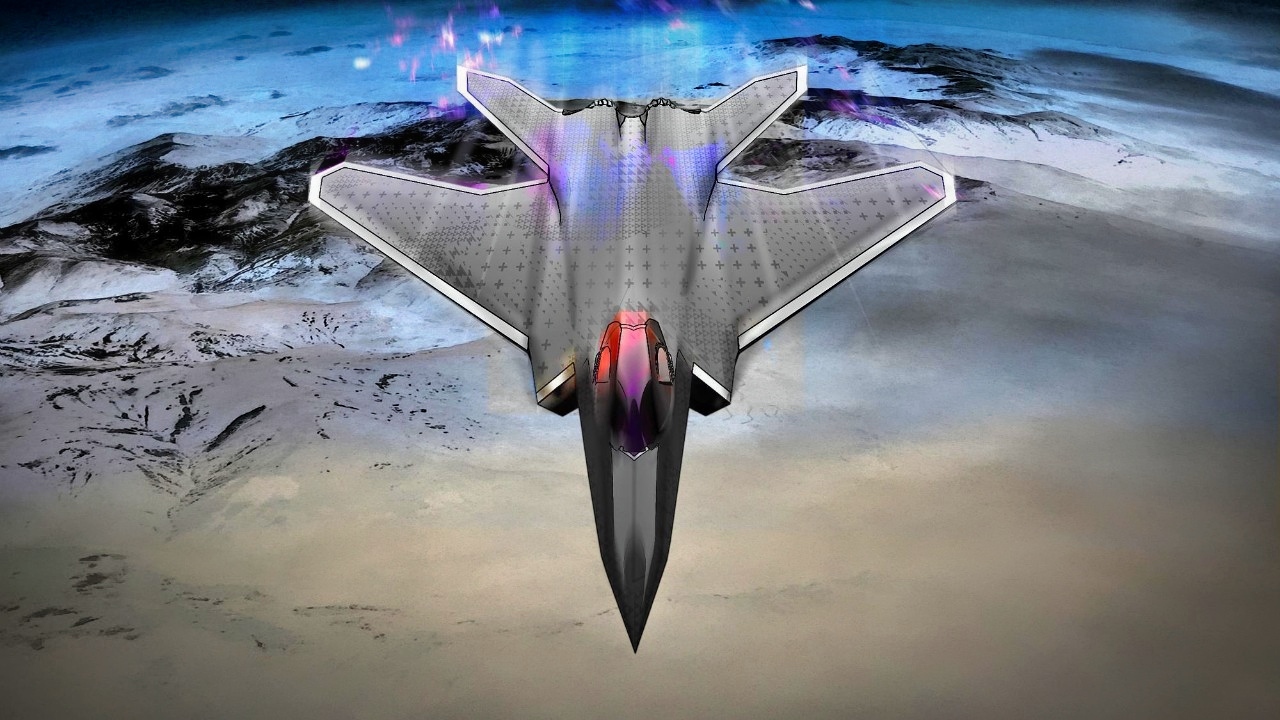
Summary and Key Points: The multinational Future Combat Air System (FCAS) project is nearing cancellation as a deep Franco-German split over industrial “best athlete” leadership dooms the 6th-generation fighter.
-German Chancellor Friedrich Merz is reportedly now open to pursuing entry into the rival Global Combat Air Programme (GCAP) and exploring a partnership with the United Kingdom, Italy, and Japan.
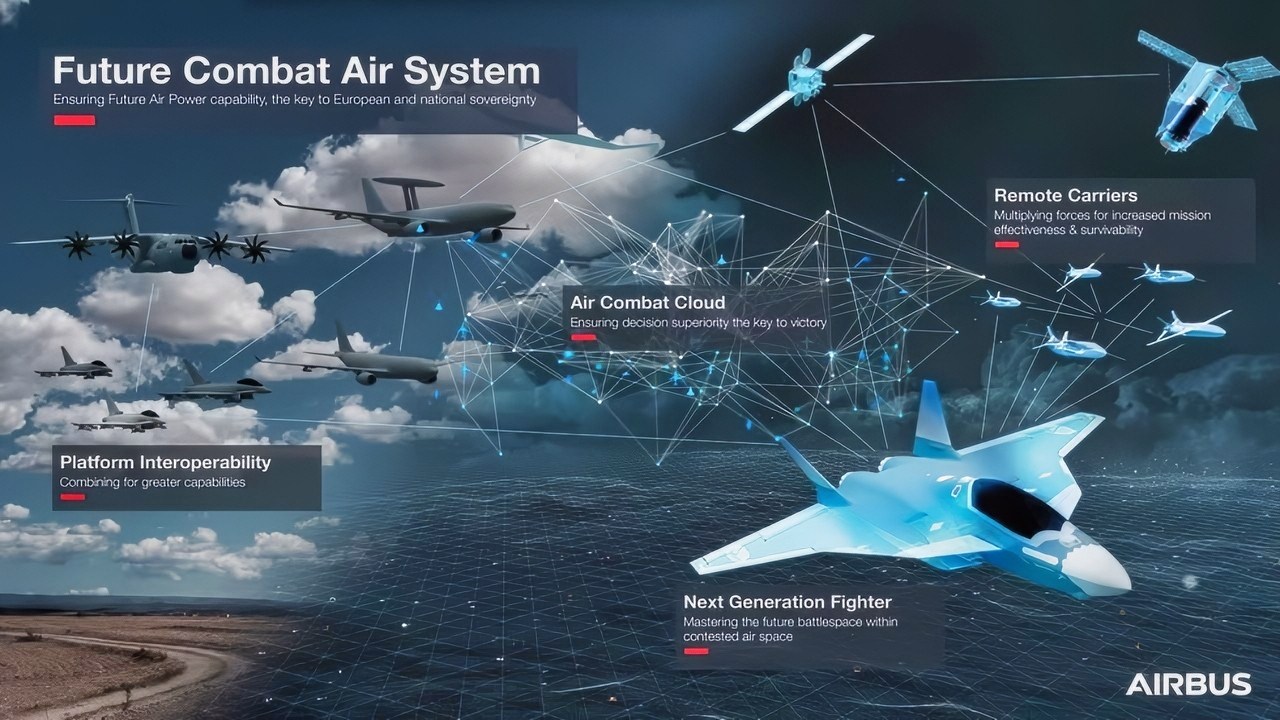
FCAS Graphic. AIRBUS Handout.
-While France’s Dassault refuses to cede technical control to Airbus, Berlin is distancing itself from Paris to secure a viable successor for its Eurofighter fleet.
-This shift could leave France to develop a sovereign fighter alone as Europe’s premier stealth collaboration collapses under conflicting national interests.
“FCAS is Dead”: Why the Franco-German Industrial Dispute Tanked the Stealth Jet
With the multinational Future Combat Air System (FCAS) project facing cancellation, Berlin is eager to join a different next-generation fighter effort, reportedly seeking entry into the trinational Global Combat Air Programme.
Franco-German Split
The FCAS project aimed at developing a European-built and designed sixth-generation fighter for the project’s three members, France, Spain, and Germany, and the FCAS fighter would have augmented, then eventually replaced those countries’ fourth-generation fighters: the Eurofighter Typhoons flown by Spain and Germany, as well as France’s Rafale jets, built by Dassault. But disagreement within the FCAS project has seemingly doomed the initiative.
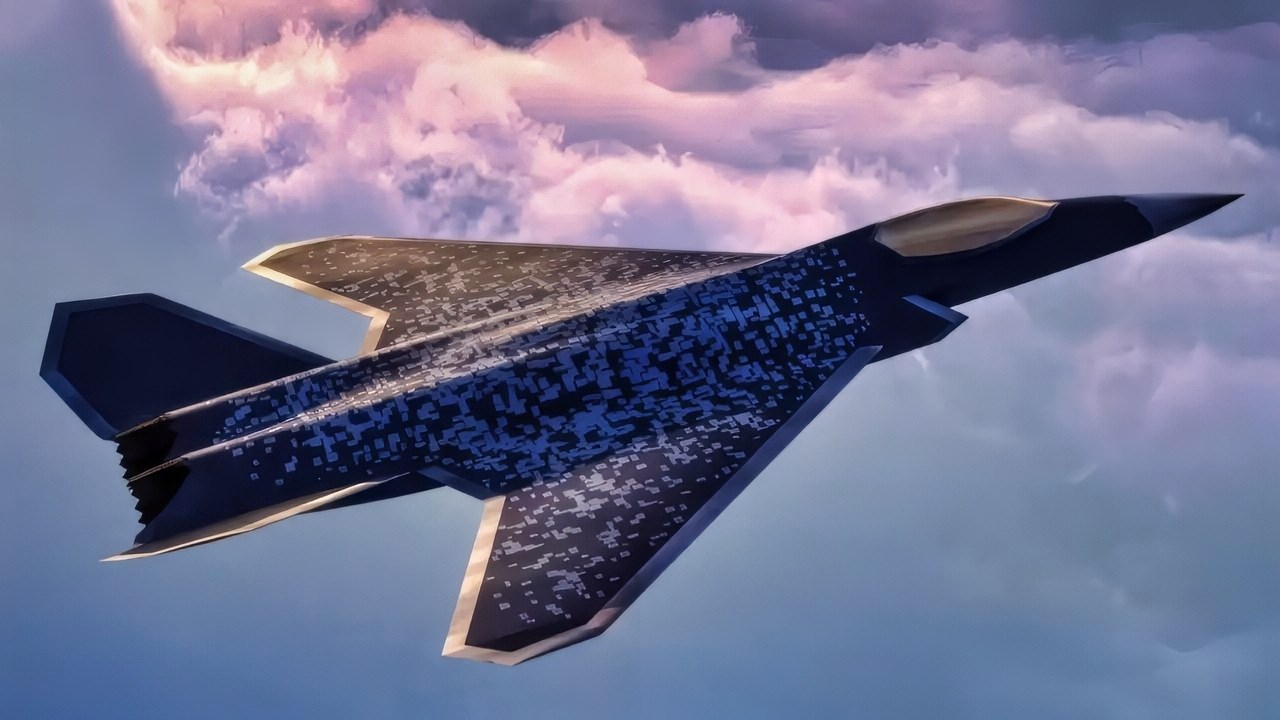
FCAS Artist Photo Creation. Image Credit: Creative Commons.
There were multiple points of friction within the project. But the core of disagreement stemmed from divisions of labor within the project. Conversations between the German defense ministry and Airbus, the aerospace firm that oversees Berlin’s area of responsibility within FCAS, shed some light on the kerfuffle.
“The conversations laid bare Berlin’s discontent with what officials see as a push by French industry for an outsized role in the program,” POLITICO reported earlier this year. “That attitude has pushed the Germans to weigh fallback options, including moving ahead without France. The company was told that the German government is exploring potential closer cooperation with Sweden or the U.K., or going it alone with Spain.”
Origin Story on FCAS Stealth Fighter
The FCAS project began in earnest in 2017, when the then-Chancellor of Germany, Angela Merkel, and French President Emmanuel Macron agreed in principle to move forward with it jointly. Spain would join the project two years later.
But Madrid’s entry into the project reportedly made FCAS more complex, Reuters reported late last year, citing French sources familiar with the project. But German project insiders also told Reuters that the French wanted to take the reins of the FCAS project by withholding the “most interesting work” from French firms and shunting off more mundane aspects of FCAS to Spain and Germany.
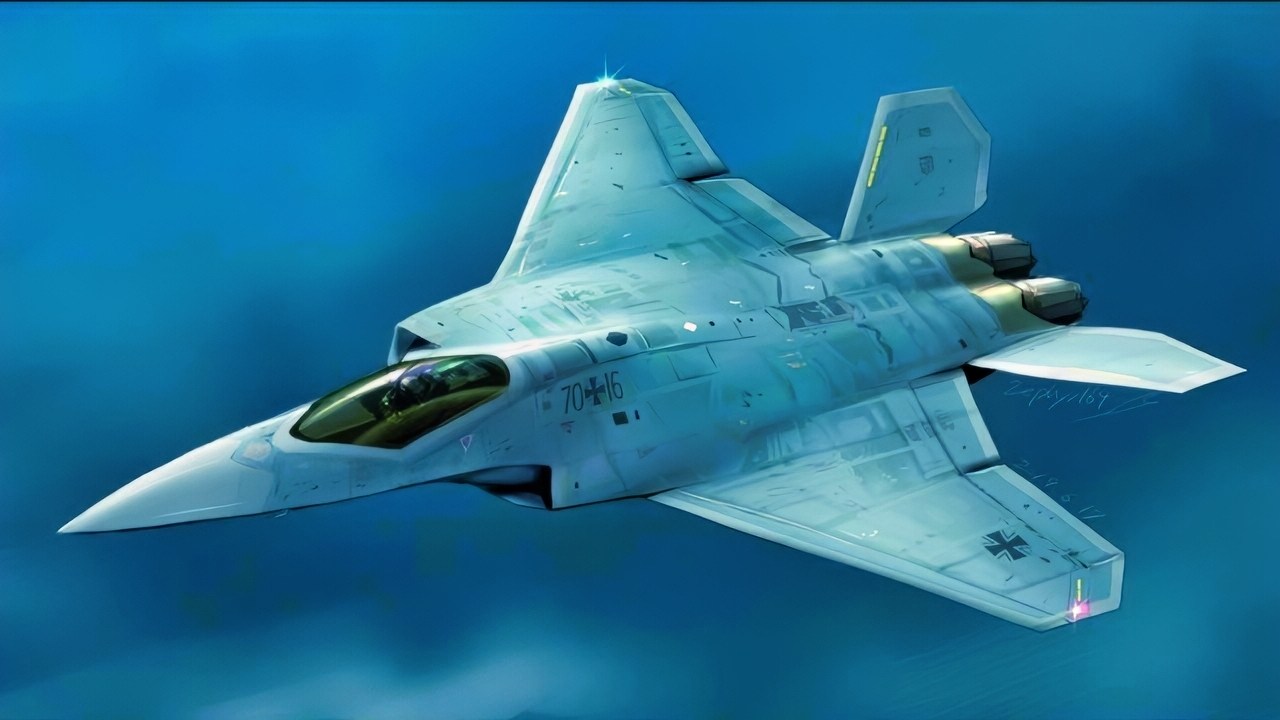
FCAS Photo Artist Image. Image Credit: Creative Commons.
Though Europe does not have a shortage of aerospace firms, many of which are world-leading, the continent does have a conspicuous dearth of experience building a stealthy fighter from the ground up. And with national defense budgets in Europe, small fractions of the defense dollars available to American firms, combining forces with other countries was hoped to be one way to diffuse costs and boost expertise.
But France did not waver in their desire to lead the project. Dassault Systèmes CEO Éric Trappier told Reuters that “the Germans can complain, but here we know how to do this. If they want to act on their own, let them do so.”
“We are totally open to cooperation including with the Germans, but we are just asking for one small thing: give us the capacity to drive the programme,” Trappier added. But “I won’t accept that three of us are sitting around the table deciding all the technical aspects of developing a high-level aircraft. I want it to be the ‘best athlete’ who decides. That doesn’t mean we run everything, far from it.”
But disagreements proved to be insurmountable. “I won’t accept that three of us are sitting round the table deciding all the technical aspects of developing a high-level aircraft,” Trappier added. “I want it to be the ‘best athlete’ who decides. That doesn’t mean we run everything, far from it.”

FCAS Fighter Mock Up. Image Credit: Creative Commons.
FCAS Looks Terminal
Irrespective of who was to blame for FCAS’s demise, the project’s failure appears to be final. “An announcement that [the project] is over is more likely than a relaunch,” one French official explained to POLITICO Europe. That sentiment was echoed by a French lawmaker familiar with Paris’ defense policy. “FCAS is dead, everyone knows it, but no one wants to say it,” the individual said.
Global Combat Air Programme (CCAP) Rising?
But the breakdown of the Future Combat Air System may be a boon for the rival Global Combat Air Programme, should there be an opening for Germany to join the United Kingdom, Italy, and Japan. During an official visit to Italy in January, German Chancellor Friedrich Mertz reportedly raised the idea with his Italian counterpart, Italy’s Prime Minister Georgia Meloni. Though Merz’s queries were not received negatively, it is unclear if Berlin’s entreaties have fallen on fertile ground.
Although Germany would bring more cash to the multinational GCAP program, a fourth project partner could introduce additional operational requirements, potentially increasing GCAP’s complexity.
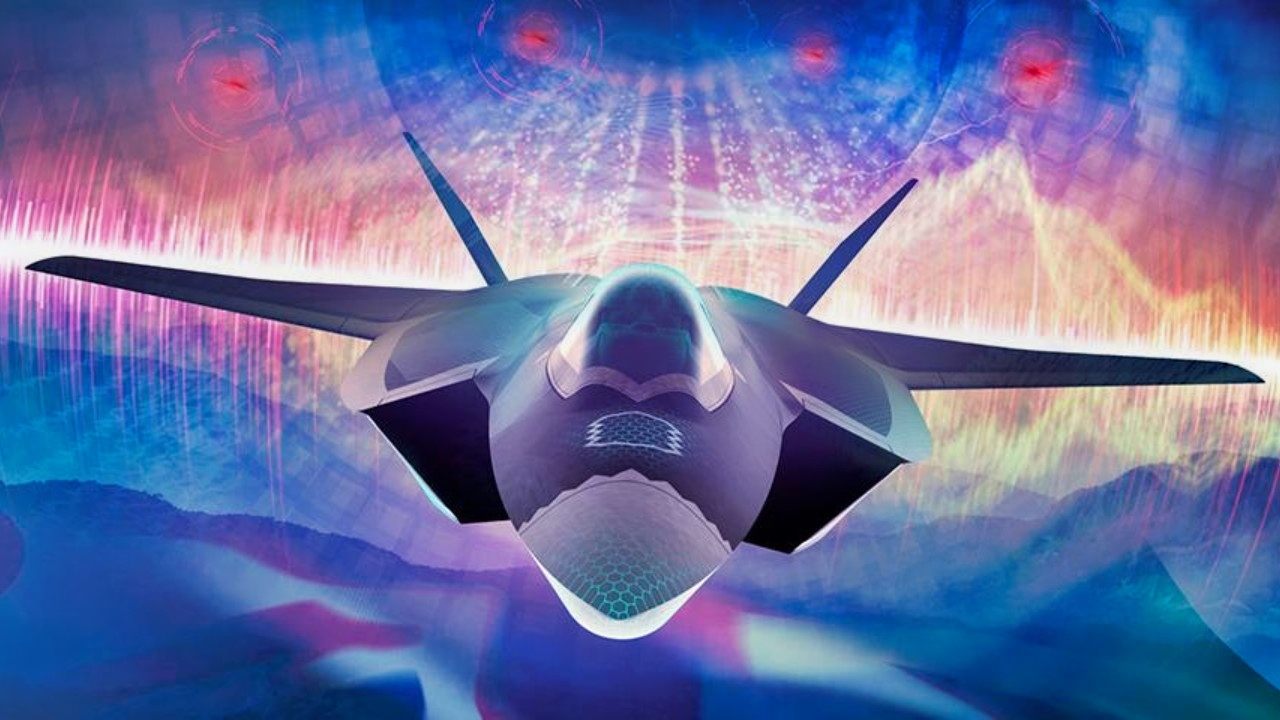
GCAP Fighter. Image Credit: Creative Commons.

GCAP 6th Generation Fighter.
Saudi Arabia reportedly expressed interest in joining GCAP as well, but Japan did not appear keen to accept Riyadh into the club. A point of contention was Saudi Arabia’s relatively warm relations with Russia and China, the latter having become rhetorically antagonistic following Japan’s new, hawkish Prime Minister, Sanae Takaichi’s decisive victory in snap elections.
Onward and Upward?
It will be some time before a decision on Germany and GCAP is finalized, and the Future Combat Air System is not yet doomed — that project may live on in a truncated, software-only form. But with the French seemingly unwilling to compromise on FCAS, Paris may, in the end, develop their own French-only fighter.
About the Author: Caleb Larson
Caleb Larson is an American multiformat journalist based in Berlin, Germany. His work covers the intersection of conflict and society, focusing on American foreign policy and European security. He has reported from Germany, Russia, and the United States. Most recently, he covered the war in Ukraine, reporting extensively on the war’s shifting battle lines from Donbas and writing on the war’s civilian and humanitarian toll. Previously, he worked as a Defense Reporter for POLITICO Europe. You can follow his latest work on X.


your uncle bob
February 18, 2026 at 11:00 pm
The FCAS is redundant.
France already has the rafale, which in a super souped-up form, would easily wipe the floor with the FCAS.
If I were macron (whose days in office are strictly numbered), I would direct the French military establishment to develop and deploy the french VORTEX spaceplane.
VORTEX is expected to fly in 2028, and could be the forerunner of a rafale-type spacefighter, one that would finish off recalcitrants like trump or Putin or xi jinping.
geh-geh
February 19, 2026 at 2:08 am
GCAP is potentially another dead duckie duck, or soon-to-be dead fowl.
How could several different companies on opposite ends of the planet get together to design and produce a sixth-grn fighter.
By flying their experts across Russian or chinese airspace.
Or posting their plans onto cyberspace. Would invite spies and espionage galore.
Recall the 1921 sempill mission. It invited stealthy espionage activities to occur in the UK for years and years.
Down with the GCAP !
Matthew Hatton
February 19, 2026 at 5:45 pm
FCAS has already failed but is a country MILE behind the Brit led CCAP, which has already won the race in any case!
A “Super Rafale” – basically a warmed over barely 5th gen aircraft in terms of airframe will NOT cut the mustard in combat capability terms let alone in 2 decades from now!
I’d bet Dassault & France will be out of the combat aircraft business within 25 years.
But we won’t lose any sleep over that here.
Will be interesting to see if Germany join GCAP (high ranking Luftwaffe official said in interview years ago that Luftwaffe wans GCAP but is unfortunately politically chained to an aircraft it doesn’t want or need——FCAS
BAE Systems have already clearly stated if they do join they (Germany) will NOT be allowed to slow the project or change the d as ready fixed specifications!—-nor will they be permitted to hold back hugely valuable GCAP export opportunities!