
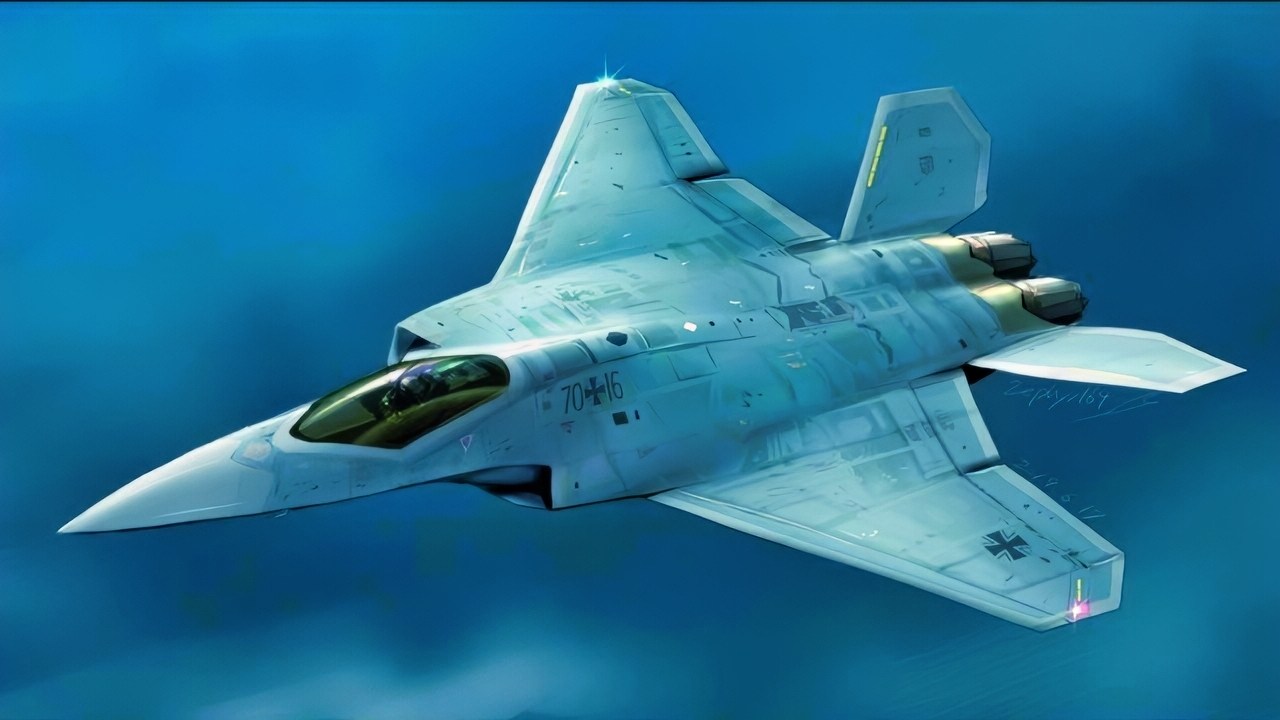
Key Points and Summary – Europe’s flagship Future Combat Air System is at a breaking point. Conceived as a €100 billion, sixth-generation fighter, drone swarm, and combat cloud, FCAS is now likely to be gutted, with France and Germany considering dropping the New Generation Fighter entirely.
-Years of industrial infighting between Dassault and Airbus over leadership, IP, and workshare have eroded trust and stalled progress ahead of a year-end go/no-go decision.
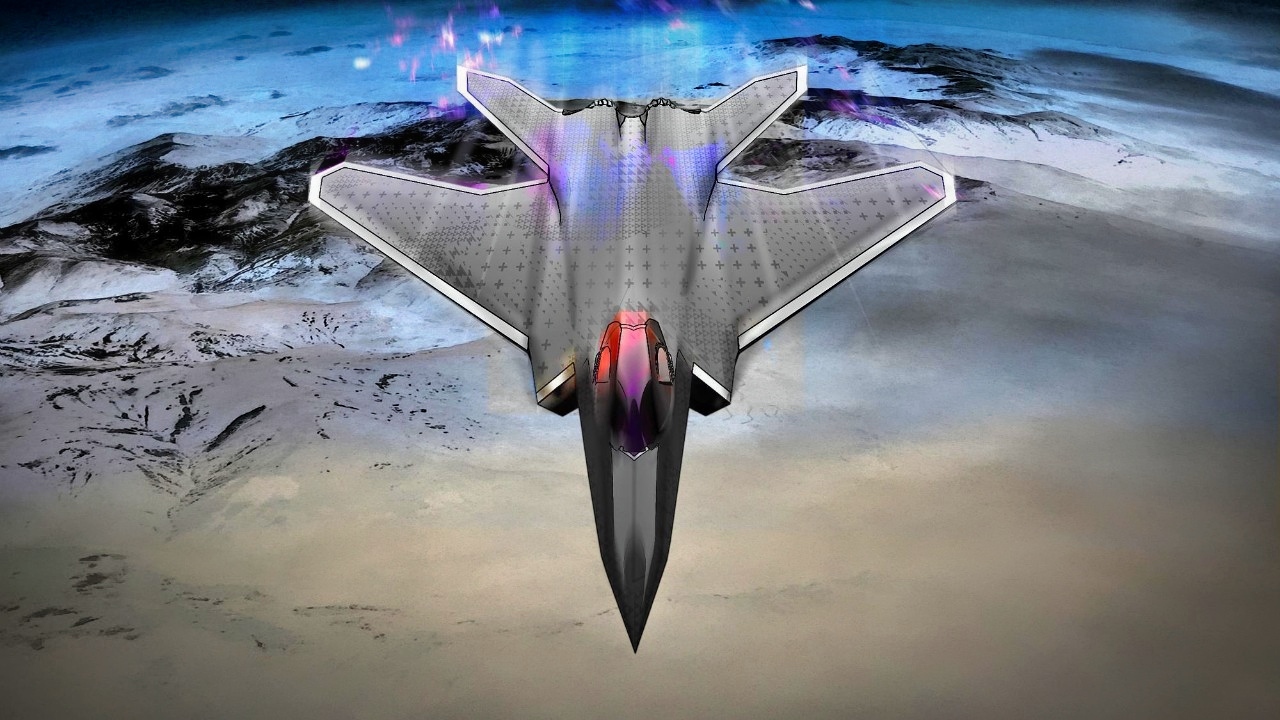
FCAS Fighter from Dassault. Image Credit: Dassault.

FCAS Fighter Mock Up. Image Credit: Creative Commons.
-The most probable outcome is a scaled-back program focused on a shared combat cloud, leaving Europe more dependent on U.S. platforms and freeing Paris to pursue its own next-gen fighter path.
Europe’s FCAS Fighter In 1 Word: Gutted?
Europe’s most ambitious defence program is facing its most profound crisis yet, and could find itself on the chopping block.
After years of delays, infighting, and stalled industrial negotiations, senior officials in Berlin and Paris are openly discussing whether the Future Combat Air System (FCAS) – the €100 billion plan to develop and field a sixth-generation fighter jet and a suite of connected drones – can continue in its current form.
What was once envisioned as the cornerstone of Europe’s next-generation airpower – and a solution to increasing dependence on American systems – is now at risk of collapsing into a scaled-down command-and-control project, with the fighter jet component potentially abandoned altogether.
A report by the Financial Times this week revealed how France and Germany are looking to downsize the project, quoting officials from both countries who said that dropping plans to build the new fighter would allow the project to instead focus on developing new combat cloud control systems that would connect existing fighter jets and their pilots to sensors, drones, radars, and other command systems.
The news comes ahead of a year-end deadline set by German Chancellor Friedrich Merz and French President Emmanuel Macron to decide whether FCAS can move into its second phase. That second stage requires the partners to approve work on a New Generation Fighter (NGF) demonstrator – a decision that has been delayed repeatedly since the program was launched in 2018. But officials in both governments now acknowledge that negotiations between France’s Dassault Aviation and Germany’s Airbus Defence have broken down so thoroughly that the jet itself may no longer be salvageable.
Deep Tensions Undermine Europe’s Next-Gen Hopes
FCAS was conceived as a solution to Europe’s fractured defense market and American dominance in the fighter jet space.
The idea was to build a shared fighter platform, a networked swarm of drones, and a combat cloud designed to connect all of those platforms.
For Europe, it was also meant to demonstrate that collaboration among major defense powers was possible without leaning on the United States.
But from the beginning, the project relied on the full cooperation of two countries with diverging strategic priorities and cultures. France, for example, has long insisted on full strategic autonomy, a self-contained industrial supply chain, and freedom to make decisions about exports.
Germany, however, has long prioritized shared control and integration with NATO systems. And there, in part, lies the problem.
Those divisions have also extended into the industrial sphere. Dassault and Airbus have spent years arguing over leadership roles within the project, intellectual property rights, the division of labor, and supplier selection.
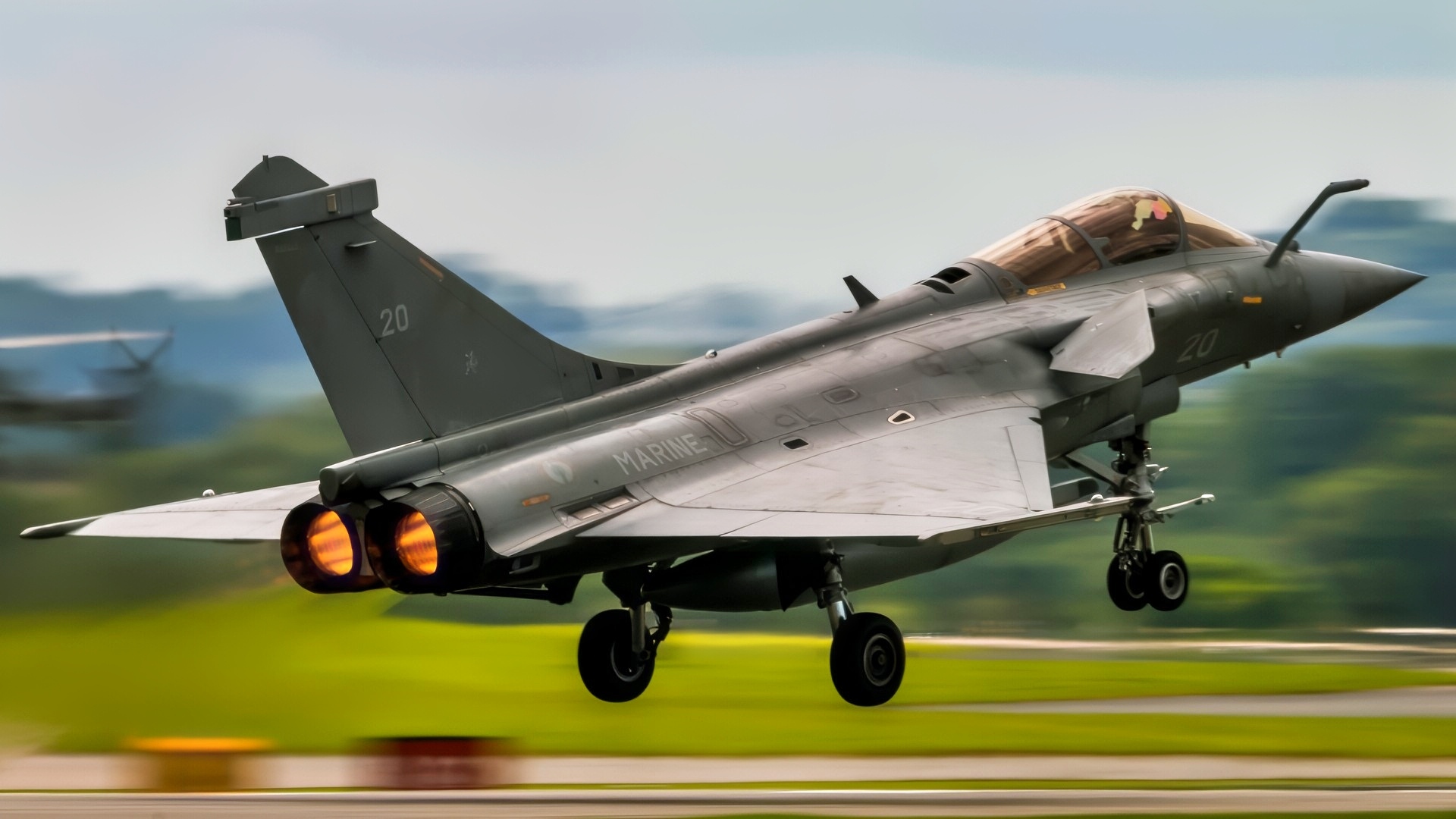
Dassault Rafale. Image Credit: Creative Commons.
At multiple points over the years, Berlin has accused Dassault of deliberately blocking progress by demanding excessive control over the jet’s core design. Dassault, however, has denied claims of seeking an 80% workshare, insisting on clear industrial leadership to guide the fighter project’s vision and direction.
By late 2025, senior officials in both France and Germany will have openly acknowledged what industry insiders have been saying for years: the partnership is not built on mutual trust. It is, therefore, on an unstable footing.
A New, Scaled-Back Future?
Reports this week revealed the extent of the plans to downsize the program by removing the fighter jet component entirely and instead relying only on the development of a combat cloud – a command-and-control network designed to connect a multitude of different aircraft, drones, radars, sensors, and naval and ground systems.
If that comes to pass, it would mean dissolving the core of FCAS and completely changing the vision of Europe’s future security. The fighter, after all, was not a side feature of the FCAS project. It was central. Without it, the program becomes a software-centered project that, while still valuable, is no longer the fully transformational system originally envisioned.
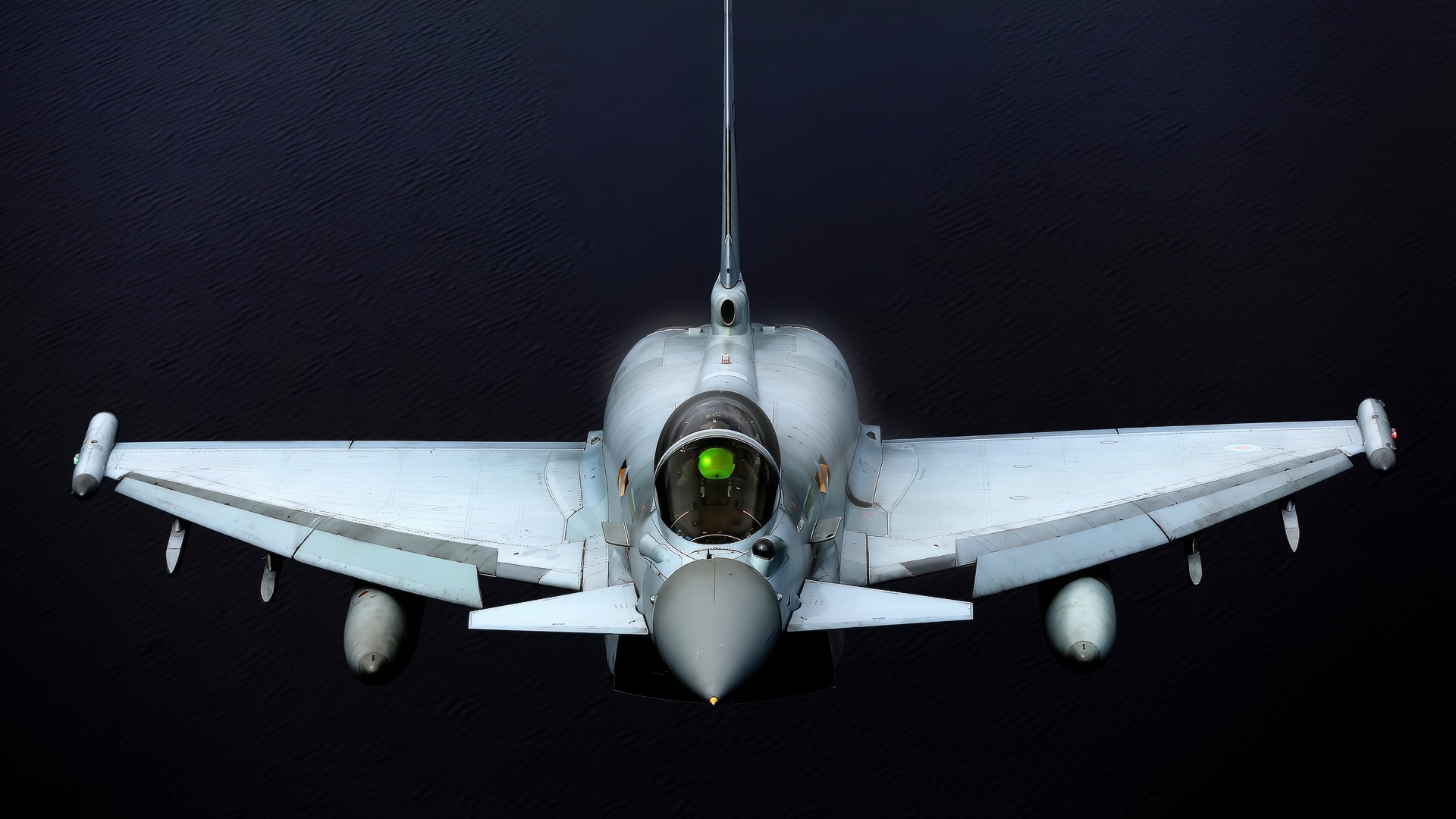
Eurofighter Typhoon over the Water. Image Credit: Creative Commons.
Officials quoted in the Financial Times have described the rethink of the project as a divorce in all but name, but there is still time for the project to evolve in different ways.
The likelihood at this stage, however, is that meaningful cooperation will exist only in the form of the combat cloud, with discussions already underway to accelerate its timeline from 2040 to 2030.
Bringing forward that deadline would allow both countries to salvage some form of collaboration and ensure that the time and resources already poured into the project aren’t entirely wasted, even if it does mean leaning more heavily on American systems in the future, or allowing France to build its own fighter jet empire, building on its recent export successes.
About the Author:
Jack Buckby is a British author, counter-extremism researcher, and journalist based in New York. Reporting on the U.K., Europe, and the U.S., he works to analyze and understand left-wing and right-wing radicalization, and reports on Western governments’ approaches to the pressing issues of today. His books and research papers explore these themes and propose pragmatic solutions to our increasingly polarized society. His latest book is The Truth Teller: RFK Jr. and the Case for a Post-Partisan Presidency.
More Military
The U.S. Navy’s Constellation-Class Frigate Crisis Keeps Getting Worse
China’s New H-20 Stealth Bomber Might Have a 10,000 km Range
Even Mach 3 Speeds Could Not Save the Titanium SR-71 Blackbird
The U.S. Navy’s New DDG(X) Destroyer Is Sailing Into Stormy Waters


Matthew Hatton
November 20, 2025 at 2:45 am
Yeah- not great reporting or research there.
While it’s true, indeed obvious the European FCAS is all but dead the consequences for France’s Dassault will undoubtedly be fatal for their long term future in combat aircraft design, development and production- it’s the beginning of the end for them in that sphere once Rafale has reached the point that further development is no longer possible!
Also worth mentioning that Germany has useful options (even while not being a core participant) still around the British led GCAP (Tempest) aircraft.
I’d call that UK’s BAE Systems has the most to gain from the failure of our European (by that I mean French) friends.
Al
November 24, 2025 at 11:36 am
Germany DOES NOT need to run to the US for the F47 6th generation fighter at all nor will it. Germany is already in undisclosed talks with the U.K. Italy and Japan with regards to Tempest. It has been since the last Chancellor was in office! The US has LOST all to near all trust from ALL European countries including the U.K. with regards to military equipment and, even support since Trumps statements and abuse towards Ukraine and rude behaviours towards Europe. NO US company can apply to be involved in European military activities to increase sovereign capabilities. It’s also noted the U.K. is more than best placed to support Europe having the largest and most advanced military sector in Europe and why ALL EU members have signed security agreements with the U.K. Germany intends to pursue Tempest with the U.K. Italy and Japan.
Rick
November 25, 2025 at 5:05 am
Of course the Tempest should be the obvious next choice for Europe. It is ongoing, no friction between nations at the moment and would release obligations to tipping the cap to America all the time. Could be the next Eurofighter success story if given finance and time