

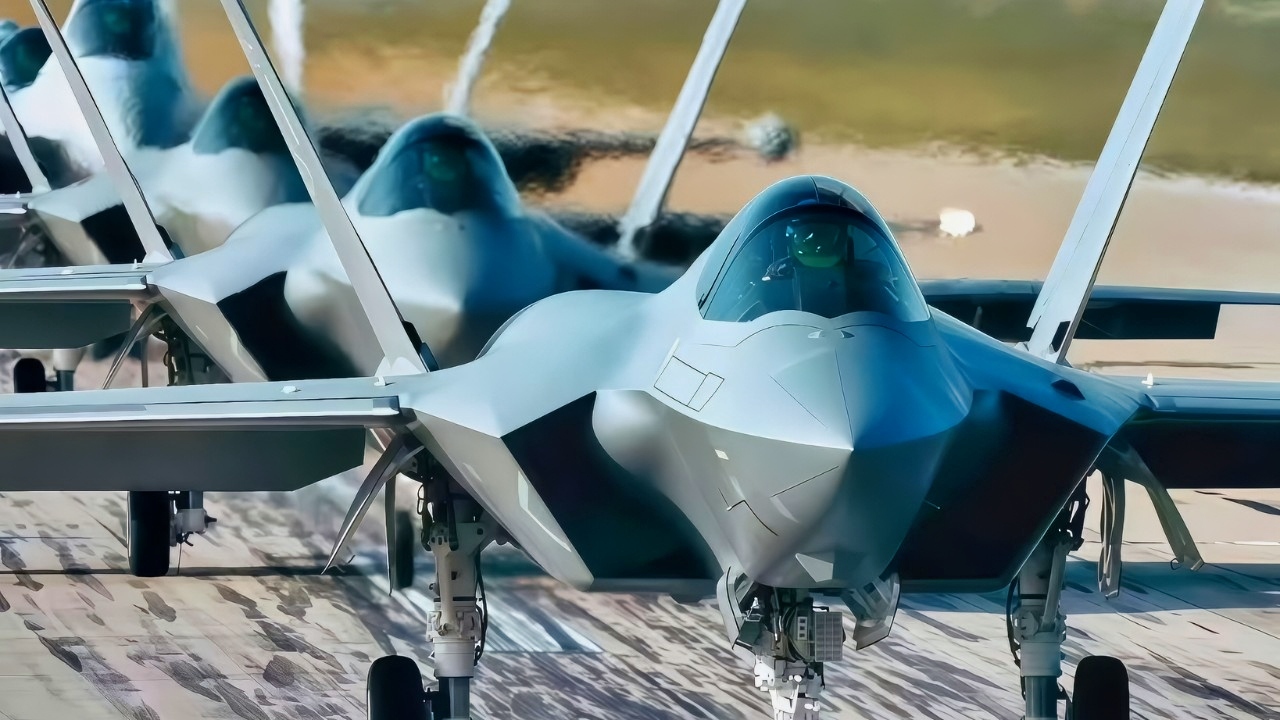
China’s Chengdu J-20 Mighty Dragon entered service in the mid-2010s as China’s first operational stealth fighter — but for years its weakest component was its powerplant: underpowered, unreliable variants of the Russian AL-31 engine that limited the aircraft’s thrust-to-weight ratio and prevented true supercruise. China has now swapped those Russian engines for its indigenous WS-15, an engine with thrust comparable to the Pratt & Whitney F119 used in the F-22 Raptor and the F135 used in the F-35 Lightning II. The J-20 also features improved frontal-aspect stealth shaping (though rear- and side-aspect stealth remain weaker than the F-22), an upgraded AESA radar, distributed IR sensors comparable in concept to Western systems, and the long-range PL-15 air-to-air missile carried internally — making the Mighty Dragon a more credible peer competitor than its early production runs suggested, though it remains untested in combat.
The Chengdu J-20 Mighty Dragon Stealth Fighter Keeps Getting Better:
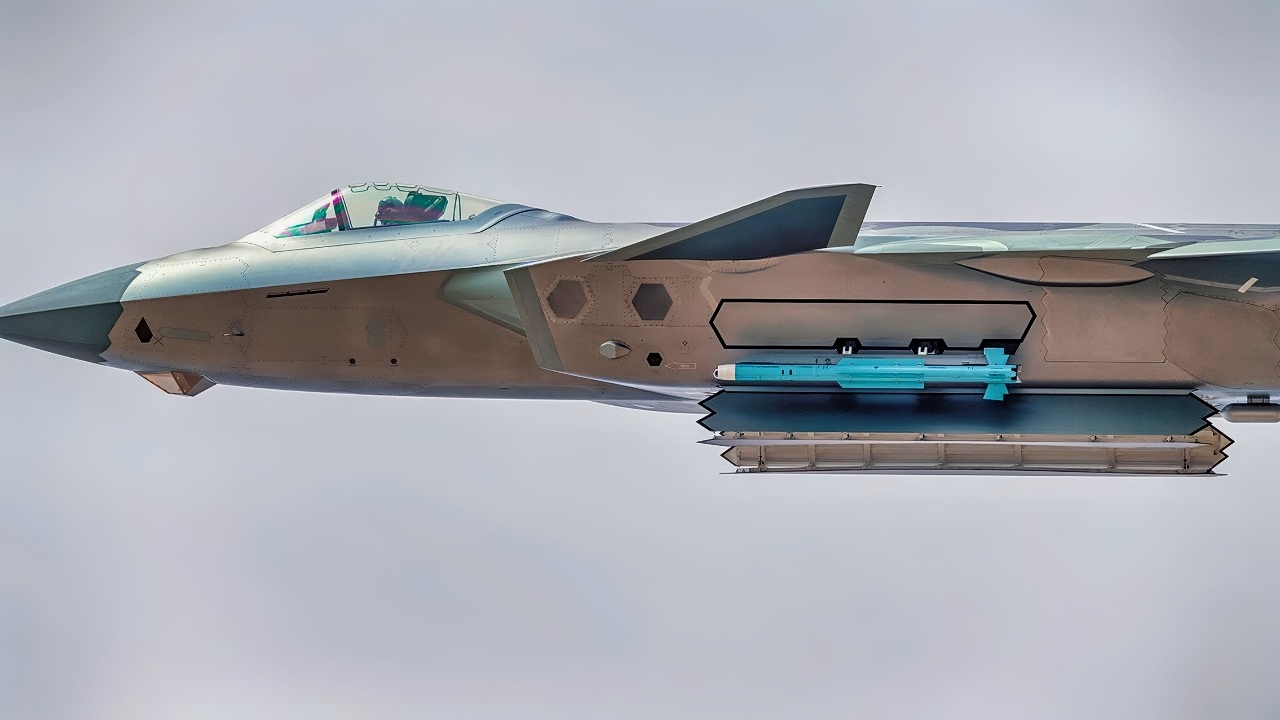
China J-20 Weapons. Image Credit: Chinese Weibo.
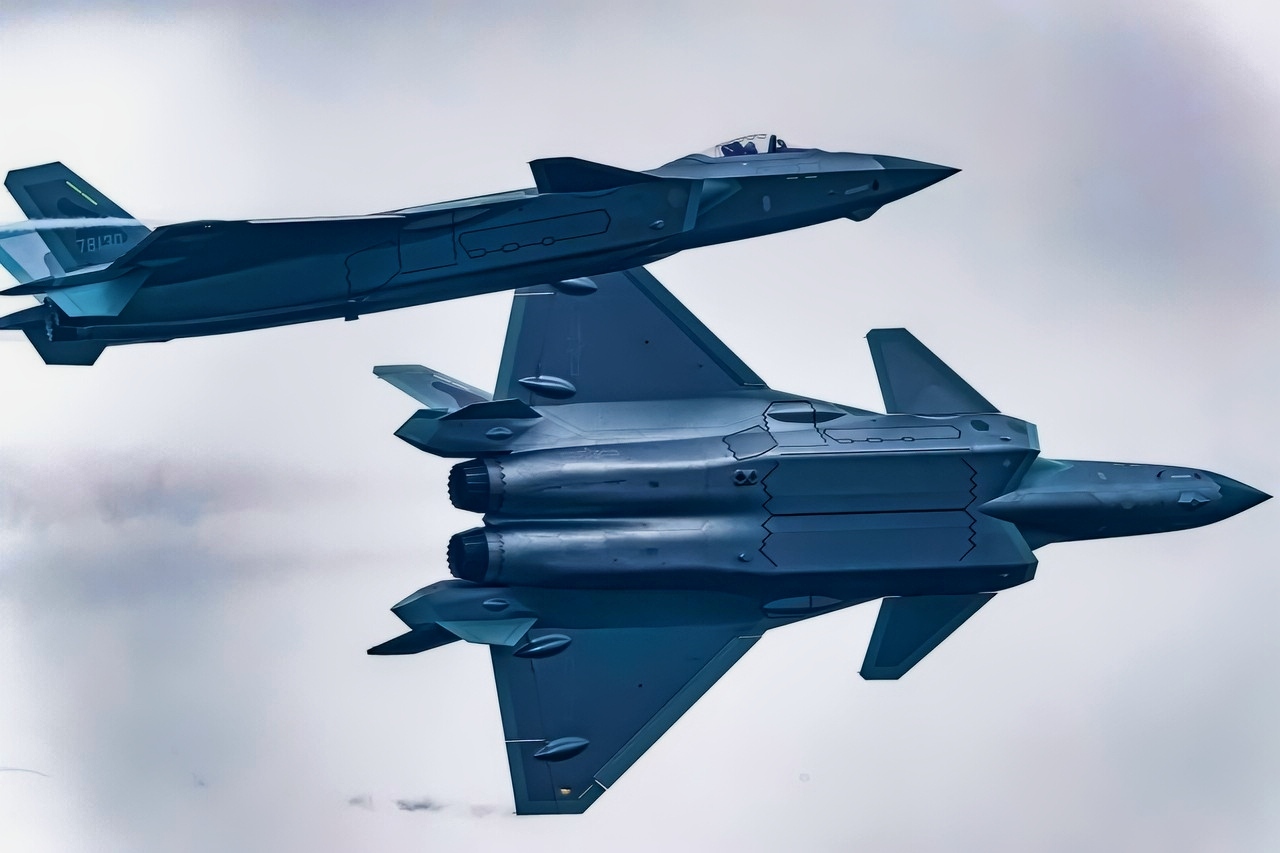
China J-20 Fighters. Image Credit: Weibo.

J-20 Fighter with Jet Stream. Image Credit: Weibo.
Entering service in the mid-2010s, the Chengdu J-20 Mighty Dragon is China’s first operational stealth fighter.
Initially dismissed as a rudimentary aircraft with only prototype-level performance, the Mighty Dragon has been upgraded and is now produced at scale, prompting a reevaluation of its merits.
In short, the J-20 has evolved significantly, especially in engines and sensors, but whether it can keep pace with US fifth-generation fighters remains an open, unresolved question.
Early Limitations
The J-20’s initial configuration had several shortcomings. For one, the jet featured Russian AL-31 variant engines.
These engines were underpowered and unreliable. Stealth shaping was also a concern; early airframes featured questionable coatings, with visible panel gaps.
China was also inexperienced in crafting advanced avionics; the fighter’s sensors were less integrated, and its data fusion was likely limited.
In practice, the early J-20s were more likely proof-of-concept than a fully mature fifth-generation platform. But that has gradually changed.
Engine Evolution
The AL-31 variants have been swapped out for the WS-15, an indigenous Chinese engine with thrust comparable to the F119/F135 class.
This is important because the WS-15 enables supercruise (which extends range) and better thrust-to-weight (which improves overall performance, particularly acceleration and high-altitude performance).
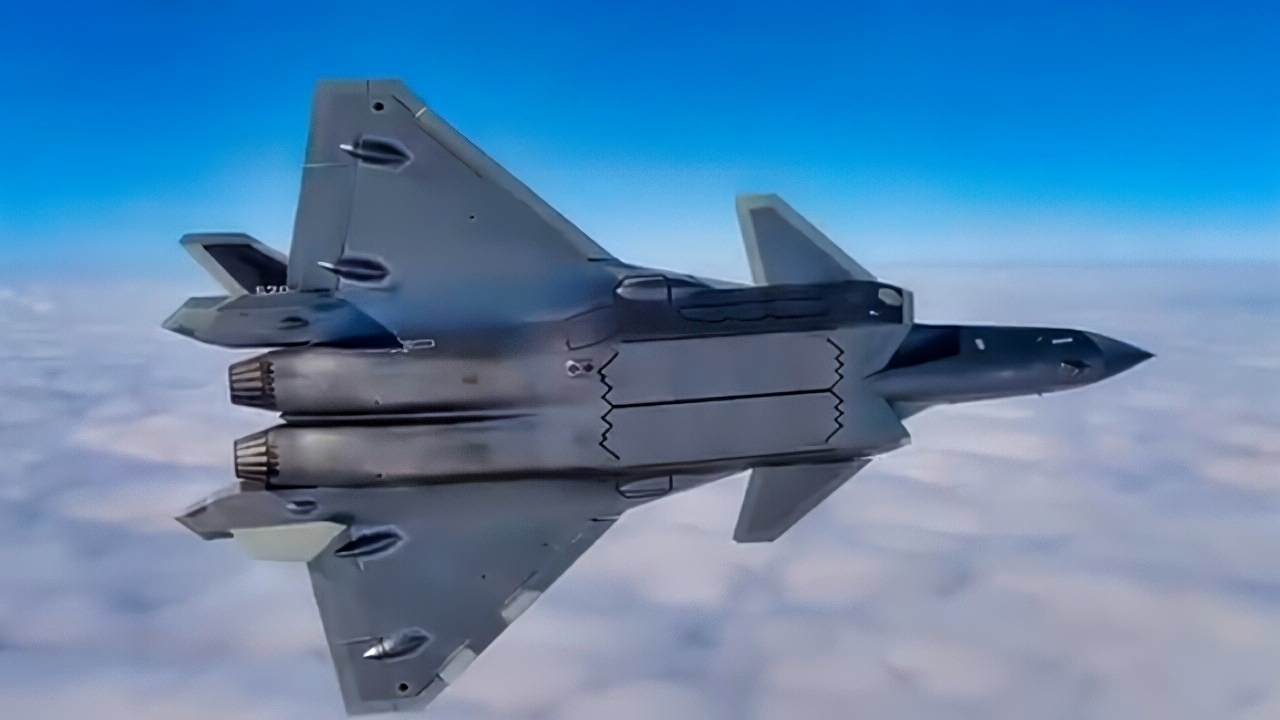
China J-20 Screenshot. CCTV Screenshot from State TV.
The shift has been gradual, but the move to the WS-15 has addressed the J-20’s biggest weakness, turning engine performance into an asset.
Stealth Refinement
The J-20 features canards, which are known to enhance aircraft agility but add control surfaces (which reflect radar signatures) and are controversial for stealth. But the J-20’s shaping has been optimized for the frontal aspect, which is useful in penetration scenarios.
The J-20’s panel alignment and RAM coatings have been improved, too. Overall, the J-20 is believed to have capable frontal-aspect stealth but weaker rear- and side-aspect stealth. Is China’s fighter on par with the F-22 or F-35 in terms of stealth performance?
Probably not, but the Mighty Dragon is still a bona fide stealth fighter.
Sensor and Avionics
The J-20’s AESA radar upgrade is likely comparable in concept to Western systems. Distributed IR sensors and advanced EW systems are also likely comparable to Western systems. Data fusion capabilities, meanwhile, have been improved—but overall capability relative to the F-35 remains unclear. In all likelihood, the F-35 remains unmatched in data fusion. Regardless, the J-20 was designed for network-centric warfare, and sensor and avionics upgrades enable this; the J-20 is not just a kinetic shooter but a sensor platform.
Weapons and Role
The primary role of the Mighty Dragon is air superiority and interception. Accordingly, the J-20 is equipped with the PL-15 long-range AAM, stored in internal bays that maintain stealth performance.
The tactical concept here is to engage high-value enablers, such as AWACS and tankers, that facilitate fighter operations.
In concept, targeting enablement aircraft would allow the Mighty Dragon to push adversaries farther back from the Chinese mainland, making it an important layer in China’s A2/AD system.
As a part of the A2/AD system, the Mighty Dragon is integrated with ground-based radar and ISR networks. The mission here is not to serve as a dogfighter but as a long-range interceptor, denying airspace and picking off weaker aircraft.
J-20 Mighty Dragon Stealth Fighter: Comparisons to US Aircraft
The US is still the world’s leading aircraft manufacturer, with fifth-generation technology that remains unrivaled. The J-20 does have real strengths, however, in range and missile capability (and increasingly in production capacity).
But the Mighty Dragon remains weaker in stealth, data fusion, and, importantly, combat experience. The F-22 and F-35 retain advantages in software maturation, stealth performance, and combat experience.
So while the J-20 is closer than it was before, the Chinese jet remains a step behind US rivals.
Is the J-20 Elite?
The J-20 is elite in some respects. It’s a stealth fighter, which means China is one of just three nations to ever field such a capability.
Additionally, the Mighty Dragon features advanced sensors and modern weapons, again pushing the platform into elite territory.
But the stealth fighter is still maturing—and remains untested in combat, meaning it’s really all just theory at this point.
The Mighty Dragon is a credible peer competitor, probably, but it is not yet a proven equal to the world’s leading fifth-generation aircraft.
About the Author: Harrison Kass
Harrison Kass is a writer and attorney focused on national security, technology, and political culture. He holds a JD from the University of Oregon and an MA in Global & Joint Program Studies from NYU. His work has appeared in City Journal, The Hill, Quillette, The Spectator, and The Cipher Brief. More at harrisonkass.com.


