

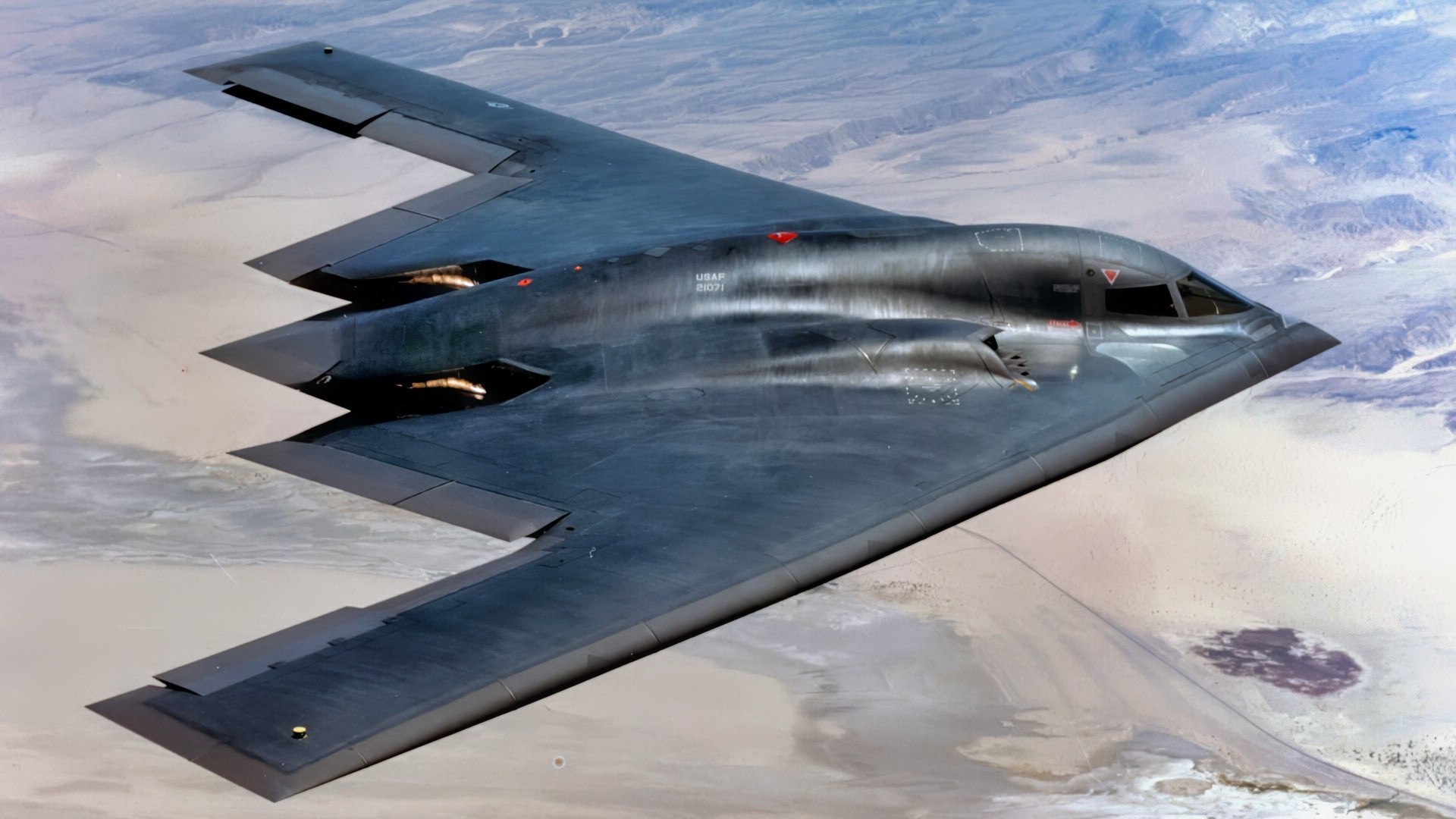
Summary and Key Points: On May 29, 2026, a Russian drone struck an apartment building in Galați, Romania, wounding two — the first time Russian weapons have caused casualties inside a NATO member state.
-It’s a warning, not a one-off: Russian incursions into NATO airspace tripled in 2025.
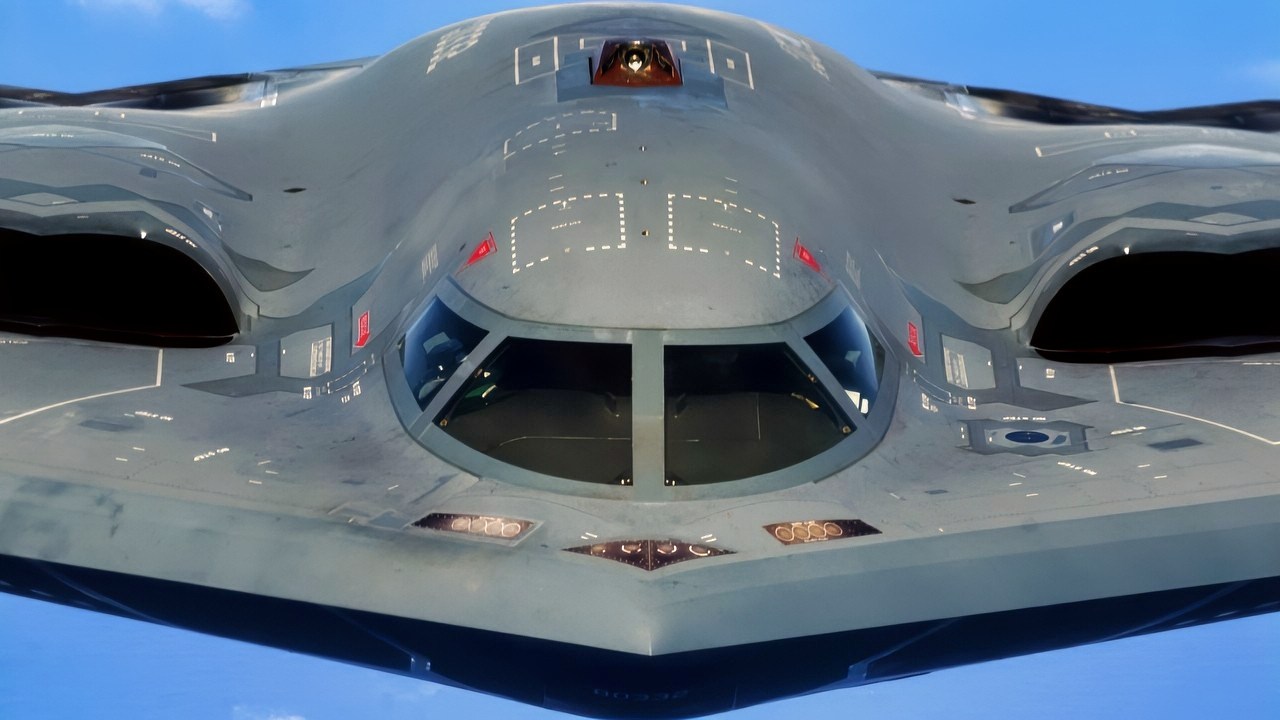
B-2 Spirit Stealth Bomber Flying. Image Credit: Creative Commons.
-The danger is structural — under NATO’s Article 5, one mass-casualty strike could pull 32 nations toward war with a nuclear-armed Russia that has openly lowered its nuclear threshold.
Russia’s War in Ukraine Could Become a NATO vs. Russia War – That Means World War III and Maybe Nuclear Weapons
On May 29, 2026, a Russian drone peeled away from an overnight assault on Ukraine, crossed into Romanian airspace, and slammed into the roof of an apartment building in the Danube town of Galați.
Two people were injured.
The building was evacuated, and the surrounding area was placed on alert. By the standards of a war that has killed well over a million people, it was a small event. By the standards of the eighty-year peace between major nuclear powers, it was something close to a turning point, because it marked the first time Russian projectiles caused casualties and damage in a populated area inside a NATO and EU member state.
And, to be honest, most of the press in America that I at least look at daily did not care.
Romania called it a serious and irresponsible escalation. NATO Secretary General Mark Rutte spoke by phone with Bucharest. European Commission President Ursula von der Leyen declared that Russia’s war had crossed yet another line. The responses were furious but still diplomatic. Romania’s government pursued anti-drone defenses and diplomatic measures rather than firing across the border. The drone strike was treated as a provocation to be managed rather than an attack to be answered with force. That restraint held this time. The single most dangerous question hanging over the world right now is whether it holds the next time, or the time after that, when the drone hits a school instead of a roof and kills forty people instead of injuring two.
The B-2 Spirit flies over the Rose Parade at Pasadena Ca., Jan. 1, 2024. The Rose Parade is a parade of flower covered floats, marching band, and equestrian units that is produced by the Tournament of Roses. (U.S. Air Force photo by Airman 1st Class Bryce Moore)
The Single Most Likely Trigger from the Ukraine War
Of all the ways a war between Russia and NATO could begin by accident, one stands above the rest in both probability and danger: a Russian munition, fired in the course of attacking Ukraine, kills a significant number of civilians inside a NATO member state, and the political pressure on that government to retaliate with military force becomes impossible to contain.
This is not a hypothetical pulled from a war game. It is the Galați scenario with a worse casualty count, and the conditions that produced Galați are intensifying.
A systematic review of Russian airspace violations against NATO members found that the alliance recorded 18 confirmed violations in 2025, three times as many as in 2024, a 200 percent increase in a single year that the analysis described as not a gradual escalation but a dramatic change.
The incidents are growing more frequent, more severe, and wider in geographic scope. Estonia, Lithuania, Latvia, and Finland have all reported repeated incursions in recent months. In September 2025, more than a dozen Russian drones flew deep into Poland and were shot down by NATO allies in the first time the alliance used force against such incursions, prompting Warsaw to invoke Article 4 of the NATO treaty and convene emergency consultations among all 32 members.
Each one of these events is a roll of the dice.

Tu-95 Bomber Russian Air Force. Image Credit: Creative Commons.
Most drones crash harmlessly in a field or get shot down over empty terrain. But the law of large numbers is unforgiving. Fly enough armed drones near and into NATO airspace, often enough, and eventually one of them lands somewhere that produces a mass-casualty event.
When that happens, the government on the receiving end will face a public that demands more than a strongly worded statement and a contract for anti-drone defenses.
How The Spiral Begins
The path from a single deadly strike caused by the Ukraine war to a shooting war between nuclear powers is shorter than most people assume, because it runs directly through NATO’s founding promise.
The alliance exists on the principle that an attack on one member is an attack on all. That guarantee, enshrined in Article 5 of the North Atlantic Treaty, is what has deterred Russia from touching NATO territory for the entire duration of the Ukraine war. It is also the mechanism that could drag thirty-two countries into a war none of them chose.
Poland has already climbed the first rung of the ladder by invoking Article 4, the consultation clause, after the September drone incursion. Article 5 is the next rung, and once a NATO member formally demands a collective military response to dead civilians on its soil, the alliance faces a choice with no good options. It can honor the guarantee and risk war with a nuclear power, or it can hesitate and watch the credibility that underpins the entire Western security order collapse in real time.
The dynamic that makes this so dangerous is that the deterrent and the risk of escalation are the same thing. The promise that protects NATO members is the promise that could pull them into the abyss. Russian drone activity near NATO borders, whether accidental or deliberate, increases the risk of escalation through miscalculation rather than intent, and every incursion tests the alliance’s air-policing posture under conditions where a single misjudgment carries enormous consequences.
There is an even more insidious wrinkle. Ukraine’s foreign ministry has accused Russia of deliberately using electronic warfare to redirect Ukrainian drones into the Baltic states, turning weapons meant for Russian targets into projectiles that strike NATO soil. Drones have already hit a power plant chimney in Estonia, fallen into a lake in Lithuania, and struck an oil refinery in Latvia. That refinery strike was destabilizing enough on its own to collapse the Latvian government. When neither side fully controls where these weapons land, an attack on NATO territory can be genuine, manufactured, or simply impossible to attribute in the critical first hours, which is precisely the fog in which catastrophic decisions get made.
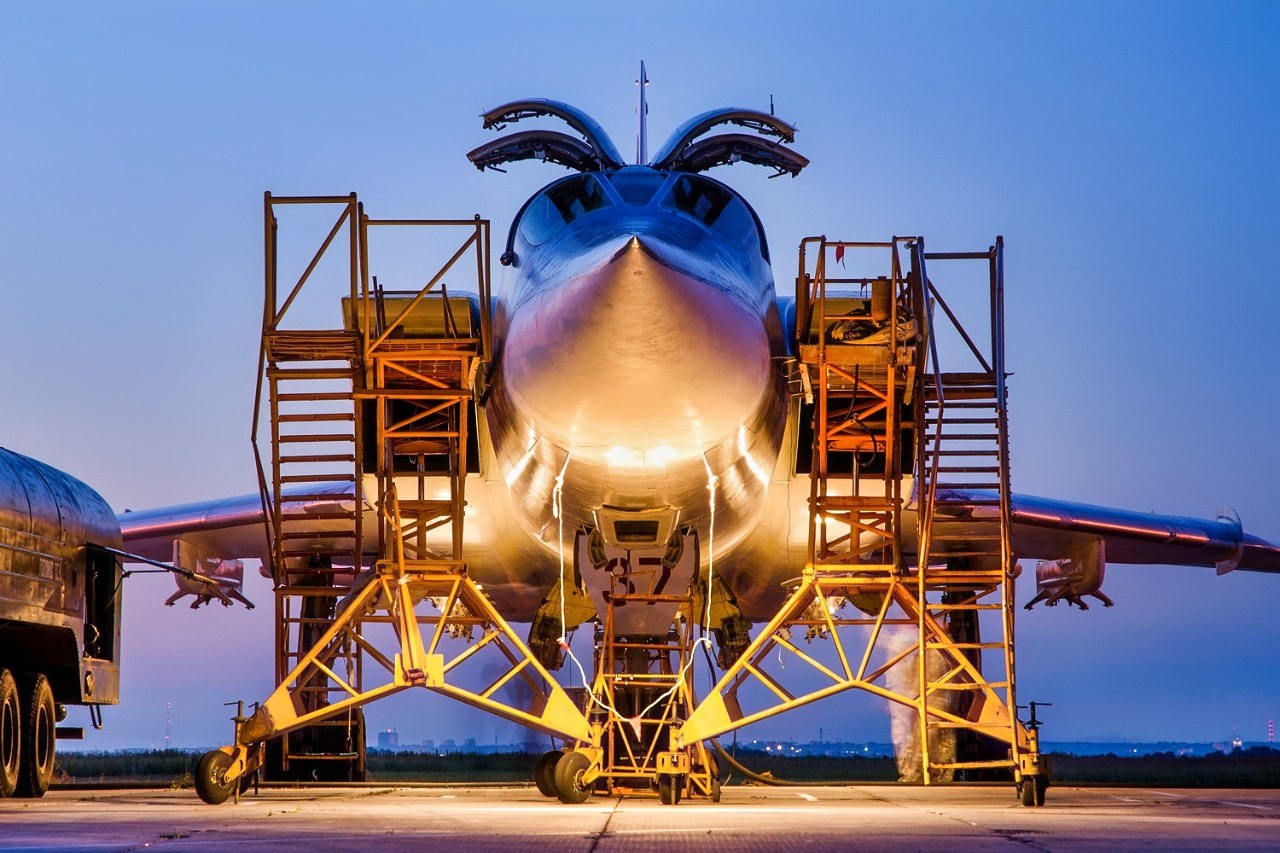
Tu-22M Bomber from Russia. Image Credit: Creative Commons.
Why The Nuclear Dimension Changes Everything
A conventional clash between NATO and Russian forces over Ukraine would be terrible.
What makes the accidental-war scenario an existential one is that Russia has spent the past two years systematically lowering the threshold at which it would consider using nuclear weapons.
In November 2024, Vladimir Putin signed a revised nuclear doctrine that declared any conventional attack on Russia supported by a nuclear power would be treated as a joint attack, and that lowered the bar for nuclear use from threats to the existence of the Russian state to threats to its sovereignty or territorial integrity. The doctrine was paired with repeated demonstrations of Russia’s willingness to brandish its arsenal.
The point of all of it was to make the West believe that any direct conventional confrontation could climb the escalation ladder toward a nuclear exchange.
Here is where the accidental-war scenario becomes genuinely terrifying. If a NATO-Russia conflict began over a drone strike on Romania or Poland, both sides would be operating in an environment of maximum confusion, maximum domestic political pressure, and minimum time to think. A Russian leadership that already frames the war as an existential struggle against a Western threat to its sovereignty could interpret a NATO conventional response as exactly the kind of attack its doctrine says justifies nuclear use.
A NATO that had just absorbed a mass-casualty event on its own soil would be under enormous pressure to respond forcefully rather than cautiously. Each side’s worst-case assumptions about the other would be in full effect, and the guardrails that functioned during the Cold War — established crisis-communication channels, mutual familiarity, decades of carefully negotiated arms-control architecture — have largely eroded.
The escalation would not require anyone to decide they wanted a nuclear war. It would only require a sequence of individually defensible decisions, each made under pressure and uncertainty, that collectively walked the world up the ladder one rung at a time. A drone kills NATO civilians. The member state demands a response. NATO strikes the launch site inside Russian-controlled territory. Russia, viewing its sovereignty as under attack, responds against NATO assets. NATO invokes Article 5. And at some point in that sequence, a Russian leadership convinced it is facing an existential threat reaches for the option its own doctrine has told the world it is prepared to use.
The Thin Line That Has Held So Far in the Ukraine War
None of this is inevitable, and it is worth being precise about why.
Every escalation in this chain requires a human decision, and so far, every relevant human has chosen the off-ramp. When more than a dozen Russian drones crossed into Poland, NATO shot them down and consulted rather than retaliated. When the drone hit Galați, Romania pursued defensive measures and diplomacy rather than firing across the border. Russia’s defense ministry claimed it had no intention of striking Poland. The institutional muscle memory on both sides still bends toward de-escalation, and that bias toward restraint is the single most important thing standing between the current situation and catastrophe.
The Cold War offers genuine reassurance on this point. Across decades of incidents, near-misses, and false alarms that could have triggered nuclear war, the gap between provocation and catastrophe was always filled by deliberate human choices, and those choices consistently favored survival over honor. The Cuban Missile Crisis did not end in mushroom clouds because individuals on both sides chose, repeatedly and under unbearable pressure, to find another way.
But the reassurance is conditional, and the condition is getting harder to meet. The frequency of incidents coming from the Ukraine war is rising sharply. The severity is climbing toward the mass-casualty threshold. The attribution is getting murkier as electronic warfare scrambles, making it hard to tell whose drone is whose. The arms-control architecture that gave Cold War leaders room to step back has been allowed to decay. And Russian nuclear doctrine has been deliberately rewritten to make the escalation threat more credible. Each of those trends shortens the fuse and shrinks the space in which restraint can operate.
About the Author: Harry J. Kazianis
Harry J. Kazianis (@Grecianformula) was the former Senior Director of National Security Affairs at the Center for the National Interest (CFTNI), a foreign policy think tank founded by Richard Nixon based in Washington, DC. Harry has over a decade of experience in think tanks and national security publishing. His ideas have been published in the NY Times, The Washington Post, The Wall Street Journal, CNN, and many other outlets worldwide. He has held positions at CSIS, the Heritage Foundation, the University of Nottingham, and several other institutions related to national security research and studies. He is the former Executive Editor of the National Interest and the Diplomat. He holds a Master’s degree focusing on international affairs from Harvard University.


