


Article Summary – Canada’s Eurofighter Typhoon decision was never really about engines or agility. Ottawa’s CF-18 replacement race collided with NORAD’s “2-Eyes” security rules and rigid industrial-offset politics.
-Eurofighter’s UK-backed Typhoon couldn’t meet U.S.–Canada information-sharing demands or secure enough guaranteed Canadian workshare, so Airbus walked in 2019.
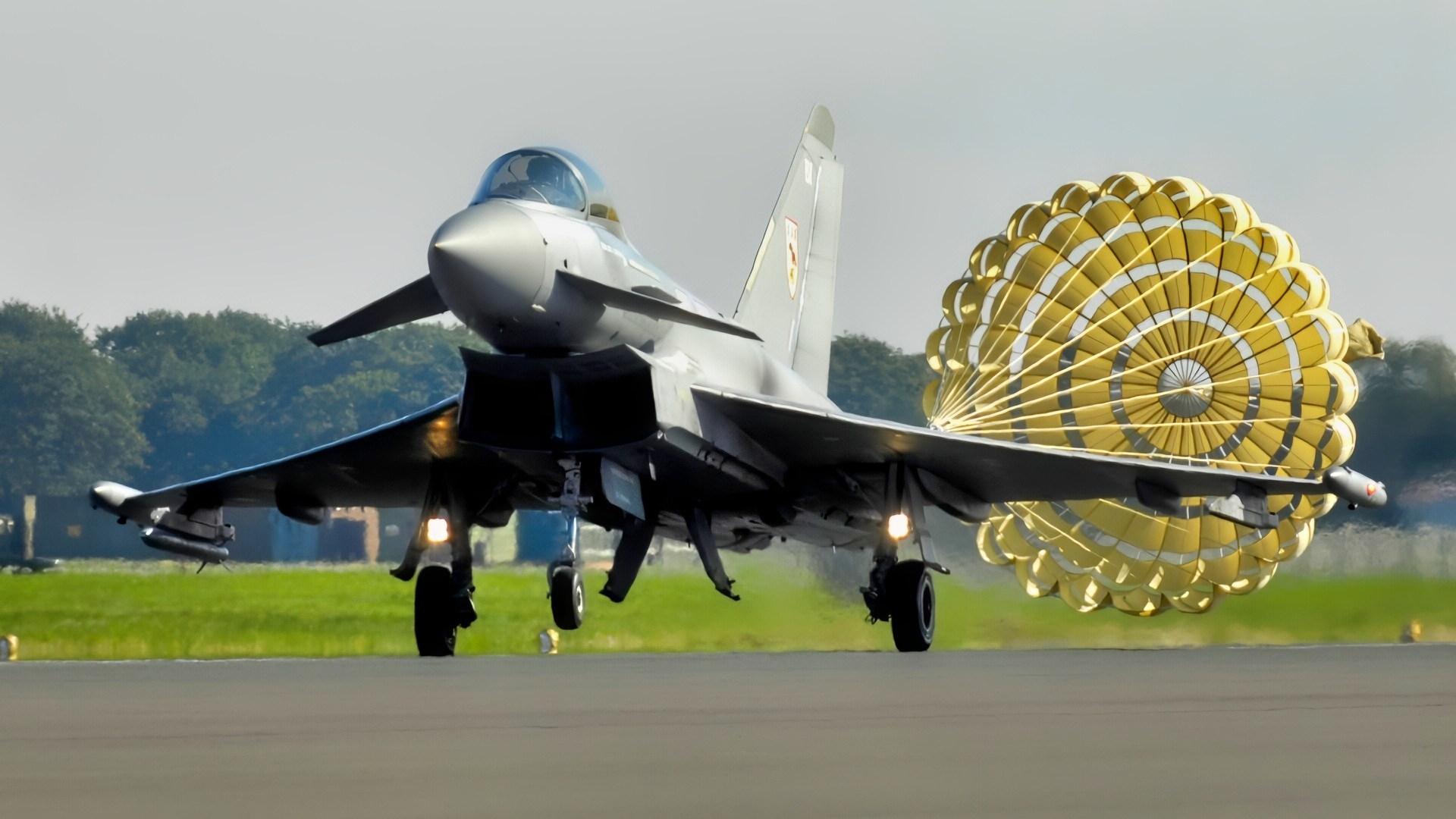
Eurofighter Typhoon with Parachute. Image Credit: Creative Commons.
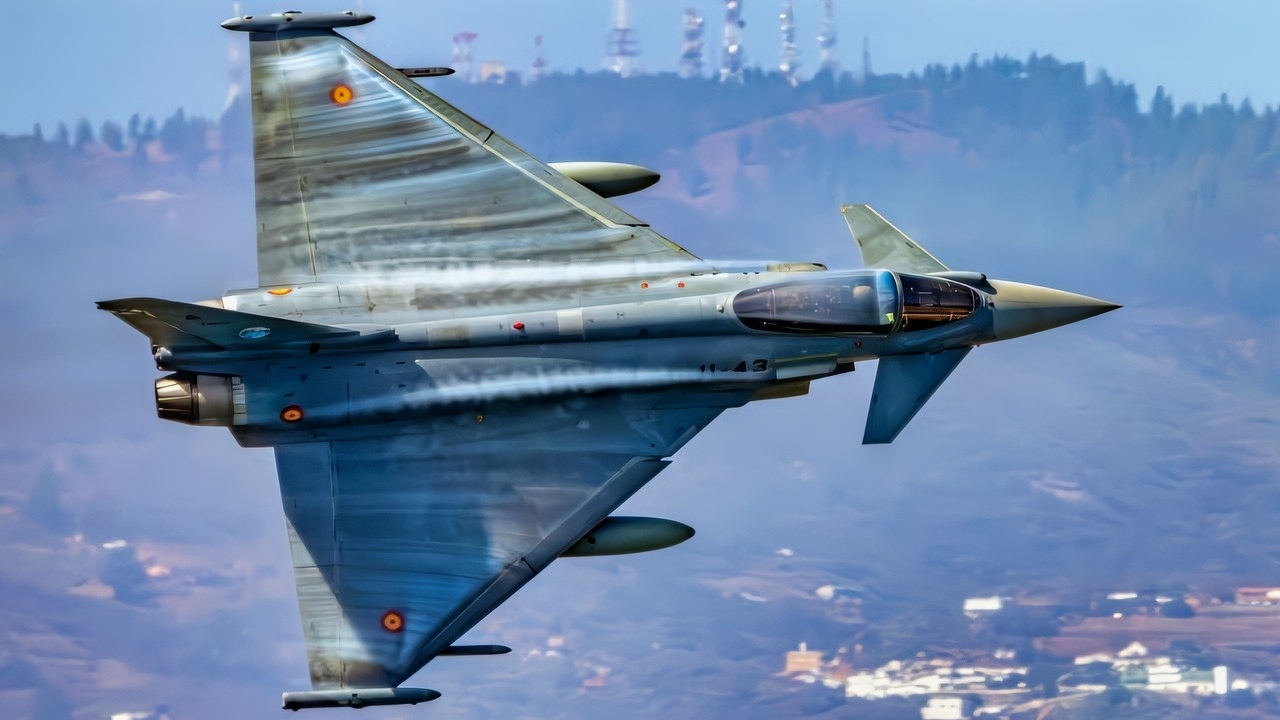
Eurofighter Typhoon Powering Through. Image Credit: Industry Handout.
-That exit reshaped the contest around platforms more tightly wired into American networks, from the F-35 to Saab’s Gripen bid.
-The episode shows how intelligence access, alliance politics, and industrial strategy can outweigh pure performance when smaller air forces choose their next frontline fighter, now and in future competitions. Capability follows politics and trust.
Why Canada Will Not Buy the Eurofighter Typhoon
SEOUL, SOUTH KOREA – The rationale, requirements, and design concepts for the Eurofighter Typhoon program stretch back more than four decades. The program’s push to become the aircraft it is today actually accelerated in 1983, when Michael Heseltine took over as the UK Minister for Defence.
The new MoD chief completely agreed there was a legitimate RAF requirement for a new fighter to replace the force’s current fleet. But, it should be an aircraft, as he declared, “with sufficient speed, acceleration and agility not only to defeat in air combat the fighters which the Soviets will be able to deploy after 1995 … but also to remain effective against increasingly powerful opposition throughout the first two decades of the new century.”
A decade later, these were sentiments echoed by UK MoD intelligence officials I spoke with at the time. The Soviet Union was gone, but the combat aircraft that were in development when the country imploded were programs still alive and well.
The idea, they said, was “to take the fight to the enemy.” The Eurofighter Typhoon was intended for that mission—to be faster, more maneuverable, and to have armament that would outrange the firing envelope of what were projected as being the threat aircraft of the future.
Those threat aircraft programs became what are known today as the Sukhoi Su-35S and the aborted project for what Mikoyan Design Bureau then called the Multirole Fighter or MFI. The latter aircraft also came to be known by its design bureau’s internal project number of “Project 1.44/1.42.”
Over The Pole
So, when Canada began looking at replacements for its fleet of CF-18 Hornet fighters, why was the Eurofighter not considered?
One of the major – if not the major – members of the four-nation consortium was none other than Canada’s “mother country” of the United Kingdom (UK).
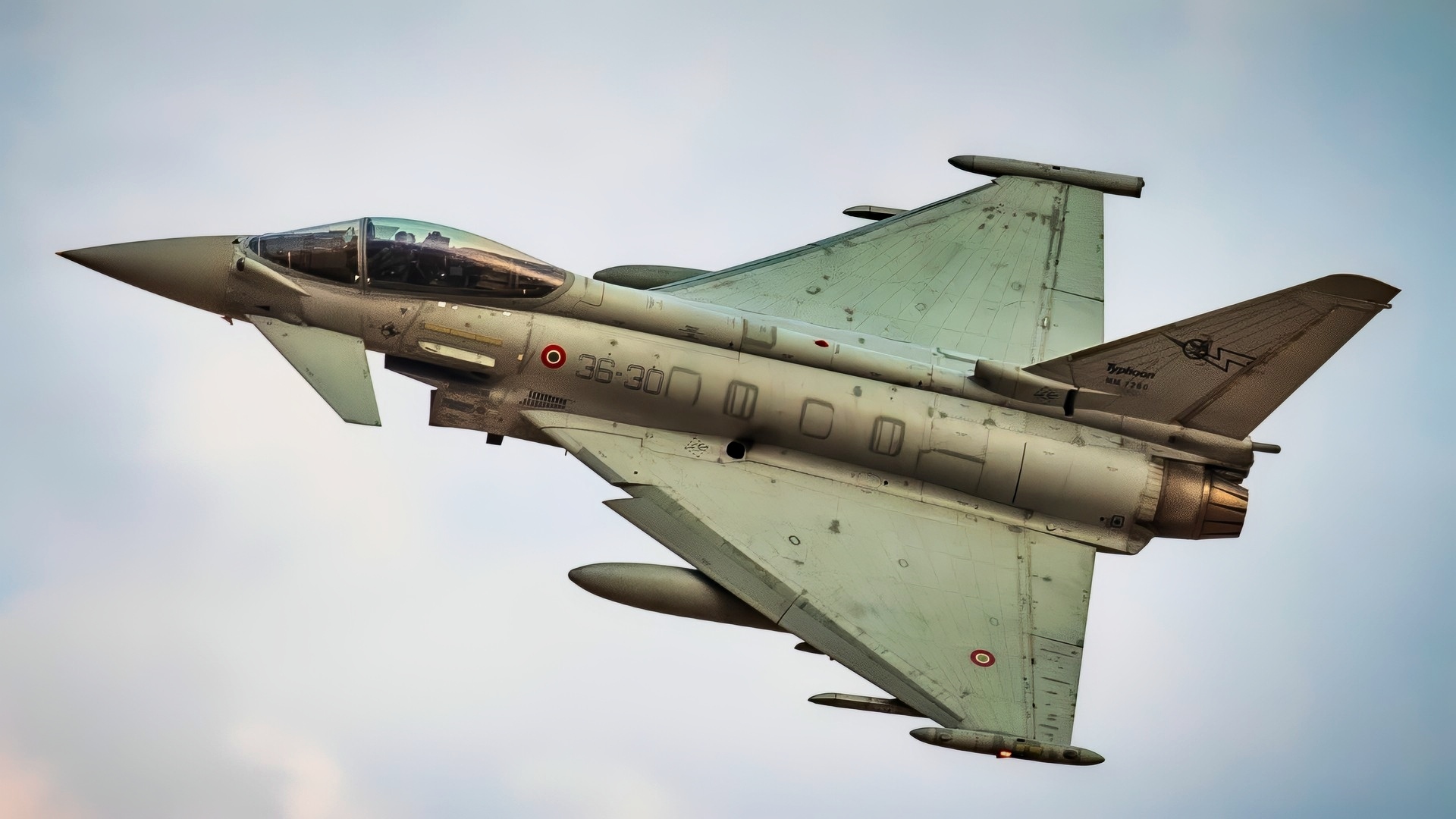
An Italian Air Force Eurofighter Typhoon maneuvers during a joint close air support exercise with U.S. Marines attached to the Special Purpose Marine Air-Ground Task Force – Crisis Response – Central Command (SPMAGTF-CR-CC) 19.2, and service members with the Italian Air Force in Kuwait, Oct. 14, 2019. The SPMAGTF-CR-CC works with partner nations on maintaining regional security. (U.S. Marine Corps photo by Sgt. Kyle C. Talbot)
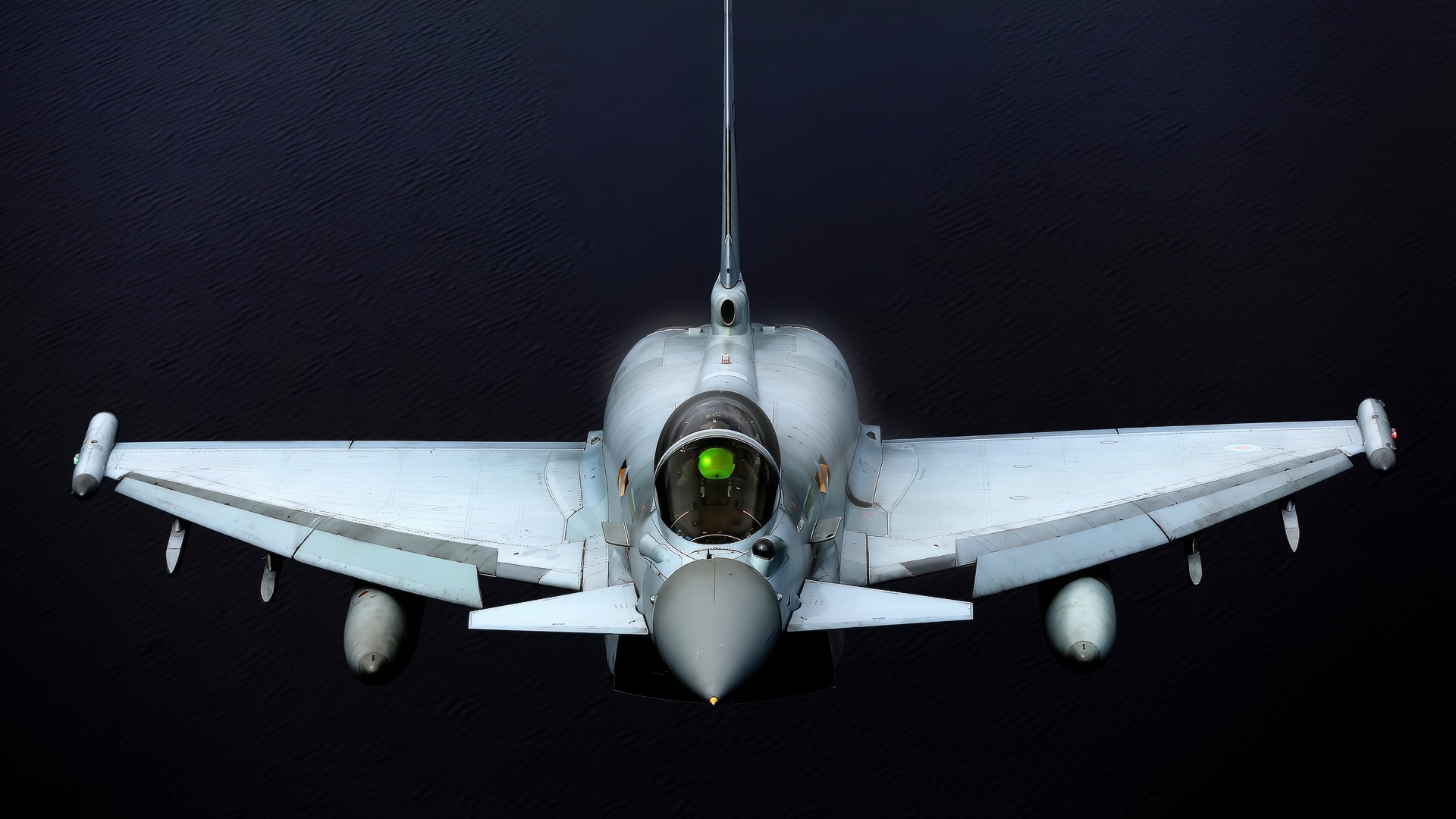
Eurofighter Typhoon over the Water. Image Credit: Creative Commons.
Canadian pilots I had spoken to, going back to the 1980s, also never tired of saying they believed a two-engine fighter was the best solution for the Royal Canadian Air Force (RCAF), no matter what decade, now or in the future.
“Northern Canada is a fairly unforgiving environment down on the ground if, for some reason, you have to punch out,” said one RCAF pilot I talked with at the time during the Le Bourget air show outside of Paris. “Having more than one engine is a considerable comfort factor in that regard,” he said.
What was likely to come “over the [North] Pole” in the event of an attack on North America was one of these two Soviet aircraft. These were the enemy platforms that the Eurofighter was created to go up against in the first place. Conventional wisdom is that this was the ideal solution for Ottawa.
2-EYES Count for More Than Two Engines
As usual, “conventional wisdom isn’t”, as they say,
When the competition to replace the CF-18s began in earnest, Eurofighter Typhoon was right there in the fray. But by August 2019, the aircraft had withdrawn from the competition.
On August 30, Airbus Military Aircraft and the United Kingdom’s Ministry of Defence informed the Canadian government that the decision was taken following a “detailed review of the request for proposal (RFP)” issued on July 23.
The European consortium pointed to two factors that prompted their withdrawal, taking into account both the RCAF draft RFP and the final version of the document.
“First, a detailed review has led the parties to conclude that NORAD security requirements continue to place too significant a cost on platforms whose manufacture and repair chains sit outside the United States-Canada 2-EYES community,” read the company’s initial statement.
The second factor was that “the significant recent revision of industrial technological benefits (ITB) obligations does not sufficiently value the binding commitments the Typhoon Canada package was willing to make, and which were one of its major points of focus.”
So, regardless of its performance that enables the aircraft to meet an incoming threat before it can launch its missiles, these 2-EYES requirements count for more than the two engines that the RCAF used to see as a prime requirement for its future fighter force.
Speaking at the time to one of the leading Canadian government-sponsored publications, David Perry, vice-president and senior analyst with the Canadian Global Affairs Institute, explained, “of the original three European competitors, Airbus with the Eurofighter flying in the UK [was] the closest to the level of interoperability the RCAF needs for the next fighter.”
He also noted that the Typhoon operates within the FIVE EYES intelligence network of the US, UK, Canada, Australia, and New Zealand.
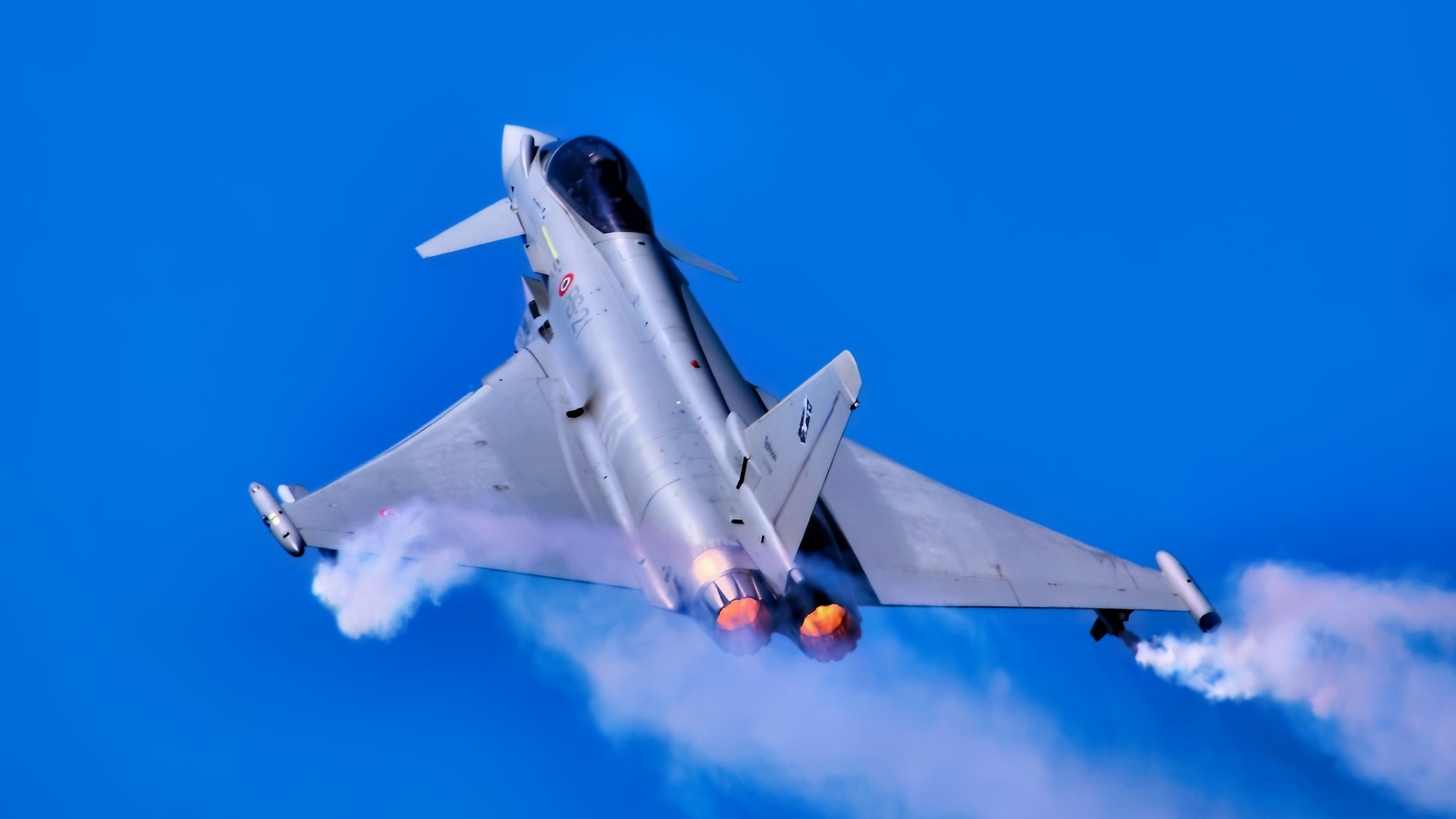
Eurofighter Typhoon Test Flight in 2013. Image Credit: Creative Commons.
“There was a hope that because they had cracked the FIVE-EYES code … they would be able to provide a solution that would be 2-EYES [US and Canada] compliant. The fact that they [Airbus] withdrew and cited that [requirement] specifically might cause a bit of concern,” he explained.
What will happen next comes down to “which aircraft Ottawa believes is a ‘safer choice’ given what appears to be the current US administration’s downgrading of their commitment to NATO,” said a Swedish defense official. “Gripen may have a chance with the Canadian buy if there is enough anxiety about whether or not the US is still a reliable alliance partner,” he said.
About the Author: Reuben F. Johnson
Reuben F. Johnson has thirty-six years of experience analyzing and reporting on foreign weapons systems, defense technologies, and international arms export policy. Johnson is the Director of the Asia Research Centre at the Casimir Pulaski Foundation. He is also a survivor of the Russian invasion of Ukraine in February 2022. He worked for years in the American defense industry as a foreign technology analyst and later as a consultant for the U.S. Department of Defense, the Departments of the Navy and Air Force, and the governments of the United Kingdom and Australia. In 2022-2023, he won two awards in a row for his defense reporting. He holds a bachelor’s degree from DePauw University and a master’s degree from Miami University in Ohio, specializing in Soviet and Russian studies. He lives in Warsaw.


Carey Alan JOHNSON
November 26, 2025 at 1:47 pm
The Typhoon is completely inferior to the F35. Since close quarter, combat is obsolete in modern air,to air warfare.
Mauser6864
November 26, 2025 at 7:23 pm
The Typhoon is still a great aircraft. For a modern two engined aircraft, the F15-EX is likely the best choice. It’s being produced now and is in service with the USAF and is equipped with the same radar as the F22 fighter. In the long run. Maintenance with be cheaper and readiness will be better than the F35.
Steve Salt
November 27, 2025 at 11:37 am
The Euro fighter will not create 10000 jobs in Canada…neither will the F35..the Euro fighter costs more to buy..and more hourly…same as f35…there will be no shared tech with either euro or f35…Grippen was desingned for harsh conditions..f35 and euro not..Grippen can take off and land on a smaall country road or off a frozen lake..f35 or euro cannot…grippen suits Canadas needs the best…but what hurts Cda.. the most..the political dithering..that has put our military in such a dire situation..the people that are supposed to make these decisions are most definitely not qualified..im including the navy..example t26 frigate or destroyer (cannot even decide how to classify it) submarines ? What a joke 12 submarines and no crew..Cdn military recruitment is at best pathetic! In closing the Grippen is an absolute no brainer..the US is no longer reliable as a trade partner..there is no tit for tat..time to walk away and develope more reliable sources for everything..
Douglas White
November 28, 2025 at 4:37 am
It is a much better interceptor due to superior availability, greater speed a d acceleration combined with super-cruise allowing much great intercept range. It is also 2 engines which makes it a far superior aircraft over the artic. Finally it has a wider weapons availability which do not require US or any 3rs party permission to use.
In other words a much better choice for any nation in that role.
Rory Ashman
November 28, 2025 at 9:57 am
Having worked Typhoon at coningsby, and maintaining the survival systems (aircrew kit, ejection seat survival seat and parachute.
The main challenge for Gripen and F35 is single engine, once engine has full flame out the jet turns into a brick.
Single engine jet, and looking at UK quick reaction Alert (QRA) scrambles by Russia (if you think Russia will not do the same over the artic to test. The following would be need for ever scramble
1. Minimum 2 ship
2. CC-150 Polaris
3. CP-140 Aurora (maritime rescue to drop extra supply’s to aircrew ditched, seat personal service pack (ejection seat seat has liferafts, survival equipment but is not much, (15 minutes to unconsciousness, the pilot is ok in bunny suit and immersion suit but often land with flight gloves on making it harder
3. CC-130J – SAR techs to parachute to pilot and / or drop more supplies especially if rescue helicopter, coast guard can’t get to seen
4. cH-148 cyclone either inflight refueling or stages at FOB along XXX radius including artic region
For this reason I prefer a twin engine, that even f22 pilots say is amazing “I was half way down the runway taking off, the typhoon taking off, half way down the runway the f22 crew looked and the typhoon was already 16000 feet , all 3 aircraft are good but have there own roles, typhoon is an interceptor
Coupled with this all pilots would have to do specialist training (try to make iceberg rather then water (seat survival pack can have sleeping bags and other aids ) and the pilot likely will have to also wear a combat survival vest (used in combat) with extra supplies as
Well as Life support Jacket
Just my thoughts as an ex survival equipment tech
Rokuth
November 29, 2025 at 6:01 am
Saw a YT video of someone toting the South Korean KAI KF-21 as a possible replacement for the CF-188(aka CF-18). It does tick all the boxes, but it is a relative newcomer with no proven record. Plus it will be up upgraded to a 5th Gen fighter with internal weapons bays. However, I don’t think the Canadian government ever considered this aircraft, nor was approached by South Korea as a potential bid in the CF-188 replacement saga.
Darylb63
December 1, 2025 at 6:45 am
Nothing has been decided which includes all options… Maybe Canada doesn’t need 80 fighters anymore and should be concentrating on unmanned fighters… 16 F35’s are coming… We know that already… There’s a lot of work to do and Canada is finally putting the effort into it’s military… So it good news!