


Key Points and Summary – Canada’s Liberal government is once again wavering on its long-promised purchase of 88 F-35s, now claiming the deal doesn’t deliver enough industrial benefits.
-Industry Minister Mélanie Joly is openly courting Saab’s JAS-39 Gripen, which comes bundled with promises of 10,000 Canadian jobs and local assembly.

An F-35A Lightning II, flown by Maj. Kristin “Beo” Wolfe, F-35 A Lightning II Demonstration Team commander, performs aerial displays during the Joint Base Andrews 2022 Air & Space Expo, at JBA, Md., Sept. 18, 2022. Wolfe demonstrated several difficult maneuvers throughout her performance at the Air & Space Expo to provide an opportunity for people to see U.S. military air capabilities in action. (U.S. Air Force photo by Airman 1st Class Ben Cash)
-But Ottawa is already contractually tied to 16 F-35s, with dozens of Canadian firms in the global supply chain.
-Military leaders warn that shifting the remaining 72 jets to a European type would create an expensive, inefficient mixed fleet and weaken NORAD and Arctic defense, trading real capability for short-term political theatre.
Canada’s Latest Excuse: “Not Enough Benefits For F-35 Buy”
Canada is looking for any excuse not to go through with the purchase of 88 F-35s from the United States.
The latest complaint is that the Liberal administration of Mark Carney believes that Canada has been “short-changed on industrial benefits” out of its contract with Lockheed Martin to purchase American-made F-35 stealth fighter jets, Industry Minister Mélanie Joly said Tuesday.
“We believe that we didn’t get enough when it comes to the F-35,” Joly said to the news media on Parliament Hill.
“The industrial benefits are not enough. There needs to be more jobs created out of the F-35 contract. That’s clear to me and clear to this government,” she added.
Saab is dangling 10,000 jobs in a last-minute full-court press for Ottawa to ditch the F-35 for the Saab JAS-39 Gripen fighter jet. Saab is offering to build the Canadian JAS 39 Gripen in Canada.
Ottawa has signed on and waffled on the F-35 since 2002. In 2023, Canada signed a deal with Lockheed Martin to buy F-35 stealth fighters to replace the Air Force’s aging CF-18 jets.
The agreement, which will see the first tranche of 16 fighters delivered between 2026 and 2030, was the result of an open competition in which Saab’s Gripen E placed second.
Joly acknowledged publicly that the Carney government was talking with Saab, which has promised to bring the 10,000 aerospace manufacturing jobs to the country in the assembly of its Gripen E fighter jet.

U.S. Air Force Maj. Kristin “BEO” Wolfe, F-35A Lightning II Demonstration Team commander, flies over Kennewick, Washington, during the Tri-Cities Water Follies Airshow Over the River, July 30, 2023. The F-35 Demonstration Team participated in the 2023 Tri-Cities Water Follies airshow and various other events in support of their mission to recruit, retain and inspire new and old generations of Airmen. (U.S. Air Force photo by Staff Sgt. Kaitlyn Ergish)
“We think that we can use military procurement to get more,” Joly said to reporters. “That is why we’re looking, indeed, at the Gripen.”
But this latest stunt is all about politics and less about the aircraft.
Carney Wins Election On Promise “To Stand Up To Trump”
Shortly after being elected this past spring, Prime Minister Mark Carney ordered a review of the $27.7 billion purchase from Lockheed Martin for the F-35.
Carney, who won the April election on a promise to stand up to U.S. President Donald Trump, had requested the review by military officials in March because Canada was over-reliant on the U.S. defense industry. But in reality, the issue had more to do with Trump’s stance on tariffs and his calls for Canada to become the 51st state.
“We have alternatives to the F-35, so we will explore those, as the ministers of defense and procurement will explore how the F-35 program could be adjusted, including greater investment here in Canada, greater production here in Canada,” Carney said at a press conference.
“The prime minister has asked me to go and examine those things and have discussions with other sources, particularly where there may be opportunities to assemble those fighter jets in Canada,” Defense Minister Bill Blair said.
Ottawa has made a legal commitment to fund the first 16 F-35 aircraft. Although Carney made clear in March that Canada could seriously consider buying the remaining 72 planes from non-U.S. companies, the Defense Ministry review concluded that there was no military sense in splitting the order.
Saab, manufacturer of the superb JAS-39 Gripen fighter, has offered to build factories in Canada for spare parts and possibly an aircraft manufacturing plant to produce the Gripen, bringing jobs and industry to the country.
Joly And The Government Ignore The F-35 Jobs Already In Canada
Canada already has 35 companies that are making parts for the F-35. Joly neglected to mention that, nor how many people are employed in the making of F-35 parts. If Ottawa decides to renege on its agreement, Lockheed Martin could relocate the manufacturing of those parts elsewhere.
“(The figures) have potential to grow as Canada further defines sovereign sustainment requirements,” said Chauncey McIntosh, F-35 vice president and general manager at Lockheed.
“Economic benefits are commensurate with a country’s program of record, and they will shrink if Canada ultimately purchases fewer than 88 aircraft.”
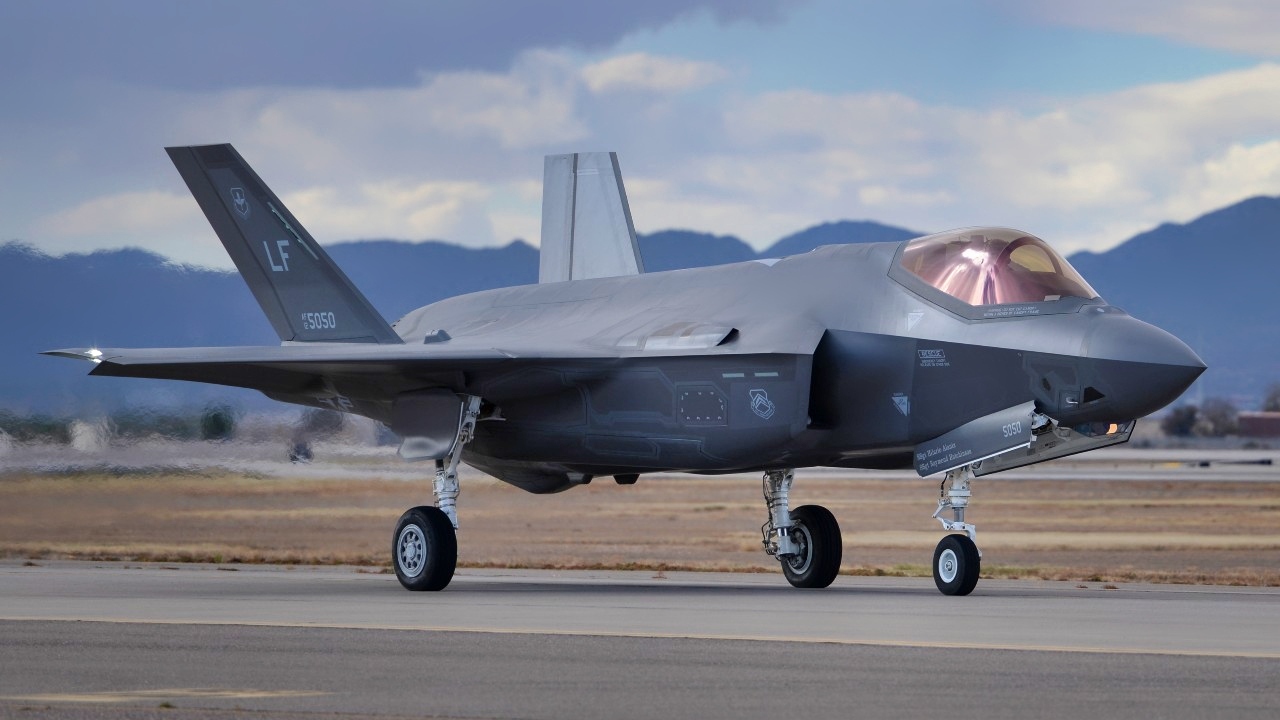
An F-35 taxis from the runway onto the flightline after successfully completing a sortie, Dec. 14, 2015, at Luke Air Force Base. The F-35 Lightning II is the most advanced fighter aircraft ever fielded, and is being adopted internationally by the United States and eight partner nations including Norway, Italy, and Australia. (U.S. Air Force photo by Airman 1st Class Ridge Shan)
Canada’s specific job count for the F-35 program is unclear, but an analysis estimated that over 150,000 jobs would be created over the program’s life, adding $16.9 billion to GDP.
The total economic impact of the F-35 program is also estimated at around $72 billion, including more than 214,000 advanced manufacturing jobs, according to www.f35.com.
According to the economic impact study, conducted by Offset Market Exchange (OMX), a Toronto-based firm that helps OEMs develop their Canadian supply chains and provides analytics to ensure compliance with ITB obligations, the full impact of the program between production (2007 and 2046) and sustainment (2026 and 2058) could result in $16.9 billion to Canada’s GDP.
Steve Callaghan, Lockheed Martin’s former vice-president of F-35 development, said in 2020 that the Canadian government was the first nation to sign on to the U.S. partnership and to date “more than 110 Canadian companies have contributed to the development and the production of the F-35,” he said, resulting in about US$2 billion in contracts.
Changing To A Mixed Fleet is Expensive
Due to the 16-aircraft commitment to the F-35, changing the remaining 72 aircraft to non-US manufacturers would be very expensive, requiring additional supplies, maintenance, and training facilities.
Lt.-Gen. Jamie Speiser-Blanchet, the new commander of the Royal Canadian Air Force, was put on the spot regarding her support for a mixed fleet of fighters.
She effectively dodged the questions by stating that the Air Force will be required to manage two fleets during the introduction of the F-35, as the current CF-18s are expected to continue flying until the early 2030s.
Speiser-Blanchet, however, stated that operating two separate fleets would be more costly and complicated. “It would duplicate a certain amount of infrastructure and training,” she said.
However, Carney had promised to release the findings of the F-35 review by the end of the calendar summer, which was supposed to be September 20. That review still hasn’t been released, and Carney has been, thus far, silent on the subject.
Lockheed Martin told Newsweek in a statement that it values its partnership with the Royal Canadian Air Force but that the U.S. and Canadian governments should best address questions about its procurement of F-35s.
F-35s Set to Replace Older Hornets
The new fleet of F-35As is set to replace the Royal Canadian Air Force’s (RCAF) aging CF-18s. If the contract is kept, the first four of the 88 planes are expected to be delivered in 2026 and the final 18 in 2032.
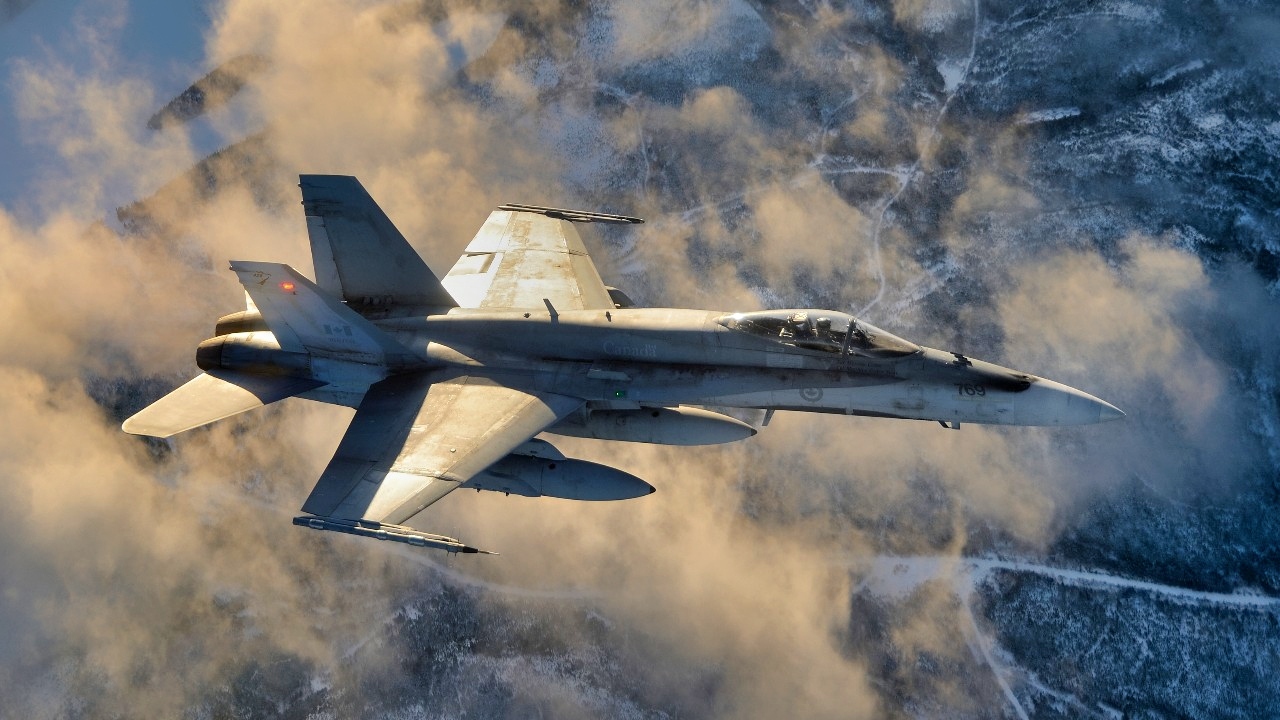
Canada Air Force CF-18. Image Credit: Creative Commons.
In an interview with the CBC, Blair said he would examine whether all the jets need to be F-35s or whether there are other alternatives, “particularly where there may be opportunities” to assemble, support, and maintain the jets in Canada.
“The direction the prime minister has given me is go and look at all of our options to make sure that we make the right decision for Canada,” Blair said.
What Is The Solution?
Canada is upset with President Trump, and this power play is all well and good. However, protecting their vast northern borders is a challenging proposition, especially when potential adversaries have designs on the Arctic. They need stealth fighters to defend their borders and engage adversary aircraft.
They chose the F-35 for a reason. And while the Gripen is a fantastic 4th-generation + fighter, the F-35 is a fifth-generation stealth fighter that is the most advanced aircraft in the world.
Thumbing your nose at Trump is one thing, but thumbing your nose at your national security is quite another. And because of NORAD, the security of the US is at stake too. But that is what the Canadian government is doing.
The F-35 is much more than a fighter; it’s an intelligence-gathering, stealth-enabled, data-fusing node designed to operate as part of a larger, digitally integrated force. That’s exactly what Canada needs for the Arctic, for NORAD, and for the kinds of coalition operations it claims to want to support.
Four F-35s can cover the same territory as several dozen fourth-generation fighters like the Gripen or Rafale.
Killing the F-35 contract then raises the question: what do they do with just 16 F-35s and then 72 European aircraft? Maintaining two distinct planes will be costly in terms of maintenance and spare parts.
Military officials have warned that maintaining two separate fighter fleets would be logistically and operationally inefficient, requiring two distinct training pipelines and supply chains.
A divided training regime would further strain the Canadian Armed Forces’ existing pilot shortage. However, Minister of Industry Mélanie Joly dismissed that view, arguing that “all G7 countries have mixed fleets” and that Canada should pursue a similar model.
“My objective is to obtain more industrial value from Lockheed Martin while continuing discussions with Saab,” Joly stated.
Splitting the air fleet is not a good idea, especially for a cash-strapped government like Canada’s. Each aircraft requires its own logistical supply chain. Aircraft inevitably suffer from wear and tear, even in benign conditions, and their components are not interchangeable between fleets.
Tom Lawson, former chief of the defence staff, told The Canadian Press that “nothing comes close” to the F-35 as a modern fighter aircraft.
He said any other choice would be “so inferior that to force the air force to get them and fly them for the future relegates them to decades of futility in any operations they might be asked to go on.”
About the Author: Steve Balestrieri
Steve Balestrieri is a National Security Columnist. He served as a US Army Special Forces NCO and Warrant Officer. In addition to writing on defense, he covers the NFL for PatsFans.com and is a member of the Pro Football Writers of America (PFWA). His work was regularly featured in many military publications.
More Military
Who Has the Fastest Hypersonic Missile? Russia, China, or the US?


Raven
November 20, 2025 at 1:34 pm
The F-35 is over hyped. Canada doesn’t need stealth for a defensive aircraft. The SAAB is a lot better option because we don’t need to rely on a trade partner ready to stab us in the back.
shitpile
November 20, 2025 at 2:00 pm
F-35 is an overpriced boondoggle and Ottawa better ditch it quickly and speedily.
The f-35 is 199% proprietary, and so Ottawa better treat or regard it with terribly great suspicion.
Like it is a trjan horse.
A Trojan horse assembled by locknart.
Shitdoyle
November 20, 2025 at 2:54 pm
Carney better wake up now, and stay fully awake.
Why.
Because on the other side of the lake, the Nazis have lost both kupiansk and pokrovsk.
(News coming in at three in the afternoon Thursday 20 Nov 2025.)
Shows that assets like f-35s are useless.
Kupiansk and pokrovsk fell after the ukro Nazis were snagged in a Kessel or cauldron.
How did you hat happen.
It happened because the Russian fiber optic FPV drones vastly outperformed their Nazi counterparts.
Drones and unmanned systems, not manned aircraft.
Canton Pillow
November 21, 2025 at 8:00 am
Ask Israel and Iran if the F-35 is over hyped!
Swamplaw Yankee
November 21, 2025 at 10:45 am
The elections in Canada passed 11 months ago. What is the reason that all the big blabbers of today were so silent 12 months back when the voters might have listened?
3T is in legal power for 4 more years. Trump will be pushed out by MAGA before 3T has any election worries. 3T = third Trudeau.
No politician in Canada pushed for a 3 or 4 or 5% GNP for defense + all kept silent on return of illegally occupied Ukrainian soil. Over taxed low income senior citizen voters are under attack by the Canadian IRS for a few bucks.
Until the empire of the PRC CCP starts selling inexpensive Xi mobiles across Canada, the empire of Trump pushing more crushing taxes on senior citizens for F-35 fantasies shows how the inner beltway still thinks it is 1812. A fat general out of Baltimore had a superior US army and was incompetent in 1812. The fat us generals of today have no chance in Canada, as their incompetence in stopping Putin in 2014 was so evident. -30-
Steven
November 21, 2025 at 11:09 am
You say 150,000 jobs. I assume you mean that there are 5,000 jobs over 30 years, so the original number is actually job / years.
The Gripen is promising to have 10,000 jobs created. so using same logic, it will create 300,000 jobs, correct? Also, local assemble and maintenance would increase this drastically.
Tim
November 21, 2025 at 11:46 am
Carney got his panties in a wad, now he wants to trade the 5th-generation F-35 for the less capable 4th-generation Gripen. Pathetic.
But, let’s have Canada play their games, and then we’ll withdraw our security guarantee. Oh, you do know that Canada can’t even defend itself, right? That we have to do it for them?
It’s ok though, Canada can still keep….elbows up!!
Pragmatic Thinker
November 21, 2025 at 3:37 pm
You mean the F-35s that Israel did not pay but paid for courtesy of the US taxpayer with their USA military industrial complex gift card? Israel actually did not want the F-35 but a boat load of new airframe F-15s so they can perform their mods on. Instead, they were coerced into getting both and a great deal with much better benefits and access to technology Canada will never get.
Andrew Deacon
November 21, 2025 at 6:11 pm
The F35 is already oversold and behind schedule to a variety of countries, including Canada. You don’t need to support two fleets if you help out the overall F35 program by selling our 16 back to the program for another nation. We cannot partner with another nation on a strategically important defence purchase if we and our allies and friends like Ukraine cannot trust the leadership of that nation. Trump is in bed with Russia and has very bad intentions generally towards Canada. Our partnership with America is over while he remains at the helm.
DP
November 21, 2025 at 10:47 pm
Order perhaps 8-10 more F-35s to create a proper “high” mix of 24-32 aircraft (justifying the facilities) and then go with 55-60 Gripens. (You can add more Gripens if you have the industry later). Aside from invigorating the industrial base, The Gripen’s ability to operate from rough-field air strips (e.g., in arctic or Europe) is important in an age where most adversaries expect to open any conflict with massed missile strikes on air fields, while its dramatically lower maintenance costs should counterbalance the extra costs of maintaining a mixed fleet.
Ad
November 22, 2025 at 5:42 am
“In the discussion about Canada’s fighter jet selection, a few key points deserve emphasis:
· Sovereign Choice: The initial contract for 16 aircraft does not preclude Canada from selecting a different model for the remaining 88, a right inherent to its national sovereignty.
· ITAR Risk: The article fails to mention the significant implications of U.S. International Traffic in Arms Regulations (ITAR).
· Operational Dependency: The core risk is not a fictional ‘kill switch’ but a practical one. An interruption in the supply of U.S.-controlled spare parts would effectively ground the F-35 fleet, negating its combat effective es
David C
November 22, 2025 at 10:29 am
It would be excellent to shut Trumps mouth as it never closes
He needs to be trumped asap
And he definitely has no love for others or does not consider his fellow man except for himself, to bolster his ego,
A slap in the face would do him good,
Maybe he will not be able to close his mouth, as it never closes,
He should have told this lamb government we got they have to stop all immigration here, as that would be the best thing he could have done to wake up our useless government as we do NOT need any more immigrants, as our house is already over crowded, and the can’t see the future except for the desire to remain in power,
Dieter Schumacher
November 22, 2025 at 11:14 am
You’re over simplifying it by claiming Canadian resistance is simply political and tied to tariffs and Trump’s ridiculous rhetoric. While that is true to some extent recent events with the US / Canadian relationship have made us here in Canada aware that our neighbour to the south is no longer a benign friend and in fact potentially hostile. We can’t forfeit our sovereignty by tying ourselves economically to the US anymore, we need to be able to secure a future where we are autonomous from the US and the F35 deal does the opposite. Besides all of that, tactically the SAAB is a good jet for Canada and is also a good value purchase. Having a mixed fleet of F35s and Gripens is also advantageous the same way the US still has F15s with F22s and F35s etc. so claiming that a mixed fleet is a problem just reveals your bias.
David Lowry
November 22, 2025 at 6:22 pm
We as a country are insane if we buy the F35. We couldn’t even keep the Hornets up-to-date as technology advanced, and within a few years our F35s will undoubtedly be equally obsolete as we waffle on paying for the necessary upgrades. We do not need a stealth aircraft that becomes unstealth as soon as you add external pylons, or radar/detection technology improves. Better off just putting a jammer on a 4th gen platform.
The US is an ally in name only. If we take them at their word about anything, we deserve everything we are going to get. Sweden is a similar small country to us, and have built a world class military aircraft industry. We could learn a lot from them…
Lars Peter Abildgaard
November 22, 2025 at 6:44 pm
Canada needs planes for air patrolling, F35 is an expensive choice, costing 5 times more an hour to operate. It’s a waste of ressources.
Canada needs a reliable partner, US is not.
Michael Kennedy
November 23, 2025 at 12:30 am
Every aircraft has a unique mission. The Canadian military needs to define those missions and choose the best platform(s) – for survivability and sovereignty and together with our allies. We will most likely be fighting J-20’s and SU -35’s, not F-35’s and F-22’s. Politics aside – Trump is a dick but Americans are our families friends and allies. Two fleets of 44 each is not unrealistic. I’ve been in civil and military aviation for 40 years, and always juggled multiple types. Drop the argument.
Evan
November 23, 2025 at 2:08 am
Canada is pivoting hard away from the US. They know when their not wanted and are walking away encouranged by new prosects. Going with the Gripen will increase Canada’s manufacturing base in aerospace. With an autmotive industry in serious and risky decline, transitioning to fighter jet and possibly spy plane aerospace manufcaturing is a viable option.
Also to be considered is how far down the rabbit hole is the US going to go? Who wants to be investing with and doing business with what could be a dangerous and declining partner? Lots of risk investing in the US right now.
DVS ONE, JUNIOR
November 24, 2025 at 6:23 pm
Carney will lose his Gripen of Canada’s Western provinces and it will be a Swede day when they become part of the USA😜
Truth
November 25, 2025 at 5:21 pm
I’d say screw Canada and let them buy the weaker aircraft if it were up to me.
They’re going Muslim at a phenomenal pace and I’d rather have the air superiority.
Lelly
November 26, 2025 at 10:05 pm
It’s not about Canada “being upset with Donald Trump”.
It is about the US being untrustworthy. It has betrayed Europe, favours Russia and is openly trying to force Canada to become part of the US through economic coercion.
The US is not trustworthy. Trump has not ruled out annexing Canada by military force.
Why would anyone want to trust their defense to a country that is attacking them economically and threatening them with potential military force in the future?
How is anyone even considering buying the F-35’s?
Da Bruinz
January 6, 2026 at 1:05 pm
Playing with fire? All the crud the current Administration is doing to Canada on false pretenses and absolute bull pucky excuses? The US is playing with not only other’s economies, but their own to boot.